📌 3 Key Takeaways
- When choosing a multi-gas detector, check five things: gas configuration, explosion-proof certification, battery life and data logging, alarm setpoints, and calibration convenience.
- The required gases for confined-space work are oxygen (O2), carbon monoxide (CO), carbon dioxide (CO2), hydrogen sulfide (H2S), and combustible gas (LEL) — 5 gases.
- The GasTiger1000 (sometimes called "G1000" internally), supplied through a WANDI partner, is a portable multi-gas detector that measures oxygen, carbon monoxide, hydrogen sulfide and combustible gas — 4 of these gases — simultaneously; if a site also needs CO2, WANDI's own portable IoT explosion-proof 5-gas detector, the EDW500, is the model to choose.
What if you switched on your gas detector before entering a confined space and the screen showed only a single number? A single-gas detector that displays only oxygen level can miss a situation where hydrogen sulfide (H2S) or combustible gas has already crossed a dangerous threshold even while oxygen reads normal. That's why multi-gas detectors, which monitor several gases at once from a single unit, have become standard equipment at confined-space, wastewater, construction, and factory sites. This guide walks through five checkpoints to consider when choosing a multi-gas detector, using WANDI's portable multi-gas detector, the GasTiger1000, as an example.
Why a Multi-Gas Detector — How Is It Different from a Single-Gas Detector?
A single-gas detector is built to measure just one gas, such as oxygen (O2) or carbon monoxide (CO). That's sufficient for a site where only one gas needs close management, but in a confined space where multiple hazardous gases can be present at once, relying on single-gas units means carrying a separate device for each gas. In practice, many recurring asphyxiation and poisoning incidents in confined spaces involve oxygen deficiency and toxic gas leaks occurring together.
A multi-gas detector packs several sensors into one unit so it can watch for different hazards at the same time. The gases required for confined-space work are oxygen (O2), carbon monoxide (CO), carbon dioxide (CO2), hydrogen sulfide (H2S), and combustible gas (LEL) — five gases, and some sites add special gases such as ammonia depending on conditions. Consolidating into one unit improves portability and lets a worker judge risk at a glance instead of checking multiple displays.
5 Checkpoints for Choosing a Multi-Gas Detector
① Gas Configuration — Does It Cover What Your Site Actually Needs?
The first thing to check is whether the gases your site needs are actually included. For confined-space work, the baseline is oxygen, carbon monoxide, carbon dioxide, hydrogen sulfide and combustible gas — five gases. At sites where additional gases occur — sewage treatment, livestock farms, cold storage — check whether an expanded sensor for a gas like ammonia is needed as well. More gas channels isn't automatically better, since unnecessary sensors only add maintenance cost, so it's more sensible to size the configuration to your site's actual risk assessment.
② Explosion-Proof Certification — Is the Area Handling Combustible Gas?
If the area handles combustible gas or flammable materials, you must confirm the detector itself carries explosion-proof certification such as ATEX or IECEx so it doesn't become an ignition source. Certification and rating vary by product and model, so check the catalog or ask the manufacturer directly whether the unit's certification matches your site's hazardous area classification (Zone 0, 1, 2, etc.).
③ Battery Life and Data Logging
For shift work or long-duration jobs, how many hours a single charge lasts directly affects usability. Korea's occupational safety law also requires records of gas measurements taken during confined-space work to be retained, so check whether readings are stored in internal memory and can be backed up to a PC or cloud. Battery type (rechargeable vs. disposable) and low-battery alert timing also affect day-to-day usability.
④ Alarm Setpoints — Can They Be Adjusted to TWA/STEL Standards?
Even for the same gas, it matters whether alarm thresholds can be adjusted to match site conditions and regulations such as the Time-Weighted Average (TWA) and Short-Term Exposure Limit (STEL). Even if factory defaults are preset, a supervisor should be able to adjust thresholds directly based on the substances handled and working conditions so alarms trigger at levels that reflect real risk.
⑤ Calibration, Bump Testing, and After-Sales Support
Because of how gas sensors behave, periodic calibration and a pre-use bump test (function check) are essential. Check the calibration interval, whether self-calibration is possible, whether KOLAS-accredited calibration certificates are issued, and how quickly domestic after-sales service responds when something fails — these all determine the real operational burden. No matter how good the specs are, slow calibration or repair turnaround leaves the site unprotected in the meantime.
GasTiger1000 — A 4-Gas Portable Multi-Gas Detector
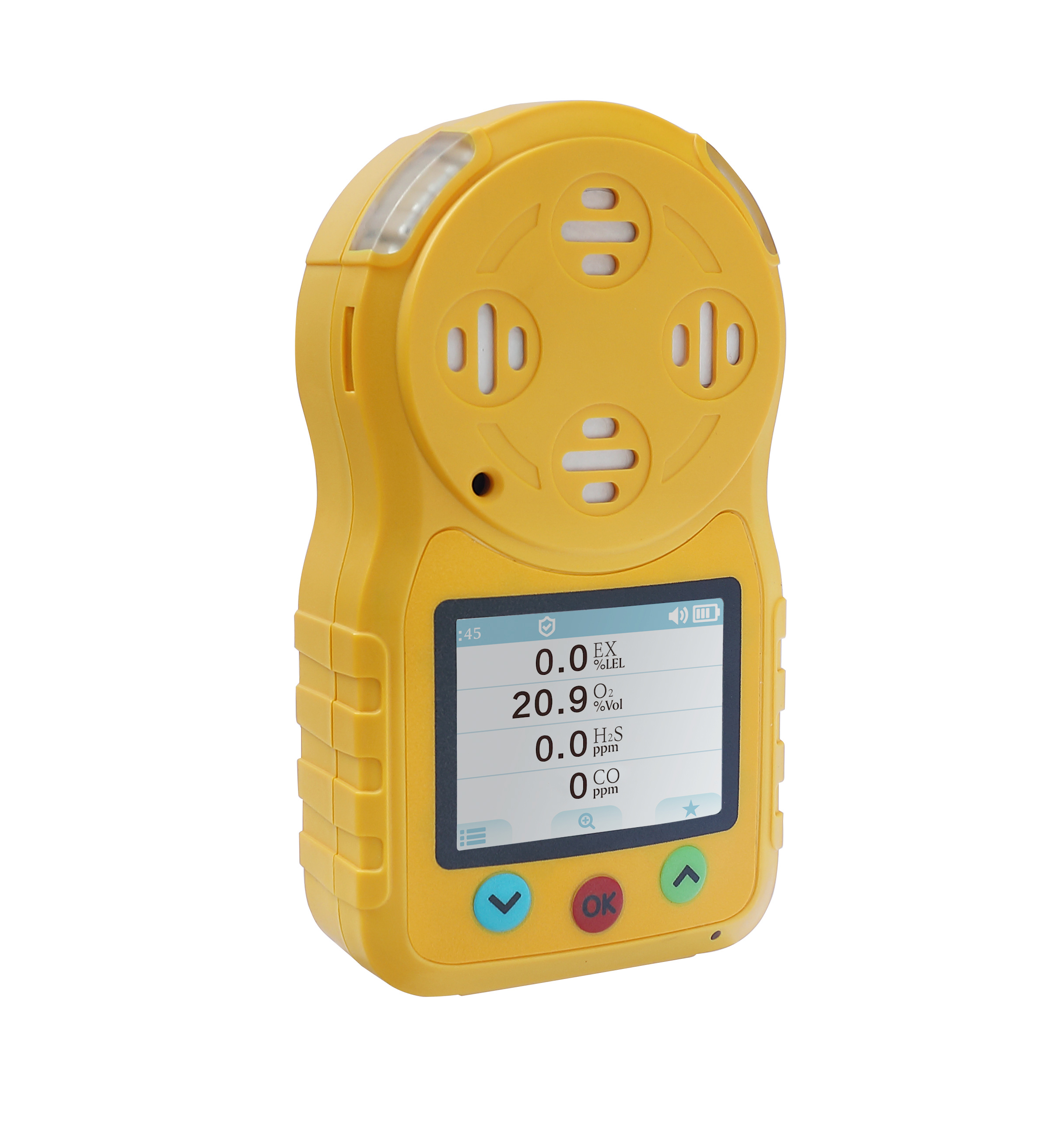
The GasTiger1000 is a portable multi-gas detector supplied through a WANDI partner, measuring oxygen (O2), carbon monoxide (CO), hydrogen sulfide (H2S), and combustible gas (LEL) — four gases — simultaneously from a single unit. It's used for pre-entry checks across confined spaces, wastewater treatment, construction sites, sewage treatment facilities, factories, and livestock farms. As noted above, however, the gases required for confined-space work now number five, including carbon dioxide (CO2) — so if your site also needs CO2 monitoring, the GasTiger2000, which adds a CO2 sensor to the same line, is the model to choose.
That said, detailed technical specs such as battery life, explosion-proof rating, and exact measurement ranges can vary by configuration option, so if you're considering adoption, we recommend contacting WANDI (+82-31-340-6952) for the latest specifications matched to your site conditions.
Building the Multi-Gas Detector into Your Site Safety Routine

Even the best multi-gas detector loses much of its value if power-on check → bump test → recording readings → alarm response procedure isn't built into the site's routine. Confined spaces in particular often can't be assessed without opening the door, so skipping the pre-entry measurement means walking straight into whatever risk is inside. It's not enough to simply issue a detector to each worker — pairing it with a supervisor's process for confirming the pre-entry check was actually done before every job is what turns the equipment into real accident prevention.
Multi-Gas Detector Selection Checklist
- Does the gas configuration include the 5 required confined-space gases (O2, CO, CO2, H2S, LEL) and match your site's risk assessment?
- If the area handles combustible gas or flammable materials, does the unit carry the required explosion-proof certification?
- Does battery life suit shift or long-duration work, with reading storage and backup available?
- Can alarm setpoints such as TWA/STEL be adjusted to match your site and regulations?
- Have you confirmed the calibration interval, method, and whether KOLAS certificates are issued?
- Have you confirmed domestic after-sales response speed and support for repairs and calibration?
- Is a pre-entry site procedure in place, including a bump test?
Closing
With a multi-gas detector, whether the configuration actually fits your site matters more than the numbers on a spec sheet. Comparing candidate products against the five checkpoints — gas configuration, explosion-proof certification, battery and data logging, alarm setpoints, and calibration convenience — helps you choose the right equipment for your site without unnecessary spend. For consultation or a site-specific configuration covering the GasTiger1000 and WANDI's full portable and fixed gas detector lineup, contact WANDI (+82-31-340-6952) for detailed guidance.