Applied Markets
Installed Gases
Project Details
This article shares field installation cases for CO₂ suppression room gas detectors — the most active project category this year. Before presenting the installation photos, the new regulation for CO₂ suppression system management and answers to the most frequently asked questions are provided.
The following regulation applies from October of this year regarding the management of CO₂ fire suppression systems.
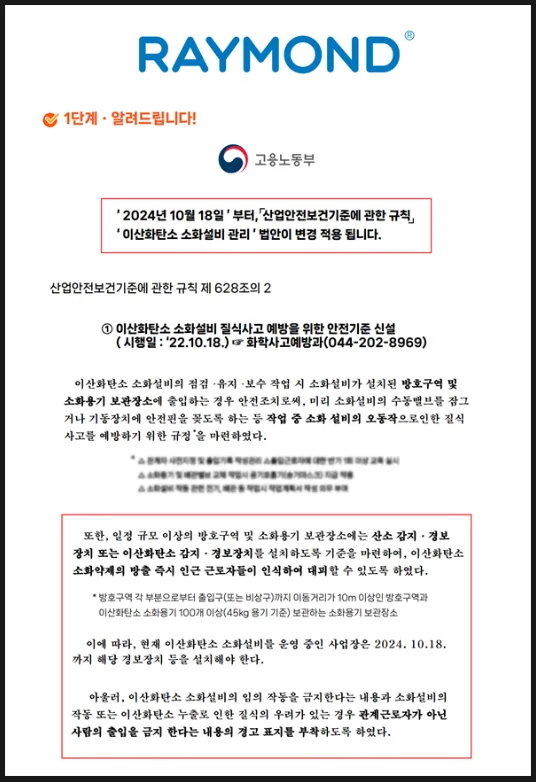
In summary:
1. Strengthen management requirements for facilities using CO₂ suppression gas.
2. Restrict and log access — only authorized personnel may enter, and all entry must be recorded.
3. Install oxygen or CO₂ detectors to prepare for accidental discharge or leakage.
4. Install alarm devices or warning displays at entry points so that hazardous conditions are immediately visible to anyone approaching.
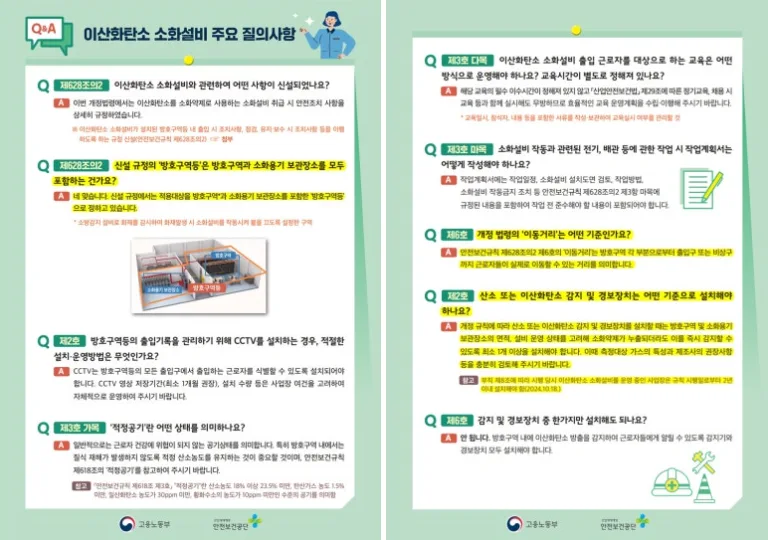
The most frequently asked questions during enquiries:
1. How many detectors are required?
Gas detectors measure the concentration of oxygen or CO₂ in the air in contact with the sensor — coverage area is not the determining factor, and there is no specific legal standard for quantity. In practice, one unit is typically installed inside a standard suppression agent room. For protected zones exceeding approximately 165 m² (50 pyeong), two units are commonly specified.
2. Our facility has fewer than 100 cylinders — is installation still required?
Under the current regulation, installation is not mandatory inside cylinder rooms with fewer than 100 cylinders. However, for protected zones such as electrical rooms and boiler rooms, installation is required where the travel distance from the deepest point to the exit exceeds 10 m.
3. How should the 10 m travel distance for protected zones be interpreted?
This refers to the walking distance from the farthest point inside the protected zone to the exit. The 10 m threshold was established based on the time needed for a worker to safely evacuate in the event of a CO₂ leak.

A protected zone is an area served by CO₂ suppression piping — a space into which CO₂ is discharged in the event of a fire. These are typically high-risk areas such as generator rooms, electrical rooms, battery rooms, UPS rooms, and server rooms.
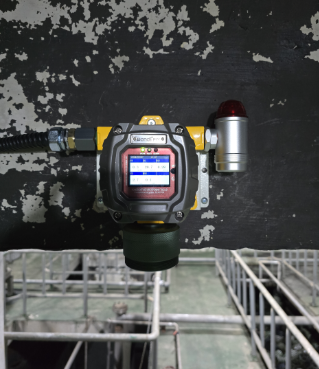
The FIX800 gas detector monitors oxygen or CO₂ concentration inside the suppression agent room and protected zone, triggering audible and visual alarms via the integrated beacon when thresholds are exceeded. The gas monitoring display panel, installed at the entrance, shows internal gas concentrations in real time — allowing workers to assess conditions before entry.
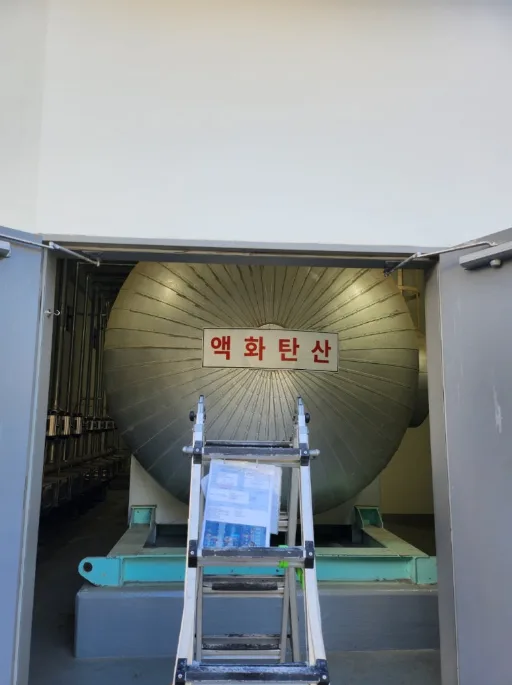
The installation site is a power plant. Power plant CO₂ suppression systems use large-capacity standalone cylinder buildings rather than the narrow cylinder racks typically seen in smaller facilities. The high volume of CO₂ is required to rapidly suppress fires in areas where a fire event could cause regional power outages or major explosions.
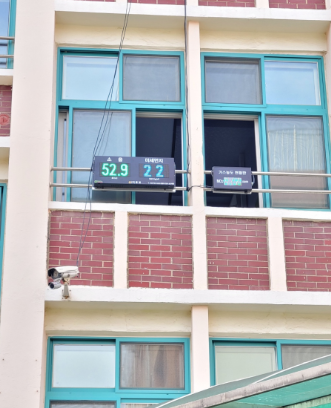
FIX800 gas detectors were installed inside the CO₂ suppression room, and display panels were installed at the exterior entrance.
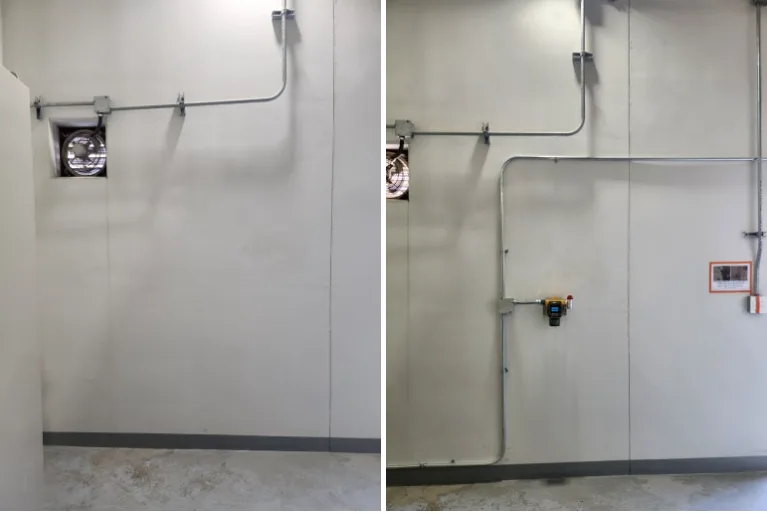
The suppression room had ventilation on all four sides and was well maintained. Installation points were selected and the FIX800 units were mounted. CO₂ detectors are selected over oxygen detectors in approximately 70% of suppression room installations. Wiring was finished with rigid steel conduit to match the existing electrical infrastructure in the facility.
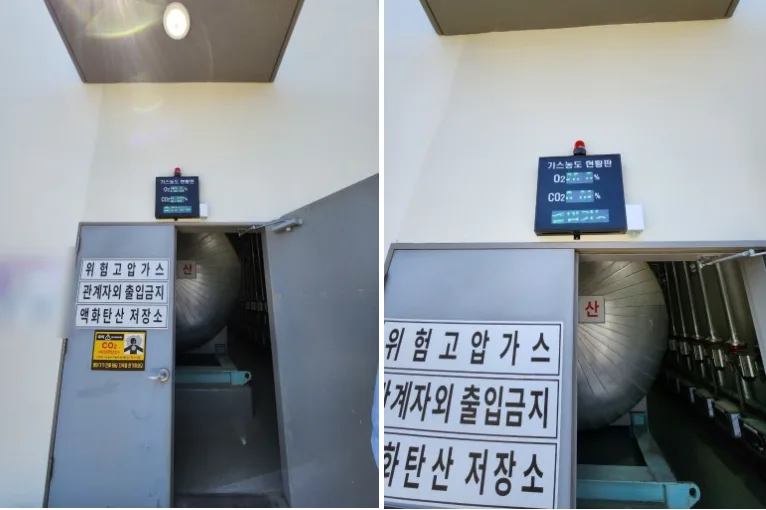
(Note: The LED display panel is operating normally, but sunlight interference during photography may cause the display to appear washed out as shown above.)
Display panels were installed at the entrance. A key advantage of SMD dot-module LED panels is excellent visibility even under direct sunlight — the same technology used on highway variable message signs nationwide.
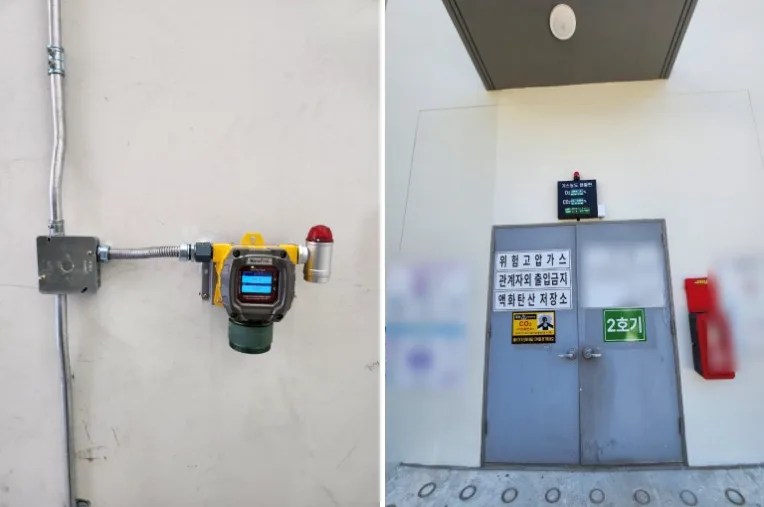
The second installation point was completed in the same manner as the first. After installation, product training and commissioning were conducted. For oxygen and CO₂ detectors, a simple breath test provides a quick verification of sensor response. Each unit ships with a calibration test certificate issued using standard span gas, so the breath test serves only as a basic field confirmation. Typical installation capacity is approximately 2 to 3 points per day, depending on site conditions and travel distance.
This concludes the installation case for CO₂ suppression room gas detectors.
![설치] 원주 국토5호선 신림~판부간 터널공사 밀폐공간 안전용 가스측정기 FIX800 4GAS O2 CO CO2 LEL 설치!](https://wandi.co.kr/storage/construction-cases/Ekn7PulFgplHqjZgJUfOsevvzH0Kawa1G0h9NlH8.png)
![설치] 약품 폐수탱크 수위계와 인디게이터 설치 그리고 무선 모니터링까지 MP + SUP1100 + FIX-AP](https://wandi.co.kr/storage/construction-cases/UjHcHl5kWktnCXlnvMIgk6eQhh7pqwuf3u65iKLO.png)