Applied Markets
Installed Gases
Project Details
Hello!
HF gas, also known as hydrofluoric acid or hydrogen fluoride, is a very dangerous gas that, even among toxic gases, can cause fatal harm from a minute leak.
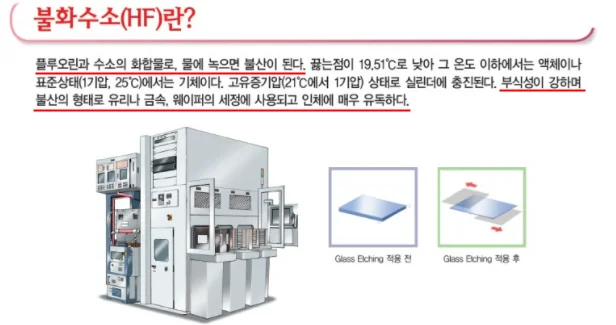
What Is Hydrogen Fluoride Gas?
Hydrogen fluoride gas is typically used in large quantities in semiconductor wafer cleaning processes, and it is also partly contained in the refrigerant gases commonly used in air conditioners and refrigeration units.
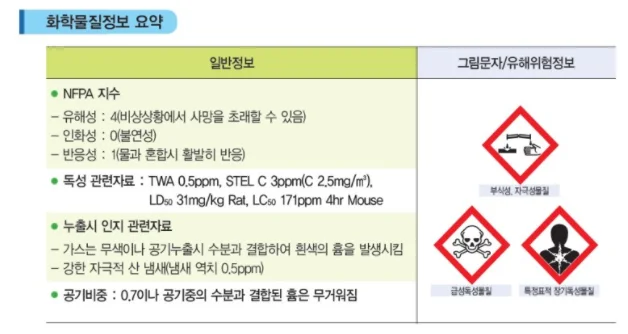
< Characteristics of Hydrogen Fluoride Gas >
Because the TWA limit is 0.5 ppm, even very low-concentration leaks require caution.
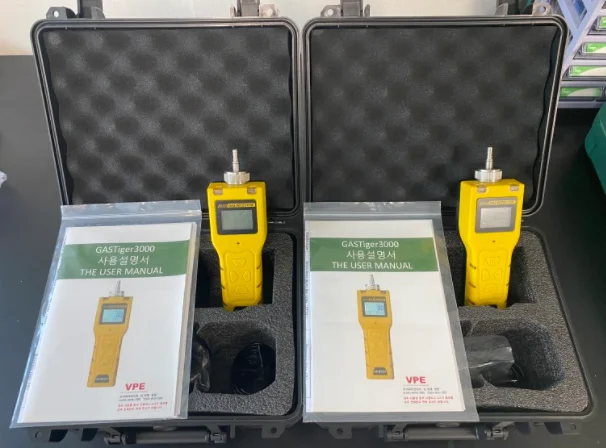
< GasTiger 3000 Toxic Gas Detector >
GasTiger 3000 for HF Measurement
The GasTiger 3000 can measure HF gas. It is a gas detector designed for measuring toxic gases that have adsorptive properties.
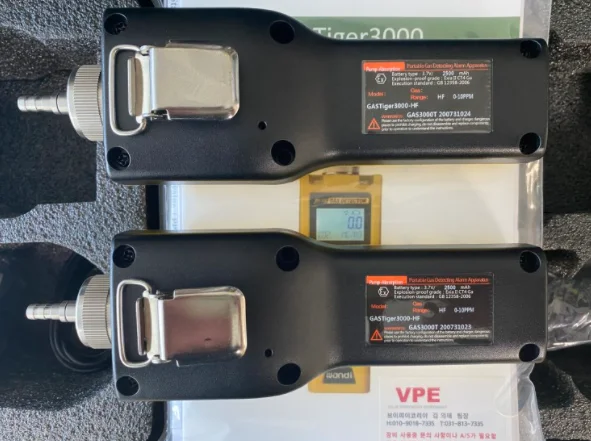
This application was supplied to protect worker safety in a steelmaking process. The unit was fitted with a 0–10 ppm sensor capable of detecting low-concentration leaks.

< GasTiger 3000 Hydrogen Fluoride Leak Detector >
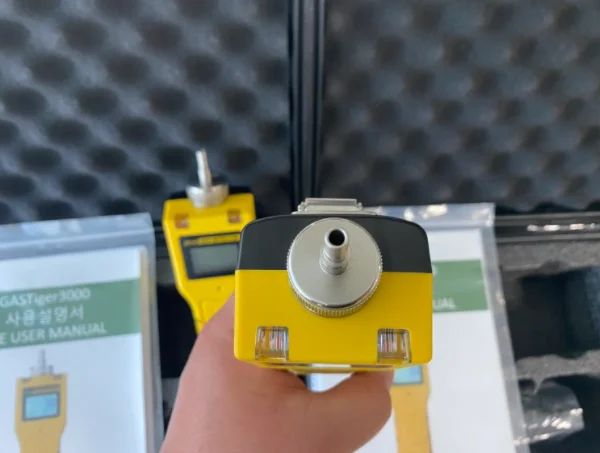
< GasTiger 3000 HF 0–10 ppm >
For fast response and accurate measurement, a pump-suction gas detector is the appropriate choice.
Measurement of other toxic gases in addition to hydrogen fluoride, such as HCl (hydrogen chloride) and PH3, can also be arranged.
Safety comes first! Please work safely.
This concludes our post on hydrogen fluoride (HF) measurement.
Frequently Asked Questions (FAQ)
Q1. Why is HF gas so dangerous?
Among toxic gases, HF can cause fatal harm even from a minute leak. With a TWA limit of 0.5 ppm, even very low-concentration leaks require caution.
Q2. Where is hydrogen fluoride gas used?
It is typically used in semiconductor wafer cleaning processes and is also partly contained in refrigerant gases used in air conditioners and refrigeration units.
Q3. Which detector was used to measure HF in this case?
The GasTiger 3000 was used. It is a gas detector designed for measuring toxic gases with adsorptive properties such as HF.
Q4. What measurement range was applied?
For worker safety in a steelmaking process, the unit was fitted with a 0–10 ppm sensor capable of detecting low-concentration leaks.
Q5. Why is a pump-suction type recommended for HF?
A pump-suction gas detector is appropriate for fast response and accurate measurement of HF gas.
#HydrogenFluoride#HFGasDetector#GasTiger3000#ToxicGasDetection#SemiconductorSafety#SteelIndustrySafety#LowConcentrationLeak#PumpSuctionDetector#Gyeongbuk#WANDI