Applied Markets
Installed Gases
Project Details
General Hospital Underground Fuel Storage Room — Confined Space Low-Oxygen Alarm System
This case documents a gas detector and LED display board installation at an underground fuel storage confined space within a general hospital in Incheon. During confined space work, proper ventilation using a blower fan is required, and an installed oxygen concentration detector must be in place so workers can immediately recognize when internal oxygen levels drop below 18.5%.
Installation Specifications
| Item | Details |
|---|---|
| Detector | FIX800 fixed O₂ oxygen monitor |
| Display board | LED gas concentration display board with optional entry-permission (go/no-go) indicator |
| Alarm behavior | Simultaneous alarm on both the detector and the display board when oxygen falls below 18.5% |
| Installation environment | General hospital underground fuel storage confined space |
| Location | Incheon |
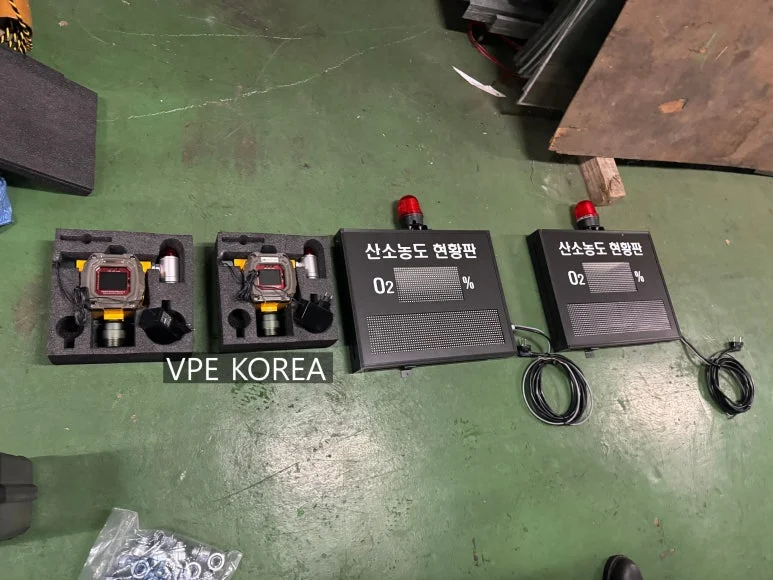
Hospital Underground Fuel Storage Room Hazard Characteristics
- Underground fuel storage rooms are classified as confined spaces with limited natural ventilation
- Oxygen depletion can occur from fuel vapor displacement and limited air exchange
- Hospital facility maintenance personnel require periodic entry for inspection and equipment servicing
- Continuous oxygen monitoring with an external display board enables workers to verify safe conditions before entry
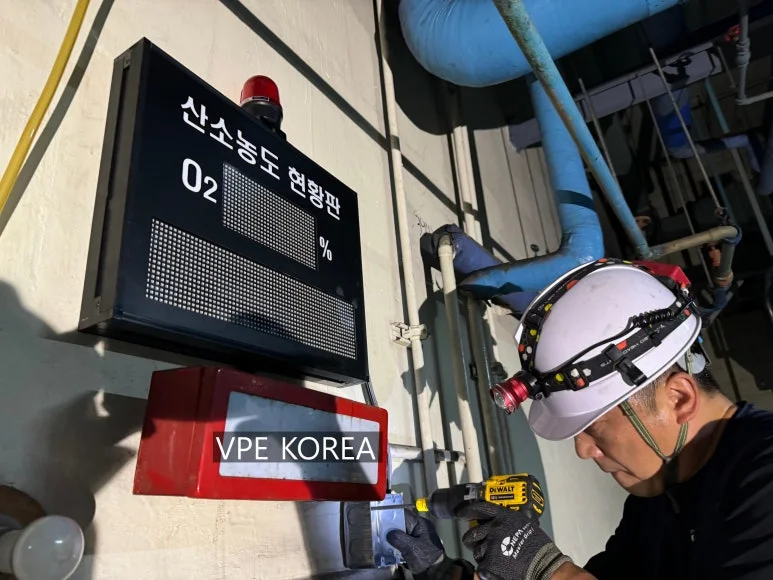
Why a Display Board Matters for Confined Space Safety
- The fixed detector inside the confined space cannot be seen from outside
- Positioning the display board at the access point allows workers to check oxygen levels before descending
- If oxygen falls below 18.5%, workers are immediately alerted and can activate ventilation before entry
- This combination of detector and display board is the standard configuration for confined space pre-entry safety verification
Installation Details
Internal wiring was finished with rigid steel conduit, with flexible GW conduit used only at points requiring bends.
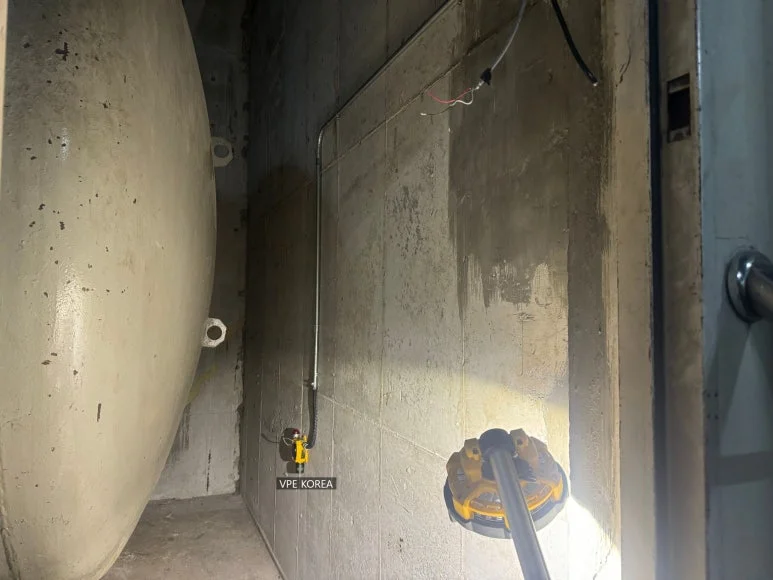
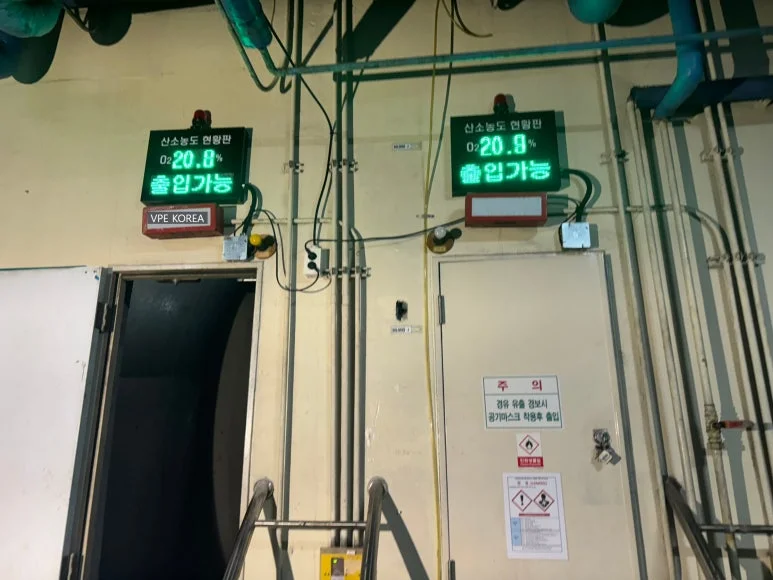
Due to on-site constraints, power was temporarily supplied through a nearby outlet. Although the display board may appear tilted in some photos, this was actually because a nearby light fixture was off-level — the display board itself was installed level. Finishing quality and precise leveling are treated as essential parts of every installation.
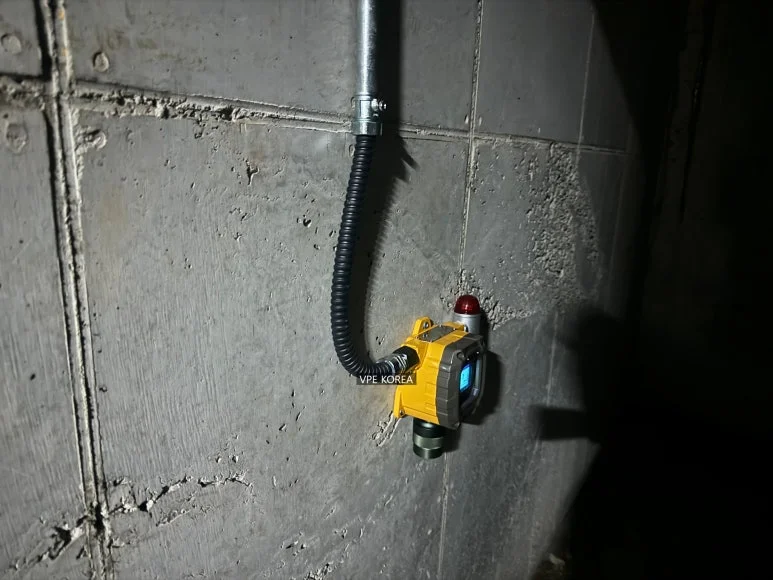
Once installation was complete, the team performed a commissioning test and provided on-site usage training.
Frequently Asked Questions
Why is 18.5% used as the alarm threshold rather than the standard 18.0%?
Some facilities apply a more conservative threshold (18.5%) above the standard minimum safe level (18.0%) to provide additional safety margin and earlier warning before oxygen reaches critically low levels, allowing more time for corrective action.
Why are hospital underground fuel storage rooms classified as confined spaces?
These rooms typically have limited natural ventilation, restricted access points, and the potential for oxygen displacement from stored fuel vapors — meeting the standard criteria for confined space classification under Korea's Occupational Safety and Health Standards.
What is required in addition to the detector and display board for confined space safety?
A complete confined space safety program also requires forced ventilation equipment (blower fans), a designated standby monitor, worker safety training, and documented pre-entry procedures. The detector and display board provide the continuous gas monitoring component within this broader framework.
What happens after installation is completed?
A commissioning test is carried out immediately after installation to confirm the detector and display board are functioning correctly, along with on-site training so facility staff can operate and monitor the system with confidence.

#HospitalConfinedSpaceOxygenAlarm #FixedO2Detector #LEDDisplayBoard #IncheonHospitalDelivery #HospitalGasSafety #UndergroundFuelStorageSafety #PreEntryVerification #WANDIKorea
![[레이먼드] 오,폐수 처리실 유해가스 모니터링](https://wandi.co.kr/storage/construction-cases/YxFUQVBZ8Unnk7pJzzfsmezr6xNe0LZvQRDmt7TL.jpg)
![[브이피이코리아] 종합병원 지하 밀폐공간 가스 측정기 설치_FIX800 & FIX-DS](https://wandi.co.kr/storage/construction-cases/gNOA28xSlEy5uU3AOxyHDRH5UfAe0TpMTgAt4Uag.jpg)

