Applied Markets
Installed Gases
Project Details
Research Institute O₂ Detector — FIX800 Oxygen Sensor Replacement and Calibration
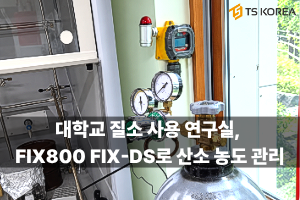
This case documents a FIX800 oxygen sensor replacement and calibration service performed at a national research institute. Gas detectors are used to protect worker safety not only at industrial sites but also at research facilities, public institutions, and laboratories. Oxygen, essential to human respiration, requires continuous concentration monitoring in confined spaces where oxygen deficiency can occur.
Service Specifications
| Item | Details |
|---|---|
| Equipment | FIX800 fixed O₂ oxygen detector |
| Service performed | Oxygen sensor replacement + calibration |
| Installation environment | National research institute |
| Service date | June 22, 2026 |
Why O₂ Sensor Replacement and Calibration Are Necessary
- Electrochemical sensor service life: O₂ electrochemical sensors typically have a service life of about two years; readings can progressively drift over time
- Research facility safety requirements: Research institutions frequently use inert gases (N₂, He, Ar) — oxygen deficiency detection is directly tied to worker safety
- Mandatory periodic calibration: Regular Zero and Span calibration using certified reference gas is required to maintain measurement accuracy
- Legal safety compliance: National research institutions are subject to Korea's Occupational Safety and Health Act, making detector accuracy management especially critical
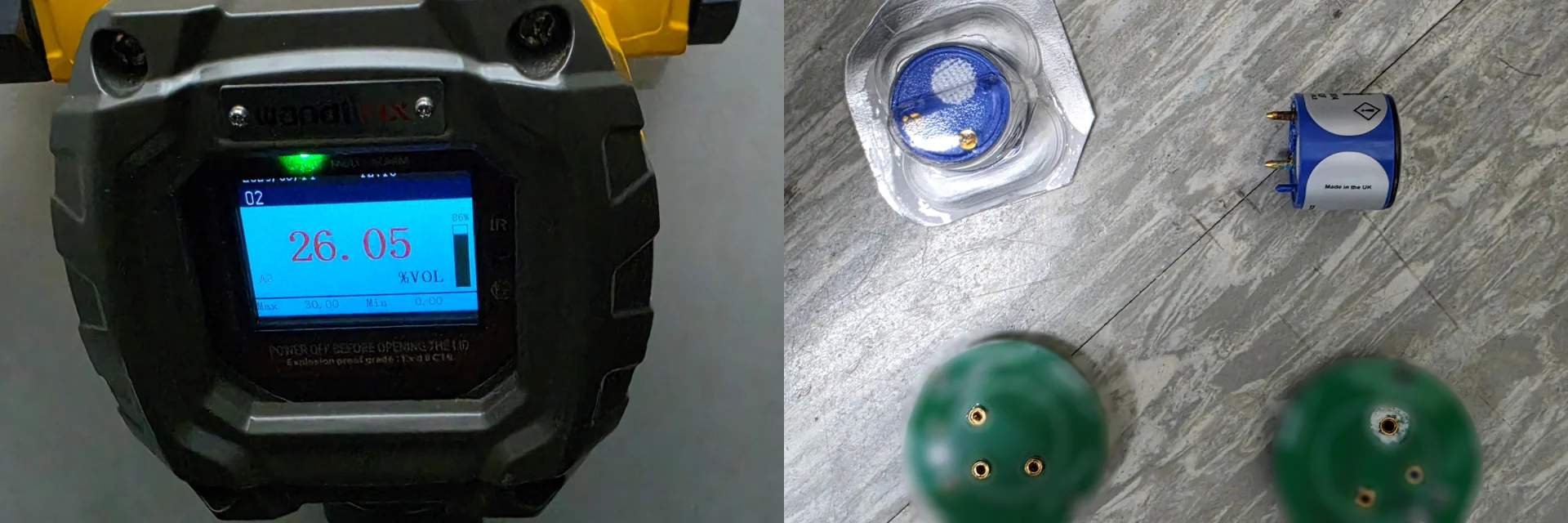
Normal ambient oxygen concentration is approximately 20.9%, but the on-site inspection measured 26.05%. The fact that a unit powers on normally and shows a reading does not necessarily mean the measurement is accurate.
This on-site inspection found that the oxygen sensors installed in all three FIX800 units had exceeded their recommended service life, resulting in reduced measurement accuracy. All three sensors were replaced, and calibration was then performed using certified reference gas.
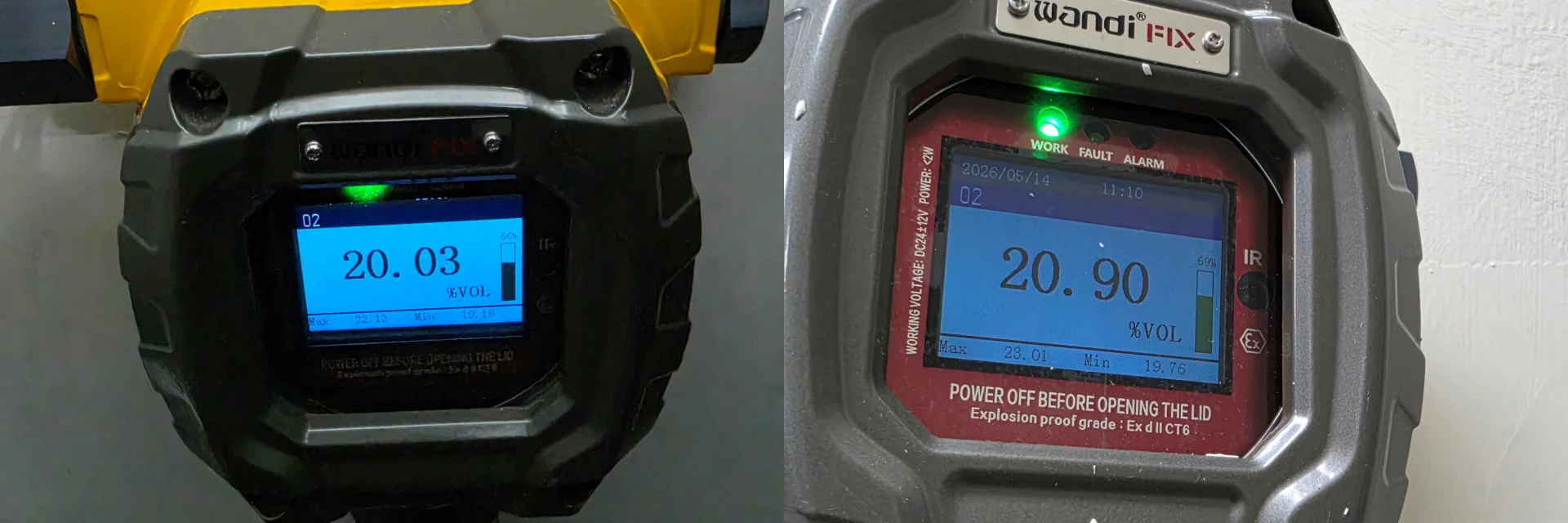
Immediately after an aged sensor is replaced with a new one, readings may fluctuate briefly. This is normal and the reading stabilizes after roughly 5 to 10 minutes. Once the sensor has stabilized, calibration is performed using 18% oxygen (O2) reference gas, and the process concludes with a final check confirming the sensor accurately indicates the ambient oxygen concentration of approximately 20.9% (21%).
Even after calibration is complete, sensor sensitivity and accuracy gradually change over time, so regular annual calibration is recommended to maintain ongoing measurement accuracy and reliability.
Sensor Replacement and Calibration Service Overview
- Replacement of aging O₂ sensors with new units to restore measurement accuracy
- Zero and Span calibration using certified reference gas to verify accuracy
- Calibration certificate issued upon completion for safety management documentation
- Maintenance support for gas detectors across research facilities, public institutions, and laboratories
Frequently Asked Questions
When should the FIX800 oxygen sensor be replaced?
Replacement is needed once the sensor reaches its recommended service life (typically about two years). Regular inspection is important for assessing sensor condition.
Why is an oxygen detector especially important at research facilities?
Research facilities frequently use inert gases such as nitrogen, helium, and argon for experiments, cooling, and purging. These gases are colorless and odorless, making leaks difficult to detect, and can rapidly displace oxygen in enclosed laboratory spaces — creating oxygen deficiency hazards.
How frequently should calibration be performed?
An annual calibration cycle is generally recommended. Facilities with high usage frequency or where safety is particularly critical should consider a shorter interval (six months).
What should be verified after sensor replacement?
Zero and Span calibration using certified reference gas must be performed immediately after replacement to verify accuracy. It is also recommended to confirm that alarm functions operate correctly and that readings display normally.
What does a typical sensor replacement and calibration visit include?
A typical service visit includes removing the aged sensor, installing a certified replacement sensor, allowing the reading to stabilize, performing Zero and Span calibration with certified reference gas, and issuing a calibration certificate for safety record-keeping.
#FIX800OxygenSensorReplacement #O2DetectorCalibration #ResearchInstituteOxygenMonitor #InertGasOxygenDeficiency #ReferenceGasCalibration #ElectrochemicalSensorLifespan #NationalResearchInstituteSafety #WANDIGasDetector #WANDI