Applied Markets
Installed Gases
Project Details
This article covers the most frequently discussed topic of the year: gas detector installation in fire suppression agent rooms. As this is the first year of full enforcement of the revised regulation, previously completed installations and the amended requirements are reviewed here.

The regulation was first revised in October 2022, following a fatal asphyxiation incident caused by an accidental CO₂ suppression system discharge in Seoul. CO₂ suppression systems extinguish fires using the "oxygen dilution" method — rapidly reducing oxygen concentration to near zero. This approach is highly effective and fast, making it the preferred choice for facilities where fire damage would be catastrophic, such as power plants, broadcasting stations, and data centers.
However, the same mechanism that makes CO₂ suppression effective also presents a serious hazard: if a discharge occurs while workers are present, oxygen levels drop so rapidly that workers may lose consciousness before they can react.

To prevent incidents caused by accidental discharges or piping leaks, the revised regulation mandates that qualifying fire suppression agent rooms install oxygen or CO₂ monitors by October 2024. Posting warning signs prohibiting unauthorized entry is also required. The scope covers both the cylinder storage room and all downstream protected zones — which typically include electrical rooms, boiler rooms, and generator rooms.
The regulation specifies "oxygen or carbon dioxide" because a CO₂ leak causes both a rise in CO₂ concentration and a corresponding drop in oxygen concentration.
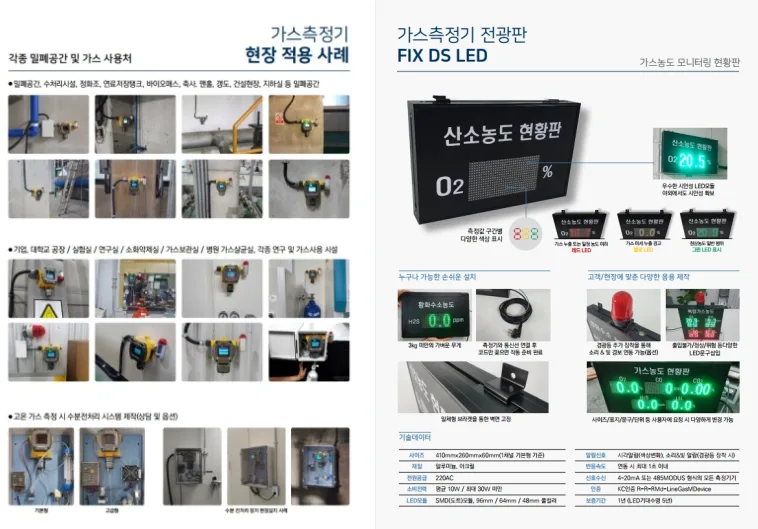
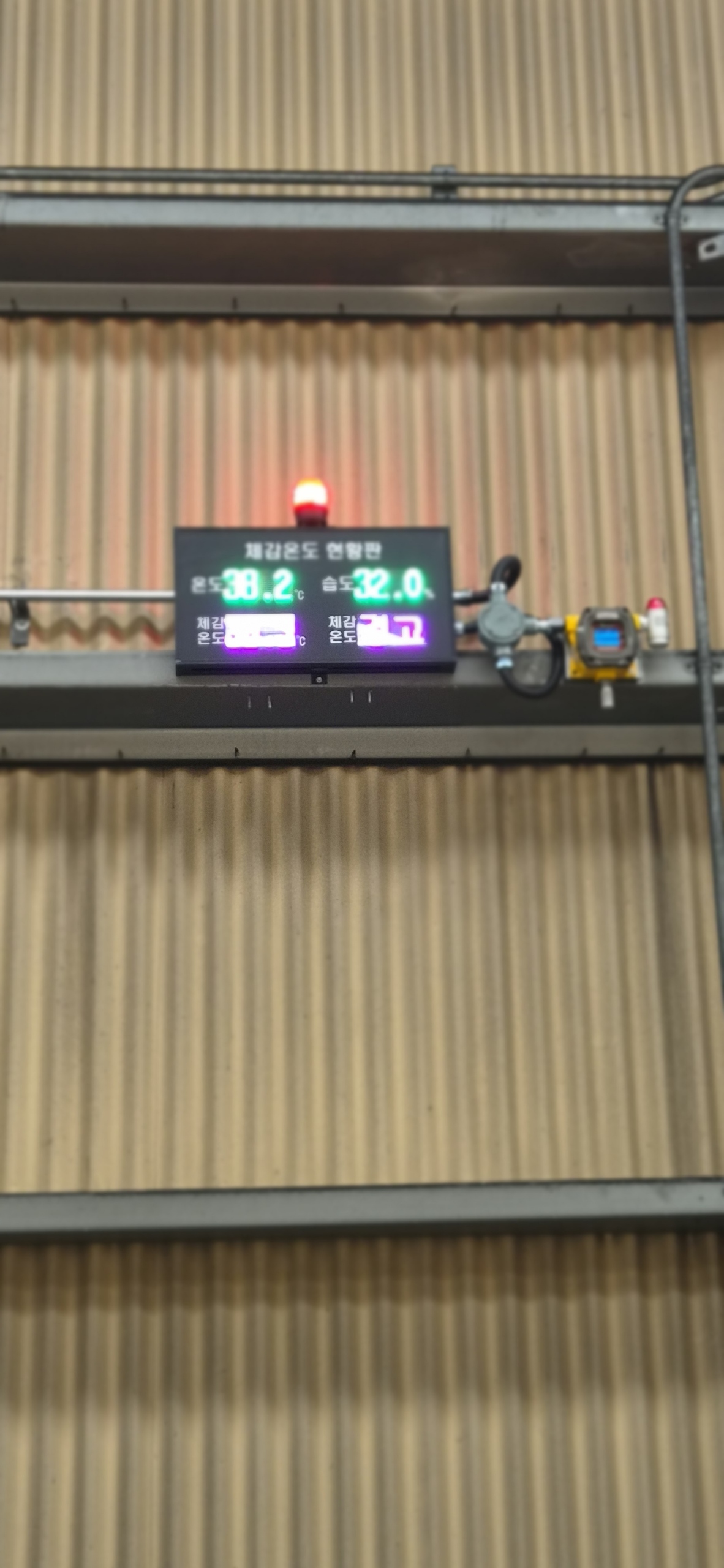
The FIX800 gas detector and LED display panel have been installed in confined spaces such as wastewater treatment rooms, septic tanks, and laboratories for many years prior to this regulatory change. Since the amendment was published, installation inquiries for fire suppression agent rooms have increased significantly. Facilities using halon or refrigerant-based suppression agents are also increasingly requesting oxygen monitors for safety.
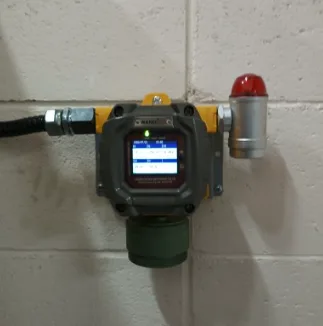
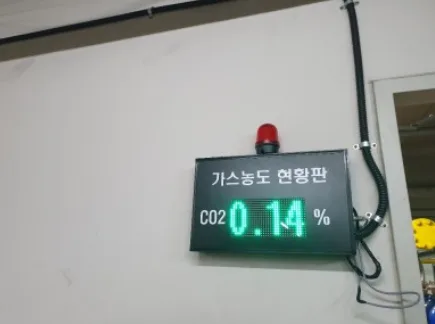
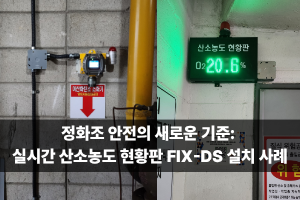
The compliance configuration is straightforward: the gas detector is installed inside the suppression agent room, and the LED display panel is mounted at the entrance door. As many suppression agent rooms have no electrical outlets, the LED panel can supply power directly to the detector — eliminating the need for a separate power connection inside the hazardous space.
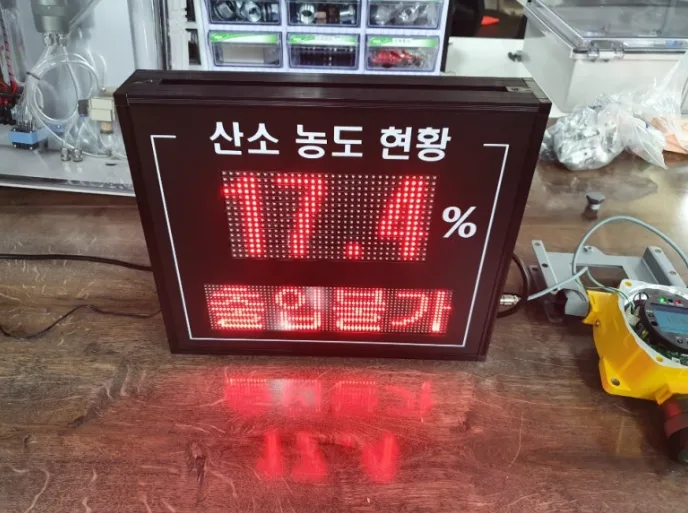
The LED display panels are manufactured in-house, allowing full customization of size, display text, and color logic — for example, green text indicating "Entry Permitted" at safe concentrations, and red text indicating "Entry Prohibited" when alarm levels are exceeded.
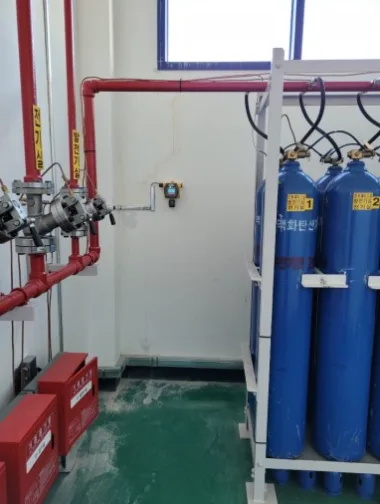
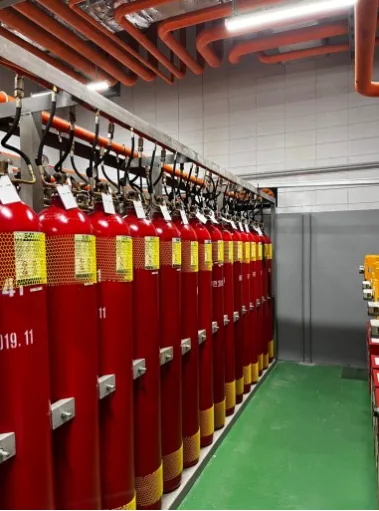
Installations have been completed across a wide range of facilities nationwide, including CO₂ suppression rooms, halon suppression rooms, power plants, and data centers. CO₂ is heavier than air, so detectors are mounted as low as possible — while prioritizing proximity to valve and piping connections for the fastest possible leak response.
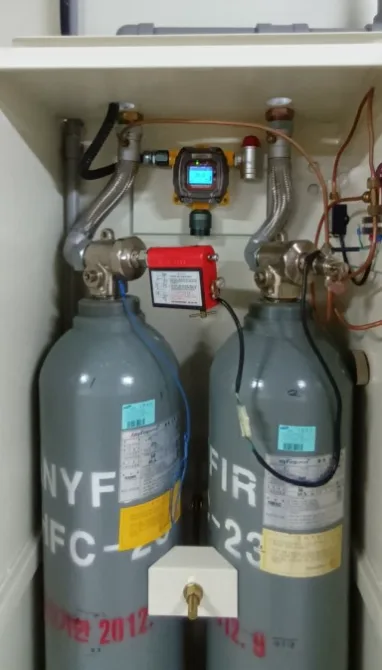
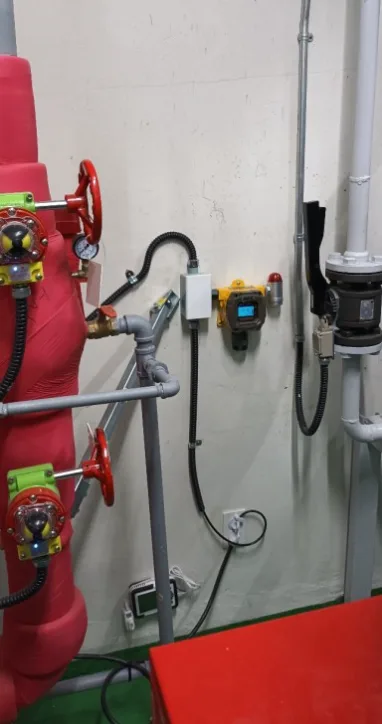
Fire suppression systems are not limited to large facilities with dozens of cylinders. Compact suppression cabinets — as shown in the left photo above — are widely installed across the country. As safety awareness continues to grow, an increasing number of facilities with these smaller units are also choosing to install CO₂ or oxygen monitors for added protection.
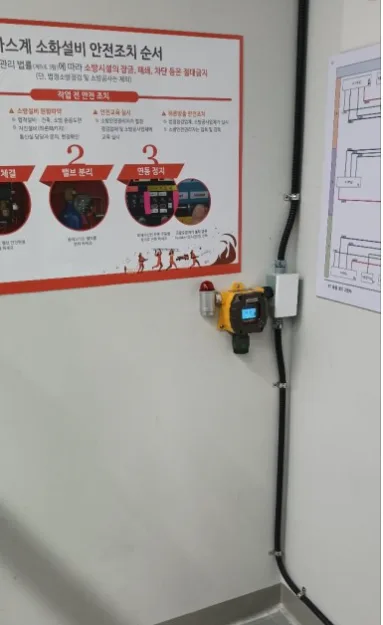
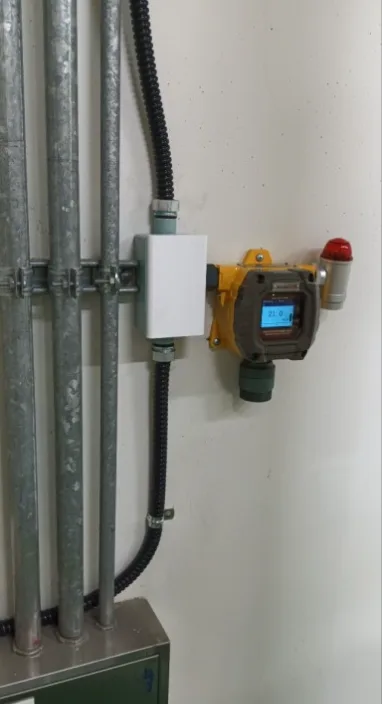
This concludes the installation case overview for gas detectors in fire suppression agent rooms under the revised regulation.

![[레이먼드] 오,폐수 처리실 유해가스 모니터링](https://wandi.co.kr/storage/construction-cases/YxFUQVBZ8Unnk7pJzzfsmezr6xNe0LZvQRDmt7TL.jpg)
![[브이피이코리아] 종합병원 지하 밀폐공간 가스 측정기 설치_FIX800 & FIX-DS](https://wandi.co.kr/storage/construction-cases/gNOA28xSlEy5uU3AOxyHDRH5UfAe0TpMTgAt4Uag.jpg)

