Applied Markets
Installed Gases
Project Details
This case documents a field visit to a research institution's wastewater treatment plant to perform maintenance on an installed FIX800 four-gas detector and to assess the need for an additional toxic gas detector.
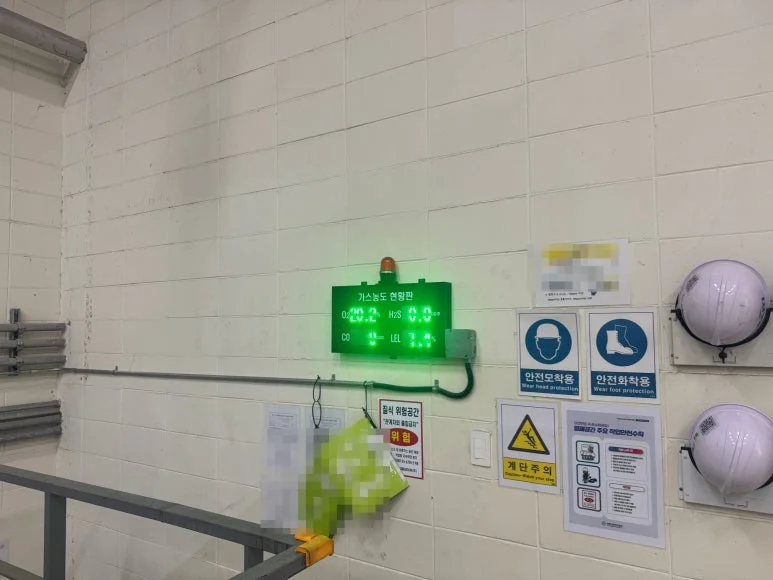
All gas detector sensors have a finite service life and cannot be used indefinitely.
Depending on the sensor operating principle, four types are primarily used: electrochemical, thermal conductivity, non-dispersive infrared (NDIR), and UV lamp. Service life ranges from approximately one and a half to five years depending on the gas type, so periodic maintenance is required.
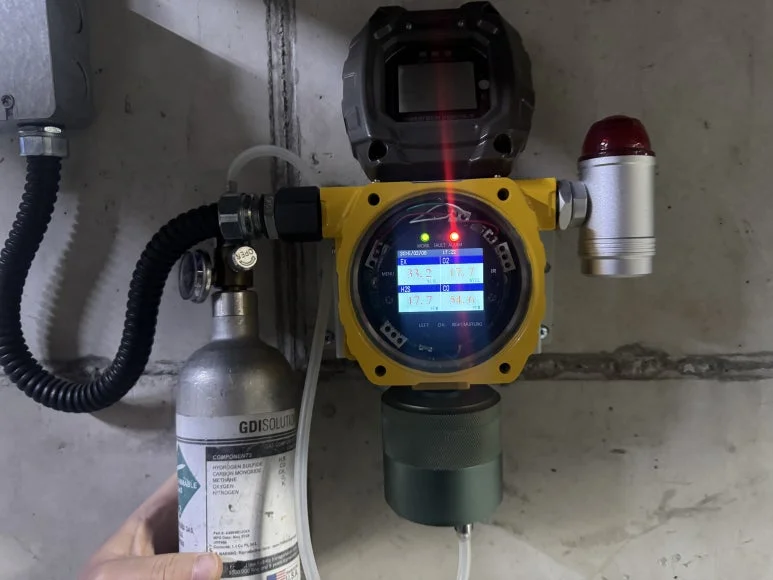
The equipment was installed recently and still has remaining service life, but as the oxygen and combustible gas sensors are approaching their replacement interval, field calibration and inspection were performed using standard calibration gas ahead of that date.
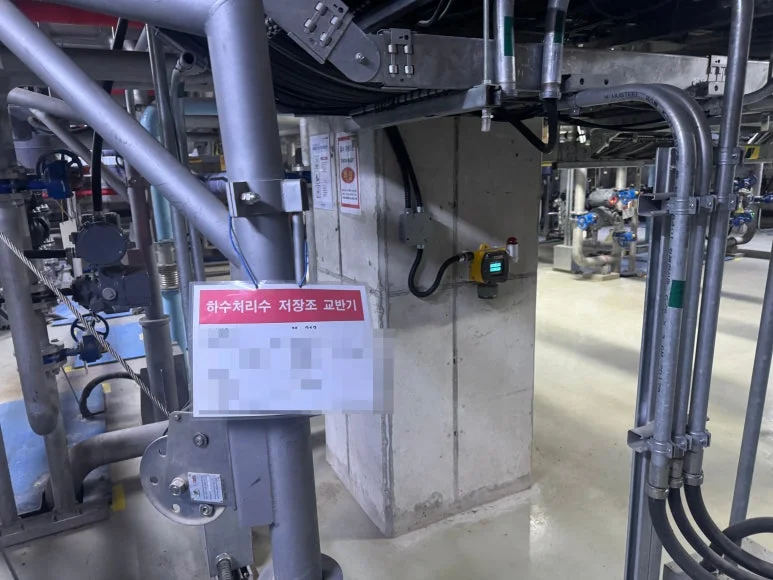
Following field calibration and inspection of the installed FIX800 four-gas detector, normal operation was confirmed with no issues.
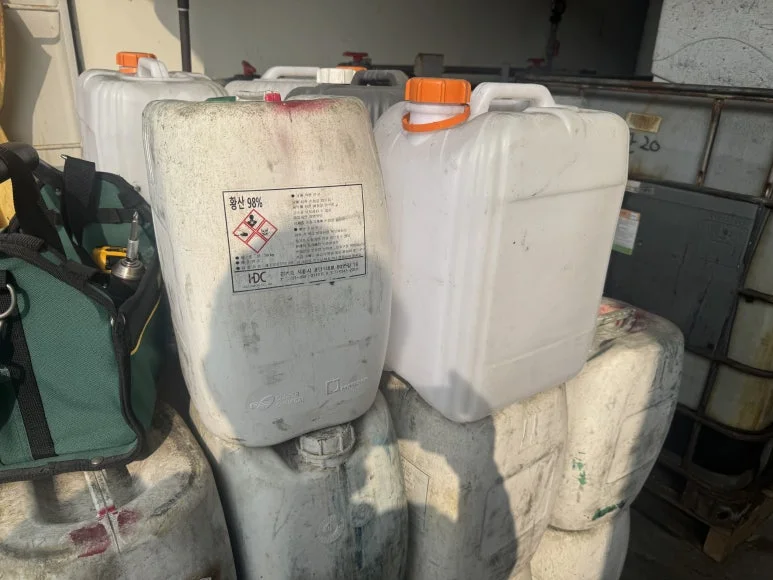
A visit was also made to an area within the same research complex that handles sulfuric acid, to assess the need for a sulfur dioxide (SO2) detector. Sulfuric acid in liquid form becomes SO2 gas when it vaporizes.
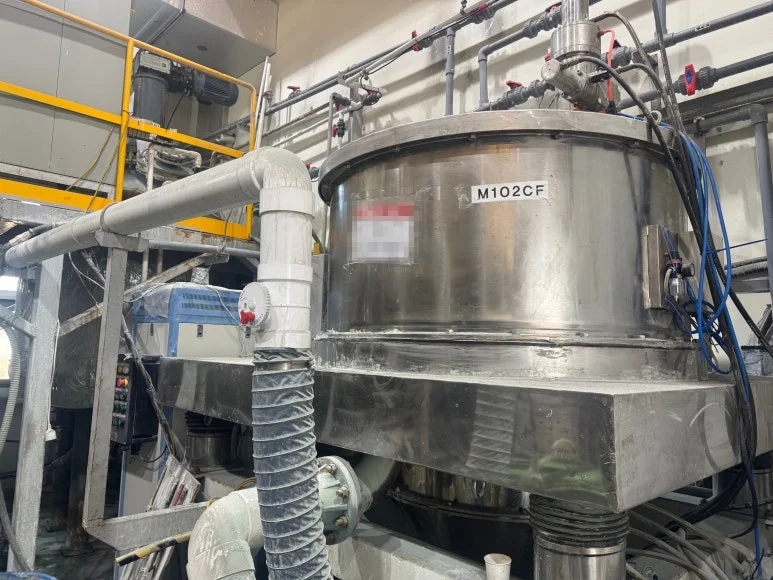
SO2 gas was found to be corroding the interior steel structure. It is a highly hazardous toxic gas — prolonged inhalation by workers can cause lung damage and respiratory distress, potentially leading to asphyxiation.
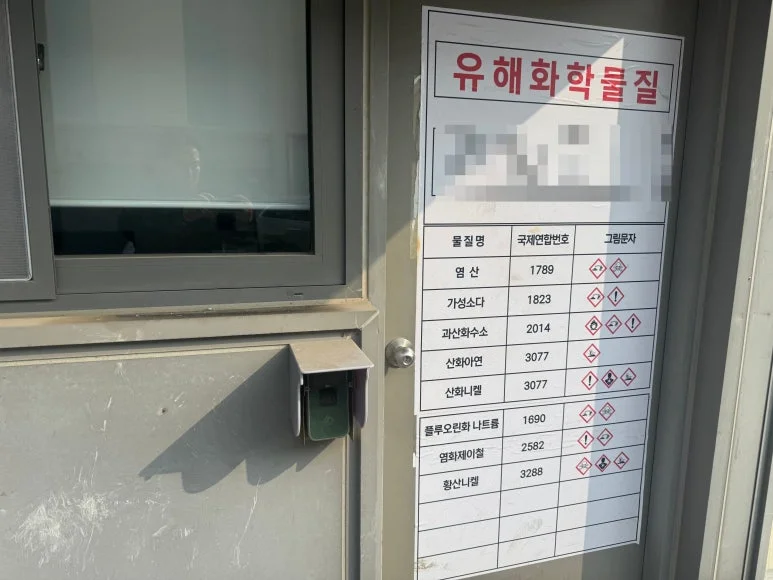
After discussing installation locations for SO2 and HCl (hydrogen chloride) detectors with the site manager, it was agreed that a gas monitoring configuration would be installed in the work space in the near future.
Wishing you continued safety at work.
![[레이먼드] 오,폐수 처리실 유해가스 모니터링](https://wandi.co.kr/storage/construction-cases/YxFUQVBZ8Unnk7pJzzfsmezr6xNe0LZvQRDmt7TL.jpg)
![[브이피이코리아] 종합병원 지하 밀폐공간 가스 측정기 설치_FIX800 & FIX-DS](https://wandi.co.kr/storage/construction-cases/gNOA28xSlEy5uU3AOxyHDRH5UfAe0TpMTgAt4Uag.jpg)

