Applied Markets
Installed Gases
Project Details
Large Shopping Mall Septic Tank — Gas Detector Installation
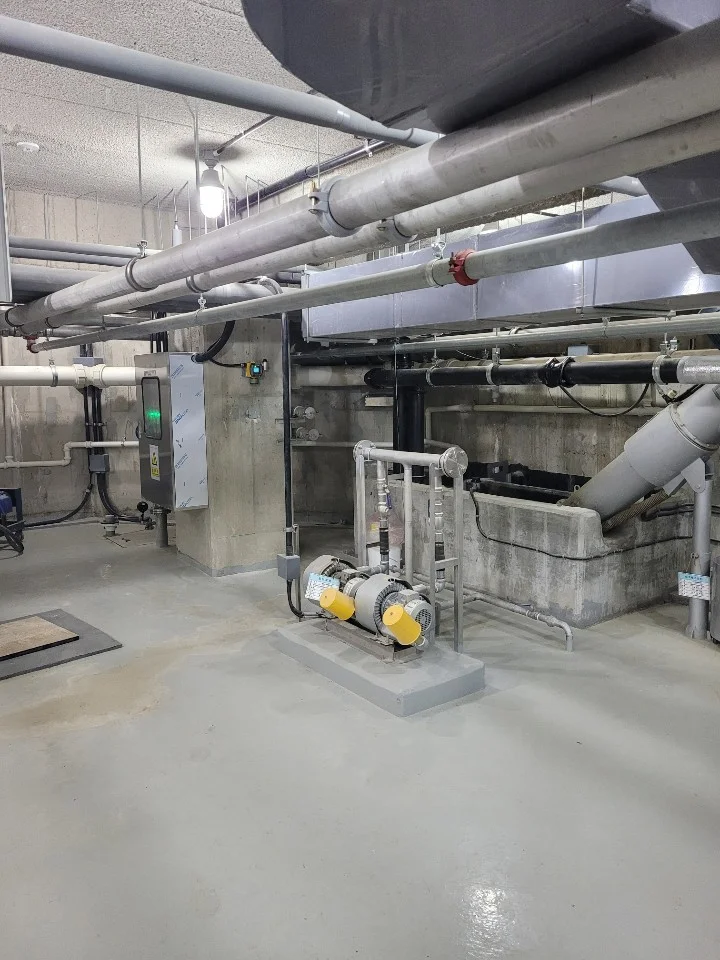
This case covers a gas detector installation at the septic tank of a large shopping mall's wastewater treatment facility. With the recent surge in incidents under the Serious Accidents Punishment Act and confined space accidents, wastewater treatment septic tanks are now classified among the highest-risk locations.
As the name implies, a septic tank treats contaminated water used for restroom and washing purposes before discharge.
The chemical reactions occurring within this contaminated wastewater generate toxic gases at a notably high frequency, and because most septic tanks are located underground, they are also highly vulnerable to poor ventilation. Most hydrogen sulfide poisoning and gas intoxication accidents occur when workers enter a septic tank or wastewater facility for cleaning or inspection. A review of actual accident case records from the Korea Occupational Safety and Health Agency (KOSHA) confirms that gas poisoning incidents in septic tanks occur at a significantly higher rate than in other confined spaces.
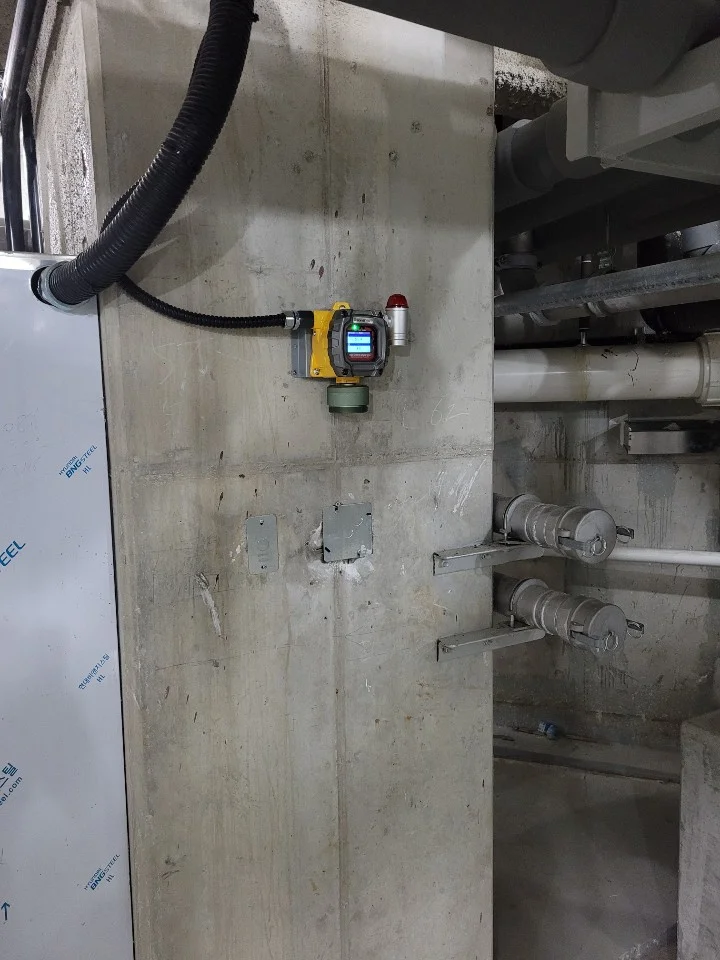
What gases should be monitored when installing a gas detector in a wastewater treatment facility or septic tank?
If cost efficiency is the priority, an O₂ (oxygen) and H₂S (hydrogen sulfide) sensor configuration is sufficient.
If budget allows, the configuration can be expanded to include CO (carbon monoxide), LEL (combustible gas), and CO₂ (carbon dioxide) in addition to O₂ and H₂S.
O₂ monitoring is essential for preventing asphyxiation, and H₂S monitoring is essential because it is the gas most likely to be generated from the wastewater itself.
CO is generated in the event of fire, and LEL detects methane or other flammable substances. CO₂ monitoring is generally unnecessary unless the wastewater facility is a protected zone where CO₂ fire-suppression gas is discharged.
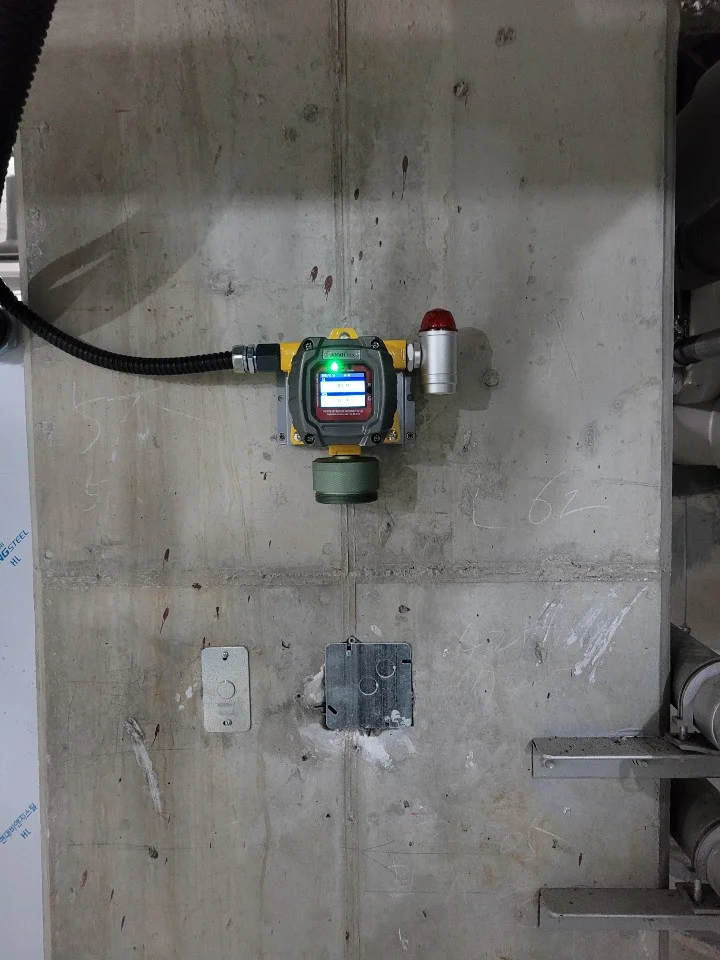
When selecting detector mounting points, the optimal installation location is determined through a site survey and discussion with the facility manager prior to installation. In particular, the FIX800 unit is not mounted directly onto the wall — it is installed via a separate bracket.
This design means that the unit can be easily detached later for repair or calibration using nothing more than a single screwdriver — a major convenience advantage. As shown in the photo, when two gases (O₂/H₂S) are selected, both readings are displayed on a single screen across two lines. When four gases are selected, the screen splits into four sections, and when five gases are selected, it splits into five sections with correspondingly smaller text.
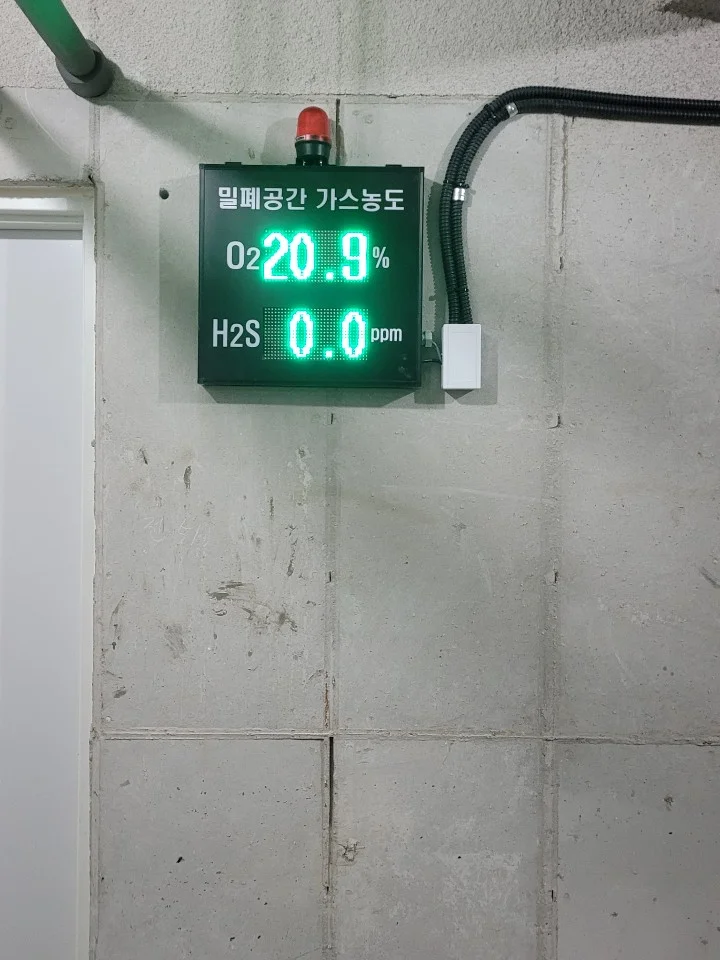
A gas concentration display board was installed near the entrance to the septic tank / wastewater treatment room.
This display board is installed at the entrance of the confined space and shows, in real time, the readings measured by the gas detector installed inside the space.
When the confined space interior is in a safe condition with no gas leakage, the display shows a green LED indicating the concentration level. When hazardous gas is detected inside the confined space, the display switches to a red LED along with an audible and visual alarm. Because every worker entering the confined space can check this display board before entry, gas poisoning and asphyxiation accidents caused by entering without being aware of hazardous gas levels can be prevented in advance.
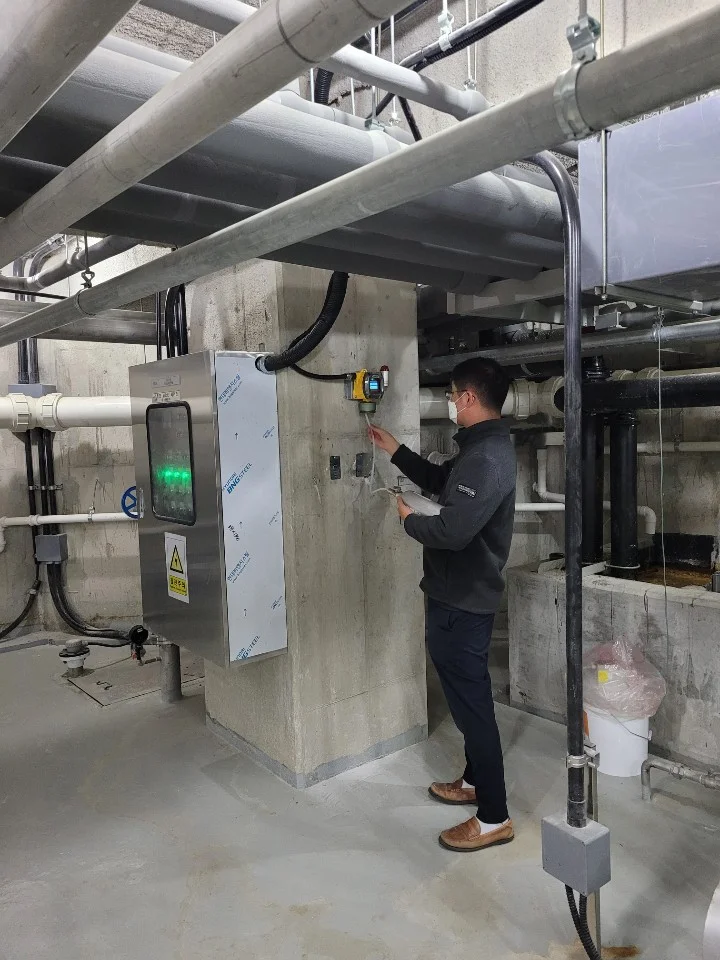
As mentioned, this site was the underground septic tank of a large, widely recognized shopping mall chain.
The gas detectors and display boards were installed and commissioned across the underground septic tank rooms of stores nationwide within approximately one month.
After installation was completed at each store location, staff were trained on how to operate the equipment, and an actual commissioning test was carried out using calibration test gas.
Finally, a self-calibration certificate and a remote control unit were delivered to complete all installation work at each site.
Installing multiple stores at the same time like this makes equipment management significantly more convenient — because the purchase dates are all similar, future sensor replacements (a consumable component) can also be carried out collectively across all locations, and replacing multiple units at once brings additional cost savings through bulk discounts.
Installation Specifications
| Item | Details |
|---|---|
| Detector | Fixed multi-gas monitor (FIX800) |
| Sensor configuration | O₂ (oxygen) + H₂S (hydrogen sulfide) |
| Installation environment | Large shopping mall wastewater treatment septic tank |
| Additional equipment | Gas concentration display board at confined space entrance |
| Location | Nationwide |
Why Shopping Mall Septic Tanks Carry Elevated Risk
- Large commercial facilities generate substantial volumes of restroom and washing wastewater requiring significant septic tank capacity
- Chemical reactions occurring in concentrated contaminated water produce toxic gases — primarily H₂S — at high frequency
- Most septic tanks are located underground and are highly vulnerable to poor ventilation
- The Serious Accidents Punishment Act and rising confined space accident statistics have made septic tanks a top-priority risk category among workplace gas hazards
- KOSHA accident case records confirm gas poisoning incidents in septic tanks occur at a notably higher rate than in other confined spaces
Frequently Asked Questions
Why are shopping mall septic tanks specifically classified as high-risk locations?
Large commercial facilities generate high volumes of contaminated wastewater, and the chemical reactions occurring in this concentrated effluent produce toxic gases — particularly H₂S — at significantly elevated frequency. Because most septic tanks are underground with poor ventilation, continuous monitoring is particularly critical.
What is the connection between the Serious Accidents Punishment Act and septic tank safety?
The Act has heightened legal accountability for workplace fatalities, including those occurring in confined spaces such as septic tanks. This has driven increased attention and investment in gas monitoring systems at facilities previously underprioritized for safety upgrades.
Why is the O₂/H₂S configuration standard for septic tank monitoring, and when should more sensors be added?
O₂ monitoring detects oxygen deficiency to prevent asphyxiation, while H₂S monitoring detects the primary toxic gas generated during wastewater treatment chemical reactions. Where budget allows, CO (fire-related gas) and LEL (methane/flammable gas) sensors can be added; CO₂ is generally unnecessary unless the facility is a designated CO₂ fire-suppression zone.
What role does the gas concentration display board play?
Installed at the entrance to the confined space, the display board shows the indoor gas detector's readings in real time — green LED for a safe condition and red LED with an audible/visual alarm when hazardous gas is detected — so workers can check gas levels before entering.
How can installation be arranged for similar shopping mall or commercial facility septic tanks?
Nationwide installation service is available for commercial facility septic tank gas monitoring systems, including consultation on selecting the appropriate sensor configuration, site survey, mounting, commissioning, and calibration support.
🎯 Portable 5-Gas Detector Used at This Site — WANDI EDW500
For confined space work in septic tanks, manholes, wastewater treatment facilities, and similar environments, the 5 gases (O₂ · CO · H₂S · CO₂ · LEL) that must be measured under the Occupational Safety and Health Act can be monitored with a single unit. With dual IECEx + ATEX explosion-proof certification, a free DCMS cloud service, and automatic email reporting, it also automatically satisfies the mandatory 3-year data retention requirement.
#ShoppingMallSepticTankDetector #O2H2SGasDetector #SeriousAccidentsPunishmentAct #ConfinedSpaceHighRiskCategory #CommercialFacilityWastewater #NationwideDelivery #WANDIKorea
![[레이먼드] 오,폐수 처리실 유해가스 모니터링](https://wandi.co.kr/storage/construction-cases/YxFUQVBZ8Unnk7pJzzfsmezr6xNe0LZvQRDmt7TL.jpg)
![[브이피이코리아] 종합병원 지하 밀폐공간 가스 측정기 설치_FIX800 & FIX-DS](https://wandi.co.kr/storage/construction-cases/gNOA28xSlEy5uU3AOxyHDRH5UfAe0TpMTgAt4Uag.jpg)

