📌 3 Key Takeaways
- Cleaning water tanks and reservoirs is confined-space work, where stagnant water and sludge generate oxygen deficiency, hydrogen sulfide, methane and carbon dioxide — you can be asphyxiated the moment you enter.
- Per KOSHA, before entry you must measure and confirm oxygen at 18%+ and hydrogen sulfide at 10ppm or less — which the eyes and nose cannot judge, only a detector can.
- The EDW500 portable 5-gas detector measures the five confined-space gases (O₂·CO·H₂S·EX·CO₂) from one unit, and with ATEX·IECEx international explosion-proof certification it safely checks hazards before entry and during work even in flammable environments.
Water-tank cleaning looks like "just a clean water space," but it is the confined-space work where fatalities recur most often on industrial sites. When water sits for a long time, sludge builds up on the bottom, organic matter decays to release hydrogen sulfide and methane, and the metal tank corrodes and consumes oxygen — creating oxygen deficiency. The danger is that these gases are mostly colorless and oxygen deficiency has no smell at all, so human senses cannot detect the hazard. This guide covers why water-tank cleaning is dangerous, which gases to measure, real accident cases, and how to clean safely with the WANDI EDW500 portable 5-gas detector.

Why Water-Tank Cleaning Is Dangerous — Gases and Causes
A water tank is a classic confined space — cut off from outside with no airflow. During cleaning, stirring the sludge or scraping the bottom releases trapped gases all at once, and a worker who entered through a narrow opening is exposed to dangerous concentrations in an instant.

| Gas | Cause during water-tank cleaning |
|---|---|
| O₂ deficiency | Sealed, stagnant-water environment; metal-tank corrosion consumes oxygen; microbial growth |
| H₂S (hydrogen sulfide) | Anaerobic decay of bottom sludge and organic matter (rotten-egg smell) |
| CH₄ (methane, flammable) | Anaerobic decomposition of organics — explosion risk plus oxygen-displacing asphyxiation |
| CO₂ (carbon dioxide) | End product of organic decomposition, accumulates at the bottom |
| CO (carbon monoxide) | Exhaust from ventilation/drainage engine pumps flowing back into the tank |
If chlorine-based cleaners (bleach/hypochlorite) are used, chlorine gas can form as well, so the hazardous gases increase depending on the cleaning method. That is why the rule for water-tank cleaning is "always measure before entering."
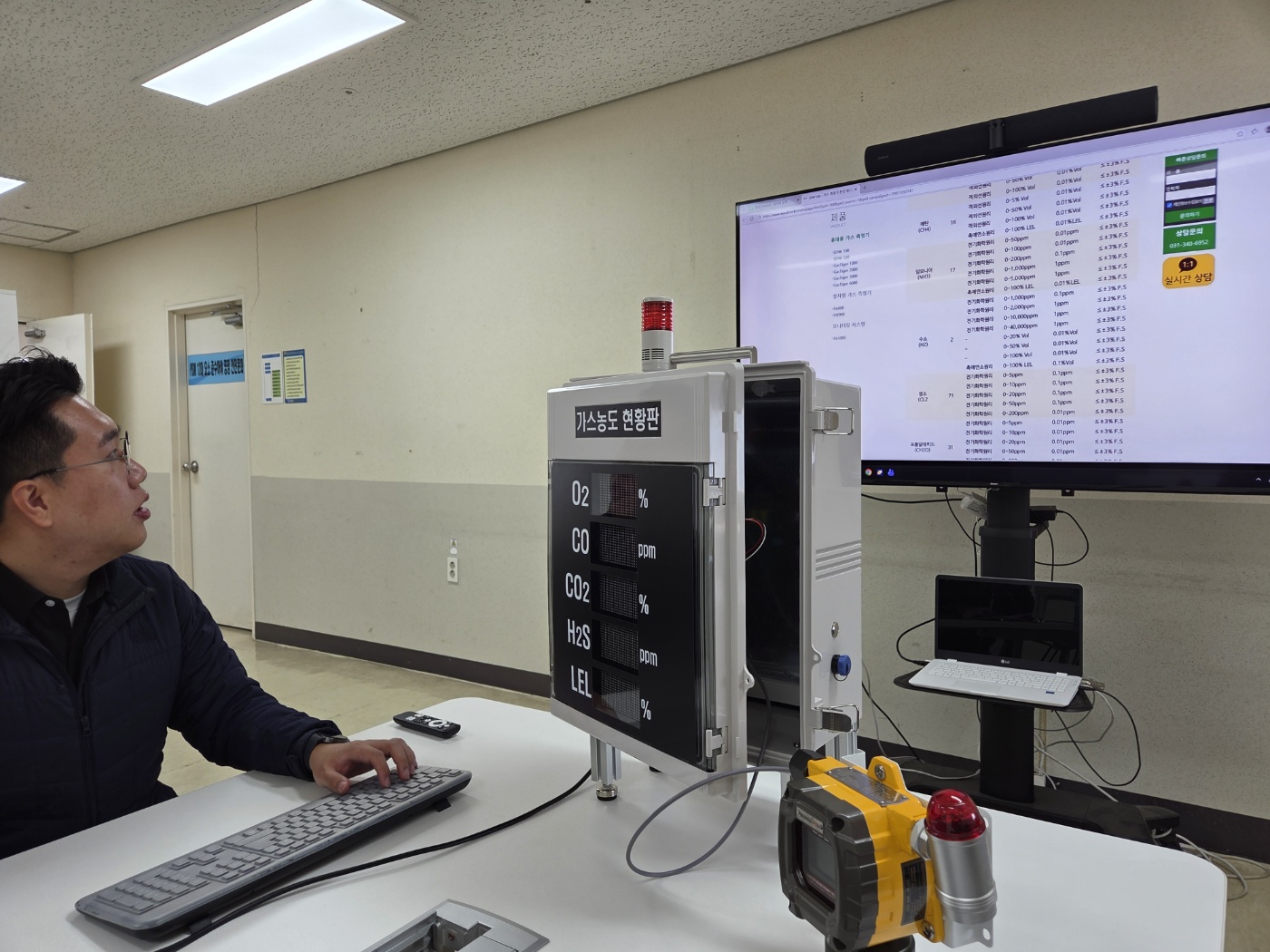
Health Effects by Concentration — Cross These and It's Dangerous
Below are health effects by concentration per the Confined Space Work Manual (2014) and Korea's occupational exposure limits (MOEL notice).
| Gas | Reference | Effects by concentration |
|---|---|---|
| O₂ | Safe 18–23.5% | Below 18% deficiency · 16% headache/nausea · 10% fainting · 6% death within minutes |
| H₂S | TWA 10ppm | 10ppm irritation · 100–200ppm smell paralysis · 700ppm↑ loss of consciousness and death within seconds |
| CH₄ | LEL 5% | 5–15% explosive range · oxygen-displacing asphyxiation at high levels |
| CO₂ | TWA 5,000ppm | 3% headache/faster breathing · 10%↑ loss of consciousness |
| CO | TWA 30ppm | 200ppm headache · 800ppm↑ loss of consciousness/death |
※ KOSHA acceptable air for confined spaces: oxygen 18%+, H₂S ≤10ppm, CO ≤30ppm, combustible gas <10% LEL. Sources: "Confined Space Work Manual" (2014); MOEL exposure-limit notice.
Real Accidents — Recurring Asphyxiation During Tank Cleaning
- November 11, 2025, Cheonan — four staff including the director were asphyxiated at a rehabilitation hospital's water tank (source: News1, 2025).
- Yeongdeungpo-gu, Seoul, sump pit — a coworker and the facility manager who tried to rescue a collapsed worker also collapsed, leaving three dead — the secondary-accident pattern typical of confined spaces.
- Cheongju livestock-farm water tank — two workers in their 20s cleaning the tank lost consciousness and died despite hospitalization.
- Statistics — over 10 years (2012–2021), confined-space asphyxiation caused 348 casualties and 165 deaths (47.4%) (source: Korea MOEL).
What these share: workers entered without measuring gas, assuming "it'll be fine," and collapsed instantly from oxygen deficiency or toxic gas. Often those who rushed in unprotected to rescue a collapsed colleague were also killed. Only a detector that shows gas in real time before entry and during work can prevent this.
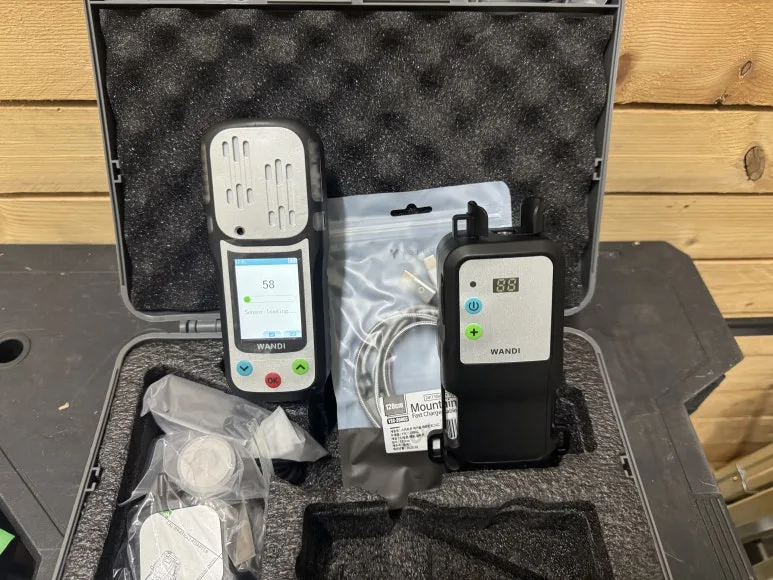
EDW500 Portable 5-Gas Detector — Core of Tank-Cleaning Safety
The WANDI EDW500 is a portable multi-gas detector that workers carry into the tank to check hazards before entry and during work. It measures the five confined-space gases (O₂·CO·H₂S·EX·CO₂) from one unit.
- Simultaneous 5-gas measurement — oxygen, carbon monoxide, hydrogen sulfide, combustible (EX) and carbon dioxide in one unit, meeting Korea's confined-space measurement requirements
- ATEX·IECEx international explosion-proof certification — safe in hazardous areas with methane or solvent vapors (the WANDI EDW500 holds ATEX·IECEx international explosion-proof certification)
- Free IoT wireless (DCMS cloud) — a standby monitor checks the worker's readings remotely in real time, with zero data or subscription fees
- Light, sound and vibration alarms — immediate alerts at dangerous concentrations to prompt evacuation
- Automatic data backup — auto-saves records for safety management

Safe Tank-Cleaning Procedure (Measurement-Centered)
- Measure before entry — use the EDW500 to measure oxygen and toxic-gas levels at the top, middle and bottom of the tank (concentrations vary by height)
- Ventilate — if unacceptable, ventilate thoroughly with a blower, then measure again
- Confirm acceptable air — enter only after confirming oxygen 18%+, H₂S ≤10ppm, combustible <10% LEL
- Continuous monitoring during work — carry the EDW500 to monitor throughout, with a standby monitor stationed outside
- Rescue principle — never enter unprotected in an emergency; rescue only with a supplied-air respirator and rescue equipment
Korea's MOEL also runs a One-Call service (1644-8595) that provides free pre-work gas measurement, safety training and equipment rental for confined-space work — apply by phone up to three days before work.

Closing
The danger of water-tank cleaning is invisible. Oxygen deficiency and hydrogen sulfide lurk even in a clear-looking tank, and the moment you enter without measuring, you can collapse before there is time to recover. The principle of measure before entry → ventilate → re-measure → monitor continuously, and the EDW500 portable 5-gas detector that carries it out, protect the lives of cleaning workers. Contact WANDI (+82-31-340-6952) for EDW500 inquiries and consultation — we will propose the right configuration and quote for your site.