Oxygen (O₂) makes up about 20.9% of normal air; any concentration below 18 %vol is legally defined as "oxygen deficiency" under Korean OSH regulations. In septic tanks, wastewater plants, manholes, fermentation tanks, and server rooms, oxygen levels can drop to lethal ranges within minutes due to microbial respiration, oxidation, or inert-gas (N₂ / CO₂) leaks. According to the Korea Occupational Safety & Health Agency (KOSHA), from 2015 to mid-2022 there were 32 accidents in septic / sludge / wastewater facilities causing 52 worker deaths, with asphyxiation as the #1 cause (21 incidents, 32 deaths). The WANDI FIX800 fixed O₂ detector uses an electrochemical sensor to monitor 0–30 %vol 24/7 and integrates with the FIX-DS display board so workers can verify safety BEFORE entering.
⚠️ 3 Key Takeaways
- O₂ below 6% = immediate death; below 8% = death within 6 minutes. Undetectable by human senses.
- 2015–2022: 52 deaths in Korean septic / wastewater facilities — asphyxiation is the #1 cause (KOSHA / MoEL).
- FIX800 fixed O₂ detector — electrochemical sensor + 24/7 monitoring + FIX-DS external display — blocks accidents before entry.
Part 1. Why Oxygen Deficiency Is Lethal — Environments and Real Accident Cases
Where Does Oxygen Deficiency Occur?
Oxygen levels drop rapidly across many industrial environments due to microbial decomposition, oxidation, and inert-gas leaks. The following sites are classified as confined spaces under Korean OSH regulations:
| Environment | Cause of O₂ Deficiency | Risk Point |
|---|---|---|
| Septic tanks / wastewater | O₂ consumed by organic decay; H₂S / CH₄ generation | Immediate unconsciousness on entry |
| Manholes / sumps / underground pits | Poor ventilation, microbial respiration, heavy-gas accumulation | Ladder fall + secondary rescuer death |
| Laboratories (N₂ storage) | Nitrogen / argon inert-gas leak | Colorless / odorless; rapid pressure-driven drop |
| Server / control / generator rooms | CO₂ suppression-system release | High sealing; insufficient evacuation time |
| Factory automation / coating / cleaning lines | Chemical evaporation, poor ventilation | VOC co-exposure; chronic harm |
| Cold-storage warehouses | Dry-ice storage, refrigerant leak (NH₃ / CO₂) | Low temperature dulls worker senses |
Health Effects by O₂ Concentration — "8 Minutes to Death"
Korean OSH regulations require confined-space oxygen levels to be maintained at 18%–23.5%vol. Below 18 %vol = oxygen deficiency. The lower the concentration, the shorter the time to death:
| O₂ Concentration (%vol) | Health Effect |
|---|---|
| 20.9% (normal) | Normal air oxygen concentration |
| 18–23.5% | Legal safe range for confined-space work (Korean OSH) |
| 16–18% | Increased pulse / respiration, headache, reduced muscle coordination |
| 12–16% | Dizziness, nausea, impaired judgment |
| 10–12% | Unconsciousness, cyanosis, vomiting |
| Below 8% | Death within 6 minutes |
| Below 6% | Immediate respiratory / cardiac arrest → death |
Sources: Korean OSH Standards Rule (MoEL) · Chemical & Physical Agent Exposure Standards (MoEL Notice 2016-41) · KOSHA Confined Space Manual (2014)
Real Accident Cases — Recurring Oxygen Deficiency Tragedies
Case ① 2015–2022 — 52 deaths in septic / waste-processing facilities
According to Korean Ministry of Employment and Labor data, from 2015 to June 2022, septic / sludge / wastewater / liquid-waste processing facilities saw 32 incidents and 52 worker deaths. Asphyxiation was the leading cause with 21 incidents and 32 deaths, most involving simultaneous oxygen deficiency and H₂S exposure.
Sources: Anjunj — "52 deaths in 7 years at septic / waste facilities; asphyxiation #1", KOSHA — Septic Tank Asphyxiation Prevention Guide
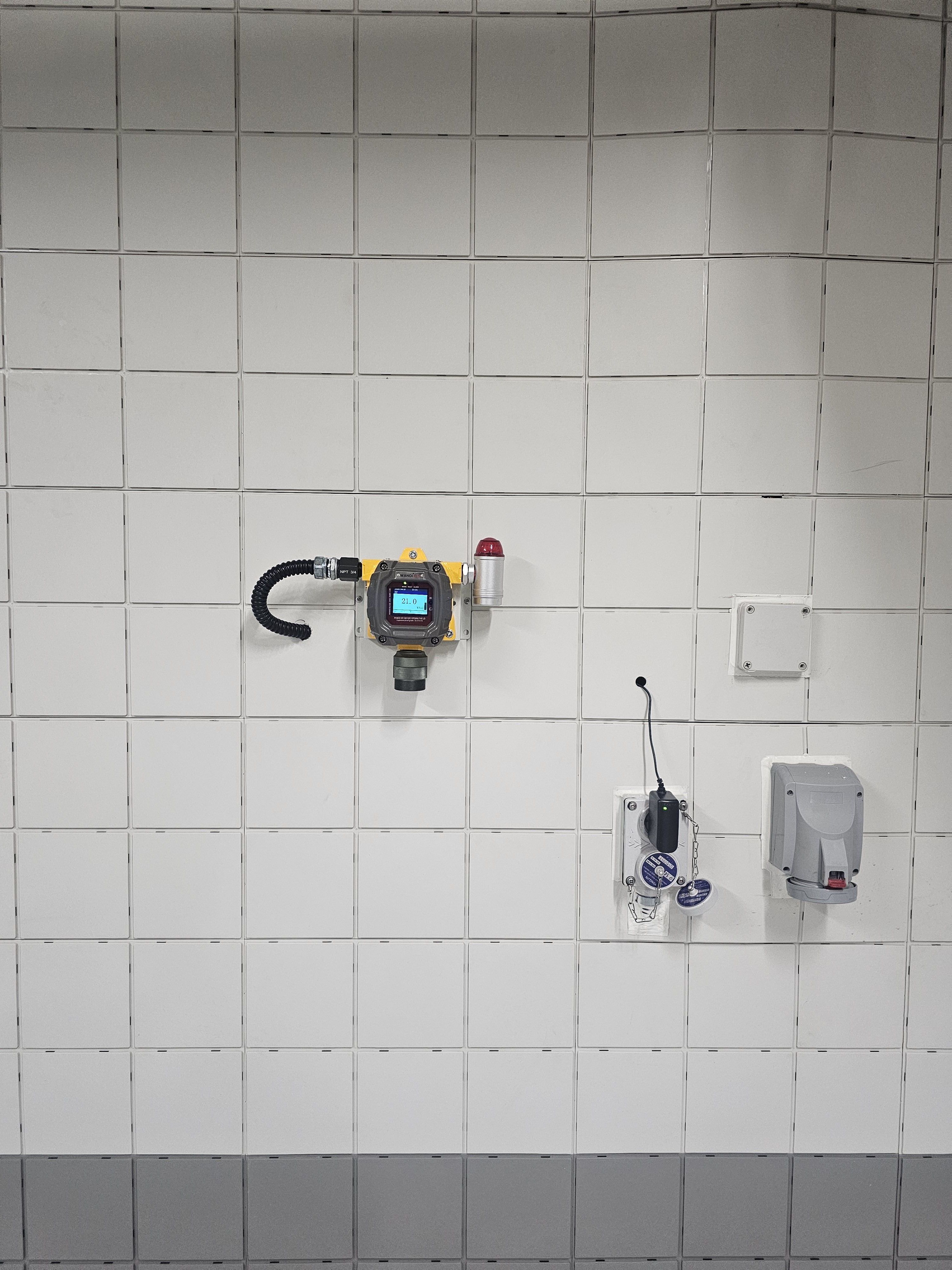
Case ② Daegu Waterworks septic-tank cleaning — 60s worker died
A subcontractor worker in his 60s died while cleaning a septic tank at Daegu Waterworks. Hydrogen cyanide (HCN) was measured at 47 ppm inside — close to the lethal threshold of 50 ppm. Septic tanks are a classic combined risk: oxygen deficiency plus toxic gases simultaneously.
Source: Newsmin — Daegu Waterworks subcontractor death
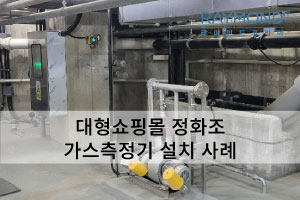
Case ③ Inert-gas leaks in research labs cause oxygen deficiency
Nitrogen (N₂) and argon (Ar) are chemically inert and seem safe, but in confined spaces they rapidly displace oxygen, causing asphyxiation. Labs storing 100 kg+ nitrogen cylinders can see O₂ drop below 18 %vol the moment a leak occurs — continuous monitoring is essential.
📌 Korean OSH Standards Rule (Articles 619–645)
Before confined-space work, employers must measure oxygen (maintain ≥ 18 %vol), provide ventilation, supply PPE, and station a watcher. Violations can lead to up to 5 years imprisonment or KRW 50 million fine; fatal accidents trigger the Serious Accidents Punishment Act.
Conclusion — That's why an O₂ gas detector is essential. Oxygen is colorless, odorless, and tasteless, and below 6 %vol causes immediate unconsciousness — so portable detectors that measure AFTER entry are too late. Only fixed detectors that visualize concentration externally BEFORE entry can prevent these accidents.
Part 2. How FIX800 Fixed O₂ Detector Prevents Accidents
FIX800's Unique Capabilities — Tailored for O₂ Environments
WANDI FIX800 is a fixed-type detector with an electrochemical (EC) O₂ sensor. Seven unique capabilities directly contribute to accident prevention:
| FIX800 Capability | Function in O₂ Environment |
|---|---|
| Electrochemical O₂ sensor | 0–30 %vol precision, 0.1 %vol resolution, auto-calibration |
| 24/7 continuous monitoring | Pre-work reading instantly available; nights and weekends covered |
| Two-stage alarm (1st 18% / 2nd 16%) | Legal threshold LED + buzzer instant alarm → entry blocked |
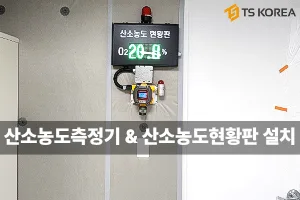
| FIX-DS display integration | External visualization → safety check BEFORE entry |
| Up to 5-gas simultaneous monitoring | O₂ + H₂S + CO + LEL + CO₂ → detects O₂ deficiency + toxic / explosive risk together |
| RS485 Modbus / 4–20 mA | Auto-interlock with control panel / ventilation fan |
| High-strength aluminum housing | Stable in corrosive (sewage / aeration tank) and electrically noisy (server room) environments |
How FIX800 Eliminates Risk in Real Environments
① Septic tanks / wastewater — "before entry" verification
Install FIX800 inside the confined space and the FIX-DS display outside; the worker checks internal O₂ concentration with their own eyes at the entry point. If below 18 %vol, force ventilation and re-measure; only enter when ≥18 %vol. This fundamentally solves the portable-detector limitation of measuring after entry.
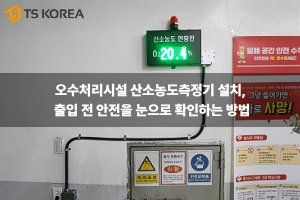
② Server / control / generator rooms — CO₂ suppression release defense
Server and generator rooms have CO₂ fire-suppression systems; malfunction or maintenance leaks cause instant O₂ drops. FIX800 O₂ detectors detect the drop immediately after release, block further entry, and auto-activate ventilation fans to restore safe concentrations.
③ Research labs — inert-gas (N₂ / Ar) leak detection
Nitrogen and argon storage rooms cannot detect leaks by smell. Installing FIX800 O₂ detectors near the storage room entry / ceiling allows 1 %vol-precision detection of O₂ drops, blocking worker entry before exposure.
④ External interlocks — from prevention to active blocking
Wiring FIX800's RS485 Modbus / 4–20 mA / relay outputs to ventilation fans, control panels, and suppression-system safety pins enables automatic ventilation startup when O₂ drops, plus interlocks that block additional gas release. Beyond passive alarms, FIX800 enables an active accident-blocking system.
FIX800 O₂ Model Standard Specifications
| Item | Specification |
|---|---|
| Sensor type | Electrochemical (EC) |
| Measurement range | 0–30 %vol (resolution 0.1 %vol) |
| Alarm setpoints | 1st: 18 %vol (legal threshold) / 2nd: 16 %vol |
| Communication outputs | RS485 Modbus RTU, 4–20 mA, alarm relay |
| Housing | High-strength aluminum, industrial-grade |
| Expansion options | Up to 5-gas (O₂·CO·H₂S·LEL·CO₂), suction pump, FIX-DS display |
| Recommended placement | Inside confined space + external FIX-DS display |
🛡️ FIX800 O₂ Detector — Extending the "8-minute" window
Septic tanks · server rooms · labs · wastewater — custom-fit installation
💬 Request a Free Quote 📋 View FIX800 Details
Phone +82-2-2088-7334 · +82-31-340-6952
Closing — Check Externally Before Entering
Oxygen deficiency accidents share a common pattern: the false judgment of "I'll know when I go in." Below 6 %vol, unconsciousness is irreversible, and secondary rescuer deaths repeat. FIX800 visualizes O₂ concentrations on an external display before entry — blocking the first step of the accident chain. It is the most reliable solution to automatically satisfy the "pre-work measurement" requirement under Korean OSH regulations and the Serious Accidents Punishment Act.
Frequently Asked Questions (FAQ)
Q1. Where must an O₂ gas detector be installed?
Under Article 619 of the Korean OSH Standards Rule, septic tanks, wastewater facilities, manholes, sumps, underground pits, aeration tanks, and anaerobic digesters require pre-work oxygen measurement. A fixed O₂ detector + display board is recommended. Server / generator rooms with CO₂ suppression and labs storing inert gases (N₂ / Ar) are also required environments.
Q2. At what concentration does O₂ become dangerous?
Korean OSH regulations require confined-space O₂ to be 18–23.5 %vol. Below 18% = oxygen deficiency. 16–18% causes headache; 12–16% causes dizziness; 10–12% causes unconsciousness; below 8% causes death within 6 minutes; below 6% causes immediate death.
Q3. What sensor type and measurement range does the FIX800 O₂ model use?
FIX800 O₂ uses an electrochemical (EC) sensor with a range of 0–30 %vol and 0.1 %vol resolution. Auto-calibration ensures long-term stability. Default alarms are 1st: 18 %vol (legal threshold), 2nd: 16 %vol — automatically satisfying Korean OSH requirements.
Q4. Aren't portable O₂ detectors enough?
Portable detectors only reveal concentration after a worker has entered the confined space — only reactive response is possible. FIX800 fixed-type visualizes internal O₂ on an external FIX-DS display BEFORE entry, blocking the risk itself. 24/7 unattended monitoring also covers nights and weekends.
Q5. In septic tanks / wastewater plants, is measuring O₂ alone enough?
No. Septic tanks and wastewater plants generate oxygen deficiency alongside toxic / explosive gases such as H₂S, CH₄, and NH₃. FIX800 can measure O₂ + H₂S + CO + LEL + CO₂ (up to 5 gases) in one unit, effectively handling combined hazards.
Q6. Why is an O₂ detector needed in server / control rooms?
Server rooms often have CO₂ or clean-agent (Novec, FM-200, etc.) gas suppression systems. Malfunction or maintenance leaks can rapidly drop O₂ to unconsciousness levels. FIX800 O₂ detectors detect the drop instantly and auto-activate ventilation while blocking further entry.
Q7. Can FIX800 interlock with ventilation fans or central control panels?
Yes. RS485 Modbus RTU, 4–20 mA, and alarm relay outputs enable auto-interlock with control panels, ventilation fans, and suppression-system safety pins. When O₂ drops below 18 %vol, ventilation auto-starts; below 16 %vol, interlocks block additional gas release — creating an active accident-blocking system.
Q8. How can I request a FIX800 O₂ detector quote?
Visit the WANDI quote page (wandi.co.kr/en/quote) and enter your site environment (location, multi-gas requirement, quantity) to receive a custom quote within 1–2 business days. Phone consultation: +82-2-2088-7334 or +82-31-340-6952.