Applied Markets
Installed Gases
Project Details
GasTiger 2000 — Wastewater Treatment Plant Portable Gas Detector Delivery (NH₃ / H₂S / CH₃SH / O₂ / EX) (Gyeongju, Gyeongbuk)
This case covers portable gas detector deliveries to a wastewater treatment plant in Gyeongju, Gyeongsangbuk-do.
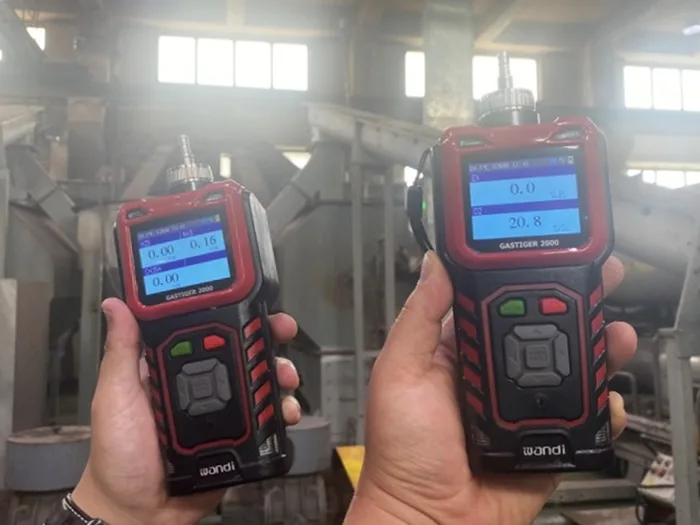
Two Purposes — Odor Measurement and Confined-Space Safety
Two separate GasTiger 2000 units were supplied: one for odor gas quantification during sludge operations, and one for worker safety monitoring in confined spaces.
Supplied Configuration
Odor measurement unit (GasTiger 2000):
- NH₃ (ammonia): 0–50 ppm
- H₂S (hydrogen sulfide): 0–50 ppm
- CH₃SH (methyl mercaptan): 0–10 ppm
Confined-space safety unit (GasTiger 2000):
- O₂ (oxygen): 0–30% vol
- EX (combustible gas): 0–100% LEL
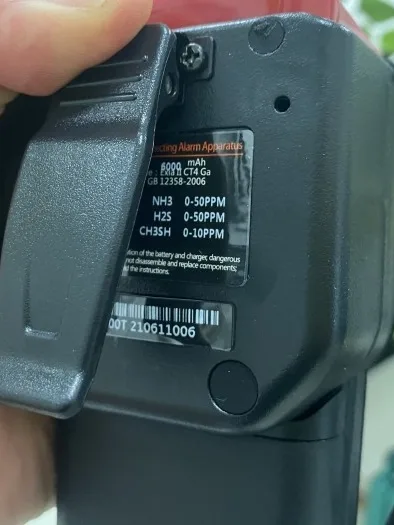
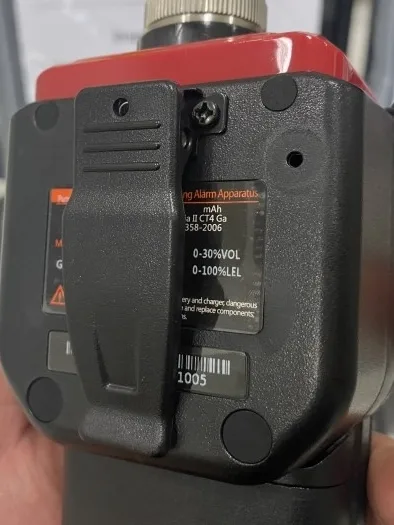
The two-instrument approach allows toxic odor precursor concentrations to be quantified accurately while simultaneously verifying that oxygen levels remain safe for confined-space entry — objectives that cannot be equally served by a single sensor combination.
Methyl Mercaptan (CH₃SH) — Powerful Odor at Trace Levels
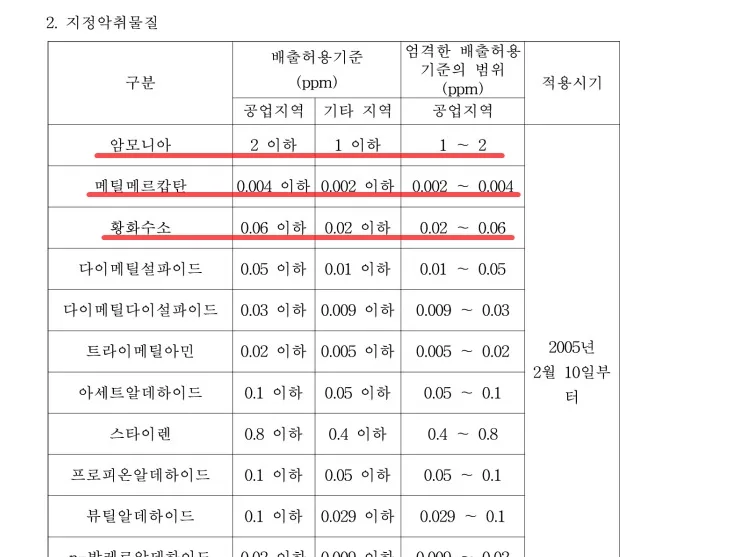
Methyl mercaptan produces intense odor at extremely low concentrations and is notoriously difficult to measure reliably with portable instruments due to adsorption losses. The GasTiger 2000 and 6000 support a 0–10 ppm CH₃SH sensor for reliable measurement of this compound.
On-Site Measurement — NH₃ Above 0.5 ppm Even with Ventilation Running
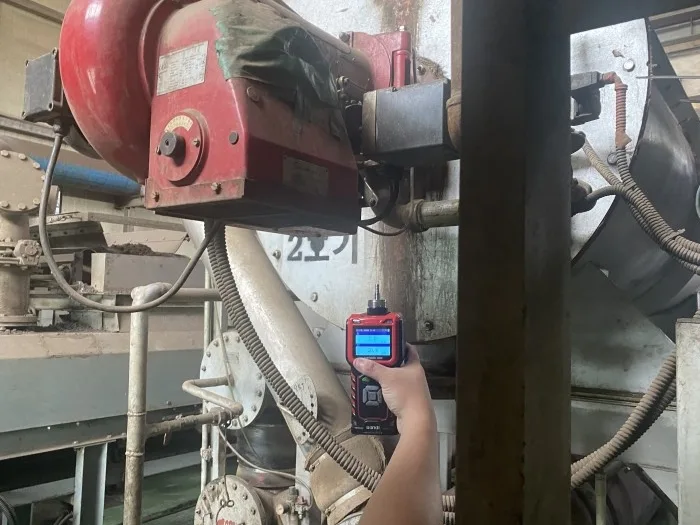
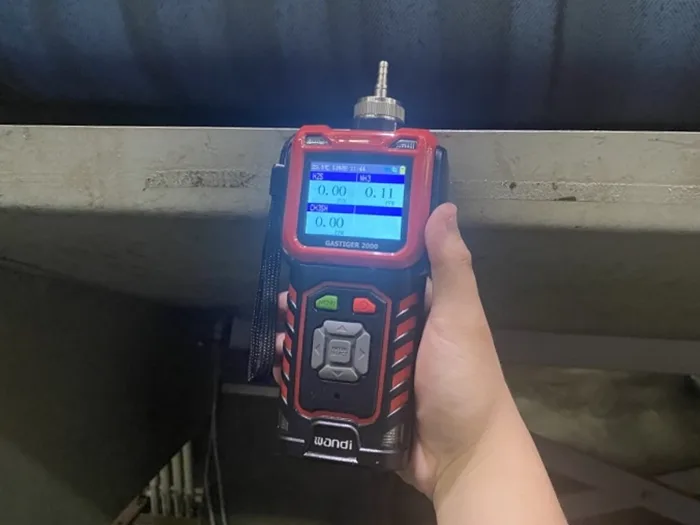
Photos taken on-site at the treatment plant. Even with ventilation systems operating, NH₃ concentrations exceeded 0.5 ppm near the process area. With ventilation stopped, other gas concentrations would be expected to rise significantly as well.
On-Site Training Included with Delivery
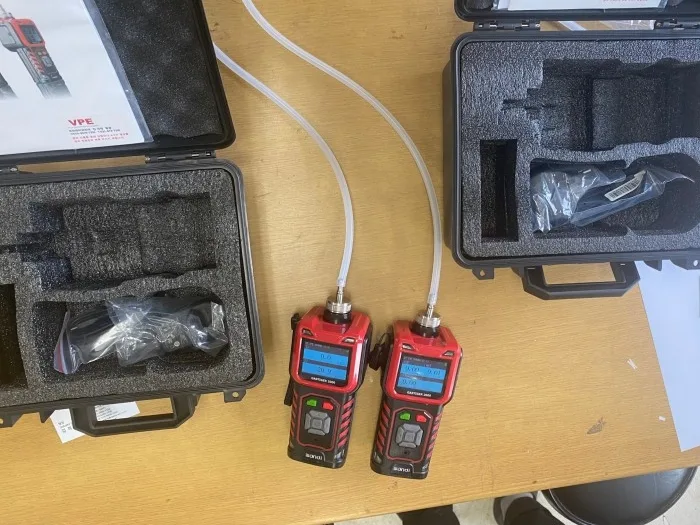
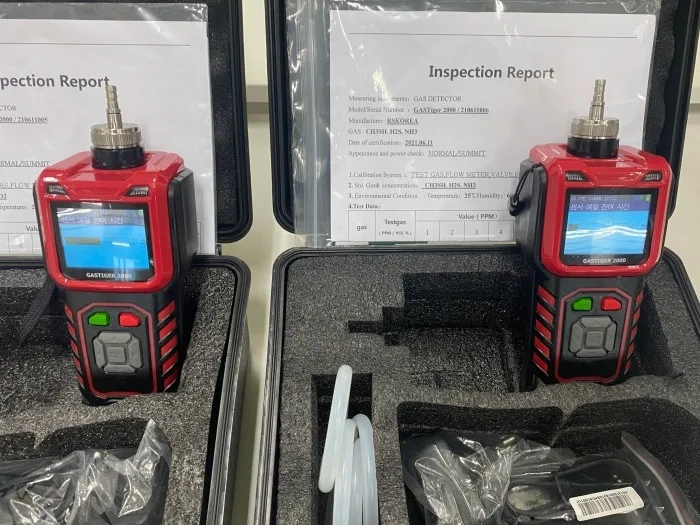
Most deliveries are made by direct site visit. Incorrect instrument operation shortens sensor life significantly, and given the value of the equipment, hands-on operator training is provided at the point of delivery — the operator performs actual measurements and configuration under guidance until they are confident to use the instrument independently.
Frequently Asked Questions
Q1. Why were two separate instruments used instead of one for this application?
Odor measurement (NH₃, H₂S, CH₃SH) requires low-range, high-sensitivity sensor combinations. Confined-space safety (O₂, EX) requires broad range and fast response. Combining both objectives in a single 4-sensor unit would compromise either range or resolution. Two purpose-configured instruments provide better performance for each task.
Q2. Why is methyl mercaptan particularly difficult to measure?
CH₃SH produces intense odor at sub-ppm levels but has relatively low electrochemical reactivity, making it difficult to detect reliably. It also adsorbs onto sampling tubing, causing signal attenuation. A dedicated sensor with appropriate materials and geometry is required for stable measurement.
Q3. What does NH₃ detection above 0.5 ppm during active ventilation indicate?
It confirms that ammonia is being generated continuously from sludge decomposition. Detection at 0.5 ppm under ventilated conditions means concentrations could rise substantially when ventilation is reduced or stopped. While well below the TWA limit of 25 ppm, long-term low-level exposure and the combined effect with other toxic gases make continuous monitoring important.
Q4. Which gas poses the greatest acute hazard during sludge operations?
H₂S (hydrogen sulfide) is the most acutely dangerous. It produces a recognizable odor at low concentrations, but above approximately 100 ppm the olfactory nerve is paralyzed — workers can no longer smell it even at lethal concentrations. Korea's OSHA TWA is 1 ppm. CH₃SH (TWA 0.5 ppm) also requires careful attention.
Q5. What does the on-site training at delivery cover?
Training covers powering on the instrument, confirming sensor warm-up, setting alarm thresholds, verifying real-time readings in the actual measurement environment, and reviewing data storage and retrieval. Hands-on operation by the site operator during the training session ensures they can use the instrument correctly from day one.
#WastewaterOdorMonitor #GasTiger2000 #AmmoniaDetector #H2SDetector #MethylMercaptanMeasurement #ConfinedSpaceSafety #SludgeOdorManagement #IndustrialSafety #WANDI #Gyeongju
![[레이먼드] 오,폐수 처리실 유해가스 모니터링](https://wandi.co.kr/storage/construction-cases/YxFUQVBZ8Unnk7pJzzfsmezr6xNe0LZvQRDmt7TL.jpg)
![[브이피이코리아] 종합병원 지하 밀폐공간 가스 측정기 설치_FIX800 & FIX-DS](https://wandi.co.kr/storage/construction-cases/gNOA28xSlEy5uU3AOxyHDRH5UfAe0TpMTgAt4Uag.jpg)

