Applied Markets
Installed Gases
Project Details
Hello. This is our team.
Today's post covers the installation of a 5-gas detection system to help prevent asphyxiation accidents among workers in confined spaces. Starting with a branch in Wonju, Gangwon-do, installations have been carried out at branches throughout Seoul, and following this installation we expect the system's practicality to be evaluated with a view to expanding it to all branches.
This installation was carried out at another branch of the same company, so the scope of work and the installation method are the same as in our previous post on this project.
Introduction
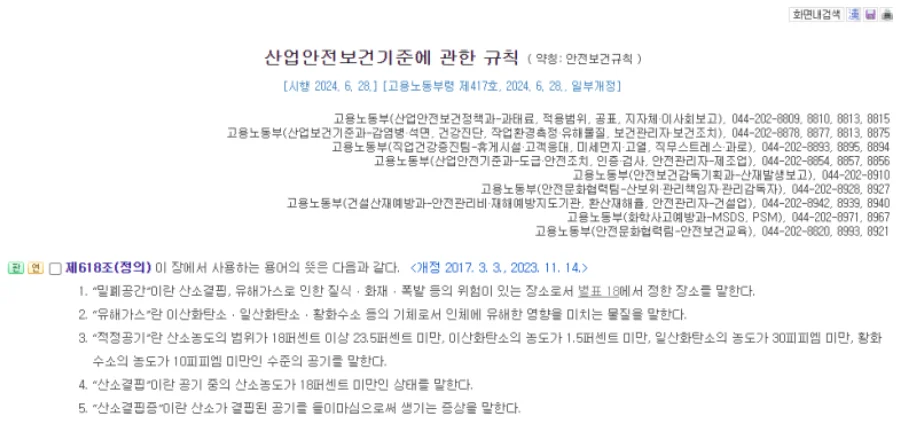
Under Article 618 of the Occupational Safety and Health Standards Rules, this project measures five gases to help prevent asphyxiation accidents in confined spaces: O2 (oxygen), CO (carbon monoxide), CO2 (carbon dioxide), H2S (hydrogen sulfide), and EX (combustible gas).
This project took place at the Dongjak building, a site that head office pays particularly close attention to. We were asked to make worker safety — both preventing asphyxiation accidents and ensuring safety during the installation work itself — the top priority. Rest assured, our team always does its best to protect worker safety on every site.
The products installed are as follows.
- Fixed-type gas detector: FIX800 5-Gas
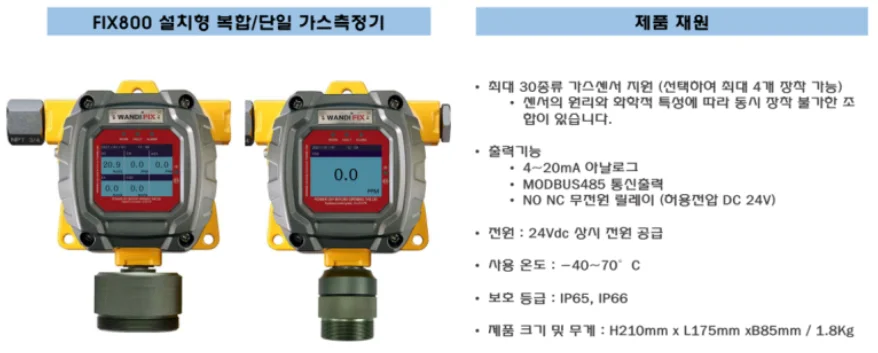
The FIX800 is a fixed-type multi-gas/single-gas detector. Users can select and mount the sensors they need; when a CO/H2S dual sensor is installed, the unit can measure up to five gases simultaneously — O2, CO, H2S, EX, and CO2 — meeting the five-gas requirement under Korean safety regulations, all with a single device.
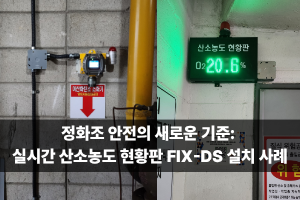
- FIX800 dedicated monitoring display: FIX-DS
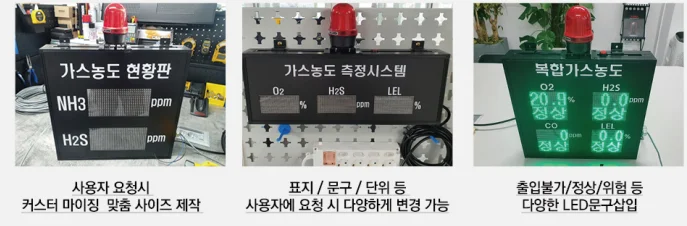
The FIX-DS is a dedicated monitoring display for the FIX800, featuring a highly visible LED display. Since the FIX800 itself is a made-to-order product built to each customer's specifications, this display can also be manufactured and customized to match the detector.
With at least these two components in place, the system allows for evacuation and response whenever there is a risk of an asphyxiation accident, both before and during work in a confined space.
Preparation
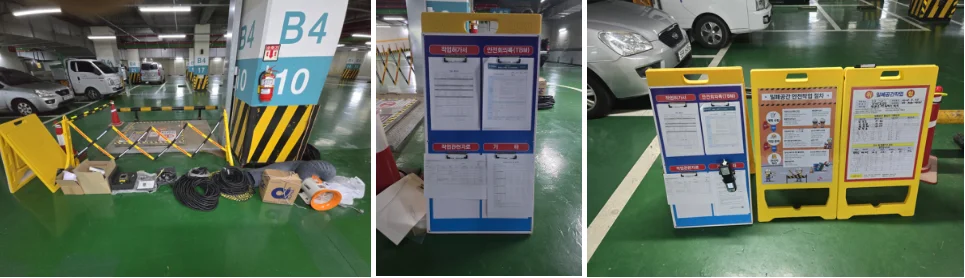
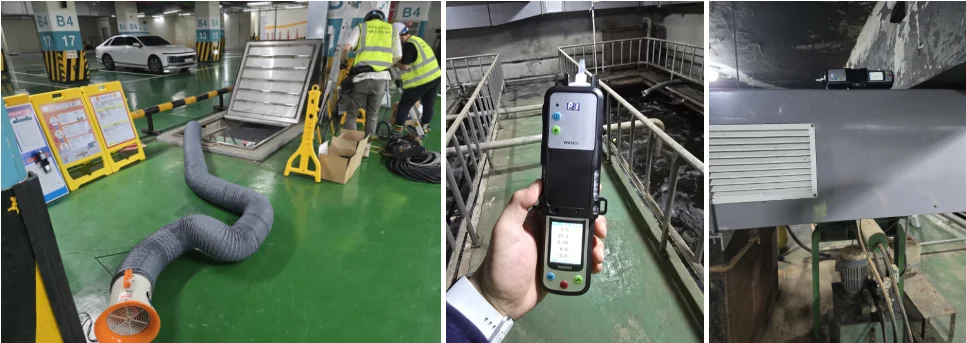
We began by preparing for the work. Today's equipment included the detectors and display panel to be installed, along with communication cabling, power cabling, and waterproof corrugated conduit. We also prepared safety signage and a ventilation blower for the confined-space work. The safety signage included documents such as confined-space worker safety training records, a workplace risk assessment, the on-site representative's credentials, and a work permit in the customer's own format.
During the Work
Before entering the confined space, we supplied oxygen with a blower for 15 minutes. We then carried a portable pump-type multi-gas detector, the EDW500, down into the space to check whether it was safe to work in. Readings were normal, so there was no issue proceeding with the work. After measuring, we left the detector on site — we will explain the excellent reason for that a little later.
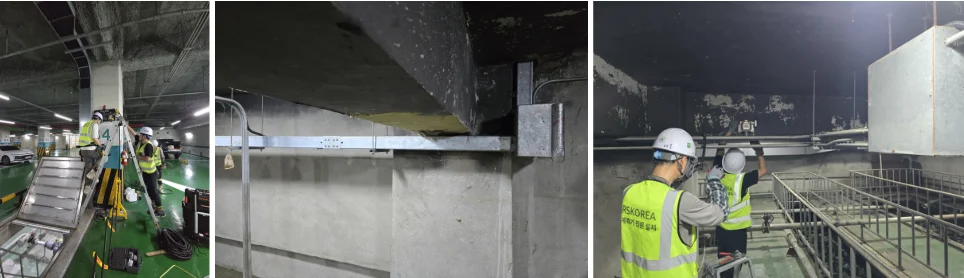
We split into two teams to install the display panel and the detector at the same time. The route to the display panel and detector mostly runs along cable trays, and since the trays were at eye level, the work was simplified.
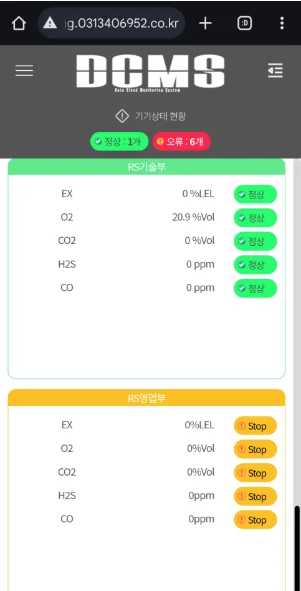
Gas concentration inside the confined space is measured once every hour. Because the IoT multi-gas detector EDW500, fitted with a USIM card, was left on site, readings can be checked in real time from outside the workspace. The customer was interested to see that gas concentration could be checked remotely via mobile, so after finishing the work we sent them a proposal. That is a topic we will cover in more detail in a future post.
Work Completed
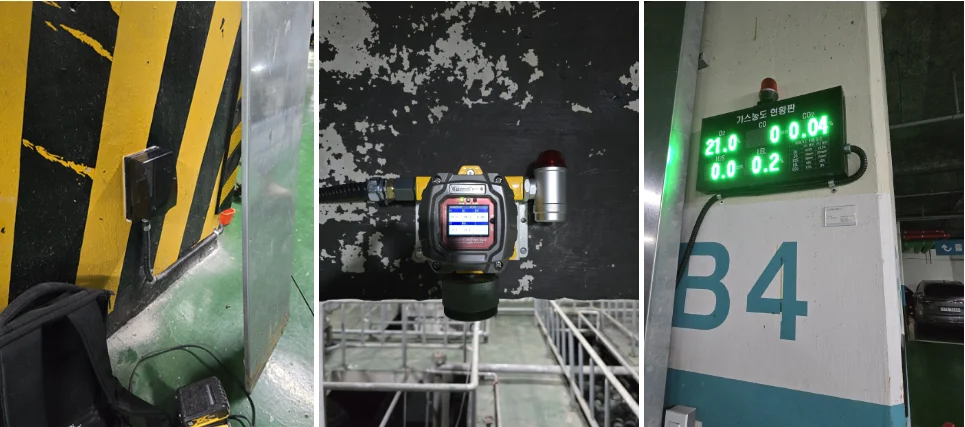
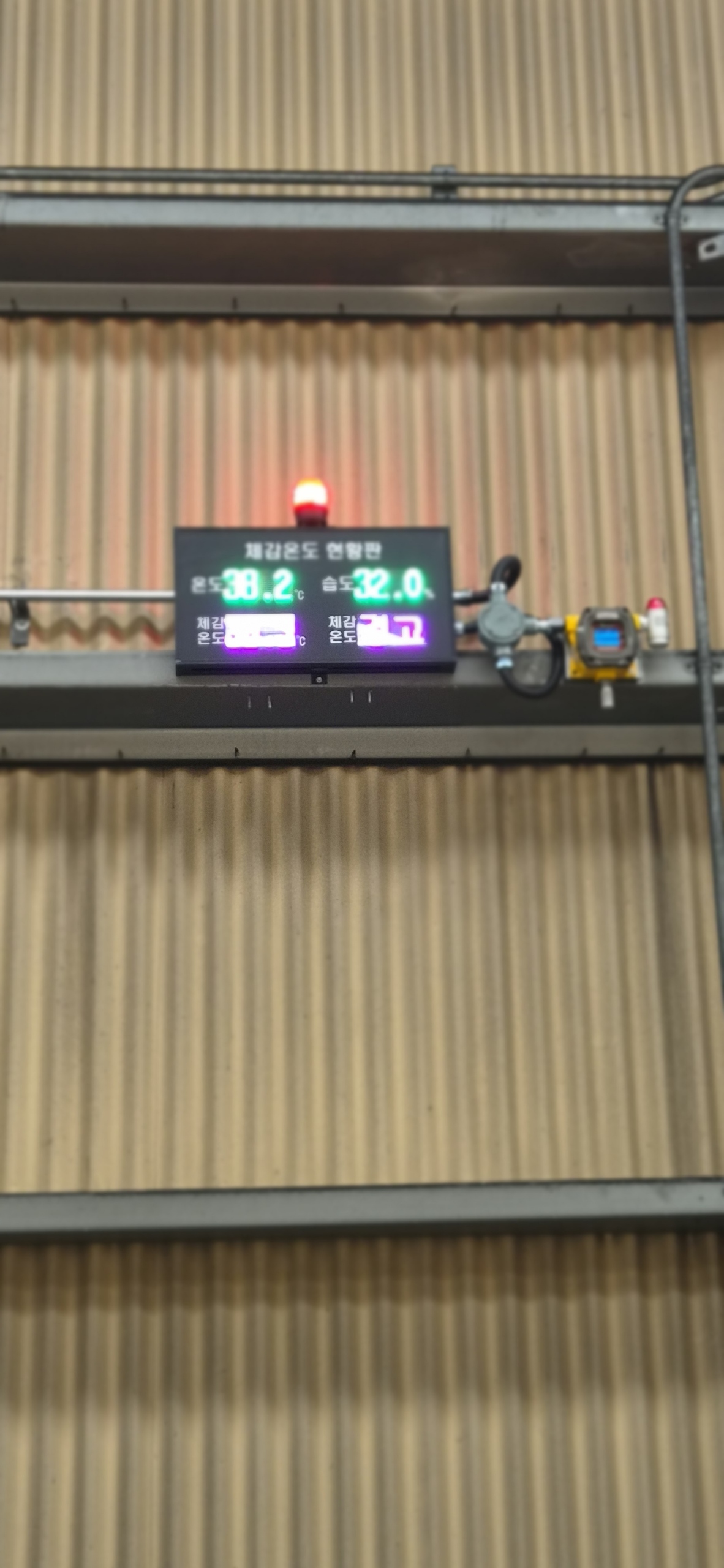
Power is supplied from an outlet behind the pillar where the display panel is installed. Both the detector and the display panel can be seen operating normally. This completed two wastewater-treatment-room installation projects within the building, from safety preparation through installation and commissioning.
Closing
The fact that installations of gas concentration detectors for worker safety are increasing reflects a growing national awareness of safety. In that spirit, our team is committed to continuously improving our work methods to keep pace with the times.
For inquiries about industrial safety gas detectors or other environmental measuring instruments, please get in touch with our team. Have a safe day, and thank you.
What gases does the FIX800 measure in this installation?
With a CO/H2S dual sensor installed, the FIX800 measures five gases simultaneously — O2, CO, H2S, EX (combustible gas), and CO2 — meeting the five-gas requirement under Korea's confined-space safety regulations.
How many sensor slots does the FIX800 have?
The FIX800 has 4 sensor slots, supporting up to 4 gases, or 5 gases when a combined CO+H2S dual sensor is used in one of the slots, as in this installation.
What is the FIX-DS?
The FIX-DS is the dedicated monitoring display for the FIX800. It is built to order to match the detector and can be customized with a high-visibility LED display.
Why was a portable detector left on site after installation?
An IoT multi-gas detector, the EDW500, fitted with a USIM card, was left on site so that gas concentration inside the confined space could continue to be checked in real time — even from outside the workspace — once every hour.
Can this type of system be customized for other facilities?
Yes. The FIX800 is a made-to-order detector that lets customers select the sensors they need, and the companion FIX-DS display can be manufactured and customized to match.
#WANDI#FIX800#GasDetector#ConfinedSpaceSafety#WastewaterTreatment#IndustrialSafety#MultiGasDetector#GasMonitoring#OccupationalSafety#FixedGasDetector
![[레이먼드] 오,폐수 처리실 유해가스 모니터링](https://wandi.co.kr/storage/construction-cases/YxFUQVBZ8Unnk7pJzzfsmezr6xNe0LZvQRDmt7TL.jpg)
![[브이피이코리아] 종합병원 지하 밀폐공간 가스 측정기 설치_FIX800 & FIX-DS](https://wandi.co.kr/storage/construction-cases/gNOA28xSlEy5uU3AOxyHDRH5UfAe0TpMTgAt4Uag.jpg)

