Applied Markets
Installed Gases
Project Details
Hello. Today's case introduces the measurement of ClO₂ (chlorine dioxide).
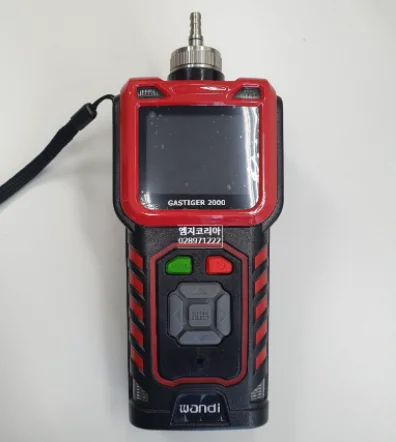
Gas accidents that occur frequently at industrial sites are frightening incidents — inhaling a specific gas over a long period in an enclosed space can seriously affect the body and, in severe cases, lead to death. Being properly prepared to prevent such accidents is always essential. The product introduced today is the Wandi GasTiger 2000.
To briefly explain ClO₂: chlorine dioxide is a substance used as a disinfectant, bleach, and sanitizer, and it carries relatively low risk to the human body. Because it disinfects through an oxidation reaction, it does not generate the byproducts associated with chlorine-based disinfectants — an advantage of ClO₂.
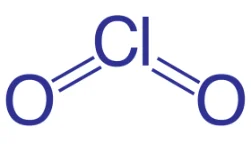
At this point you might wonder: if it's used as a disinfectant and has low risk to the body, what's the concern? However, at higher concentrations the picture changes. General consumers never come into contact with concentrated ClO₂ solution, and its safety to the human body is based on trace-level exposure. For example, ClO₂ used to disinfect drinking water is present at roughly 1 ppm — about 0.0001% of the total. If exposed to ClO₂ in air at around 45 ppm, severe eye and nose irritation occurs, and exposure above 350 ppm can be life-threatening.
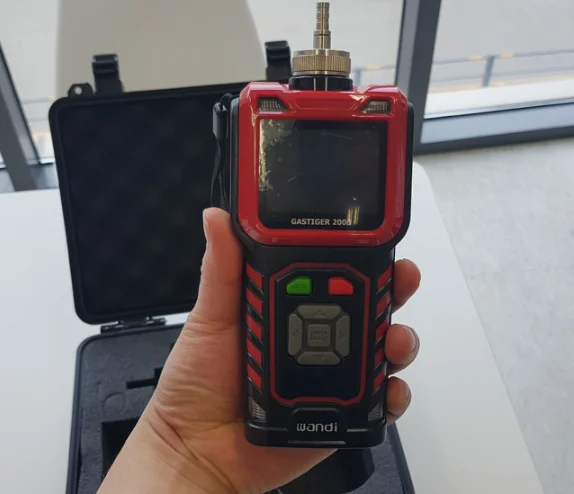
This is why the GasTiger 2000 gas detector was prepared — it detects and measures gas in the surrounding air to protect users from hazardous exposure. In emergency situations, it provides a faster hazard-level reading than most other equipment. Its excellent repeatability allows for reliable repeated measurements, its accuracy makes the measurement data trustworthy, and it supports data storage. Depending on the site, it can be configured with only 2–3 sensors, or as a single-sensor unit.
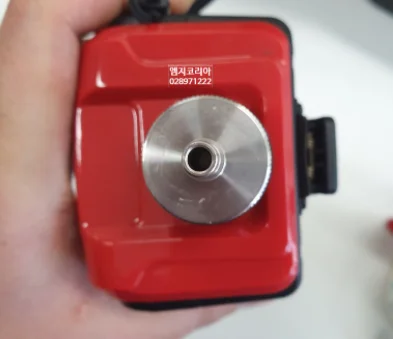
Through its built-in pump, the unit can quickly draw in gas for measurement. Because the pump can be switched on or off, gas measurement is possible in a variety of environments, and users can freely start or stop the pump as needed.
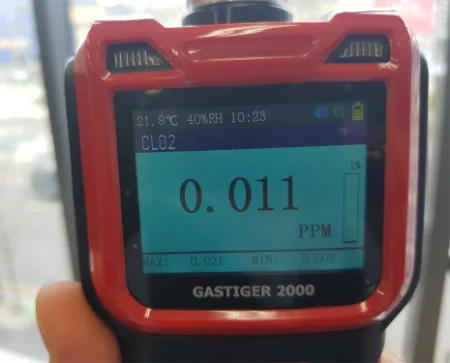
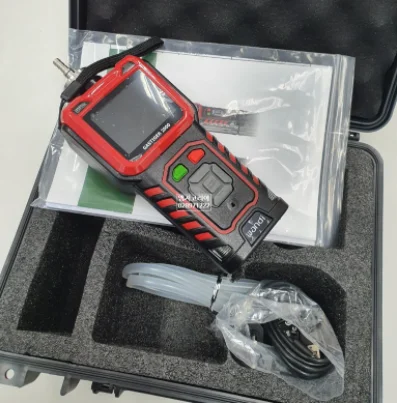
The GasTiger 2000 gas detector supports individual alarm settings for each sensor, and its three alarm types — audible, vibration, and LED — ensure that alarms are reliably triggered even in harsh industrial environments, helping support safe work.
Frequently Asked Questions (FAQ)
What is chlorine dioxide (ClO₂)?
ClO₂ is a substance used as a disinfectant, bleach, and sanitizer. Because it disinfects through an oxidation reaction, it does not produce the byproducts associated with chlorine-based disinfectants.
Is ClO₂ hazardous to the human body?
At trace levels — such as roughly 1 ppm used in drinking water disinfection (about 0.0001% of the total) — risk is low. However, risk increases sharply at higher concentrations: exposure to ClO₂ in air at around 45 ppm causes severe eye and nose irritation, and exposure above 350 ppm can be life-threatening.
How does the GasTiger 2000 measure ClO₂?
The GasTiger 2000 uses a built-in pump to quickly draw in gas for measurement. The pump can be switched on or off, allowing measurement across a variety of environments.
How is the GasTiger 2000 sensor configuration set up?
Depending on the site, the unit can be configured with only 2–3 sensors, or as a single-sensor unit.
What alarm features does the GasTiger 2000 have?
Each sensor supports individual alarm settings, with three alarm types — audible, vibration, and LED — ensuring alarms are reliably triggered even in harsh industrial environments.
#GasTiger2000#ClO2#ChlorineDioxideDetector#PortableGasDetector#IndustrialSafety#GasAccidentPrevention#DisinfectantGasDetection#YeongdeungpoDelivery#SeoulInstallation#WANDI
![[레이먼드] 오,폐수 처리실 유해가스 모니터링](https://wandi.co.kr/storage/construction-cases/YxFUQVBZ8Unnk7pJzzfsmezr6xNe0LZvQRDmt7TL.jpg)
![[브이피이코리아] 종합병원 지하 밀폐공간 가스 측정기 설치_FIX800 & FIX-DS](https://wandi.co.kr/storage/construction-cases/gNOA28xSlEy5uU3AOxyHDRH5UfAe0TpMTgAt4Uag.jpg)

