Applied Markets
Installed Gases
Project Details
Incubator CO₂ Detector Delivery — Pharmacy Department Laboratory (Daejeon)
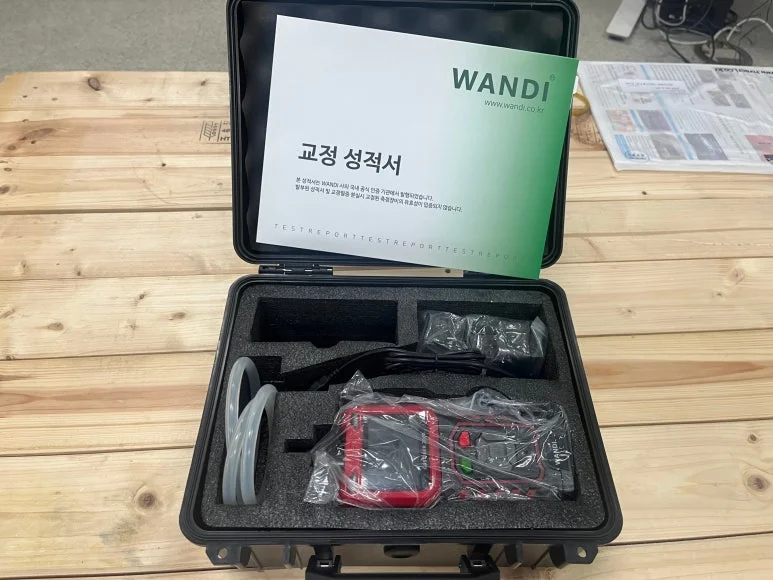
This case covers a portable CO₂/O₂ detector delivery for incubator monitoring at a university pharmacy department laboratory in Daejeon. Managing CO₂ levels inside laboratory incubators is critical for reliable experimental results, and this delivery introduces the GT2000 portable detector — capable of fast, accurate carbon dioxide measurement for incubator applications.
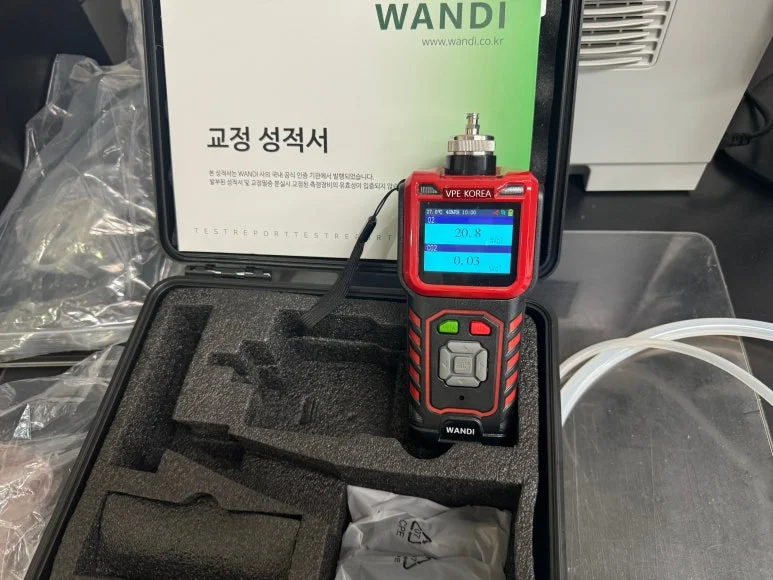
The detector was supplied to a university pharmacy department laboratory in Daejeon. Full specifications are listed below.
Delivery Specifications
| Specification | Details |
|---|---|
| Model | Portable multi-gas detector GT2000 |
| Measurement range | CO₂ 0–20% / O₂ 0–30% |
| Measurement method | Gas-aspirated (pump suction) type |
| Data management | Excel file download |
| Advantages | Fast response time and accurate reproducibility |
| Recipient | University pharmacy department laboratory |
| Location | Daejeon |
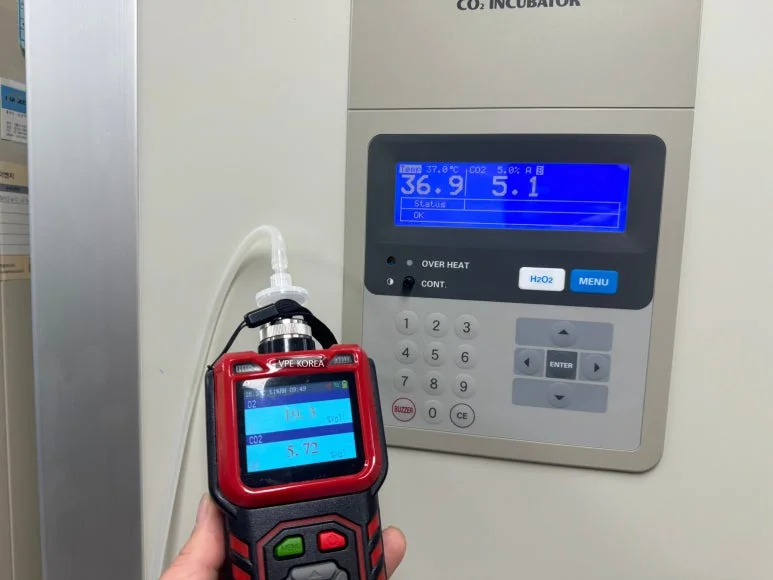
Why CO₂ Management Matters in Laboratory Incubators
CO₂ management in incubators is critical across many life-science and medical applications, including cell culture and neonatal care.
1. pH Regulation
Most cell cultures rely on a CO₂-bicarbonate buffering system to keep the pH of the growth medium stable. A concentration of around 5% CO₂ is typically required; if the concentration is too high or too low, the resulting pH shift can damage the cells.
2. Optimizing Cell Viability and Growth
An appropriate CO₂ concentration is necessary for normal cell metabolic activity and proliferation.
3. Ensuring Reproducible Experimental Results
Stable CO₂ levels are required to ensure data reliability across cell culture experiments.
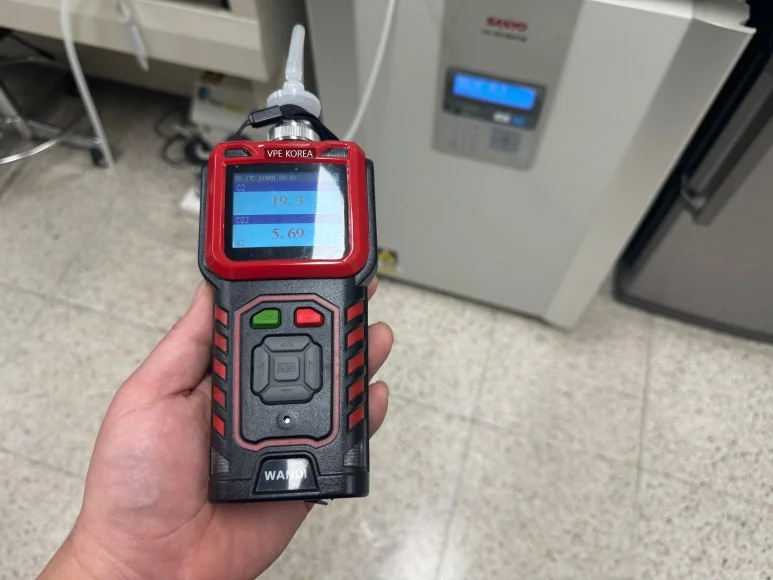
Moisture Management and Filtration
When gas is drawn from inside a CO₂ incubator for measurement, a certain amount of moisture is aspirated along with the sample.
If moisture continues to enter the sensor, it can shorten sensor life and reduce measurement accuracy. A moisture removal filter must therefore be installed whenever measurements are taken.
The GT2000 includes a micron filter that removes moisture and dust from the sampled gas.
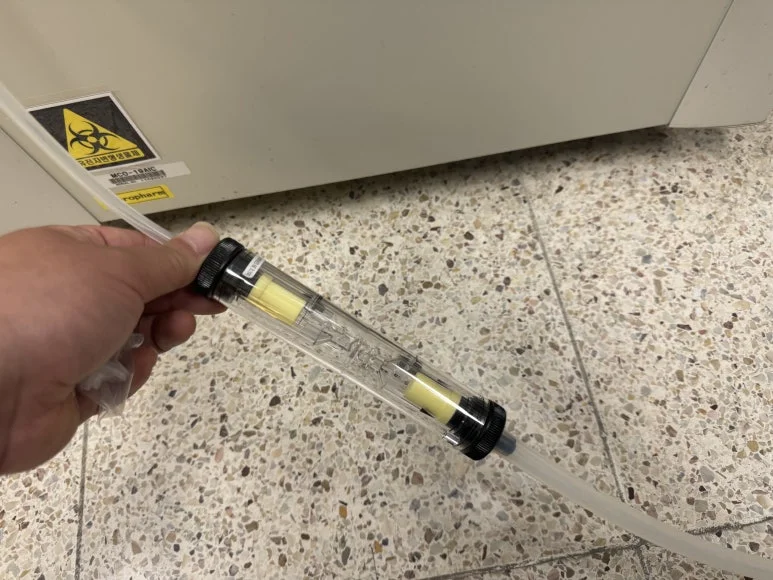
For extended monitoring periods, a condensation trap with greater moisture removal capacity should be used to remove moisture before measurement.
Frequently Asked Questions
Why is external CO₂ verification needed if the incubator already has a built-in sensor?
Built-in incubator sensors can experience drift over time due to aging, contamination, or calibration lapses. Periodic external verification using a calibrated portable detector identifies any discrepancy before it compromises experimental results, supporting research quality assurance.
What CO₂ concentration is typically maintained in cell culture incubators?
Standard cell culture protocols typically use around 5% CO₂ to regulate the pH of bicarbonate-buffered growth media, though specific requirements vary by cell type and experimental protocol.
Is the GT2000 suitable for measuring multiple incubators across a laboratory?
Yes. The portable design allows the same detector to be used for spot-check verification across multiple incubators and laboratory stations, providing flexible and cost-effective monitoring coverage.
Why does the GT2000 include a moisture filter?
Because gas drawn from inside a CO₂ incubator carries moisture along with it, continuous exposure can shorten sensor life and reduce accuracy. The built-in micron filter removes moisture and dust from the sample, and a condensation trap is recommended for extended monitoring sessions.
#IncubatorCO2Detector #GT2000PortableDetector #PharmacyLabResearch #CellCultureCO2Monitoring #DaejeonDelivery #MoistureFilterGasDetector #O2CO2PortableDetector #WANDIKorea
![[레이먼드] 오,폐수 처리실 유해가스 모니터링](https://wandi.co.kr/storage/construction-cases/YxFUQVBZ8Unnk7pJzzfsmezr6xNe0LZvQRDmt7TL.jpg)
![[브이피이코리아] 종합병원 지하 밀폐공간 가스 측정기 설치_FIX800 & FIX-DS](https://wandi.co.kr/storage/construction-cases/gNOA28xSlEy5uU3AOxyHDRH5UfAe0TpMTgAt4Uag.jpg)

