Applied Markets
Installed Gases
Project Details
University Building Carbon Dioxide Storage Room — O₂/CO₂ Gas Detector Installation (Seoul)
This installation covers an O₂/CO₂ gas detector system at a carbon dioxide storage room within a university building in Seoul. Buildings using carbon dioxide as a fire suppression agent are required, under Korea's Occupational Safety and Health Standards (Ministry of Employment and Labor Ordinance No. 367), to install CO₂ gas detectors in the protected area.
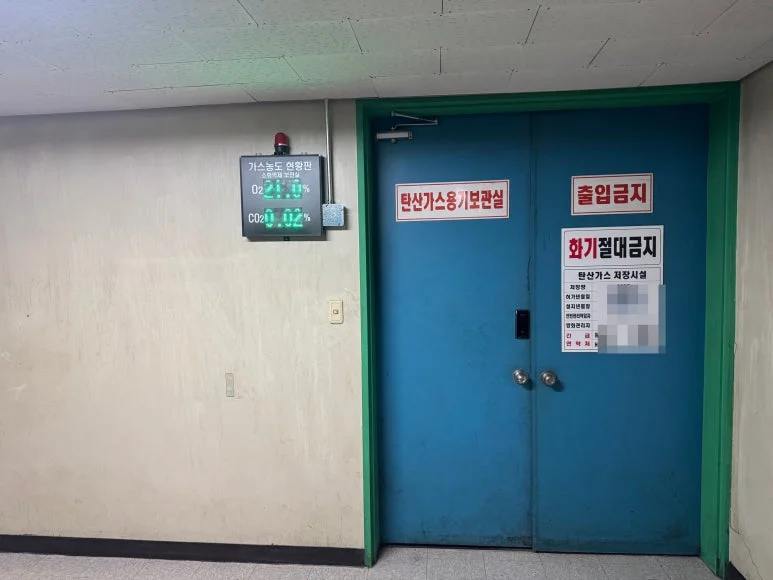
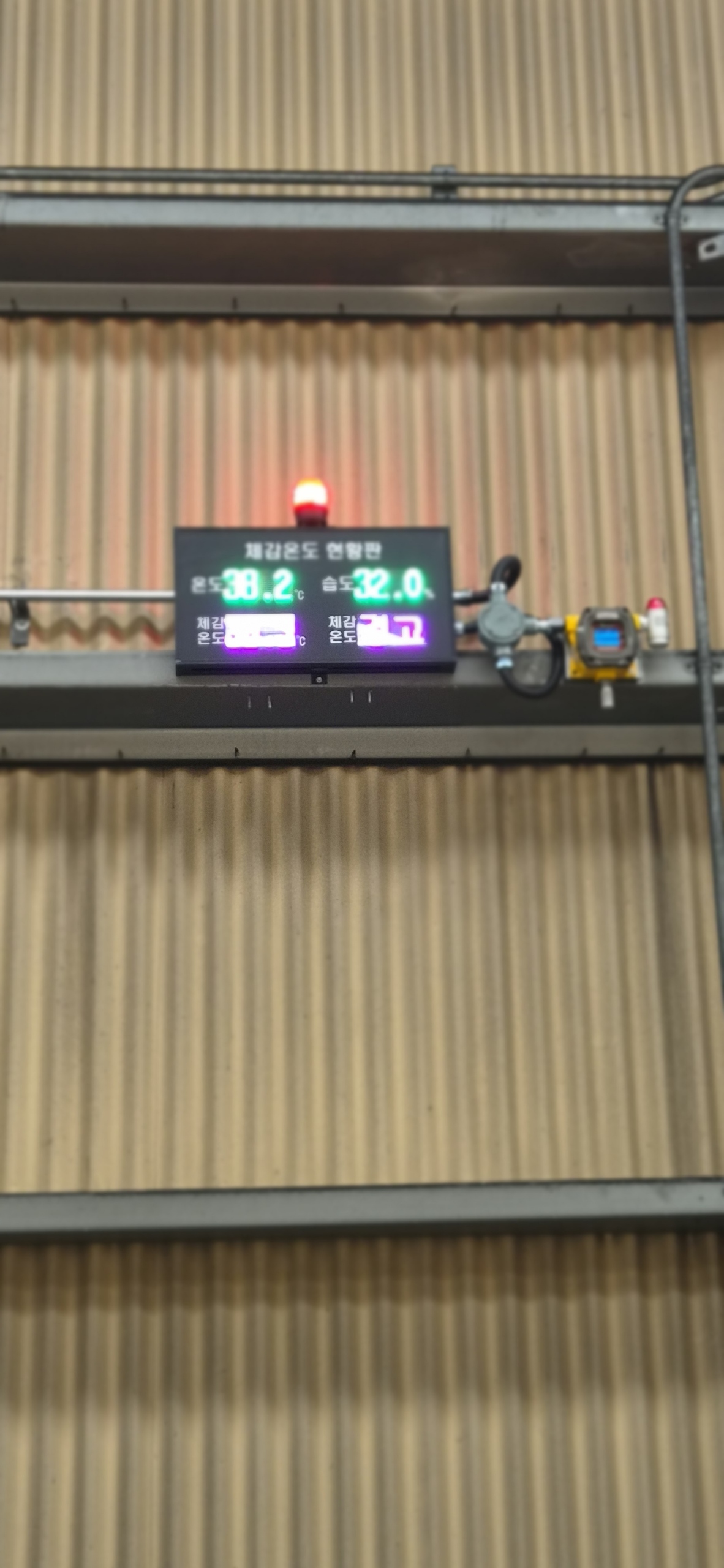
Gas detectors and display boards were installed inside the CO₂ storage room, generator room, electrical room, and other protected areas, allowing workers to quickly recognize hazardous conditions.
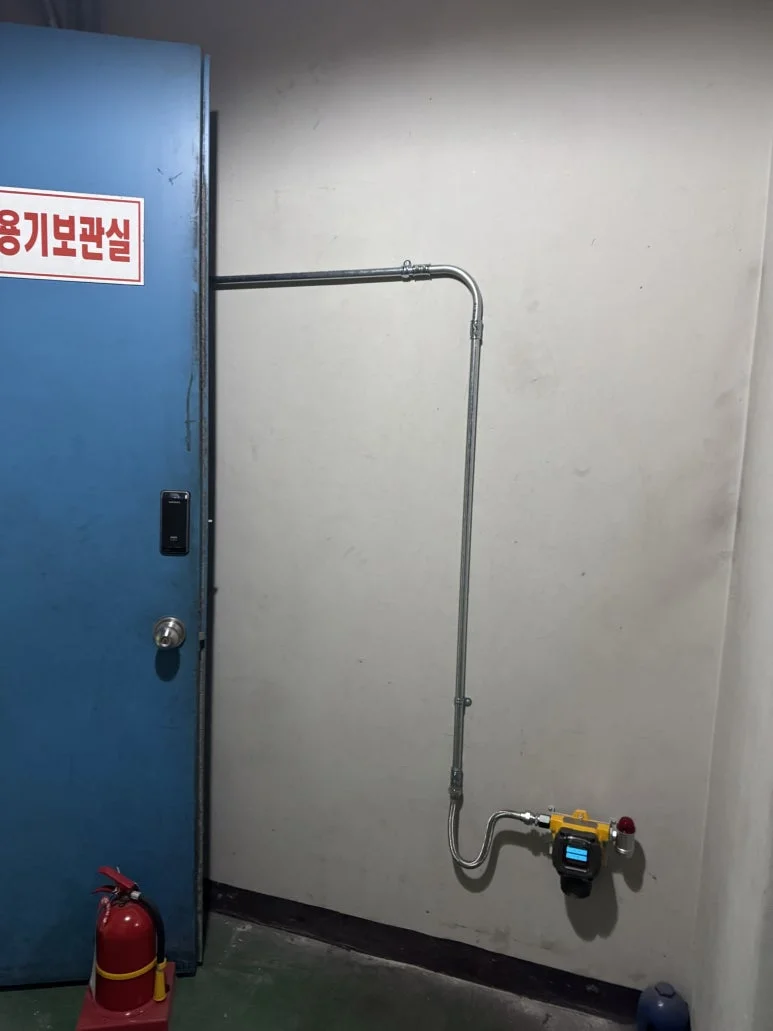
Detector Specifications
| Item | Details |
|---|---|
| Detector | RIX800 fixed gas detector |
| Measurement items | O₂ (oxygen), CO₂ (carbon dioxide) |
| Alarm | Audible and visual (light) alarm |
| Communication | Linked to the main display board and the integrated monitoring display board |
| Sensor lifespan | O₂: 1.5–2 years; CO₂: 3–4 years |
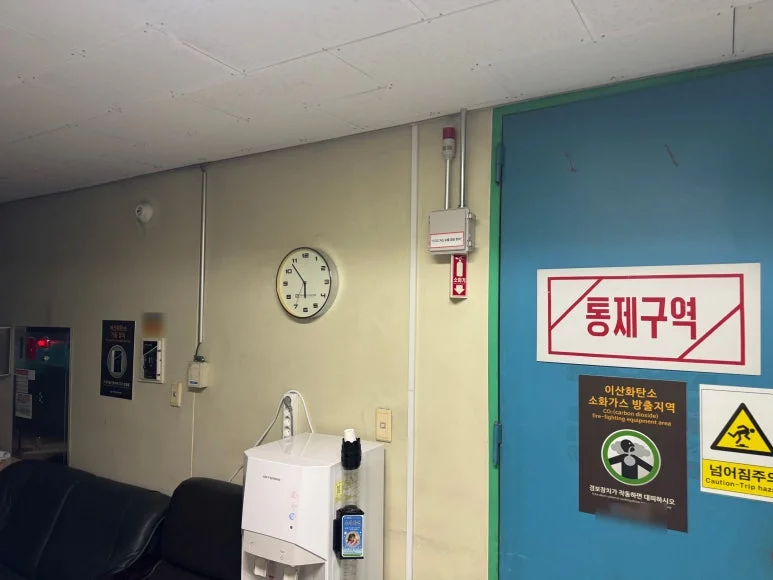
At entrances where a display board was not installed, standalone alarm devices alone were installed, so that an alarm would activate at every entrance covered by a gas detector.
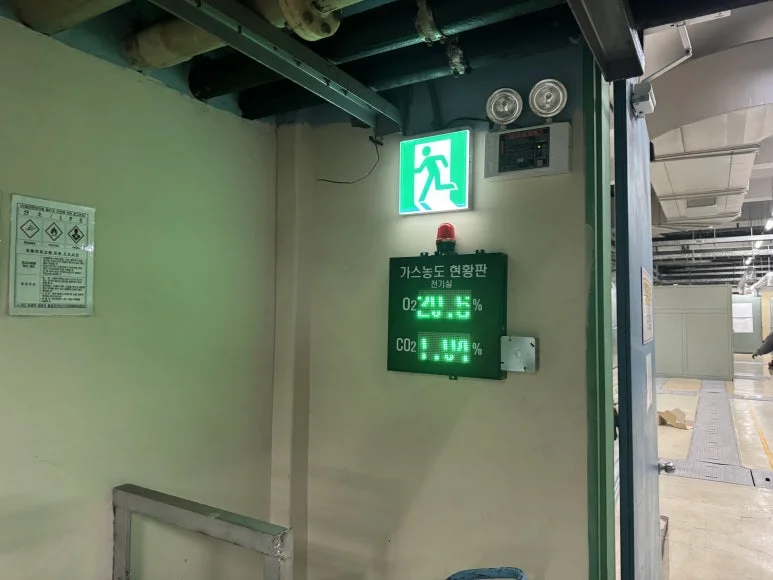
A gas status display board was installed at the electrical room entrance.
Alarm setpoints: O₂ at or below 18.5%, CO₂ at or above 1.5%.
When the alarm activates, the warning light switches on and the displayed value changes color.
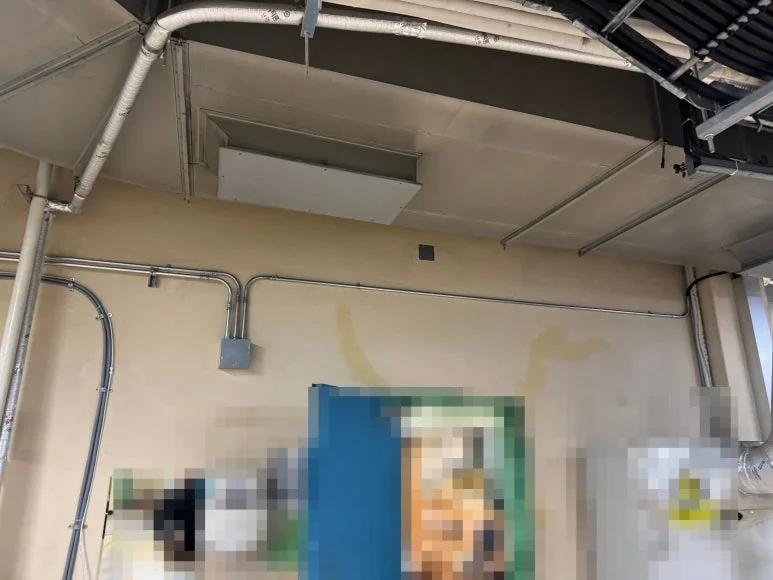
Except for cabling routed on trays, all wiring was finished using steel conduit. This installation was a particularly demanding site, requiring roughly 200 meters of data cable alone.
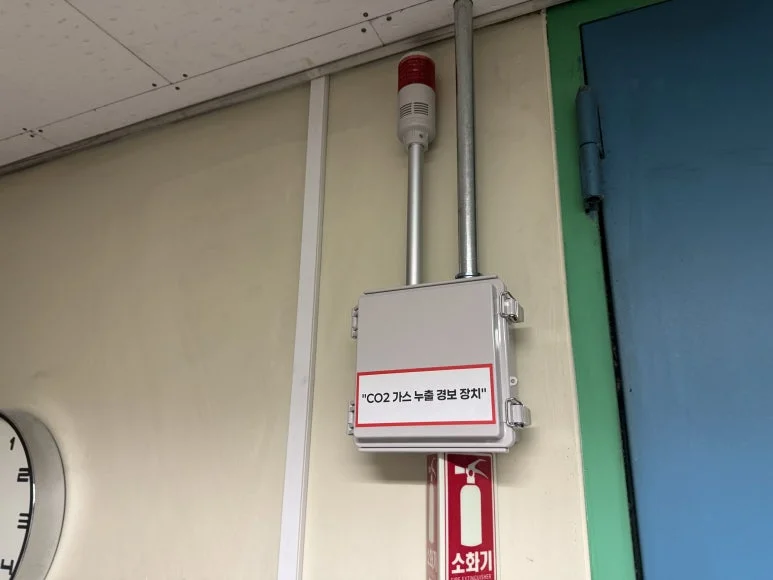
A carbon dioxide leak alarm device was also installed, linked so that it activates together with the display board.
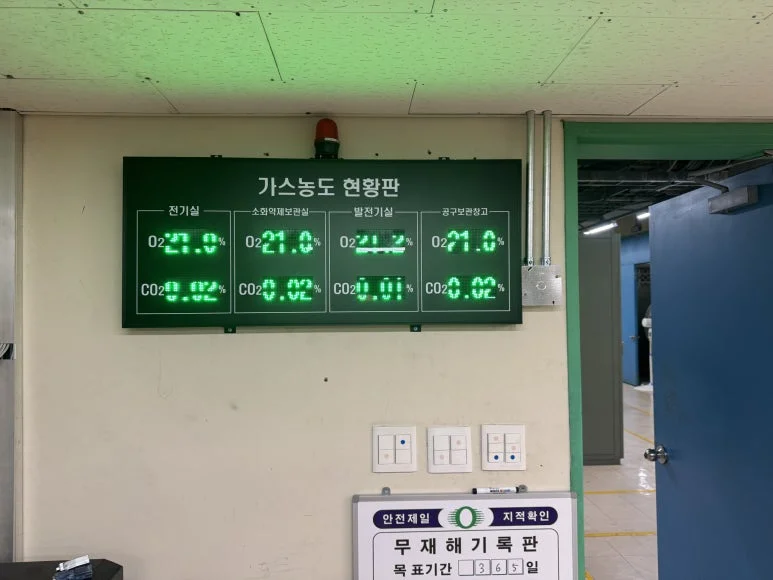
An 8-channel (8CH) status display board was built and installed so that gas concentrations at each location can be checked in real time from the office.
Because the air condition of vulnerable locations can be checked intuitively, a rapid response is possible to prevent safety accidents.
Where This Type of Detector Is Used
This type of gas detector installation applies to CO₂ storage rooms, generator rooms, UPS rooms, oil storage areas, electrical rooms, and similar protected spaces.
Frequently Asked Questions
Why is CO₂ detector installation mandatory in university carbon dioxide storage rooms?
Under Ministry of Employment and Labor Ordinance No. 367 (Occupational Safety and Health Standards), any protected area using CO₂ as a fire suppression agent must have a gas detector installed, regardless of facility type. This applies equally to university buildings as to commercial and industrial facilities.
Why is both O₂ and CO₂ measured rather than just CO₂?
CO₂ measurement directly tracks fire suppression agent concentration, while O₂ measurement independently verifies the resulting oxygen displacement risk. Monitoring both parameters provides a more complete and reliable safety verification than either measurement alone.
What other facilities typically require this type of CO₂ storage room detector?
Generator rooms, UPS rooms, oil storage areas, and electrical rooms are common examples of protected spaces that require the same type of gas detector installation as a CO₂ storage room.
How is gas concentration monitored on an ongoing basis after installation?
A multi-channel status display board (such as an 8CH configuration) allows gas concentrations at each monitored location to be checked in real time, typically from a central office, so that a rapid response is possible if unsafe conditions are detected.
#CO2StorageRoomDetector #O2CO2GasDetector #FireSuppressionAgentCompliance #KoreaOSHARegulation #UniversityBuildingDelivery #SeoulDelivery #CO2LeakAlarmSystem #WANDIKorea
![[레이먼드] 오,폐수 처리실 유해가스 모니터링](https://wandi.co.kr/storage/construction-cases/YxFUQVBZ8Unnk7pJzzfsmezr6xNe0LZvQRDmt7TL.jpg)
![[브이피이코리아] 종합병원 지하 밀폐공간 가스 측정기 설치_FIX800 & FIX-DS](https://wandi.co.kr/storage/construction-cases/gNOA28xSlEy5uU3AOxyHDRH5UfAe0TpMTgAt4Uag.jpg)

