Applied Markets
Installed Gases
Project Details
FIX800 Fixed Gas Detector and FIX-DS Display Panel Installation — Underground Wastewater Reservoir
This case covers the installation of a FIX800 fixed multi-gas detector and FIX-DS gas concentration display panel for continuous monitoring of the confined underground reservoir workspace inside a wastewater treatment facility. The system measures four gases — O₂, CO, H₂S, and EX (flammable) — and provides real-time alarm annunciation in compliance with Korea's Occupational Safety and Health Act (OSHA).
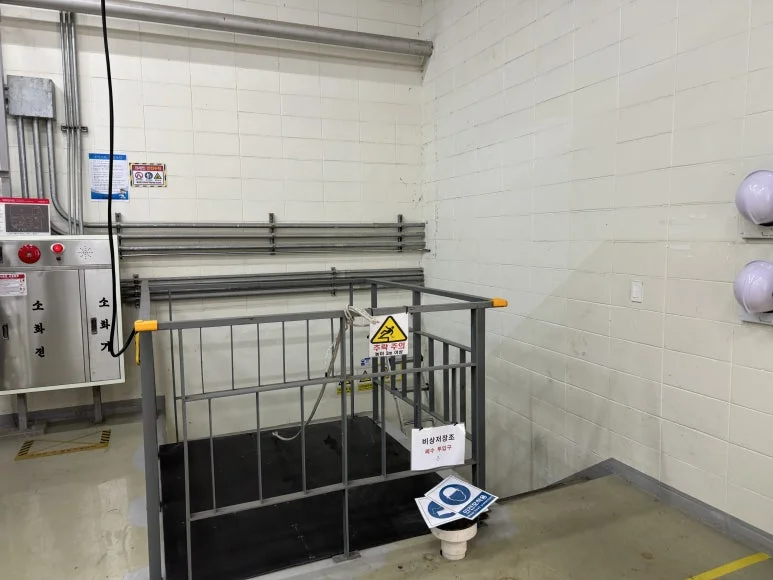
The FIX-DS gas concentration display panel was positioned at a clearly visible location near the underground entrance. This placement allows workers to verify internal gas conditions before entering the confined space, without needing to step inside first.
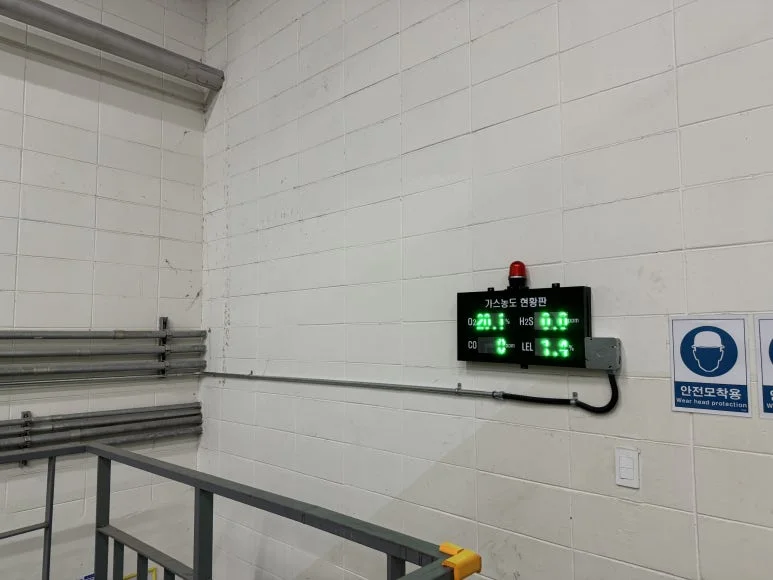
FIX-DS Gas Concentration Display Panel — Specifications
- 4-gas configuration: O₂ (oxygen), CO (carbon monoxide), H₂S (hydrogen sulfide), EX (flammable gas)
- Alarm setpoints configured to Korean OSHA standards
- Audible and visual alarm output
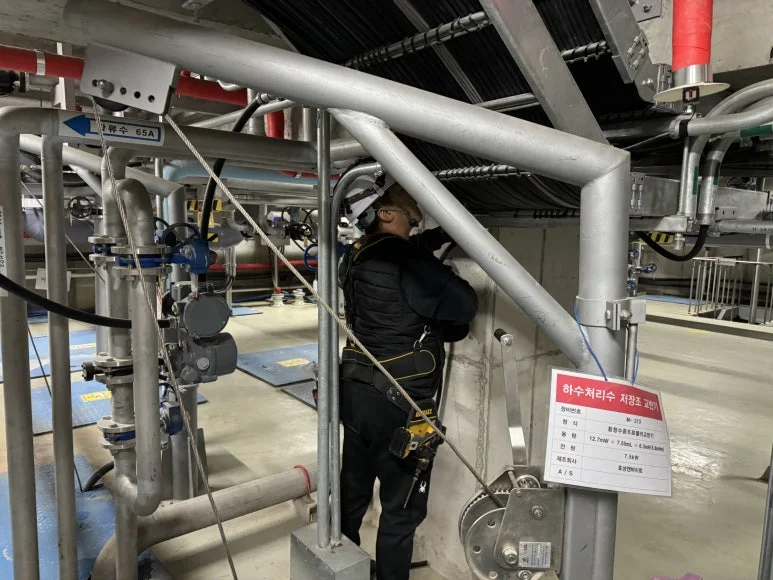
Inside the wastewater treatment reservoir, the FIX800 fixed multi-gas detector was mounted at a position directly visible to workers operating within the space.
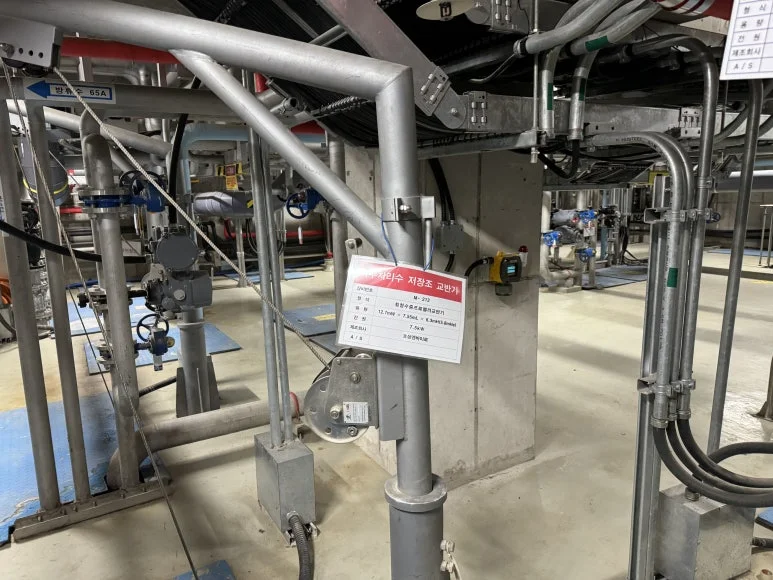
FIX800 Fixed Gas Detector — Configuration
- 4-gas measurement: O₂ (oxygen), CO (carbon monoxide), H₂S (hydrogen sulfide), EX (flammable gas)
- Beacon lamp option included
- Default alarm thresholds set to Korean OSHA standards (user-adjustable)
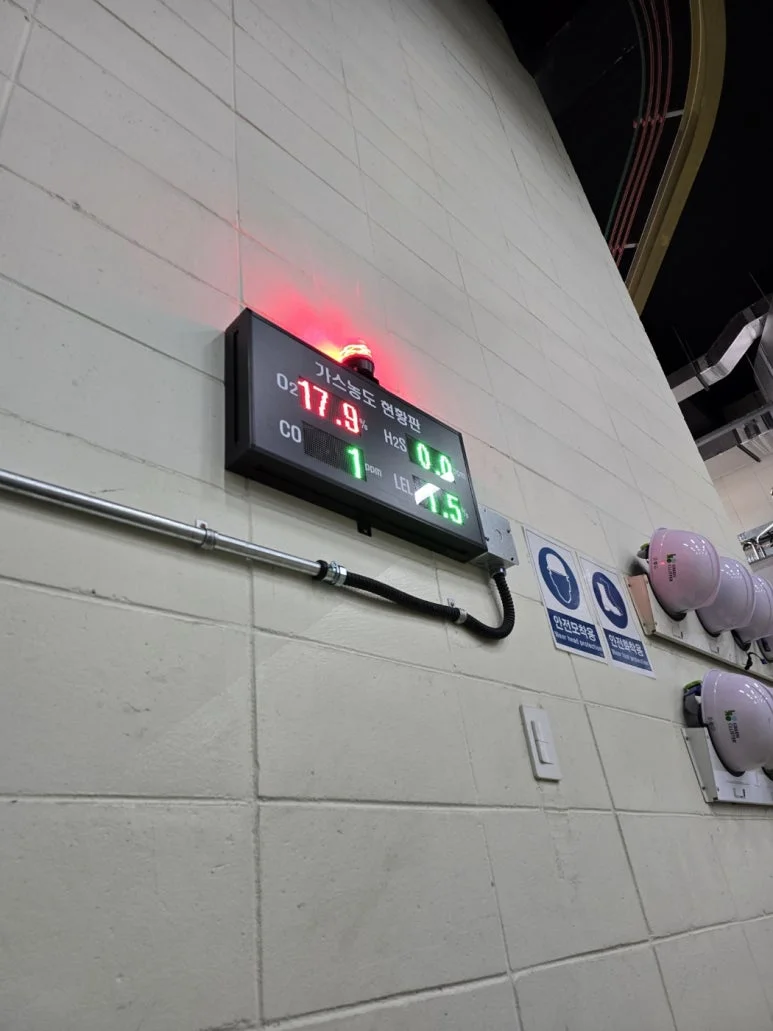
When oxygen concentration inside the workspace drops to 18.5% or below (oxygen-deficient condition), or when toxic gas levels are detected, the FIX-DS display panel triggers an audible alarm, enabling workers to respond immediately.
If a gas concentration monitor is needed for a confined-space asphyxiation risk area, please feel free to reach out to our team for a prompt response.
Frequently Asked Questions
Q1. Why is gas monitoring mandatory in underground wastewater reservoir spaces?
Underground reservoirs in wastewater treatment facilities are classified as confined spaces under Korea's OSHA regulations. Organic decomposition in wastewater generates hydrogen sulfide (H₂S), methane (CH₄), and other toxic or flammable gases, while the enclosed environment can cause oxygen depletion. Continuous monitoring with a fixed gas detector is required to protect workers from asphyxiation and gas poisoning before and during entry.
Q2. Which gases should be monitored in a wastewater treatment confined space?
The four gases most commonly monitored are O₂ (oxygen), H₂S (hydrogen sulfide), CO (carbon monoxide), and EX (flammable gases, typically measured as LEL). For cost-effective coverage, O₂ and H₂S are the minimum recommended sensors. Where budget permits, adding CO and EX provides comprehensive protection against all primary hazards present in wastewater environments.
Q3. What is the difference between the FIX800 detector and the FIX-DS display panel?
The FIX800 is the primary sensing unit installed inside the confined space. It continuously measures gas concentrations and generates local alarms. The FIX-DS is an external LED display panel connected to the FIX800 via RS-485 communication. Positioned at the entrance, it mirrors real-time readings from the FIX800, allowing workers to assess internal air conditions before entering — without requiring a portable detector for every individual.
Q4. Can alarm setpoints be adjusted after installation?
Yes. The FIX800's alarm thresholds are pre-configured to Korean OSHA standards at the time of delivery, but they can be adjusted by the operator as needed using the infrared remote control, without requiring tools or special software.
Q5. At what oxygen concentration does a hazard begin?
Under Korea's Occupational Safety and Health Act, an oxygen concentration below 18% is defined as an oxygen-deficient condition. The FIX800's default alarm threshold is set slightly higher, at 18.5%, giving workers a small safety margin so they can recognize and evacuate a hazardous condition before it becomes critical.
#WastewaterTreatment #ConfinedSpaceSafety #FIX800 #GasDetector #OxygenMonitor #H2SDetector #HydrogenSulfide #IndustrialSafety #FixedGasDetection #WANDI
![[레이먼드] 오,폐수 처리실 유해가스 모니터링](https://wandi.co.kr/storage/construction-cases/YxFUQVBZ8Unnk7pJzzfsmezr6xNe0LZvQRDmt7TL.jpg)
![[브이피이코리아] 종합병원 지하 밀폐공간 가스 측정기 설치_FIX800 & FIX-DS](https://wandi.co.kr/storage/construction-cases/gNOA28xSlEy5uU3AOxyHDRH5UfAe0TpMTgAt4Uag.jpg)

