Applied Markets
Installed Gases
Project Details
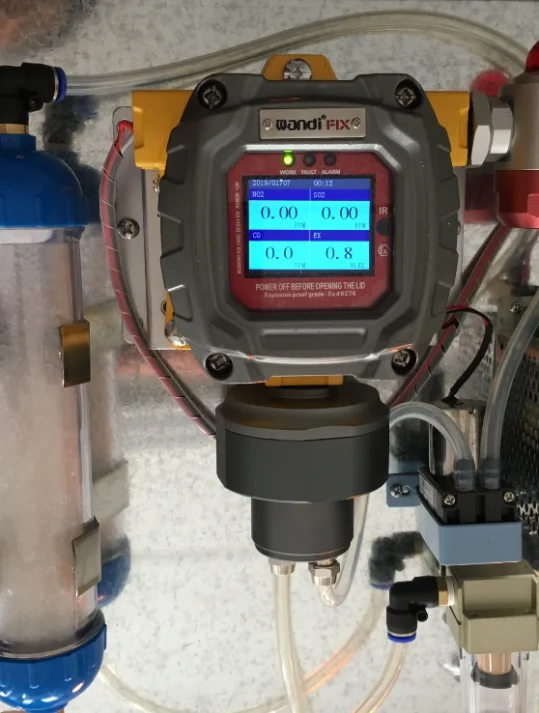
This installation showcases a FIX800 multi-gas detector configured to monitor four gas parameters simultaneously — NO₂, SO₂, CO, and combustible gas (Ex) — through a single unit, paired with an active sampling (suction-type) pre-conditioning system housed in a protective enclosure.
The unit is fitted with sensors covering the following ranges:
NO₂ : 0–20 ppm
SO₂ : 0–20 ppm
CO : 0–500 ppm
Ex : 0–100% LEL
With these sensors installed, the system detects gas leaks for safety purposes, triggers a warning beacon when a leak is detected, and provides a 4–20mA output signal for integration with external monitoring or control systems.
- All four gas readings are displayed simultaneously on a single screen.
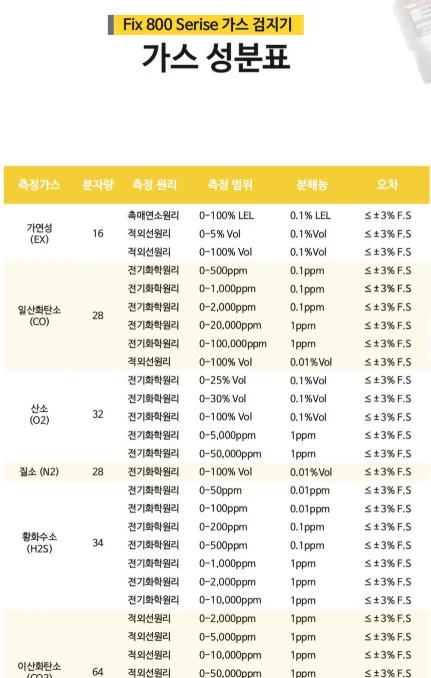
The Wandi product line offers a wide range of sensor types and measurement ranges to choose from. Configurations of 1, 2, 3, or 4 sensors are available, supporting up to 5 gas types (O₂, CO, H₂S, Ex, CO₂) in a single unit.
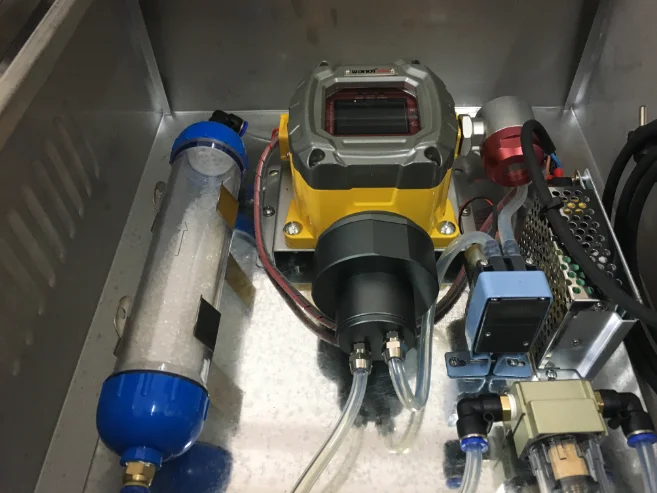
An intake pump actively draws in ambient air, allowing for a faster gas detection response time.
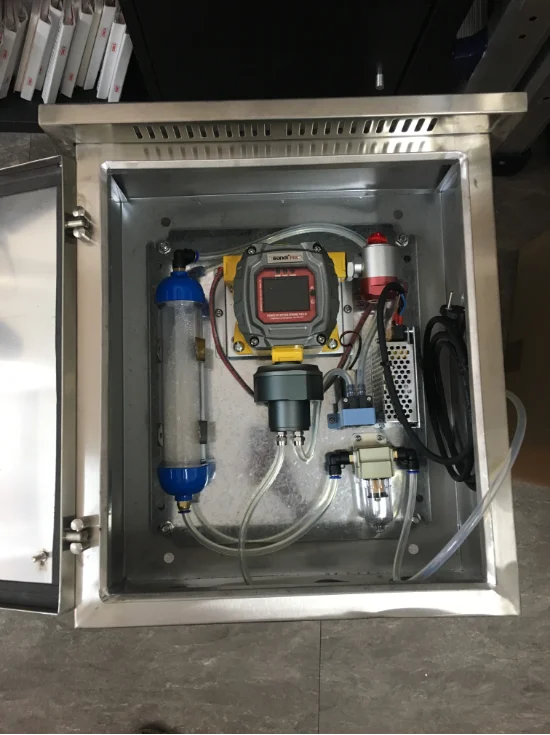
The sampled air passes through a silica gel stage to remove moisture before measurement, ensuring more stable and accurate readings.
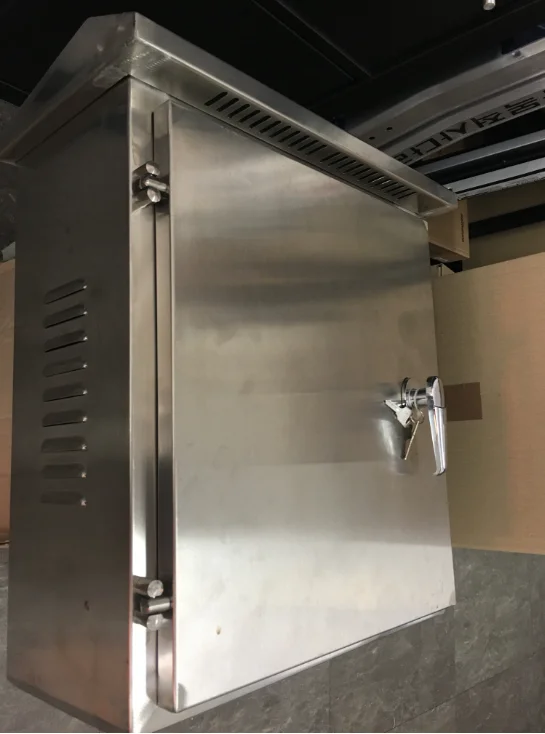
The system is supplied fully assembled inside a SUS (stainless steel) or high-box type enclosure.
(This design allows for convenient installation and protects the equipment from external impact and direct exposure to rain or snow.)
Frequently Asked Questions (FAQ)
Q1. How many gases can the FIX800 multi-gas detector measure at the same time?
A single FIX800 unit can simultaneously display and monitor up to four gas parameters — NO₂, SO₂, CO, and combustible gas (Ex).
Q2. What role does the active sampling (suction-type) pre-conditioning system play?
An intake pump actively draws in ambient air to speed up detection response time, while a silica gel stage removes moisture from the sampled air to ensure stable, accurate measurements.
Q3. How is the enclosure configured?
The system is housed in a SUS (stainless steel) or high-box type enclosure, allowing for convenient installation and protection against external impact and direct exposure to rain or snow.
Q4. How are alarms and output signals handled?
When gas concentration exceeds the configured threshold, a warning beacon is triggered, and a 4–20mA analog output signal is provided for integration with upper-level monitoring or control systems.
Q5. Can the sensor configuration be changed or expanded?
The Wandi product line offers a variety of sensor types and measurement ranges. Configurations of 1 to 4 sensor slots are available, supporting up to 5 gas types (O₂, CO, H₂S, Ex, CO₂) in combination.
![[레이먼드] 오,폐수 처리실 유해가스 모니터링](https://wandi.co.kr/storage/construction-cases/YxFUQVBZ8Unnk7pJzzfsmezr6xNe0LZvQRDmt7TL.jpg)
![[브이피이코리아] 종합병원 지하 밀폐공간 가스 측정기 설치_FIX800 & FIX-DS](https://wandi.co.kr/storage/construction-cases/gNOA28xSlEy5uU3AOxyHDRH5UfAe0TpMTgAt4Uag.jpg)

