Applied Markets
Installed Gases
Project Details
GasTiger 6000 — NO/NO₂ Measurement in Plasma Research Environment (Gunsan, Jeollabuk-do)
A GasTiger 6000 NO/NO₂ detector was delivered to a national research institution in Gunsan, Jeollabuk-do.
Plasma and NOx Generation
Plasma is a state of matter alongside solid, liquid, and gas. When sufficient energy is applied to a molecular gas, it transitions to plasma. When that energy is applied to normal ambient air (O₂/N₂ base), molecules dissociate into atomic O and N — which then recombine to form NO, NO₂, and O₃. The research requirement was to precisely measure the high-concentration NO and NO₂ generated during these experiments.
Why GasTiger 6000 Was Selected
Conventional combustion gas analyzers include mandatory O₂ and CO sensors, and their NO₂ range is typically limited to approximately 5% of total NOx — insufficient for high-concentration NO₂ measurement. The GasTiger 6000 configured with NO 5,000 ppm / NO₂ 1,000 ppm sensors was identified as the most suitable solution for the high-concentration measurement conditions in this application.
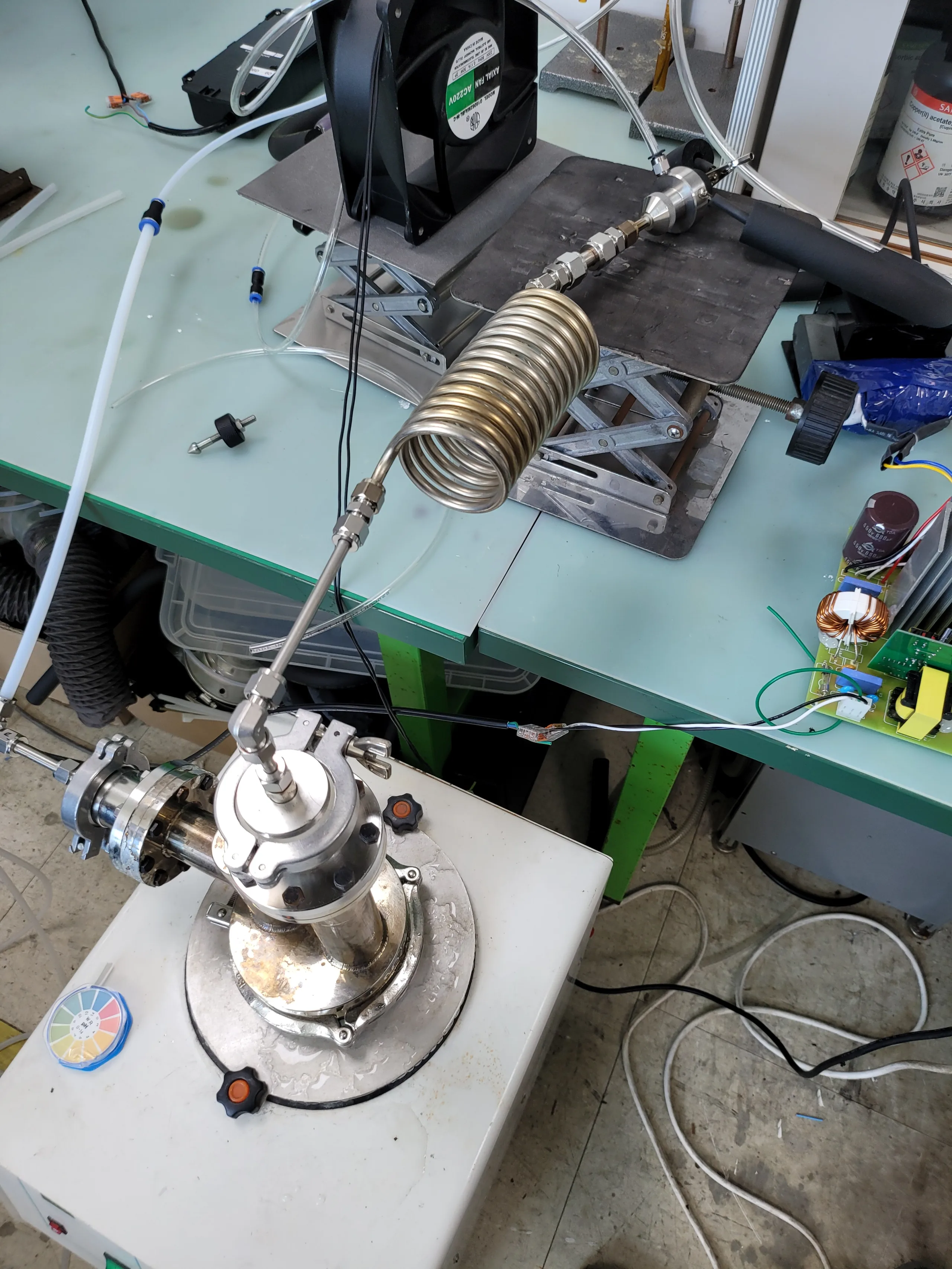
Plasma Reaction Experiment Setup
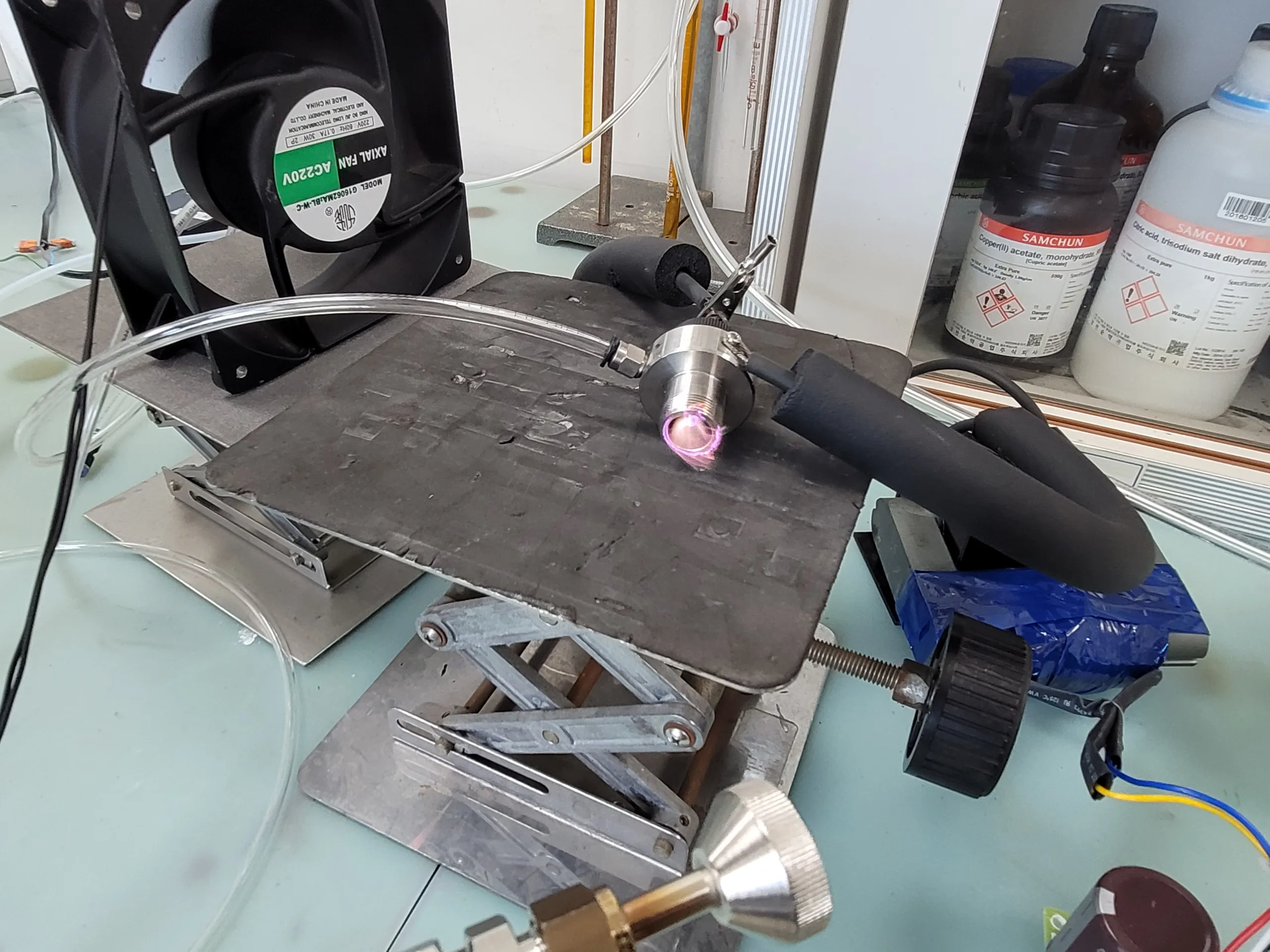
With power applied, the characteristic violet (purple) plasma glow of N₂ is visible.
Measurement Results — NO:NO₂ Ratio of 3:1
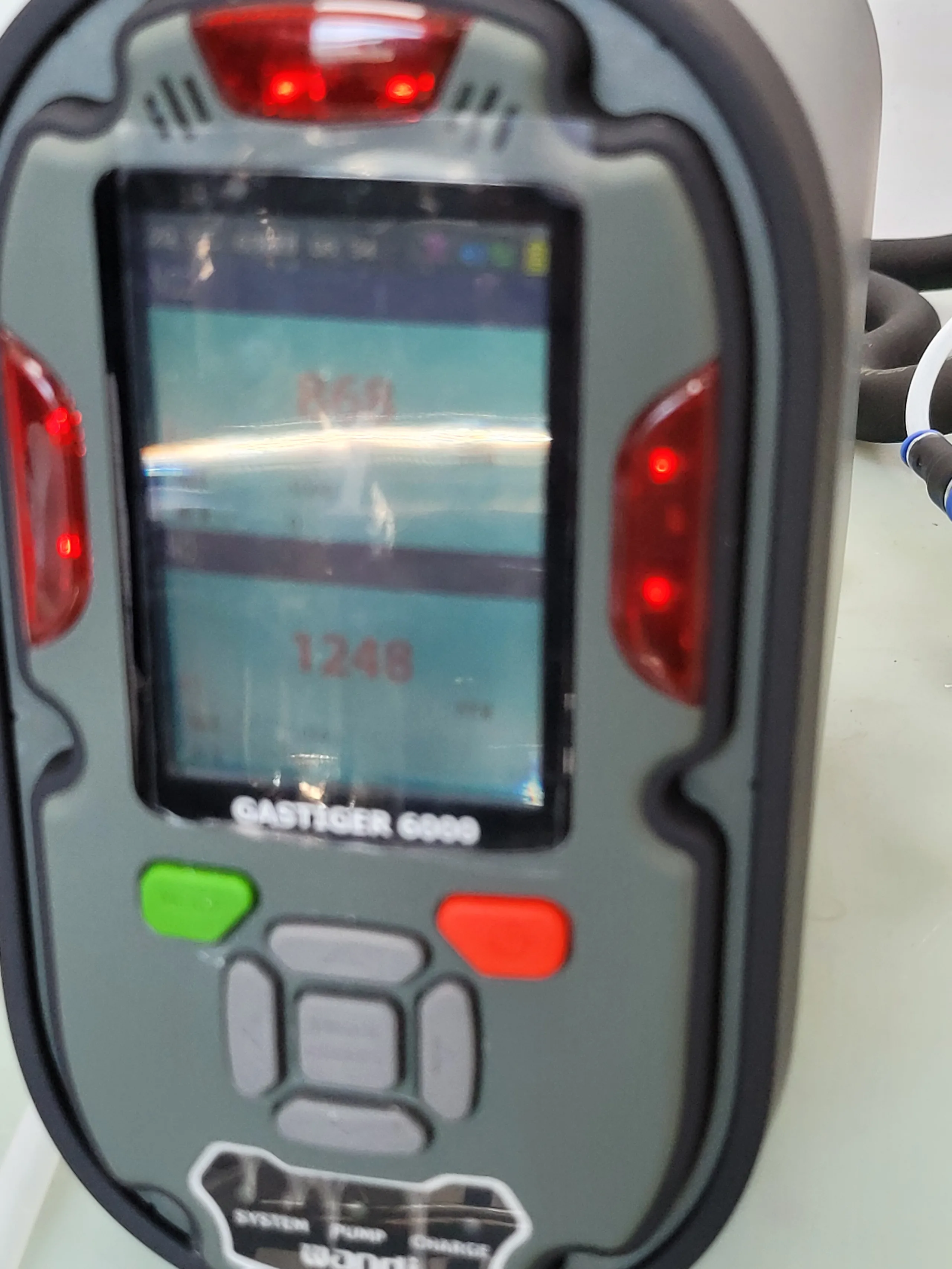
Unlike typical combustion environments, NOx was generated at a NO:NO₂ ratio of approximately 3:1. However, oxygen was fully depleted at a certain point during the experiment, preventing further measurement. Any plasma research setup must include a provision to maintain oxygen above a minimum threshold to ensure continuous sensor operation.
Frequently Asked Questions
Q1. How are NO and NO₂ generated in plasma experiments?
High-energy discharge (plasma formation) dissociates atmospheric O₂ and N₂ into their constituent atoms. During recombination, these atoms form NO, NO₂, and O₃. The mechanism is similar to thermal NOx formation during combustion, but the energy input method and resulting concentration ratios are different.
Q2. What made GasTiger 6000 the decisive choice over combustion gas analyzers?
Combustion analyzers are designed with O₂ and CO as mandatory channels, and their NO₂ range covers only the small fraction (approximately 5%) typical of combustion-derived NOx. The GasTiger 6000's flexibility to accommodate NO at 5,000 ppm and NO₂ at 1,000 ppm in a single portable instrument made it the only suitable option for this high-concentration plasma application.
Q3. Why did oxygen depletion interrupt measurement during the experiment?
O₂ is consumed as plasma reactions proceed. Electrochemical sensors require a minimum oxygen partial pressure to sustain the electrochemical reaction at the sensing electrode. When O₂ falls below this threshold, sensor output becomes unreliable or ceases entirely.
Q4. Why must oxygen be maintained above a minimum level in plasma research setups?
Electrochemical sensors require a baseline O₂ concentration to operate reliably. Supplying supplemental oxygen to maintain a stable minimum concentration allows continuous NOx measurement throughout the experiment, preventing data gaps and ensuring analytical validity.
Q5. What other applications is the GasTiger 6000 suitable for beyond plasma research?
With support for up to 6 sensors, the GasTiger 6000 is suited for ambient NOx/SOx air quality monitoring, combustion stack emission analysis, specialty gas research environments, and industrial process exhaust characterization — any application requiring simultaneous high-concentration multi-gas measurement.
#PlasmaNOMonitor #GasTiger6000 #NitrogenOxideDetector #NO2Monitor #PlasmaResearchInstrument #HighConcentrationNOx #ResearchLabGasDetector #AirQualityAnalysis #WANDI #Gunsan
![[레이먼드] 오,폐수 처리실 유해가스 모니터링](https://wandi.co.kr/storage/construction-cases/YxFUQVBZ8Unnk7pJzzfsmezr6xNe0LZvQRDmt7TL.jpg)
![[브이피이코리아] 종합병원 지하 밀폐공간 가스 측정기 설치_FIX800 & FIX-DS](https://wandi.co.kr/storage/construction-cases/gNOA28xSlEy5uU3AOxyHDRH5UfAe0TpMTgAt4Uag.jpg)

