Applied Markets
Installed Gases
Project Details
GasTiger NO/NO₂ Detector — Atmospheric Plasma Generation Demo at National Research Institutes (Changwon / Gunsan)
This article covers a demonstration visit to two national research institutions to verify and demonstrate NO/NO₂ generation during atmospheric plasma formation.
Demo Route — Changwon then Gunsan
The first demonstration was conducted at a national research institute in Changwon, followed by a second identical demonstration at an institute in Gunsan.
Changwon — Capturing NO/NO₂ During Plasma Formation
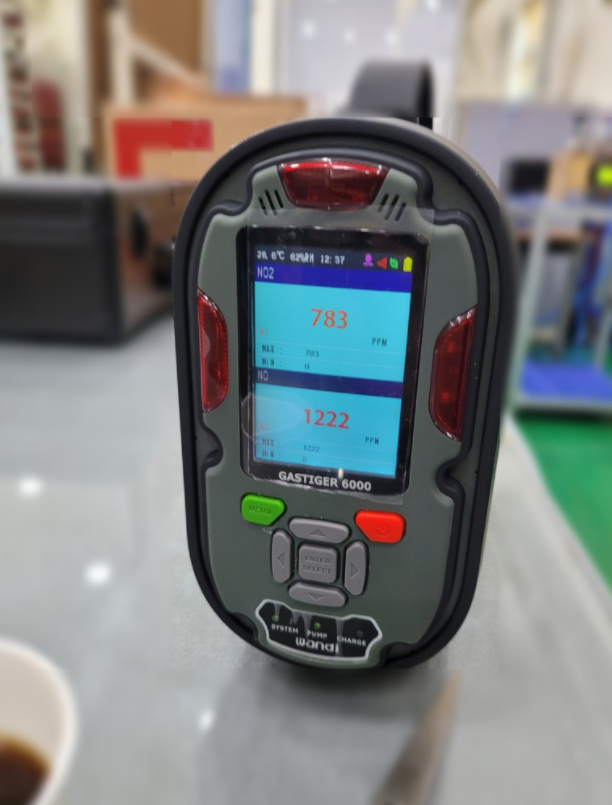
NO and NO₂ were measured in real time as normal atmosphere was converted to plasma using high voltage.
Two Critical Considerations for Plasma Measurement
1. Oxygen depletion: Electrochemical sensors require a minimum oxygen level to operate reliably. As the high-voltage discharge continuously converts atmospheric oxygen into plasma, oxygen can become depleted by the end of the experiment — causing sensor malfunction.
2. NO₂ overrange: Conventional NO/NO₂ sensors are designed for combustion gas analysis, where the NO:NO₂ ratio is typically 95:5 — making high-range NO₂ sensors unnecessary. In plasma environments, NO₂ is generated at much higher proportions and can exceed the 1,000 ppm sensor limit.
Solution: Both issues are resolved by injecting a controlled quantity of oxygen to create a diluted mixed-gas environment. Maintaining adequate oxygen ensures sensor operability, and dilution keeps NO₂ concentrations within the measurement range.
Gunsan — Same Reaction Confirmed
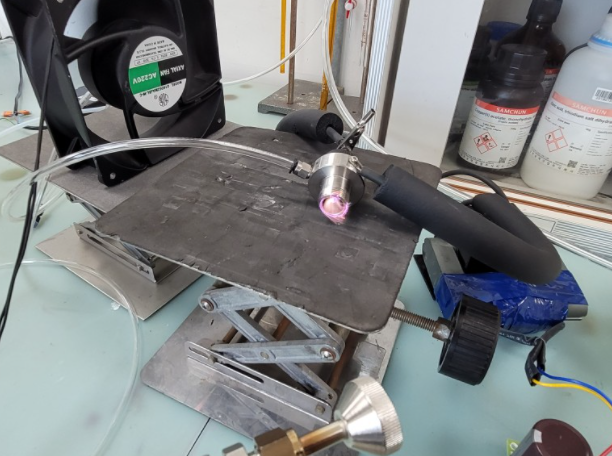
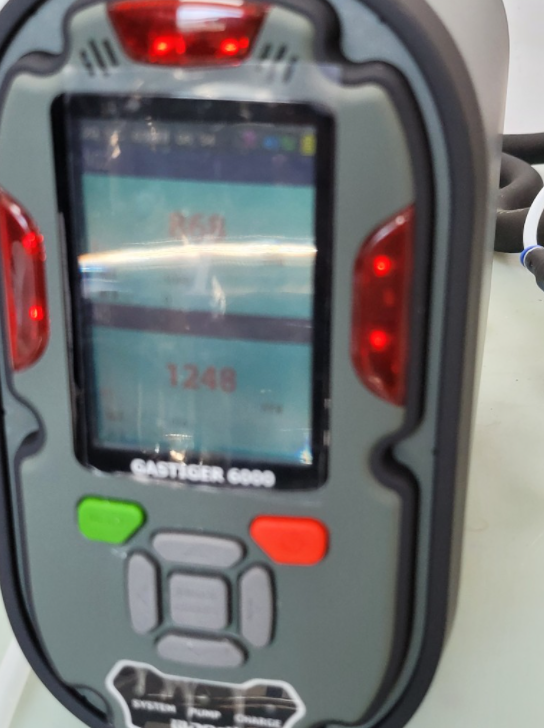
Identical plasma reactions were observed at the Gunsan institute, confirming consistency across both sites.
Demo Conclusions
- Plasma reactions generate NO:NO₂ at approximately 3:1 (varies with voltage, temperature, and conditions)
- High-voltage discharge decomposes both O₂ and N₂, causing rapid oxygen depletion inside the reaction chamber
- Very high concentrations of NO and NO₂ are generated
- A dilution configuration using ambient air or supplemental oxygen injection is required for reliable continuous measurement
Frequently Asked Questions
Q1. Why is the NO:NO₂ ratio in plasma different from combustion environments?
Combustion NOx forms predominantly through thermal mechanisms, producing mostly NO (95:5 ratio). High-voltage plasma discharge dissociates N₂ and O₂ into atoms and drives different recombination pathways, resulting in a much higher proportion of NO₂. The exact ratio depends on voltage, temperature, residence time, and oxygen availability.
Q2. Why do electrochemical sensors malfunction under oxygen-depleted conditions?
Many electrochemical sensors rely on oxygen reduction at one electrode to generate a measurable signal. When oxygen is severely depleted, the electrode reaction cannot proceed normally — causing inaccurate readings or, in prolonged cases, permanent sensor damage.
Q3. How is supplemental oxygen practically injected in plasma research setups?
The most common approach is connecting a separate oxygen cylinder to supply a controlled flow that maintains a minimum O₂ concentration (typically 5–10%) in the reaction chamber. Alternatively, controlled ambient air inflow can be used. The required flow rate must be determined based on the specific experimental conditions.
Q4. What happens when NO₂ exceeds the 1,000 ppm sensor range?
Standard NO₂ electrochemical sensors saturate when exposed to concentrations beyond their upper range limit — producing a pegged or meaningless output. Prolonged overrange exposure can shorten sensor life or cause permanent damage. Dilution to bring concentrations within range is essential before measurement.
Q5. What other industrial environments generate high-concentration NO₂?
High-concentration NO₂ is encountered in nitric acid production, certain explosive manufacturing processes, some welding operations, and environments with intense UV exposure near ozone generators. In all of these, appropriate measurement range selection and dilution or pretreatment is required.
#PlasmaNO2Measurement #GasTiger6000 #NONOMonitor #PlasmaResearchDemo #NitrogenOxideDetector #HighConcentrationNOx #NationalResearchInstitute #RSKorea #WANDI #ChangwonGunsan
![[레이먼드] 오,폐수 처리실 유해가스 모니터링](https://wandi.co.kr/storage/construction-cases/YxFUQVBZ8Unnk7pJzzfsmezr6xNe0LZvQRDmt7TL.jpg)
![[브이피이코리아] 종합병원 지하 밀폐공간 가스 측정기 설치_FIX800 & FIX-DS](https://wandi.co.kr/storage/construction-cases/gNOA28xSlEy5uU3AOxyHDRH5UfAe0TpMTgAt4Uag.jpg)

