Applied Markets
Installed Gases
Project Details
FIX800 O₂ Detector with LED Display Board — Confined-Space Pesticide Storage Room Monitoring (Paju)
This case covers a delivery to a public institution in Paju — a FIX800 O₂ detector and LED display board for pre-entry oxygen monitoring of a confined-space pesticide/chemical storage room. Internal photographs were not permitted; product photographs are used throughout.
1. Installation — Single-Gas Configuration with Bracket
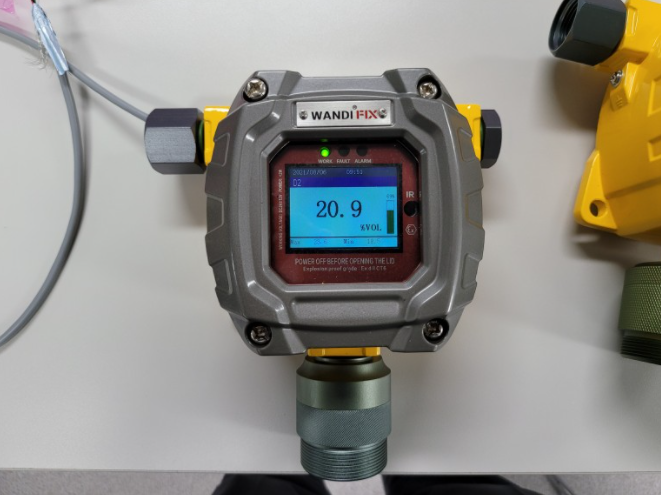
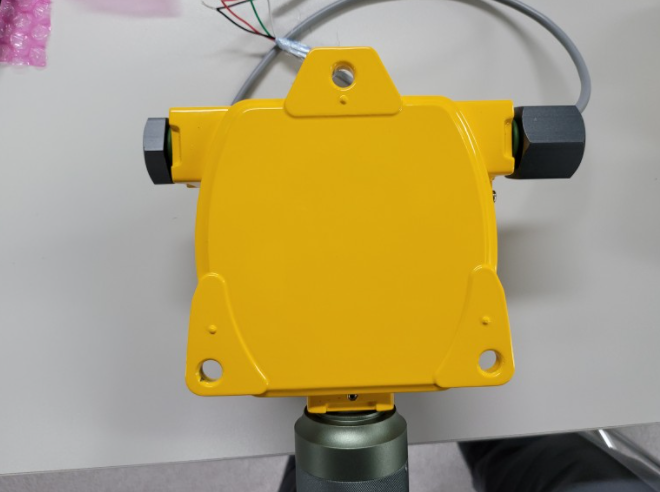
The FIX800 is a fixed detector capable of measuring a single gas or up to 4 gases simultaneously. Mounting holes on the housing allow direct wall installation on most surfaces.
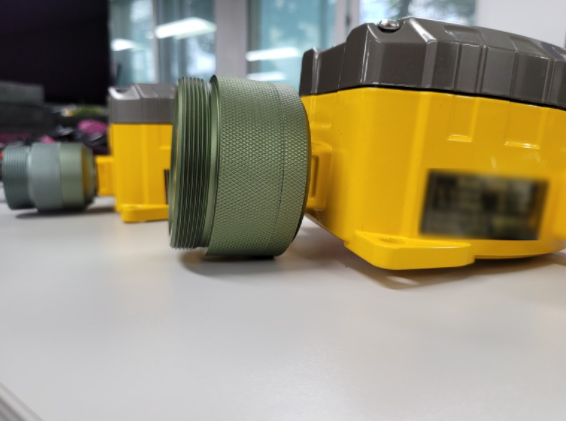
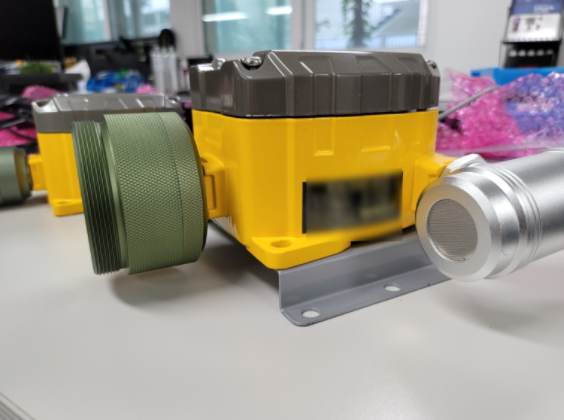
For multi-gas configurations, the enlarged sensor section makes direct wall mounting difficult — a mounting bracket is used in those cases.
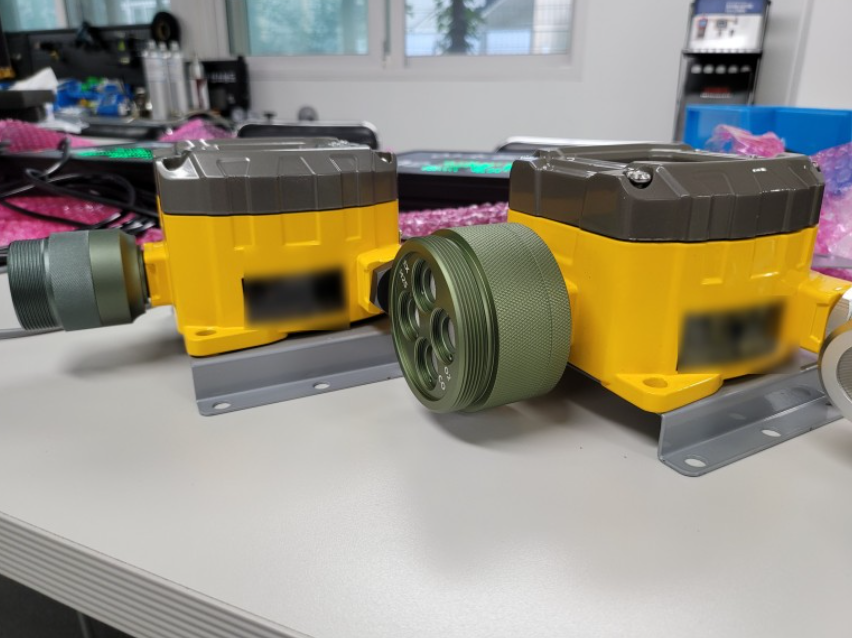
Although this was a single-gas (O₂) installation, the facility manager requested a bracket to simplify future maintenance. Oxygen sensors operate continuously in ambient air 365 days a year, making regular inspection and timely sensor replacement essential for reliable performance.
2. Monitoring — Color-Coded Display Board
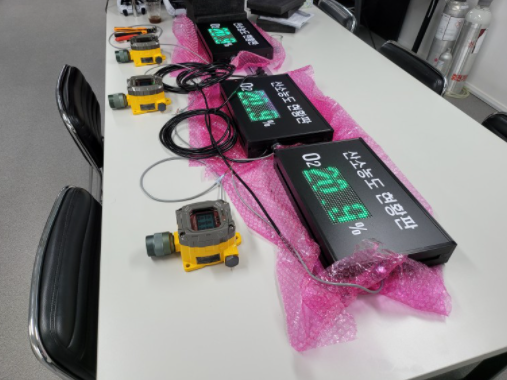
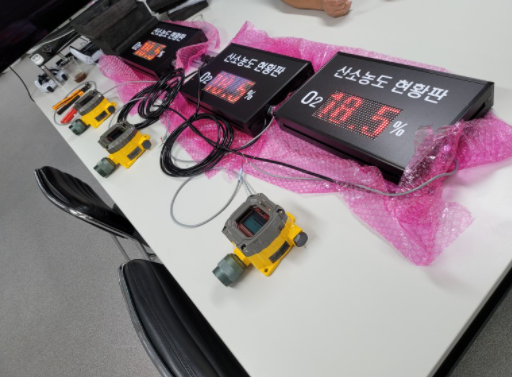
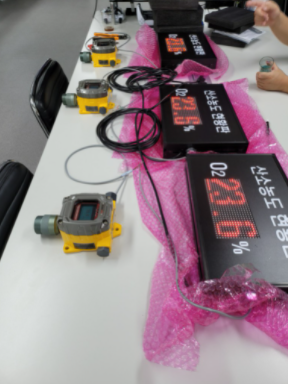
The external display board is configured in accordance with Korea's OSHA industrial safety regulations:
- O₂ 18.6–23.5%: display shows green
- Outside this range: display switches to red to indicate hazard
4. Wiring — 4-Wire Connection, Instant Operation
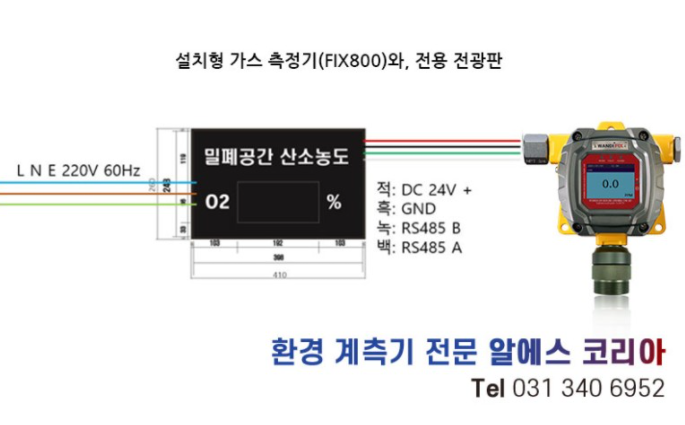
Installation and wiring are straightforward. The display board is powered at 220V and supplies 24V to the detector. Only 4 wires — RS-485 A/B plus power +/– — are required for full operation.
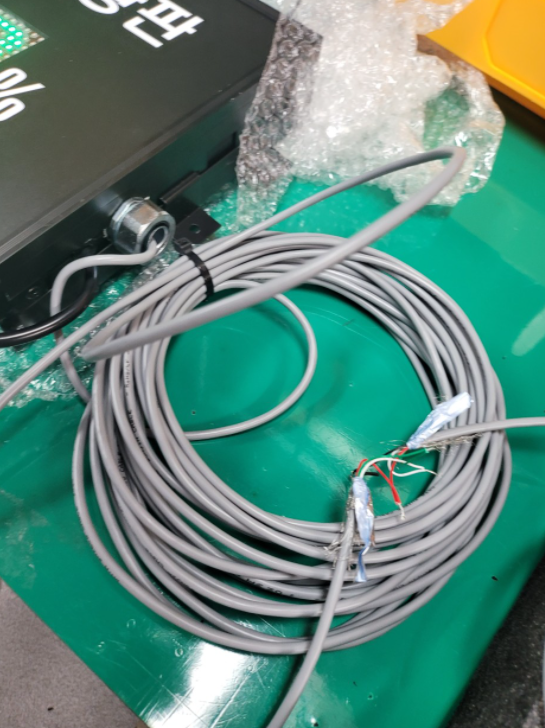
For this installation, the customer performed the installation themselves, and approximately 10 m of 4-wire shielded cable was added. For any location requiring safety monitoring, the FIX800 provides easy measurement, installation, and monitoring.
Frequently Asked Questions
Q1. Why is a pesticide storage room classified as a confined space?
Pesticide and chemical storage rooms have restricted natural ventilation and are not regularly occupied. Stored chemicals can off-gas hazardous substances or consume oxygen over time. Under Korea's OSHA, such rooms are classified as confined spaces — requiring gas monitoring before worker entry.
Q2. What is the advantage of powering the detector from the display board?
Only a single 4-wire cable is needed between the two units — eliminating the need for a separate power circuit to the detector. This reduces wall penetrations, conduit work, and installation time significantly.
Q3. How long does the FIX800 oxygen sensor last?
Electrochemical oxygen sensors typically have a service life of approximately 2–3 years under normal conditions. Exposure to high temperatures, humidity, or chemical fumes can shorten this. Before each use, verify that the reading in ambient air is approximately 20.9% O₂ — significant deviation indicates calibration or sensor replacement is needed.
Q4. Why is shielded cable used for the 4-wire connection?
Shielded cable prevents communication errors caused by electromagnetic interference from other electrical equipment in the building. When RS-485 communication lines run parallel to power cables or other signal wiring, shielding maintains stable signal integrity.
Q5. What should be done when the display board shows red?
Entry must be suspended immediately and ventilation activated. Red indicates either oxygen deficiency (below 18.6%) or oxygen enrichment (above 23.5%) — both are hazardous conditions. Entry must not resume until concentration has returned to the normal range and stabilized.
#ConfinedSpaceOxygenDetector #FIX800 #ExternalConfinedSpaceMonitoring #GasDisplayBoard #PublicFacilitySafety #OxygenDeficiencyPrevention #FixedGasDetector #IndustrialSafety #WANDI #Paju
![[레이먼드] 오,폐수 처리실 유해가스 모니터링](https://wandi.co.kr/storage/construction-cases/YxFUQVBZ8Unnk7pJzzfsmezr6xNe0LZvQRDmt7TL.jpg)
![[브이피이코리아] 종합병원 지하 밀폐공간 가스 측정기 설치_FIX800 & FIX-DS](https://wandi.co.kr/storage/construction-cases/gNOA28xSlEy5uU3AOxyHDRH5UfAe0TpMTgAt4Uag.jpg)

