Applied Markets
Installed Gases
Project Details
Hello!
Today, our installation team visited a site in Seoul to install a FIX800 fixed multi-gas detector in an underground utility tunnel.
Why the installation was needed
Underground utility tunnels are classified as confined spaces under the Occupational Safety and Health Act, and this project came from a request to install a gas detector to meet that requirement.
Why gas monitoring matters in confined spaces
While falls and collapses account for roughly 1% of workplace fatalities, asphyxiation accidents in confined spaces have a fatality rate as high as 42.3%.
Many gases are colorless and odorless, and can be encountered anywhere in daily life. In a confined space, some gases can be seen or smelled, but many others cannot be detected at all by sight or smell, which often leads workers to enter such spaces without realizing the danger.
If oxygen drops below 18%, or if toxic gas has built up in a confined space, the result can quickly turn into poisoning, fire, explosion, or asphyxiation — even death.
This is why gas concentration in a confined space must always be checked with a gas detector before work begins.
Five essential gases to monitor in confined spaces
| Target Gas | Description | Hazard |
|---|---|---|
| Oxygen (O2) | Normally present at about 20.9% in the atmosphere (0-30% VOL range) | Below 18%, oxygen deficiency can cause reduced consciousness and risk of asphyxiation |
| Carbon Monoxide (CO) | Produced during combustion (engines, welding, painting, etc.), 0-1,000 ppm range | Colorless, odorless toxic gas; can cause headaches and dizziness even at low concentrations |
| Carbon Dioxide (CO2) | Occurs naturally from respiration, fermentation, and waste decomposition, 0-5% VOL range | Above 5,000 ppm can cause breathing difficulty and reduced consciousness; higher concentrations can cause asphyxiation |
| Methane (CH4) / Combustible Gas (EX) | Generated from natural gas, fuel gas, and decomposition of organic matter, 0-100% LEL range | Explosion risk; concentration must be managed against the Lower Explosive Limit (LEL) |
| Hydrogen Sulfide (H2S) | Generated from decomposition of organic matter in sewers, septic tanks, wastewater treatment plants, etc., 0-100 ppm range | Can be fatal even in small amounts; the sense of smell can be paralyzed, making it undetectable by odor |
Article 618 of the Occupational Safety and Health Standards Rules requires that adequate air be maintained during confined-space work.
Adequate air means that the gases above remain within safe concentration levels and that combustible gas stays below a set threshold.
The space we visited for this installation was an underground utility tunnel.
What is an underground utility tunnel?
An underground utility tunnel is a facility built underground to jointly house buried infrastructure such as electricity, gas, and water supply lines, telecommunications facilities, and sewage systems, improving the streetscape, preserving road structures, and allowing for smoother traffic flow.
Products installed in the underground utility tunnel
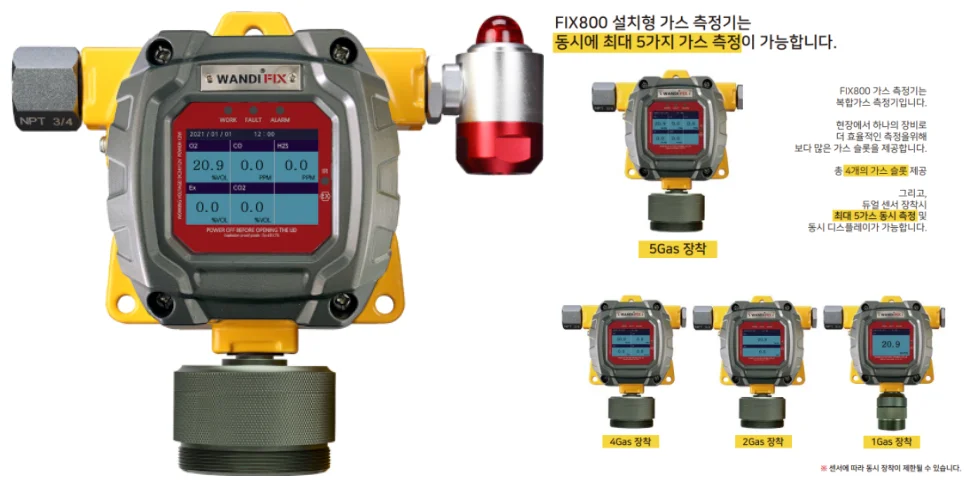
Here is a look at the installation points, the installation sequence, and the finished result.
1. Site photos and installation points
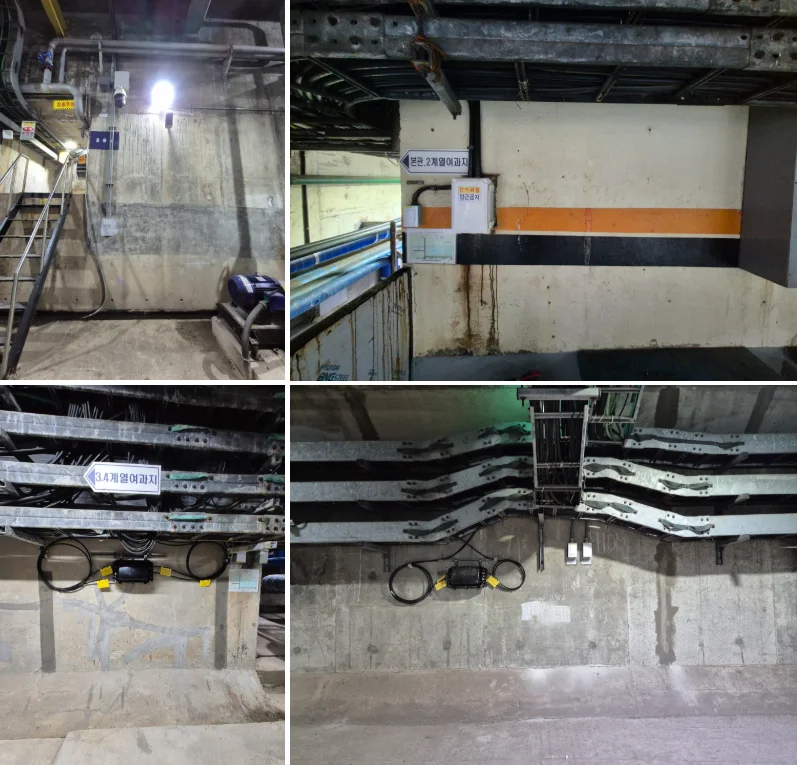
The spaces shown above are the installation points for the FIX800 and the display panel.
We check on-site photos and conduct a site survey beforehand so we can identify any obstacles and complete the installation safely and efficiently.
2. Installation team at work
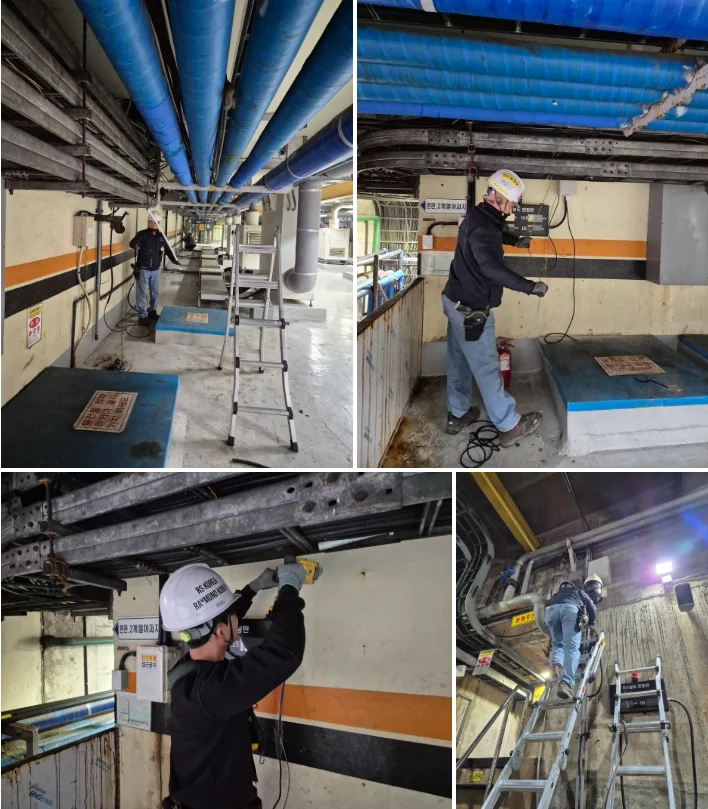
After reviewing the site conditions from the photos, the installation team went on site and carried out the work shown here.
The general installation sequence for the detector and display panel is: install the detector, install the display panel, run wiring between the detector and the display panel, and once the display panel receives a 220V supply, install a junction box to connect a DC 24V power line to the detector.
Site conditions can introduce many variables, but this is the basic installation order.
3. Detector after installation
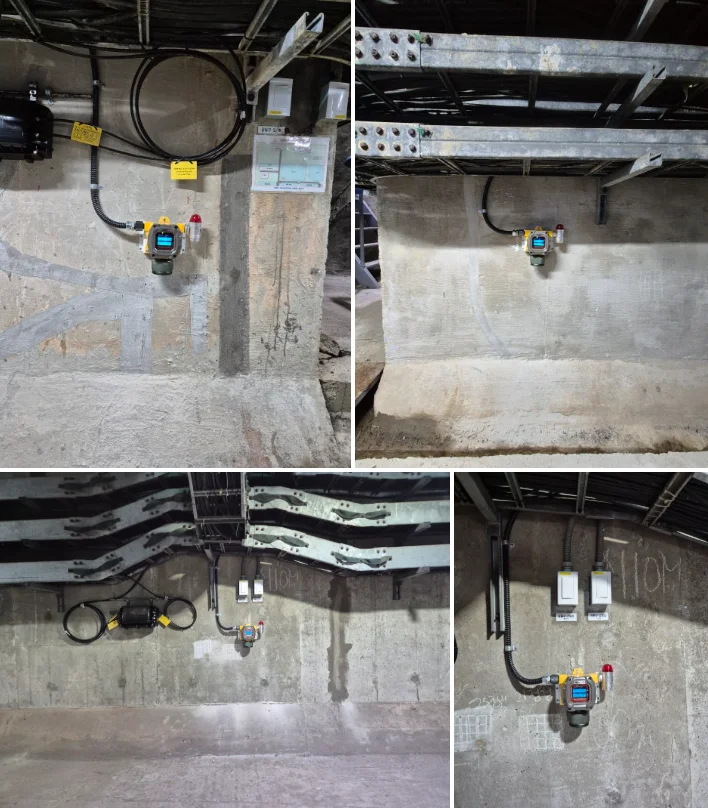
This photo shows the detector installed at the location requested by the customer, based on the available space on site.
Wiring can be run through waterproof flexible conduit, steel conduit, or explosion-proof conduit, and cost varies depending on the length of power and communication lines needed on site.
Because material costs differ significantly between flexible and steel conduit, distances are measured precisely, in increments such as 1m or 5m.
4. Display panel after installation
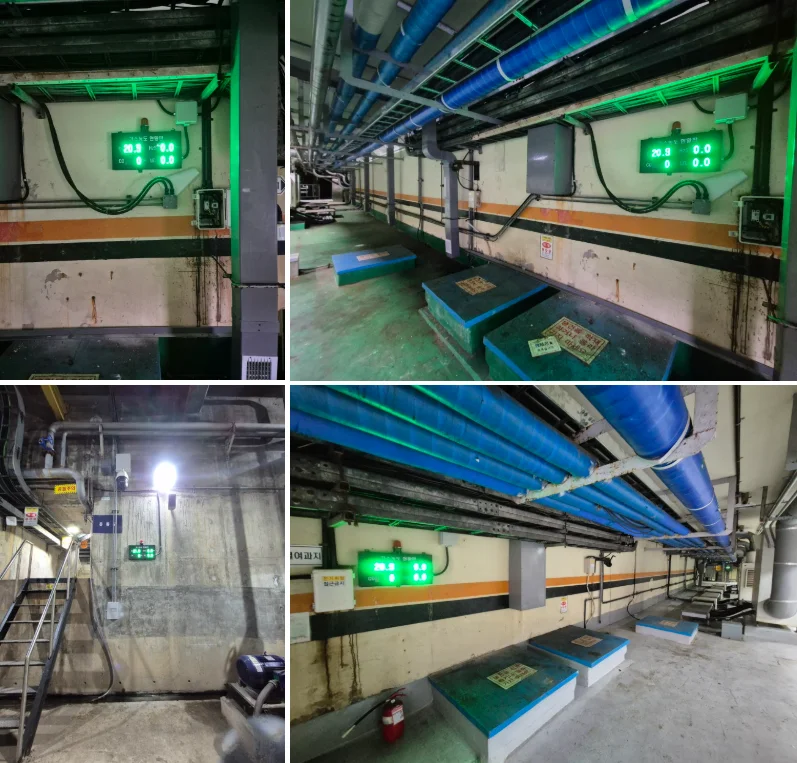
After installing the detector and connecting it to the display panel, we ran a test to confirm that gas readings were being measured accurately.
In total, three sets (three detectors and three display panels) were installed.
After tidying up the site, we walked through the installation locations with the customer and explained how to operate the system and use the manual.
Once installation was complete, the site contact asked whether one more set could be installed in the building next door, even though it was already getting late. We confirmed it was no problem and moved on to the neighboring building.
5. Additional installation inquiry site
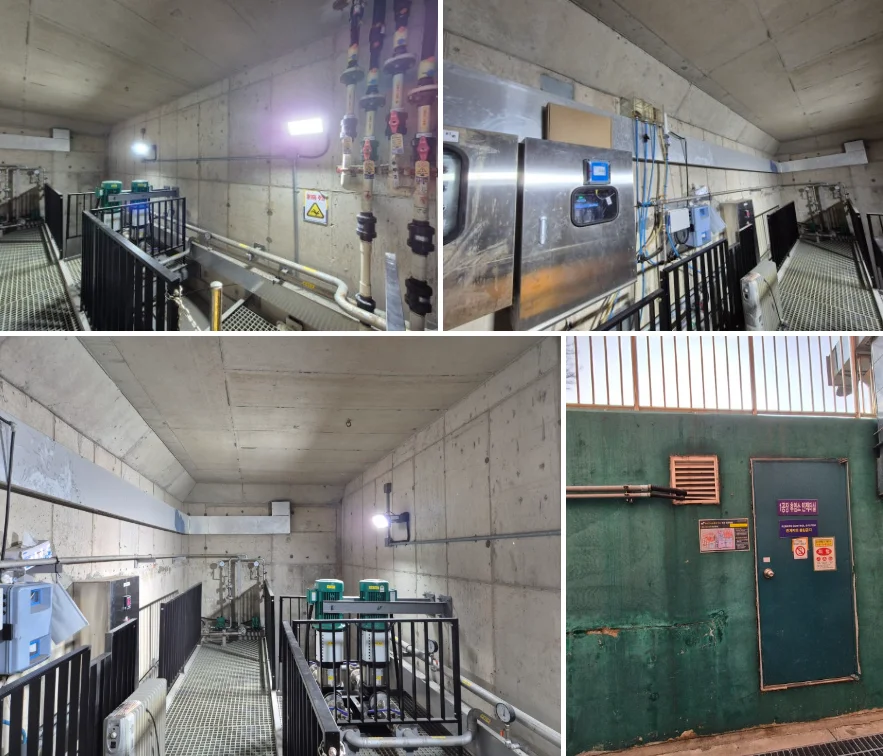
We first walked through the site where the additional installation was requested, held another discussion on installation points and wiring, and completed the on-site installation and survey successfully.
Closing thoughts
Gas detectors are essential in confined spaces such as underground utility tunnels.
A gas detector helps prevent a range of risks in advance, including worker safety, locating hazards if something goes wrong, and monitoring the on-site gas concentration.
Thank you for reading.
When you are not sure what gases may be present, or you know which gases may occur but cannot confirm the exact concentration, it can be difficult to decide what to buy before making a purchase.
A thorough consultation with a specialist, considering environmental factors, the gases involved, frequency, and concentration, is the safest way to choose a gas detector with the right measurement range.
Beyond simply selling products, our team also provides in-house calibration, domestic repair (A/S), manufacturing and shipping, and installation work as a gas-specialized company.
Based on experience with demonstrations, site surveys, deliveries, repairs, and installation work across a wide range of environments, we provide one-on-one tailored solutions for gas-measurement environments.
Frequently Asked Questions
What is the FIX800 and what gases does it detect?
The FIX800 is a fixed multi-gas detector with 4 sensor slots, supporting up to 4 gases at once (5 when a combined CO+H2S sensor is used). In this installation, it was configured to monitor carbon monoxide (CO) and hydrogen sulfide (H2S).
Why is a gas detector required in an underground utility tunnel?
Underground utility tunnels are classified as confined spaces under Korea's Occupational Safety and Health Act, which requires appropriate gas monitoring equipment to protect workers from oxygen deficiency and from toxic or combustible gases.
What does the display panel connected to the FIX800 do?
The display panel is wired to the FIX800 and shows real-time gas readings on site so workers can check the gas concentration at a glance. In this project, three FIX800 units were installed along with three display panels.
What are the five key gases to monitor in a confined space like this?
The five gases commonly monitored in confined spaces are oxygen (O2), carbon monoxide (CO), carbon dioxide (CO2), methane (CH4) or other combustible gas (EX), and hydrogen sulfide (H2S), each carrying its own risk if levels fall outside a safe range.
Can the wiring method for the FIX800 vary by site?
Yes. Depending on site conditions, wiring can be run through waterproof flexible conduit, steel conduit, or explosion-proof conduit, and the length and type of conduit affect the overall installation cost.
#WANDI #FIX800 #GasDetector #ConfinedSpaceSafety #UndergroundUtilityTunnel #COH2SDetector #GasSafety #OccupationalSafety #DisplayPanel #SeoulInstallation
![[레이먼드] 오,폐수 처리실 유해가스 모니터링](https://wandi.co.kr/storage/construction-cases/YxFUQVBZ8Unnk7pJzzfsmezr6xNe0LZvQRDmt7TL.jpg)
![[브이피이코리아] 종합병원 지하 밀폐공간 가스 측정기 설치_FIX800 & FIX-DS](https://wandi.co.kr/storage/construction-cases/gNOA28xSlEy5uU3AOxyHDRH5UfAe0TpMTgAt4Uag.jpg)

