Applied Markets
Installed Gases
Project Details
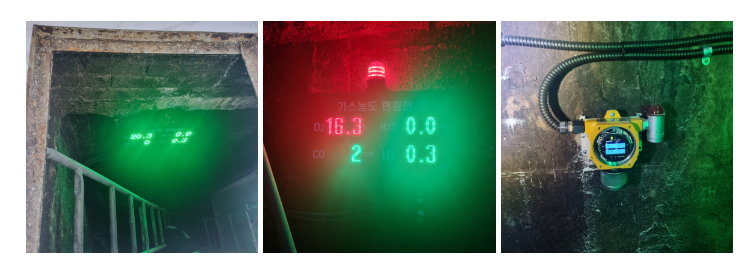
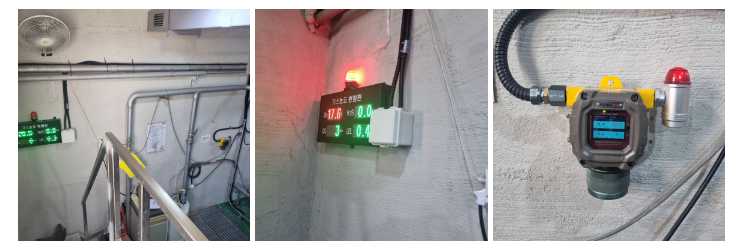
Hello, this is our technical team. We visited a hospital in Jeonju in response to an inquiry about a gas detector for a confined space. The customer had seen one of our display boards elsewhere and wanted a similar setup: when the entrance cover to the confined space is opened, the internal gas readings should be visible immediately.
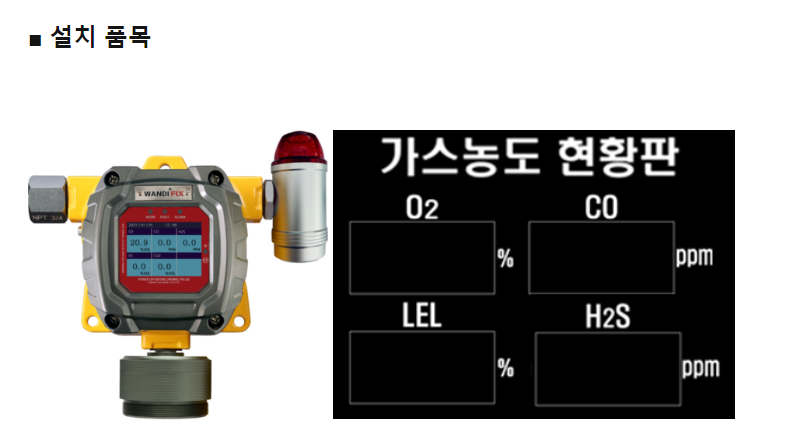
FIX800 fixed-type gas detector, 4-gas configuration:
O2: 0–30% Vol
CO: 0–1,000 ppm
H2S: 0–100 ppm
LEL: 0–100% LEL
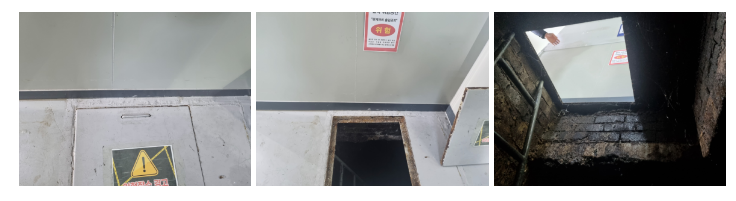
Installation point 1
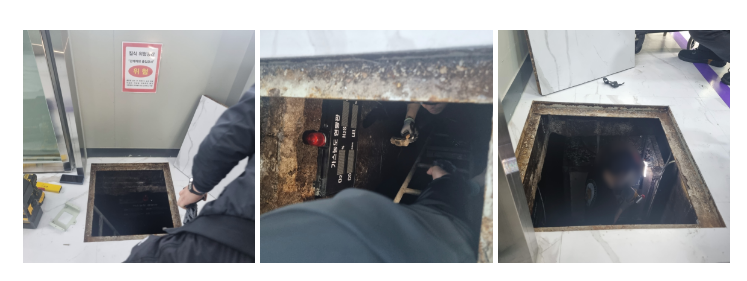
This space houses a wastewater storage tank. The customer requested that the display board be positioned so it is immediately visible when the entrance cover is opened, along with a gas detector inside. The space had no lighting and was too narrow for two people to enter at once, though the odor was manageable.
Installation point 2 — wastewater treatment area
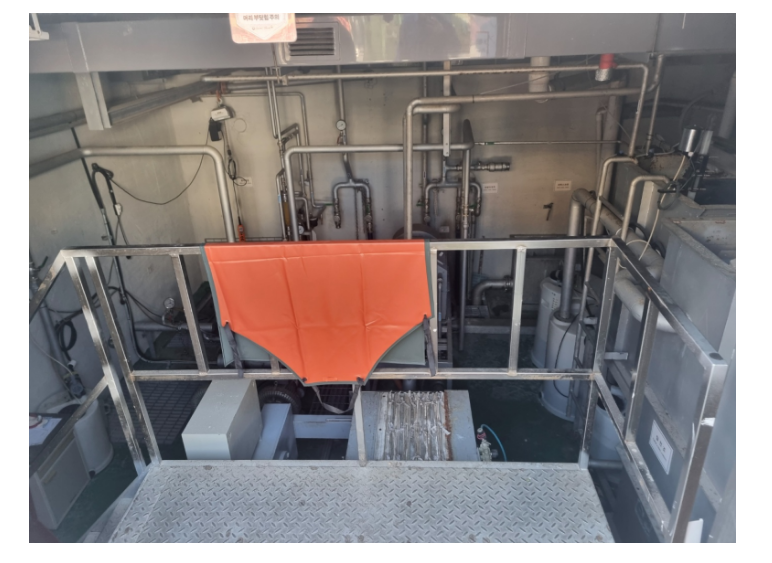
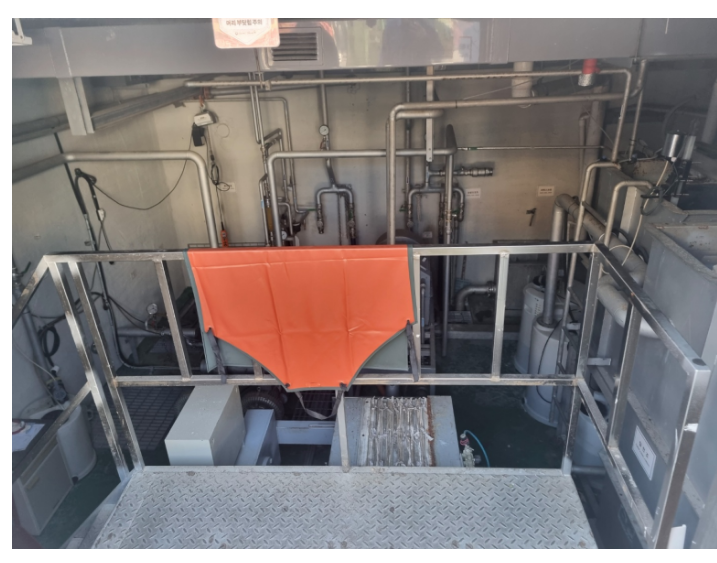
A separate wastewater treatment facility is located on the hospital grounds. The customer requested a detector and display board on the left-hand wall so that readings would be visible while descending the stairs.
Installation work
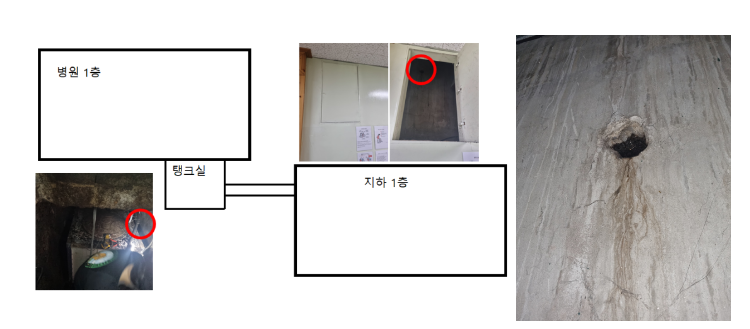
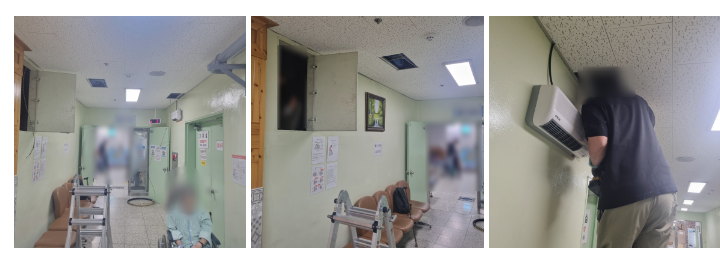
The tank room was too narrow to photograph from inside, so these photos were taken from above. There was no power source inside the tank room, and the room is accessed from a hallway used by hospital staff. Since running a new line through the wall would not have reached a power source either, the tank room wall was found to align with a spot on the basement level shown at right, so the power line was routed down to the basement and connected to an outlet there.
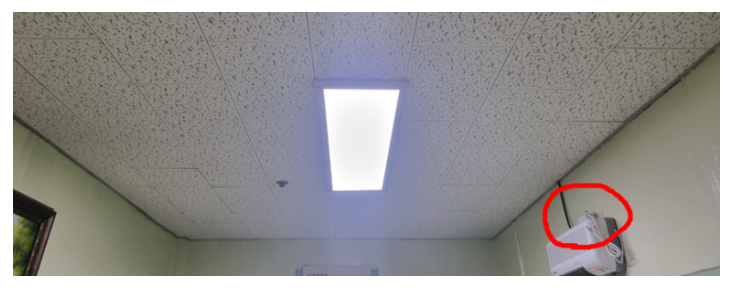
Power for the display board was drawn from a multi-outlet on the air conditioning unit, and the ceiling tiles were opened during the work to keep the power cabling as concealed as possible.
Once connected, both the display board and the fixed gas detector powered on correctly, and the warning light and alarm also functioned as expected, completing the wastewater tank room installation.
A display board is normally installed together with a fixed gas detector so that the internal gas concentration can be checked from outside the confined space. Since this facility was not inside the hospital building itself but at an outdoor wastewater treatment area, the display board was installed in front of the stairs on the left so it would remain clearly visible.
When installing at a facility like this, there are a few things to confirm with the customer in advance. Adding a dedicated earth-leakage circuit breaker to the electrical panel, or using an existing multi-outlet at the site, generally avoids complications. However, if the intended multi-outlet is already in use by other equipment and a direct connection from the outlet is required instead, the breaker feeding that outlet must be switched off for electrical safety during the work — and since this will also stop any other equipment connected to the same outlet, it is important to confirm in advance whether that equipment can be safely powered down during installation.
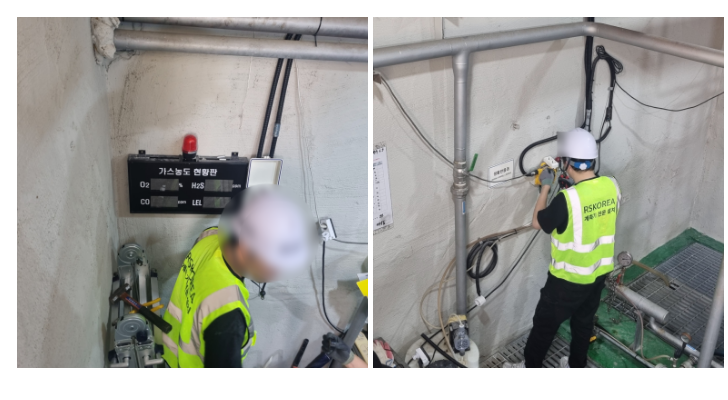
After completing the installation, the warning light and alarm were tested, and the customer was given a demonstration along with guidance on the product and its calibration cycle before the work was closed out. Because the display board uses LED modules, the readings remain clearly visible even from a distance, making for a satisfying finish to the project. This concludes our installation case at the Jeonju hospital. Thank you for reading.

Frequently Asked Questions (FAQ)
Q1. Why did the hospital need a gas detector and display board in this confined space?
The wastewater storage tank room is a confined space, and the customer wanted the internal gas readings to be visible immediately upon opening the entrance cover, before anyone enters — hence the combination of an internal detector and an external display board.
Q2. What gases does the FIX800 detector measure at this site?
The FIX800 fixed-type detector was configured for four gases: oxygen (O2, 0–30% Vol), carbon monoxide (CO, 0–1,000 ppm), hydrogen sulfide (H2S, 0–100 ppm), and combustible gas (LEL, 0–100%).
Q3. Why was the power line routed to the basement level?
There was no power source inside the tank room itself, and it is accessed from a staff hallway with no nearby outlet. Since the tank room wall aligned with a location on the basement floor, the power line was routed there and connected to an available outlet instead of creating a new supply point in the hallway.
Q4. What should be checked before connecting a display board to an existing outlet or multi-outlet?
If a direct connection is needed because the intended multi-outlet is already in use, the circuit breaker feeding that outlet must be switched off during the work for electrical safety. Because this also stops other equipment connected to the same outlet, it is important to confirm in advance that this equipment can be safely powered down.
Q5. Why was the display board installed outside the main hospital building?
The wastewater treatment facility is located separately from the hospital building, so the display board was installed near the stairs leading down to that facility, ensuring the LED readout remains clearly visible from a distance.
#WANDI#FIX800#GasDetector#DisplayBoard#ConfinedSpaceSafety#HospitalSafety#WastewaterTreatment#H2SDetector#OxygenMonitoring#RSKorea
![[레이먼드] 오,폐수 처리실 유해가스 모니터링](https://wandi.co.kr/storage/construction-cases/YxFUQVBZ8Unnk7pJzzfsmezr6xNe0LZvQRDmt7TL.jpg)
![[브이피이코리아] 종합병원 지하 밀폐공간 가스 측정기 설치_FIX800 & FIX-DS](https://wandi.co.kr/storage/construction-cases/gNOA28xSlEy5uU3AOxyHDRH5UfAe0TpMTgAt4Uag.jpg)

