Applied Markets
Installed Gases
Project Details
Following up on a previous post, we are sharing another installation case in Pohang — this time at a sewage sludge recycling facility.
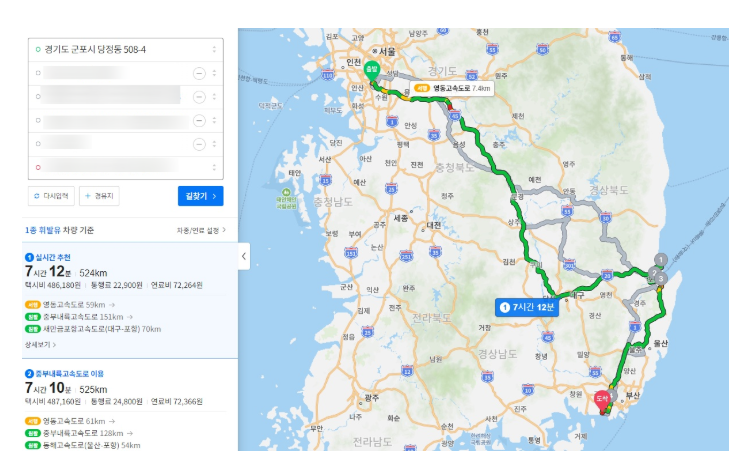
Site: Pohang sewage sludge recycling facility
Installation points and equipment:
- Sludge intake area: FIX800 (O2, H2S, EX), 1 set, plus an outdoor display board
- Dry sludge storage tank: FIX800 (CO), plus advanced pre-treatment equipment and a self-supporting display board
Schedule: 2 teams of 2, completed in 1 day
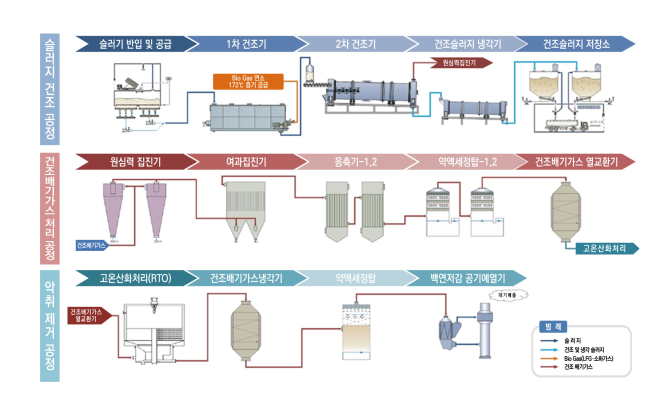
First, a quick overview of what a sewage sludge recycling facility is. (Photo source: Sudokwon Landfill Management Corporation.) Put simply, sewage sludge refers to food wastewater collected from household sinks. A facility that processes this sludge through several stages and converts it into a resource is called a sewage sludge recycling facility — in the same general category as the livestock manure treatment facilities covered in earlier posts.
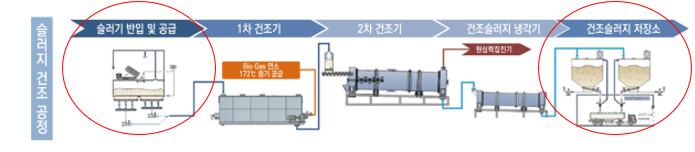
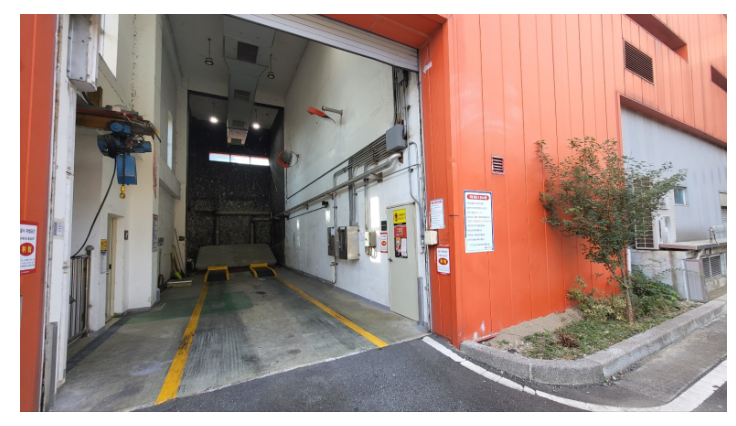
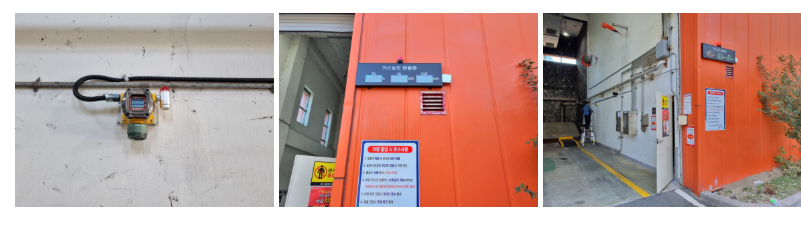
The two installation points for this project were as follows. Sludge intake area: filled with odors and potentially explosive gases, this area becomes a confined space once the shutter is lowered after intake is complete. A gas detector was installed here for the safety of workers inside.
Dry sludge storage tank: a warehouse where heat-treated dried material from the intake area is stored — beneath the green urethane flooring is effectively one large tank. Because flammable gases such as methane can be generated from the dried sludge just before it is recycled, even a small ignition source can cause a fire. To prepare for this risk, a CO detector was installed to monitor this key combustion gas.
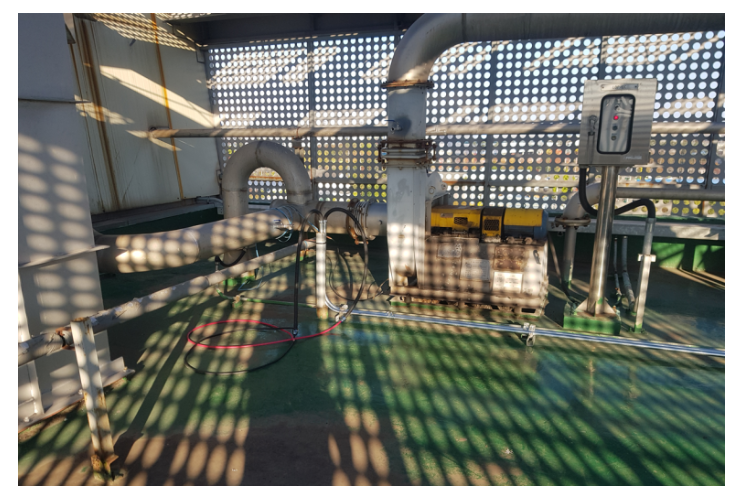
Because the installation points and power supply method had already been finalized through several prior meetings, the work went smoothly on site.
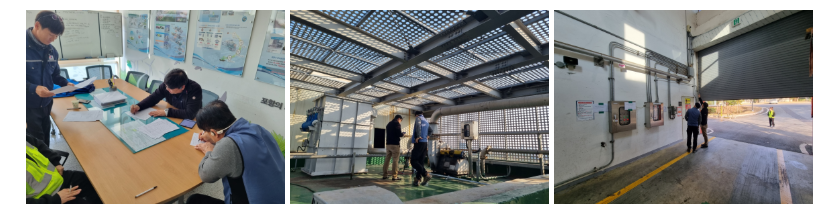
After completing safety training, the installation plan and sequence were briefed to the construction team and site personnel. The team split into two groups to handle each location in parallel; the photos below are organized one location at a time, starting with the sludge intake area.
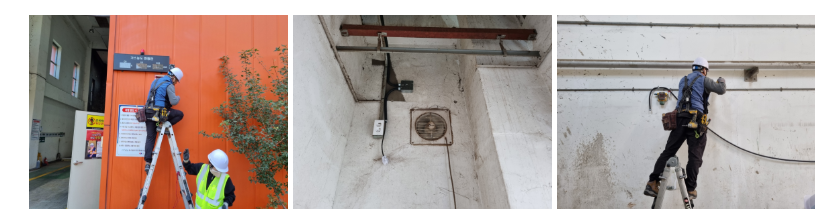
Gas detector installation — sludge intake area
1. After drilling into the concrete wall, the display board was installed first.
2. Power was drawn from an existing ventilation fan outlet behind the wall; a single outlet was converted to a dual outlet to leave a spare.
3. The detector was installed and the wiring cut to length.
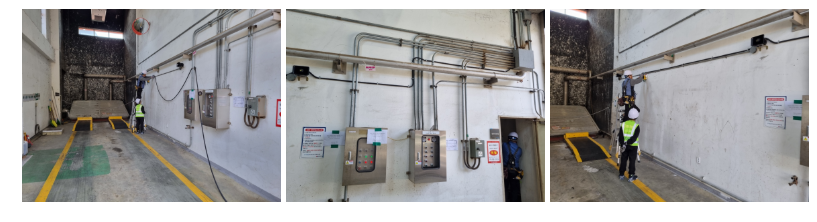
4. Wire ends were terminated based on the cut lengths.
5. Cabling was neatly routed with saddle clips so as not to interfere with existing fixtures.
6. Finally, the display board was connected to the FIX800 — a straightforward finish.
CO detector installation — dry sludge storage tank
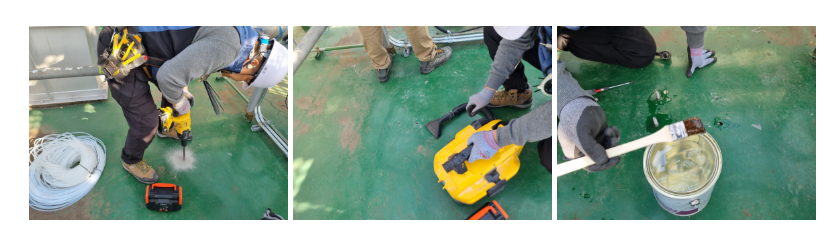
This site was fitted with a self-supporting stainless enclosure and pre-treatment equipment, so anchor work was carried out first. Holes were drilled with a hammer drill to match the anchor bolt length, and the drilled area and surrounding dust were cleaned. The waterproof coating around the drilled area, which could lift due to the drilling, was re-sealed.
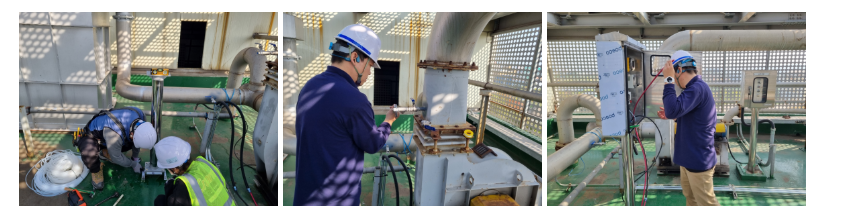
4. The anchors were installed and leveled.
5. Piping was routed to connect the gas IN/OUT hoses to the blower's positive-pressure inlet and negative-pressure outlet; these ports had already been welded in place as agreed during the planning meetings.
6. The pre-installed 220V power line and 4–20mA signal line were wired. Due to a scheduling conflict with the electrical works team, power was not yet supplied at this stage.
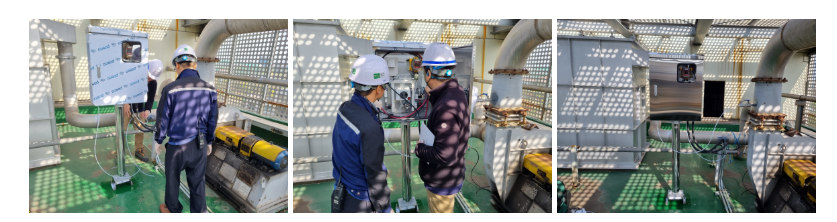
7. Durable PTFE hose was connected to the completed piping.
8. Product training and usage guidance were provided to the site manager.
9. Here is the finished installation.

Even though power had not yet been connected, a trial run was still possible, since this project involved two slightly different types of installation carried out simultaneously at the same site. Because all the details had been coordinated in advance through site surveys and multiple meetings, the actual on-site work could be completed very efficiently — a good reminder of how valuable careful preparation is. We believe the photos speak for themselves, so we will wrap up here. If you need gas measurement equipment, please feel free to contact us for installation, commissioning, or product demonstrations, during weekday business hours (9am–6pm, closed on national holidays).
Frequently Asked Questions (FAQ)
Q1. Why was a gas detector installed at the sludge intake area?
The sludge intake area becomes a confined space once the shutter is lowered after intake, and it can contain odorous and potentially explosive gases. A detector covering O2, H2S, and EX (combustible gas) was installed to protect the safety of workers entering this space.
Q2. Why was a CO detector chosen for the dry sludge storage tank?
Dried sludge just before recycling can generate flammable gases such as methane, and even a small ignition point can cause a fire. A CO detector was installed to monitor this representative combustion gas as a fire-prevention measure.
Q3. How long did the installation take?
Two teams of two technicians completed both installations at this site within a single day, thanks to detailed coordination of installation points and power supply methods during several prior planning meetings.
Q4. Was the equipment powered on immediately after installation?
At the dry sludge storage tank, the final electrical connection was delayed due to a scheduling conflict with the electrical works team, but a trial run of the equipment was still carried out successfully as part of the overall commissioning process.
Q5. What equipment was used for the dry sludge storage tank installation?
The tank was fitted with a self-supporting stainless enclosure, advanced pre-treatment equipment, and a FIX800 CO detector, connected via durable PTFE hose to the blower's gas sampling ports.
#WANDI#FIX800#GasDetector#SewageSludge#ConfinedSpaceSafety#COMonitoring#CombustibleGasDetector#RecyclingFacility#IndustrialSafety#RSKorea
![[레이먼드] 오,폐수 처리실 유해가스 모니터링](https://wandi.co.kr/storage/construction-cases/YxFUQVBZ8Unnk7pJzzfsmezr6xNe0LZvQRDmt7TL.jpg)
![[브이피이코리아] 종합병원 지하 밀폐공간 가스 측정기 설치_FIX800 & FIX-DS](https://wandi.co.kr/storage/construction-cases/gNOA28xSlEy5uU3AOxyHDRH5UfAe0TpMTgAt4Uag.jpg)

