Applied Markets
Installed Gases
Project Details
Hello, this is RS Korea. Today's post covers an installation at an agricultural and marine products market wastewater treatment plant. Like other wastewater treatment facilities, this is where all the wastewater and residue generated at the market — used water, ice used to keep seafood fresh, and so on — is collected in one place.
■ Purpose of installation
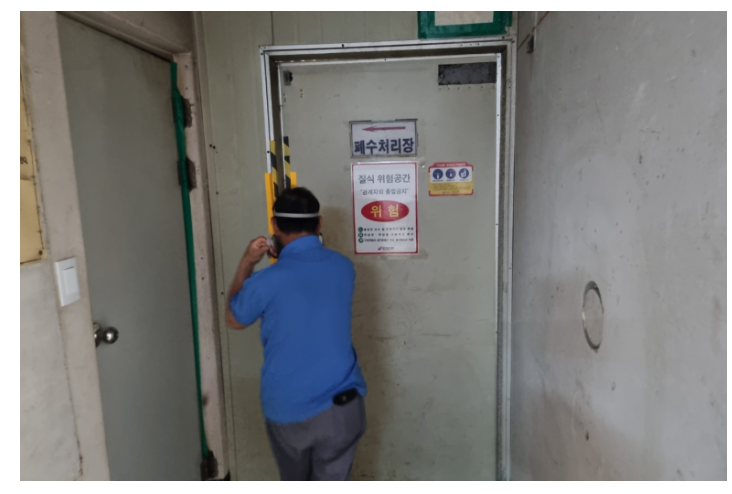
Because this wastewater treatment plant is located underground, it is classified as a confined space, requiring measurement of the five gases mandated for confined spaces under Korea's Occupational Safety and Health Act: O2, CO, CO2, H2S, and LEL (combustible gas). During the seafood wastewater treatment process, H2S concentrations exceeding 10 ppm were being generated, so the client requested a gas detector and electronic display board to protect worker safety.
What is H2S? Hydrogen sulfide (H2S) is a gas with a rotten-egg odor. Classified as a toxic gas, even small amounts can cause difficulty breathing, nausea, and vomiting if inhaled, and severe exposure can be fatal. Because it's invisible, extra caution is required.
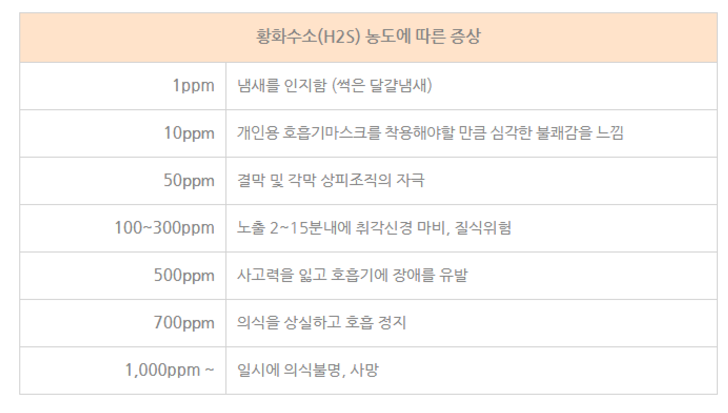
■ Pre-installation work: safety training
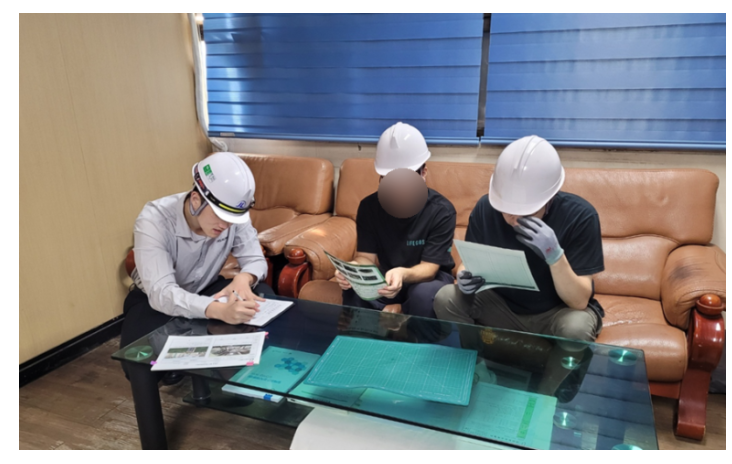
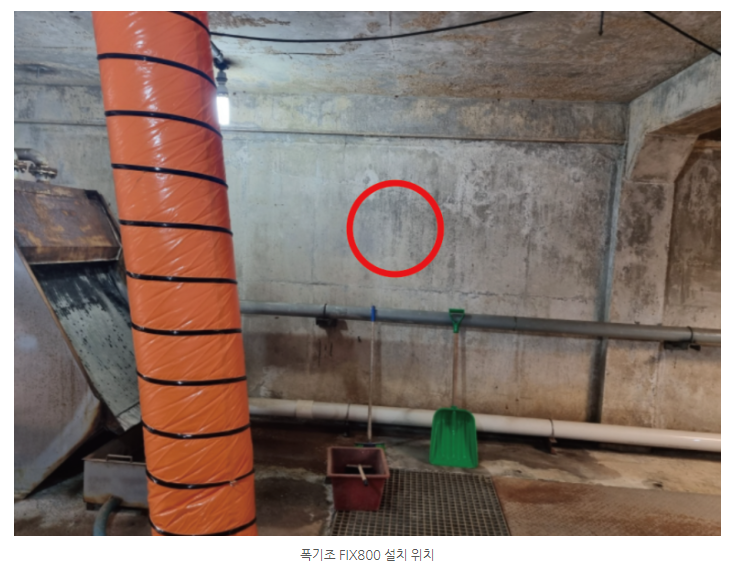
Since this installation took place in a confined space with toxic gas present, safety training was conducted before work began. The planned installation points, marked during the earlier site survey, were reconfirmed on site before construction proceeded.
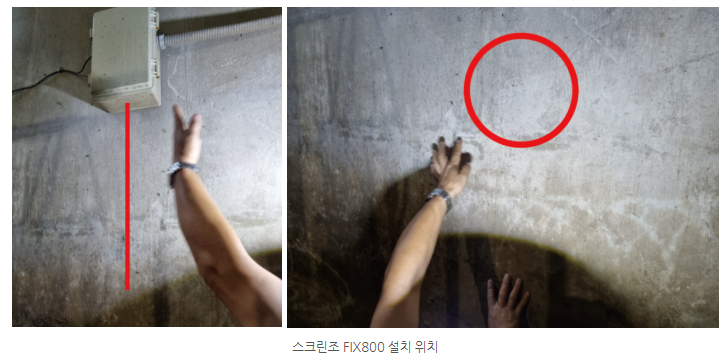
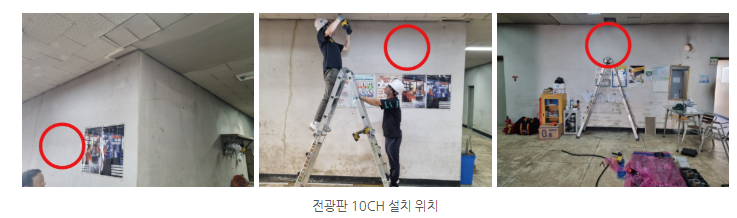
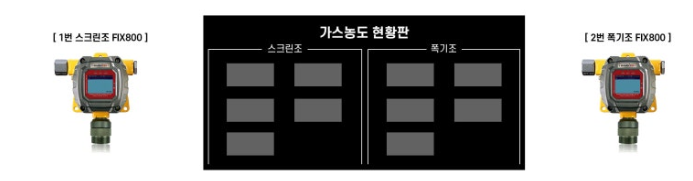
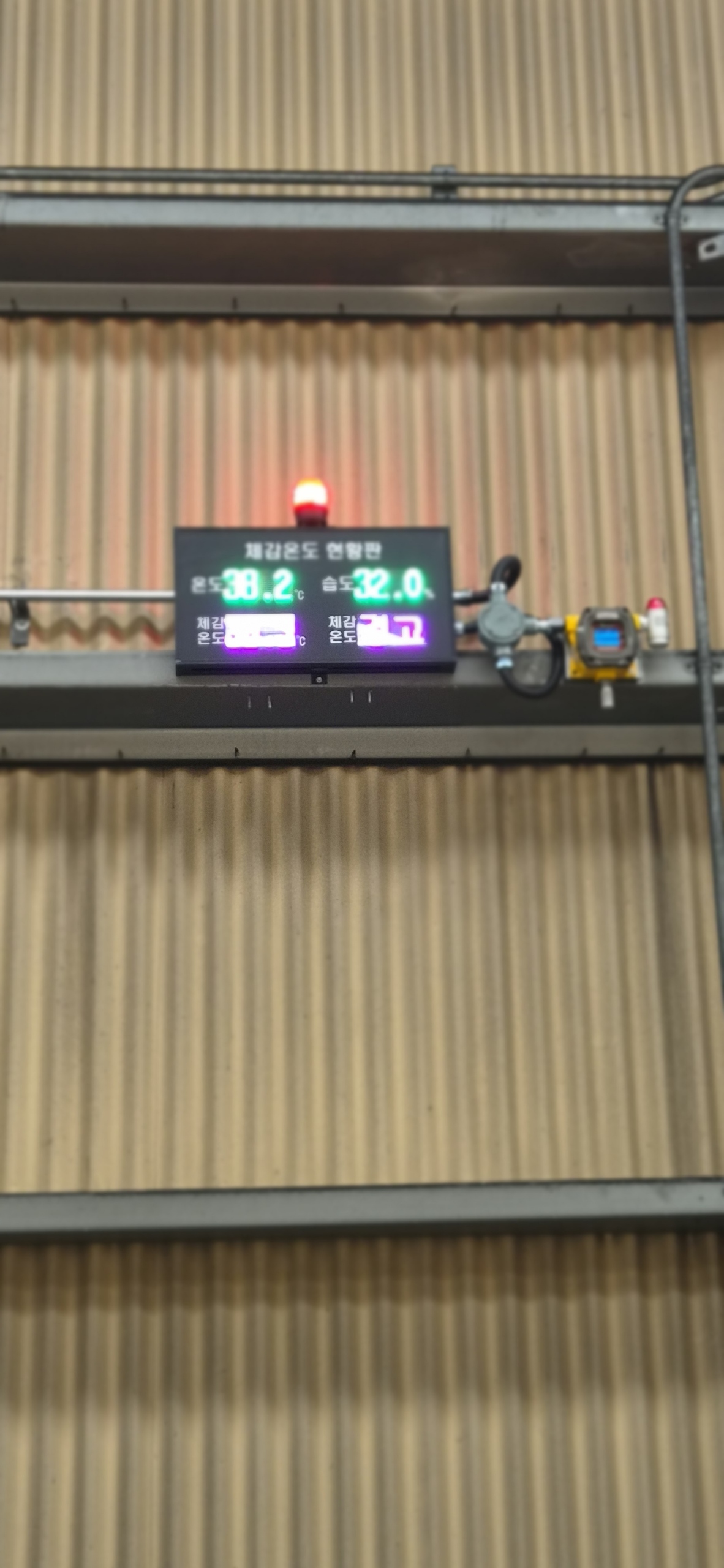
The display board was originally planned for the left wall of the lobby. We considered moving it to the front wall, but since site staff found the original left-wall position easier to view, it was kept in its initial location. This particular display board was configured to show the readings from two FIX800 units simultaneously.
■ Product introduction
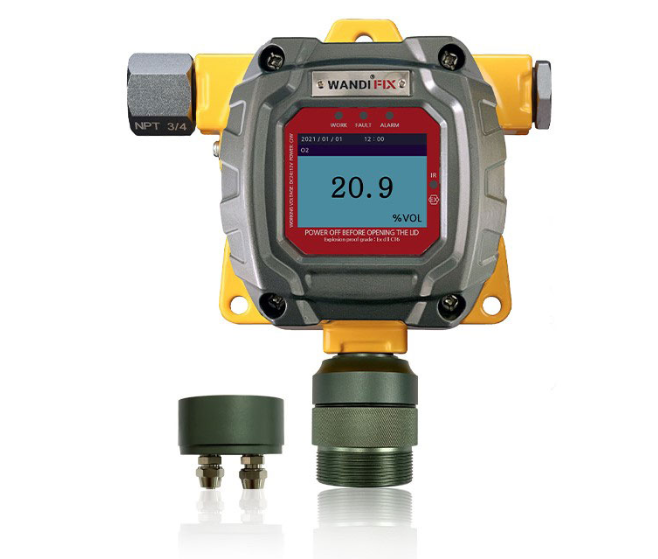
The unit installed was the FIX800, a fixed-type gas detector from WANDI, a brand specializing in gas detection equipment. The FIX800's housing uses military-grade high-strength aluminum, allowing it to operate reliably even in harsh environments. It supports threaded pipe insertion (M45×15) as well as optional pump or suction adapters, making it adaptable to a wide range of site conditions.

The FIX800 supports a range of output options, including 4–20mA, RS-485, and two relay outputs, allowing flexible response to on-site conditions and easier data management.
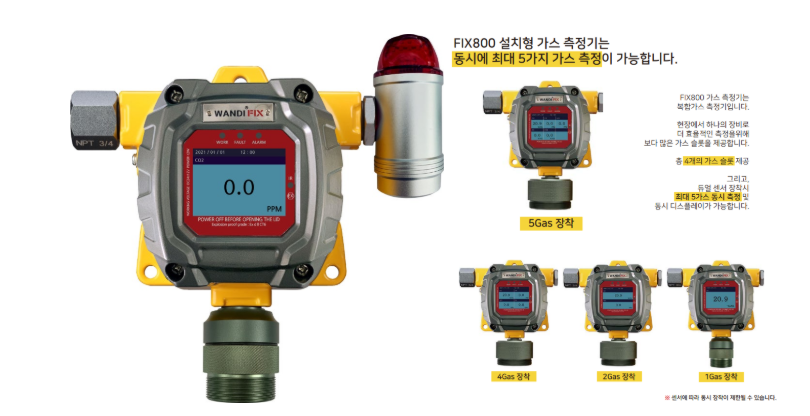
The unit supports more than 40 gas types, allowing configuration to match a wide range of site requirements, with the unit of measurement selectable at the time of order. The FIX800 can measure up to five gases simultaneously: it provides four sensor slots, and with dual sensors installed, up to five gases can be measured and displayed at the same time.
■ Installation work
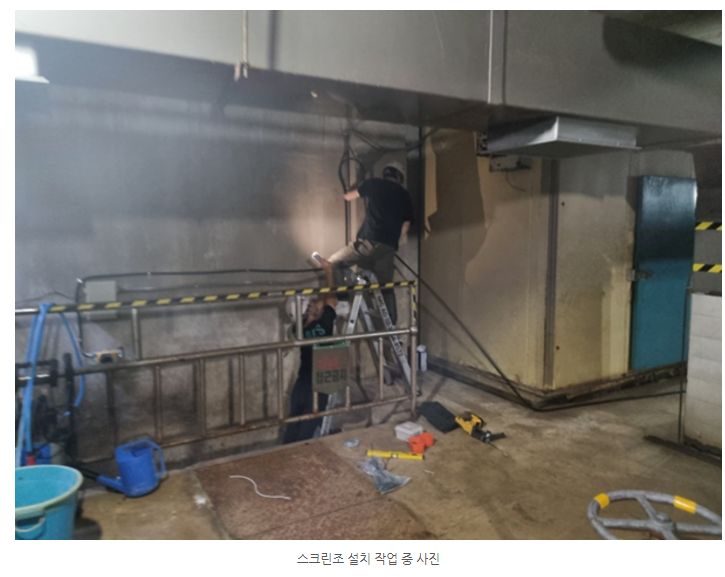
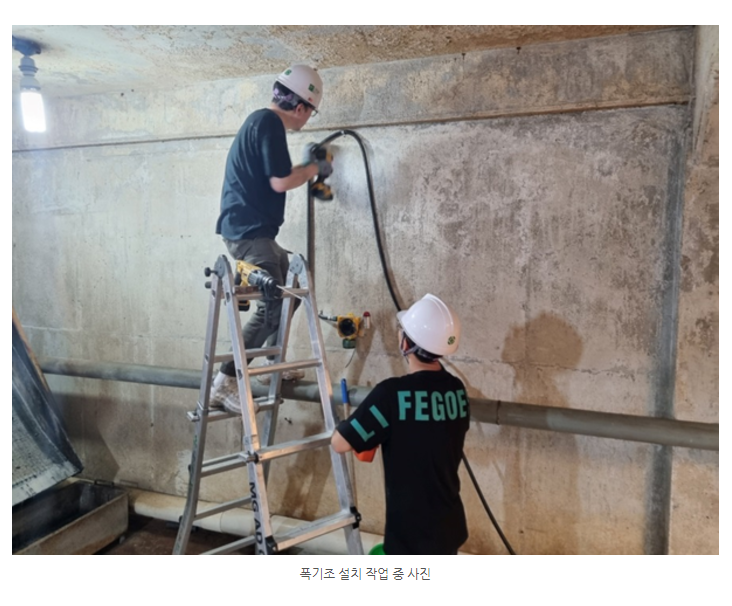
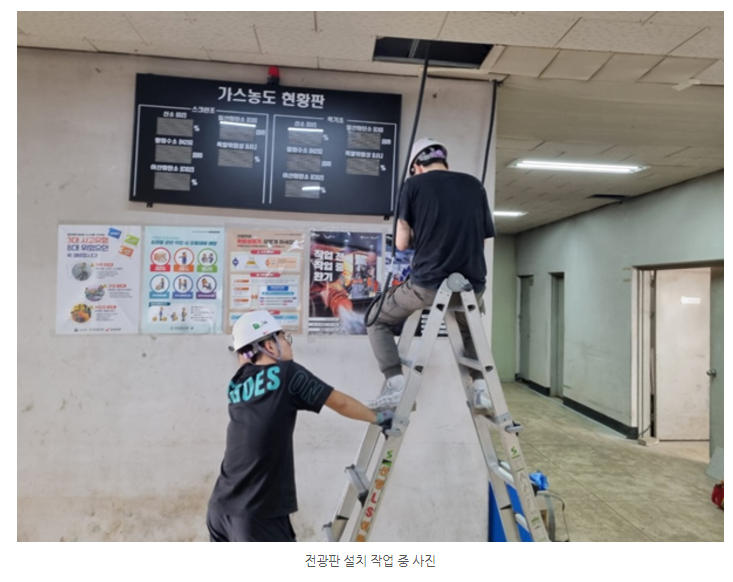
Beyond the H2S itself, the odor at the site was strong enough that work proceeded with the entrance kept open, alternating 30 minutes of work with 5-minute ventilation breaks throughout.
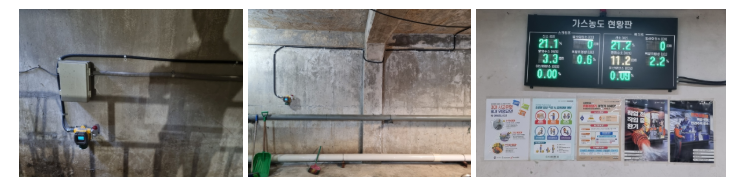
This is the site after the FIX800 and display board installation was completed. The client also mentioned plans to install an automatic ventilation system in addition to the gas detector, for further worker safety.
■ After installation
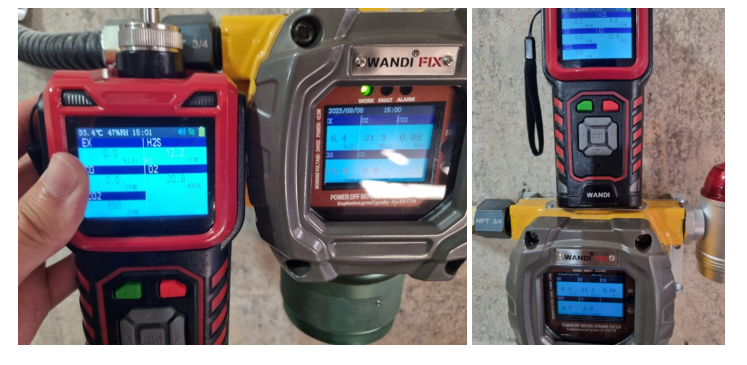
After installation, the client asked us to confirm that the FIX800 was measuring gas correctly, so we returned with G2000 demo equipment. The FIX800's readings were cross-checked against the calibrated demo unit, and we also provided maintenance training and an alarm test.
■ Summary
This site is a confined space where H2S — a toxic gas harmful to the human body — is generated during seafood wastewater treatment, which is why the FIX800 was installed for safety purposes. Under Korea's Occupational Safety and Health Act, confined spaces require measurement of five key gases: O2, CO, CO2, H2S, and LEL. Installing a gas detector is strongly recommended to help prevent accidents. Beyond simply selling products, RS Korea specializes in gas measurement — including self-calibration, domestic repair (A/S), custom manufacturing, and installation work — and provides one-to-one customized solutions based on experience across demonstrations, site surveys, deliveries, repairs, and installations in a wide range of environments.
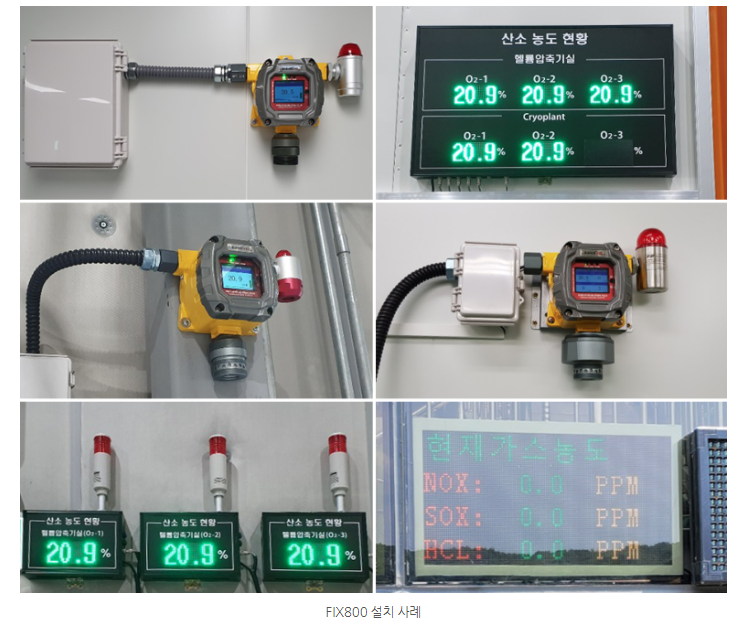
This concludes our post on the FIX800 installation at an agricultural and marine products market. For any inquiries about gas detector surveys, installation, or other environmental monitoring equipment, please feel free to contact us.

Frequently Asked Questions (FAQ)
Why does this site require five different gas sensors?
Because the facility is an underground, confined-space wastewater treatment plant, Korea's Occupational Safety and Health Act requires monitoring of five gases — O2, CO, CO2, H2S, and LEL (combustible gas) — as a baseline safety measure.
Why is H2S particularly dangerous at this site?
H2S (hydrogen sulfide) is a toxic, invisible gas with a rotten-egg odor that can cause difficulty breathing, nausea, and vomiting even in small amounts, and can be fatal at higher concentrations — and it was measured above 10 ppm during the seafood wastewater treatment process here.
How many gases can the FIX800 measure at once?
The FIX800 provides four sensor slots and, with dual sensors installed, can measure and display up to five gases simultaneously, selected from more than 40 supported gas types.
How was worker safety maintained during installation given the strong odor on site?
Installation proceeded with the entrance kept open for ventilation, alternating roughly 30 minutes of work with 5-minute ventilation breaks throughout the process.
How is detector accuracy verified after installation?
Readings from the installed FIX800 units are cross-checked against a calibrated demo unit on a follow-up visit, along with maintenance training and an alarm test for the site staff.
#FIX800 #WANDI #H2SDetector #ConfinedSpaceSafety #WastewaterTreatment #FixedGasDetector #GasDetectorInstallation #DisplayBoard #IndustrialSafety #OccupationalSafety
![[레이먼드] 오,폐수 처리실 유해가스 모니터링](https://wandi.co.kr/storage/construction-cases/YxFUQVBZ8Unnk7pJzzfsmezr6xNe0LZvQRDmt7TL.jpg)
![[브이피이코리아] 종합병원 지하 밀폐공간 가스 측정기 설치_FIX800 & FIX-DS](https://wandi.co.kr/storage/construction-cases/gNOA28xSlEy5uU3AOxyHDRH5UfAe0TpMTgAt4Uag.jpg)

