Installed Gases
Project Details
This is RS Korea's technical sales team. We recently received an inquiry about relocating and reinstalling a gas detector due to a laboratory reorganization. From an expert's perspective, relocating a fixed detector is simple enough — disconnect the power, remount the unit at the new location, and reconnect it. For someone without that experience, though, an unfamiliar measuring instrument can feel intimidating to handle. Even with our own experience across electrical work, refrigerant tools, and detector installation, there are still things best left to the right specialist — which is exactly why we always recommend consulting an expert for this kind of relocation work. We asked the client to send photos of the unit and its installation location.
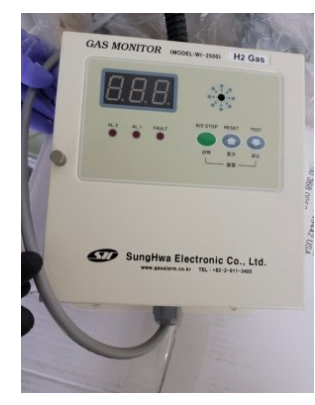

Interestingly, the detector turned out to be a model RS Korea doesn't typically carry — a product from a familiar competitor in the same industry. Our first instinct was that this inquiry might be better handled by the client's original supplier. As it turned out, internal changes at the client's facility — including a lab relocation and a change in the responsible staff member — meant that arranging the relocation through the original installer wasn't possible, and the inquiry reached RS Korea instead, through our installation blog.

It's common practice not to take on unfamiliar equipment, but that's not how we approach things at RS Korea. Drawing on years of experience across installations, site inspections, repairs, and calibration work, we accepted the request and headed to the site in Daejeon.
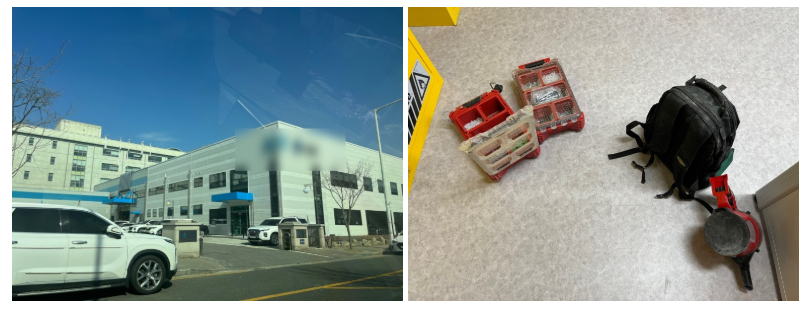
The site was a pharmaceutical company in Daejeon. We prepared our tools and materials, along with a vacuum cleaner to leave the workspace as clean as we found it.
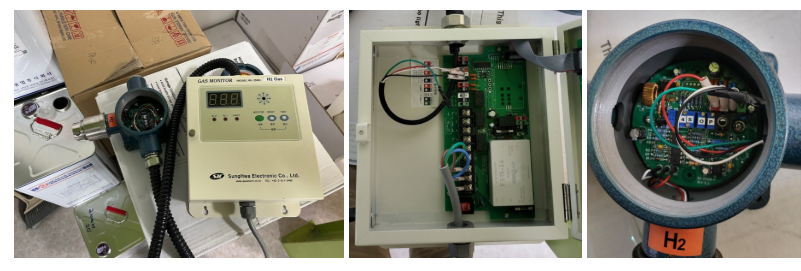
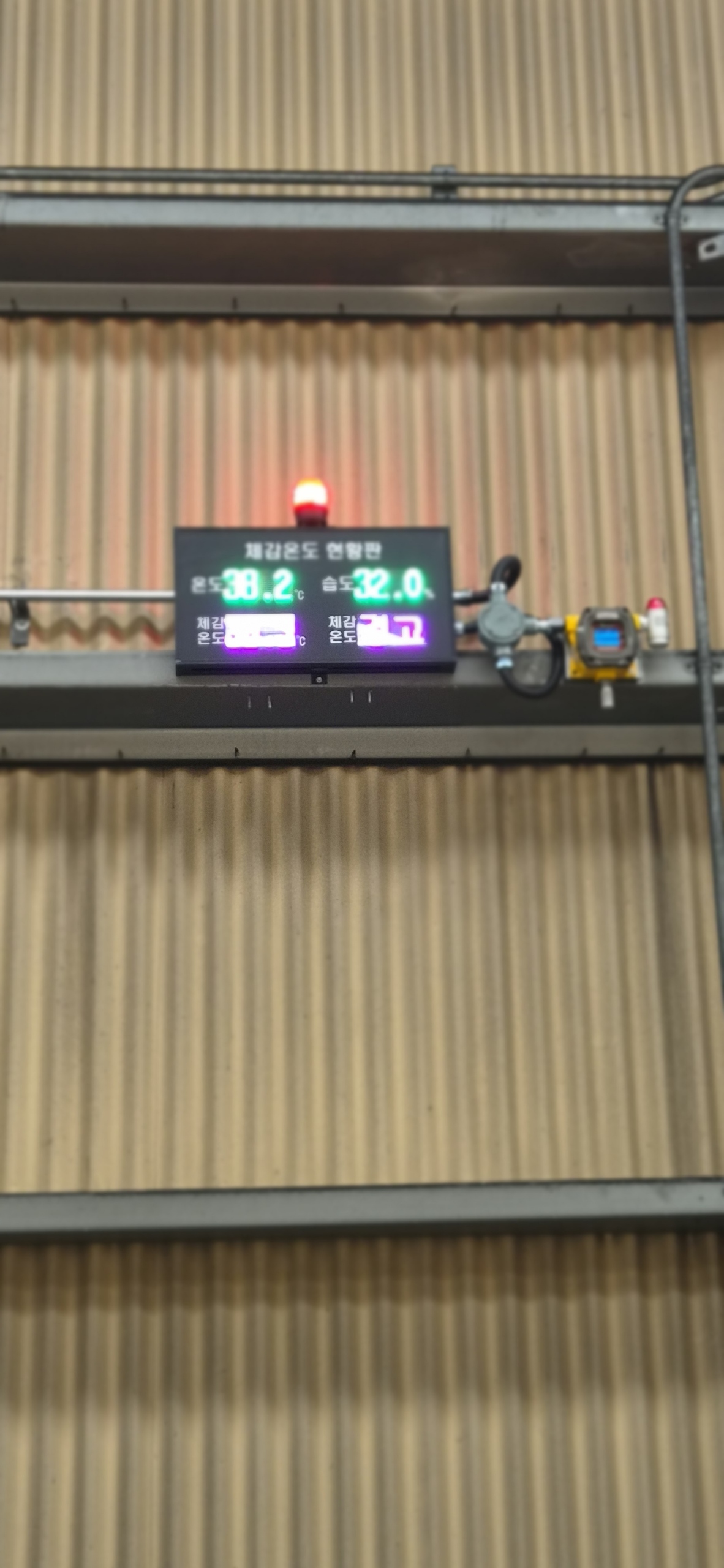
The unit itself was a sensor-and-transmitter configuration without its own display, paired with a separate monitoring box for alarms and readings. The wiring board looks complex at first glance, but the essential task is straightforward: connecting the power supply and the wired signal line between the detector and the monitoring system. We carefully disassembled the unit and, even though the terminals were labeled on the board, photographed the internal wiring beforehand to avoid any mistakes when reconnecting it.
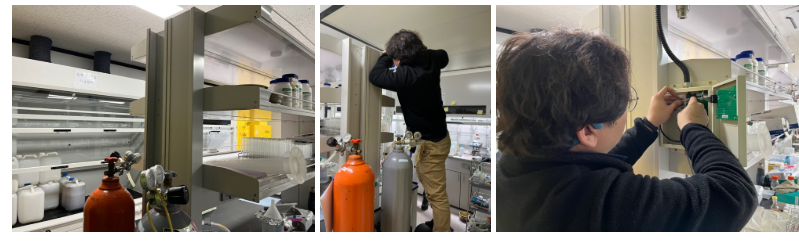
We double-checked the installation location and power supply. Since hydrogen is one of the lightest gases and tends to rise, the detector was mounted above the hydrogen gas cylinder to catch any potential leak early. Once the position was confirmed, installation proceeded.
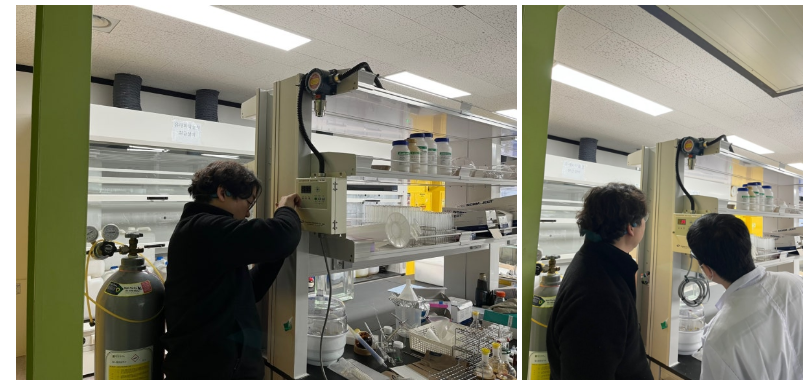
After completing the wiring, we used standard calibration gas to confirm the detector's response and alarm activation.
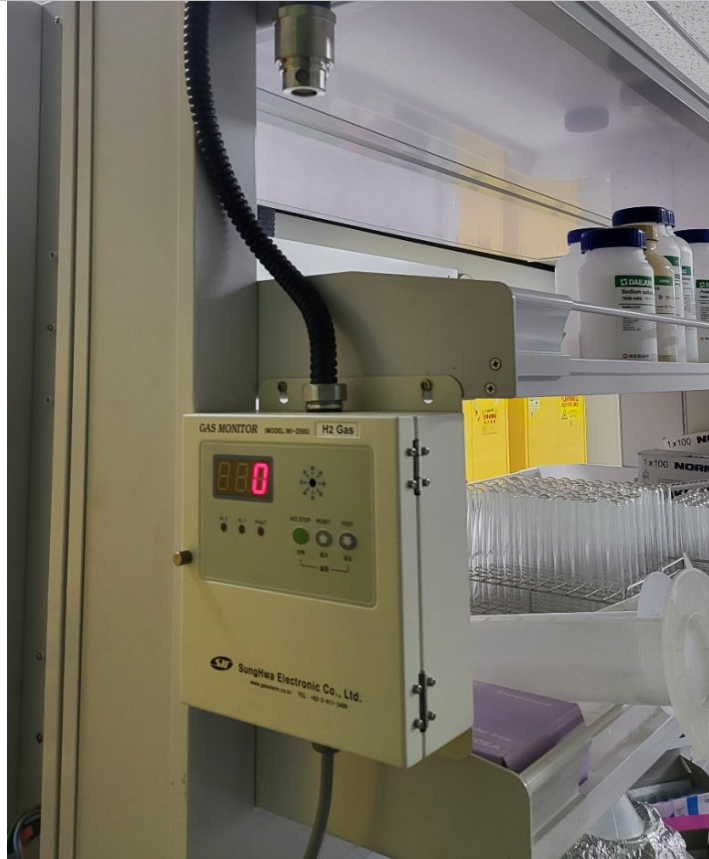
With future relocation in mind, the excess cable length was neatly coiled and secured on the laboratory rack. The clean installation and successful test run left both the client and our technician satisfied with the result.
To summarize: we relocated and recommissioned a hydrogen gas detector — a model outside RS Korea's usual product line — at a pharmaceutical company in Daejeon. Drawing on years of installation, repair, inspection, and calibration experience, RS Korea is glad to help with environmental measurement equipment questions whenever we can, even beyond our own product lineup. Feel free to reach out anytime.
Frequently Asked Questions (FAQ)
Can RS Korea relocate a gas detector that isn't one of its own products?
Yes. Based on extensive experience with installation, repair, inspection, and calibration work across many detector types, RS Korea can assist with relocation and recommissioning even for equipment outside its usual product lineup.
Why is professional installation recommended instead of relocating a detector without one?
While disconnecting and reconnecting a fixed detector may sound simple, an unfamiliar measuring instrument can be intimidating to handle correctly, and incorrect reinstallation can affect its accuracy or safety function — which is why professional support is recommended.
Why was the hydrogen detector mounted above the gas cylinder?
Hydrogen is one of the lightest gases and tends to rise, so mounting the detector above the potential leak source allows it to catch a leak early.
What precautions are taken when disassembling and reconnecting the wiring?
Even when terminals are labeled on the board, the internal wiring is photographed beforehand so the connections can be verified and reproduced correctly during reinstallation.
How is the detector's function verified after relocation?
After completing the wiring, standard calibration gas is used to confirm that the detector responds correctly and that the alarm activates as expected.
#WANDI #HydrogenDetector #GasDetectorRelocation #Recommissioning #PharmaceuticalSafety #GasLeakDetection #FixedGasDetector #IndustrialSafety #Daejeon #GasDetectorInstallation
![[레이먼드] 오,폐수 처리실 유해가스 모니터링](https://wandi.co.kr/storage/construction-cases/YxFUQVBZ8Unnk7pJzzfsmezr6xNe0LZvQRDmt7TL.jpg)
![[브이피이코리아] 종합병원 지하 밀폐공간 가스 측정기 설치_FIX800 & FIX-DS](https://wandi.co.kr/storage/construction-cases/gNOA28xSlEy5uU3AOxyHDRH5UfAe0TpMTgAt4Uag.jpg)

