Applied Markets
Installed Gases
Project Details
Hello, this is RS Korea.
Today we visited a resource recovery center whose septic tank room needed a fixed-type gas detector for confined-space safety. Since it's a resource recovery facility, the interior was clean and there was a lot to see, so we would have liked to share more — but photography wasn't permitted beyond the work itself, so we don't have interior photos to show this time.
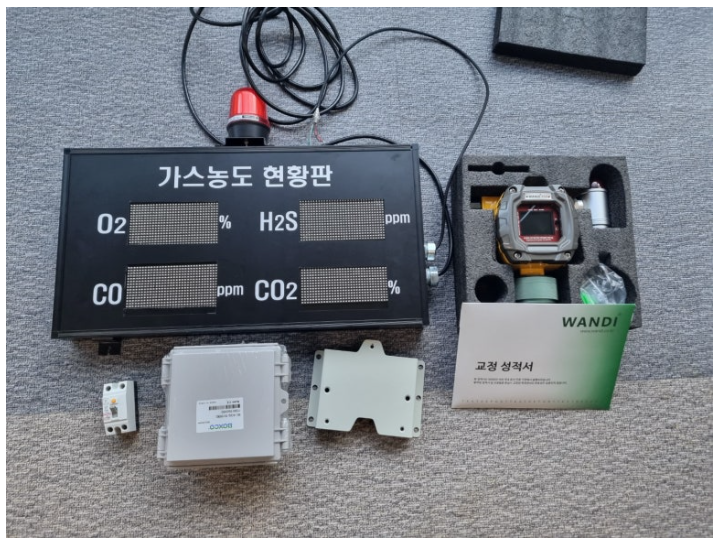
FIX800 Detector Installed
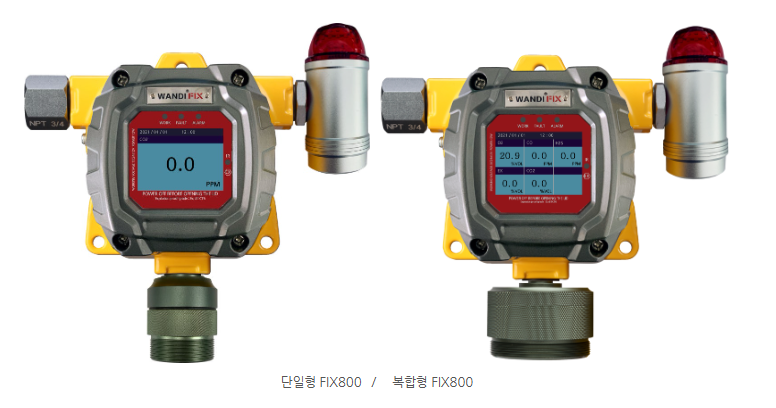
This is the FIX800, a fixed-type gas detector from WANDI, a brand specializing in gas detection equipment.
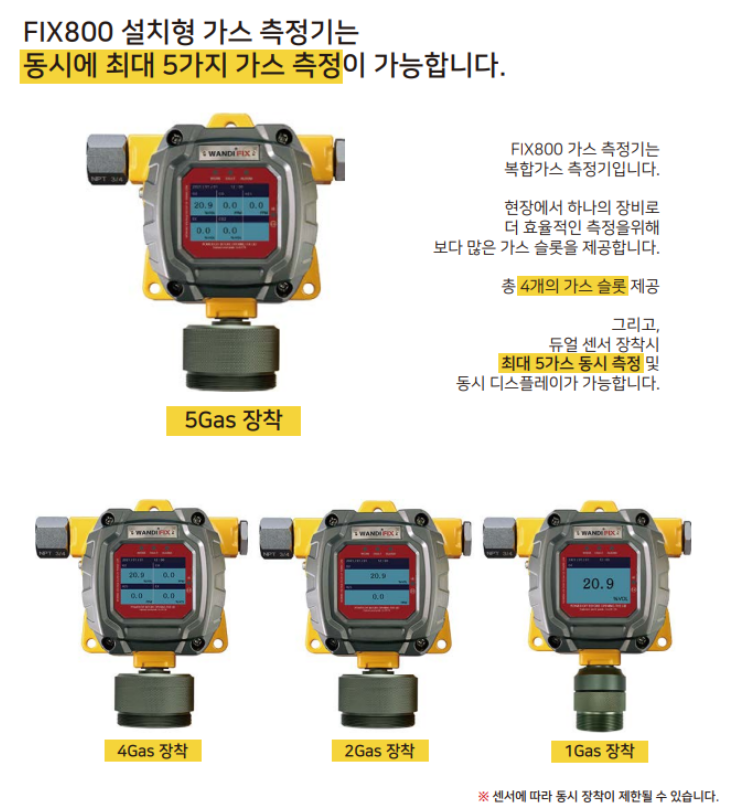
Since the sensor is mounted at the bottom of the unit, a multi-gas configuration requires a larger circuit board, which is why the housing size at the bottom varies depending on the configuration.
Installation Environment
This installation is inside a confined space within a septic tank. The client asked for a fixed-type detector both for worker safety and for day-to-day convenience.
Gases and ranges — safety monitoring for oxygen, carbon monoxide, hydrogen sulfide, and carbon dioxide:
O2 (oxygen): 0–30% vol
CO (carbon monoxide): 0–1,000 ppm
H2S (hydrogen sulfide): 0–100 ppm
CO2 (carbon dioxide): 0–5% vol
The client asked us to take periodic breaks during the work, since the entrance is narrow, access requires climbing down a ladder, and the space is a confined space. This request reflected genuine concern for our safety.
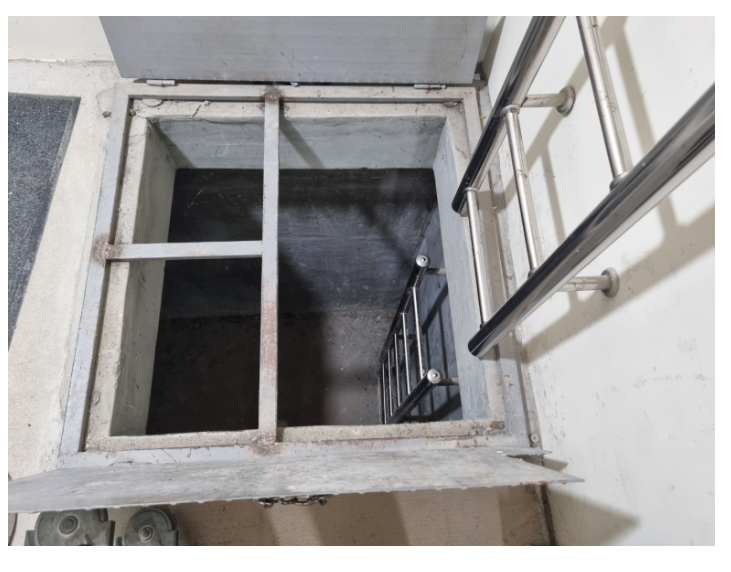
By this point we've visited plenty of sites and climbed plenty of ladders, and even after all that experience, this narrow entrance was a reminder not to get overconfident about any site, however routine it may seem.
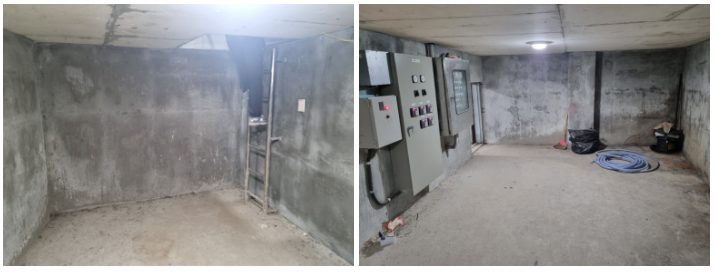
Going down the narrow entrance ladder leads to a power supply panel inside the septic tank (no odor at all up to this point, so we thought this might be an unusually pleasant site).
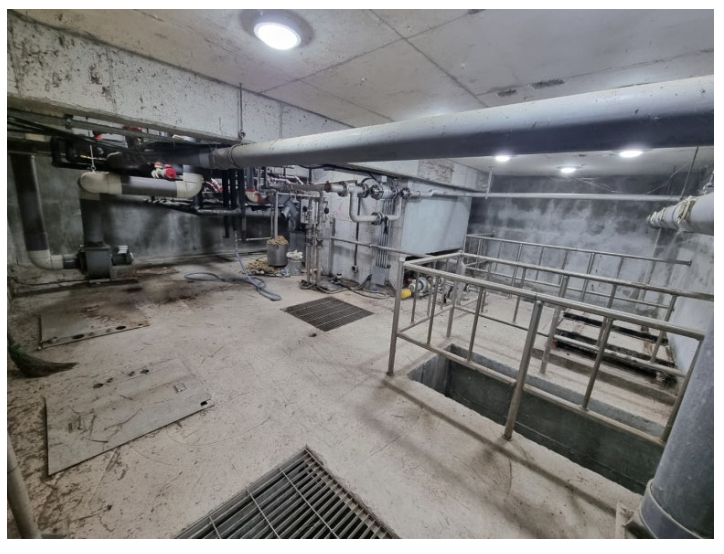
Through the inner door is the septic tank room itself — and, as expected, the familiar odor was there to greet us.
One question we're often asked on-site is where exactly the detector should be installed. When the client has no specific preference, we typically explain that we install it near the gas source and at roughly human breathing height. Once the client confirms the likely gas source, we identify a suitable nearby spot, get their approval, and begin installation.
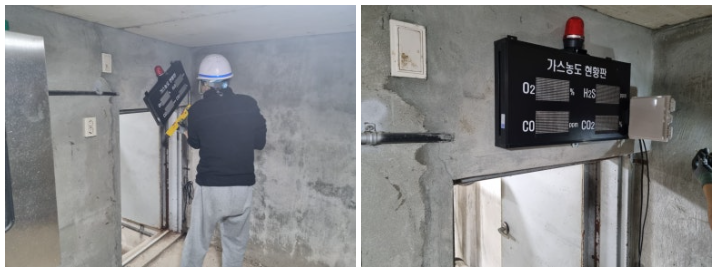
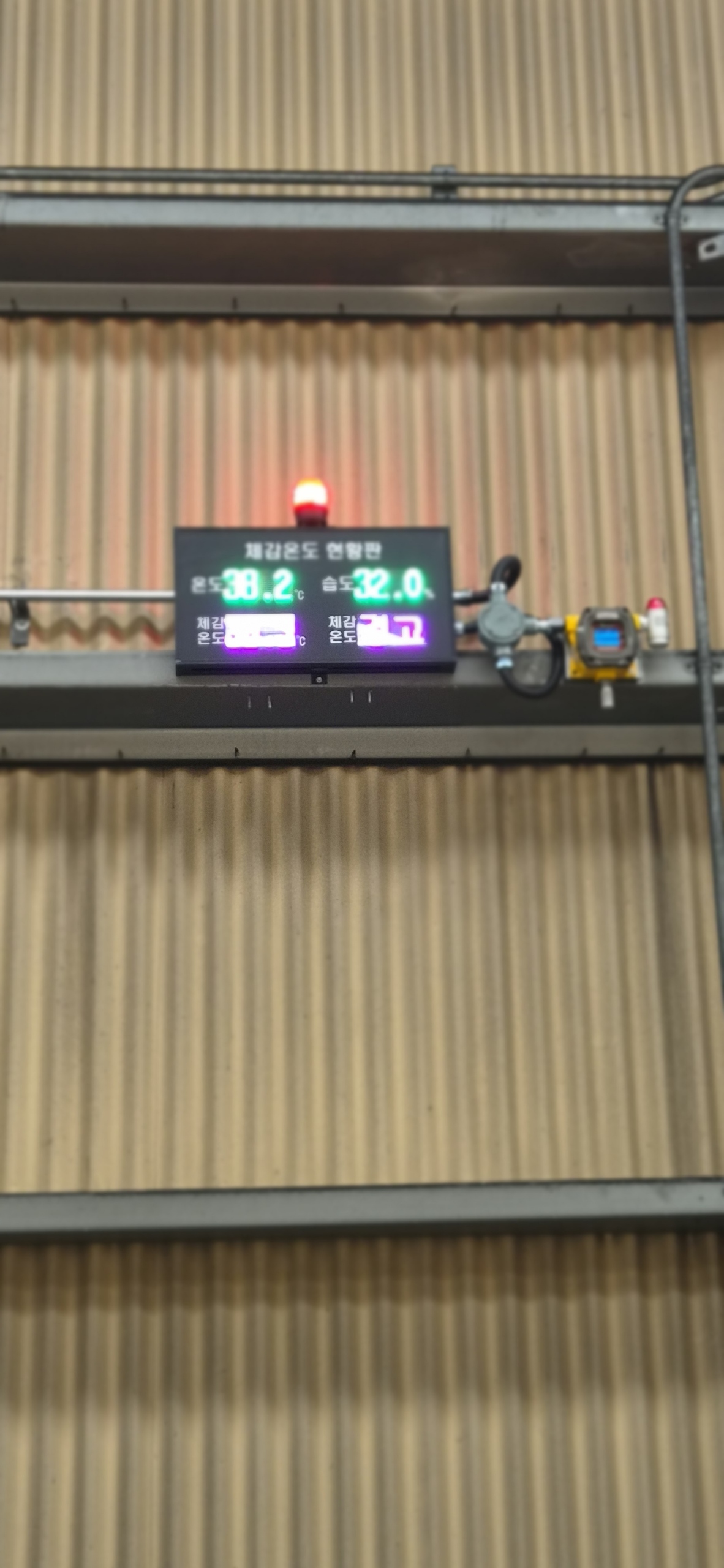
The display board was installed above the entrance to the septic tank room,
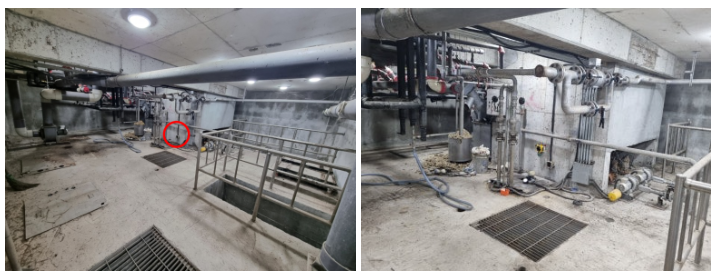
and the FIX800 fixed-type detector was installed beside the waste tank. The odor was noticeably stronger there, and given that it was also stronger toward the center of the room than elsewhere, it turned out to be a good position for the detector.
Even in a septic tank room that workers visit only occasionally, it's RS Korea's principle to route power and communication lines neatly regardless.
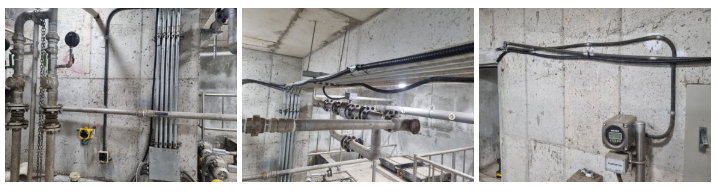
We routed waterproof flexible conduit along the existing piping as much as possible.
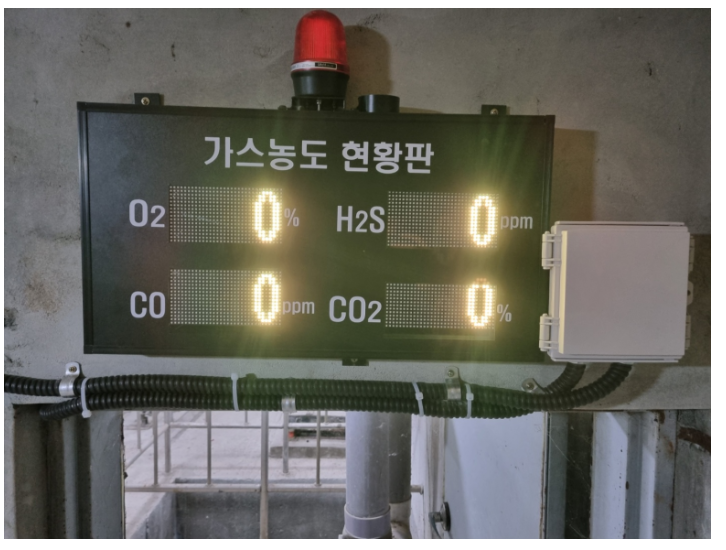
The connection to the detector itself had no issues, but communication wasn't working correctly. It turned out to be a minor problem — a terminal inside the display board appeared to have come loose — so we quickly disassembled and reseated it.
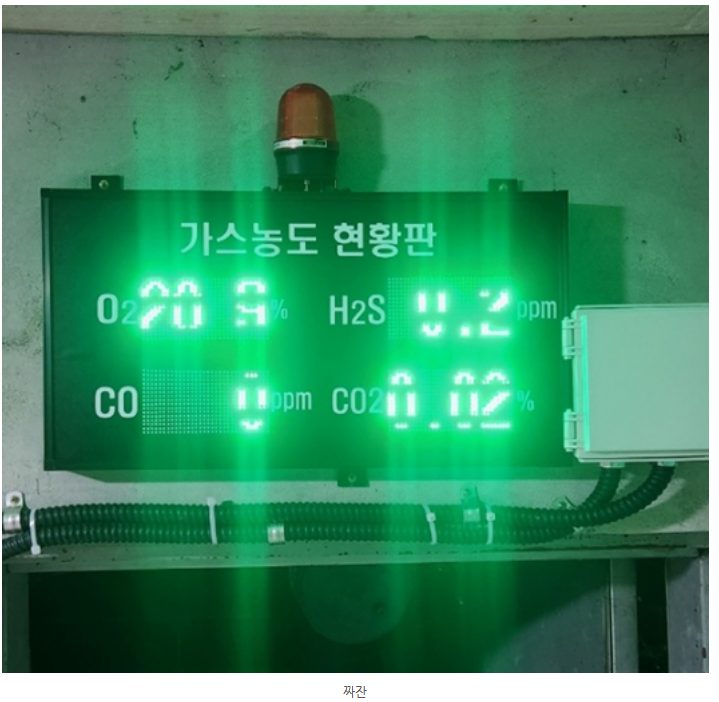
With that fixed, the installation was complete. After confirming with the client that everything was finished, we ran an alarm test and a communication test on-site before concluding the work.
We assess feasibility through an on-site survey, and for any client request, we explain on the spot what's possible and, where something isn't, why not. We're always happy to answer questions about gas detectors, portable meters, or anything else in this space.
This concludes our post on the FIX800 installation at this resource recovery center. If you have any questions, please feel free to reach out to our team.

Frequently Asked Questions (FAQ)
Q1. Why does a septic tank room need a 4-gas detector?
Septic tank rooms are confined spaces where hydrogen sulfide, carbon monoxide, low oxygen, and carbon dioxide can all pose a risk, so a single FIX800 unit was configured to monitor all four gases simultaneously.
Q2. How is the detector's installation position decided?
When the client has no specific request, the detector is typically installed near the likely gas source and at roughly human breathing height; if the client can identify the gas source, installation is placed nearby and confirmed with them before work begins.
Q3. Why does this project use both a display board and a detector?
The FIX800 detector was installed near the waste tank where odor was strongest, while the display board was mounted above the entrance so gas readings can be checked from outside without entering the confined space.
Q4. Is special care taken with cabling in an odor-heavy environment like this?
Yes. Even in an infrequently visited space like a septic tank room, power and communication lines are routed through waterproof flexible conduit along existing piping, following RS Korea's standard practice for a clean, durable installation.
Q5. How is the installation verified before completion?
After installation, an alarm test and a communication test are carried out on-site, and any issues — such as a loose terminal inside the display board — are resolved immediately before the work is signed off.
#WANDI #FIX800 #SepticTankSafety #ConfinedSpaceSafety #MultiGasDetector #FixedGasDetector #GasDetectorInstallation #DisplayBoard #H2SDetector #IndustrialSafety
![[레이먼드] 오,폐수 처리실 유해가스 모니터링](https://wandi.co.kr/storage/construction-cases/YxFUQVBZ8Unnk7pJzzfsmezr6xNe0LZvQRDmt7TL.jpg)
![[브이피이코리아] 종합병원 지하 밀폐공간 가스 측정기 설치_FIX800 & FIX-DS](https://wandi.co.kr/storage/construction-cases/gNOA28xSlEy5uU3AOxyHDRH5UfAe0TpMTgAt4Uag.jpg)

