Applied Markets
Installed Gases
Project Details
Hello. This is RS Korea's technical team.
Today's post covers an on-site repair and calibration of the FIX800 O2 detector installed in the electrical room of a gymnasium in Goyang.
Product Serviced
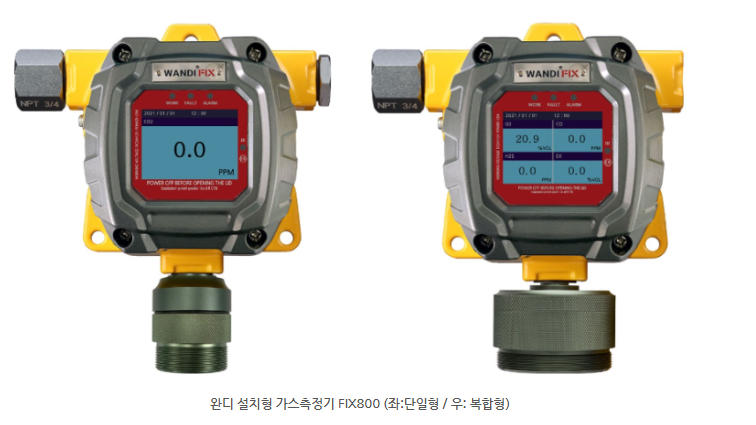
This is the FIX800, a fixed-type gas detector from WANDI, a brand specializing in gas detection equipment. The FIX800 provides four sensor slots in total, allowing two or more gases to be configured simultaneously. Out of roughly 40 available gas types, it can be configured from a single gas up to 5 gases with dual sensors — as required for safety under Korea's Occupational Safety and Health Act — with all readings measured and displayed in real time.
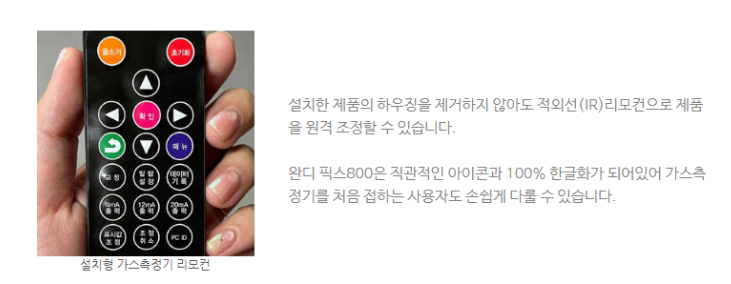
Via RS485 communication, it can connect to a display board or PLC, allowing readings to be checked and managed remotely.
Installation Purpose and Environment
This unit is installed in the electrical room inside the gymnasium. The transformers in the electrical room run at roughly 60–70°C, so an air conditioner or exhaust fan is used to keep the room within an appropriate temperature range. While the room isn't a fully sealed space, it isn't continuously staffed either — workers typically enter only for periodic inspections, roughly once every one to four weeks. Since electrical rooms are also frequently located next to fire-suppressant agent rooms, this detector was installed to prevent asphyxiation from a drop in oxygen levels in the event of a CO2 gas leak.
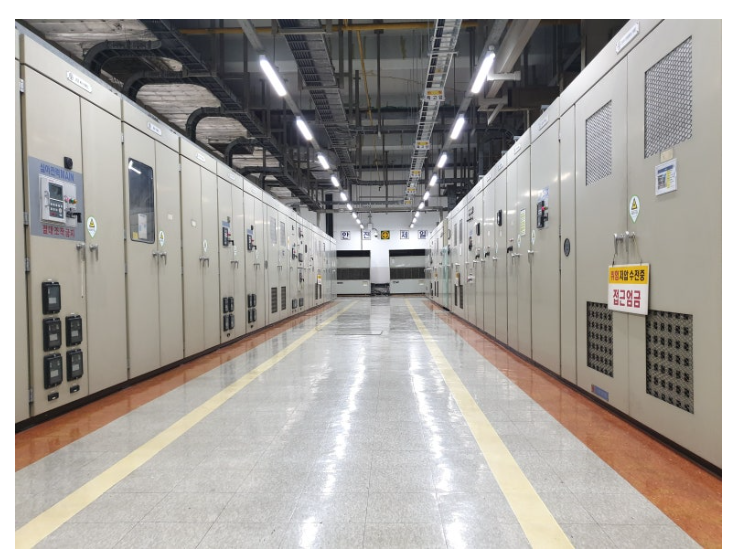
Initial Installation
This unit was originally installed in May 2022. It was still operating normally, but with only about 3–4 months of sensor life remaining, we proceeded with a sensor replacement during this visit.
Repair and Calibration
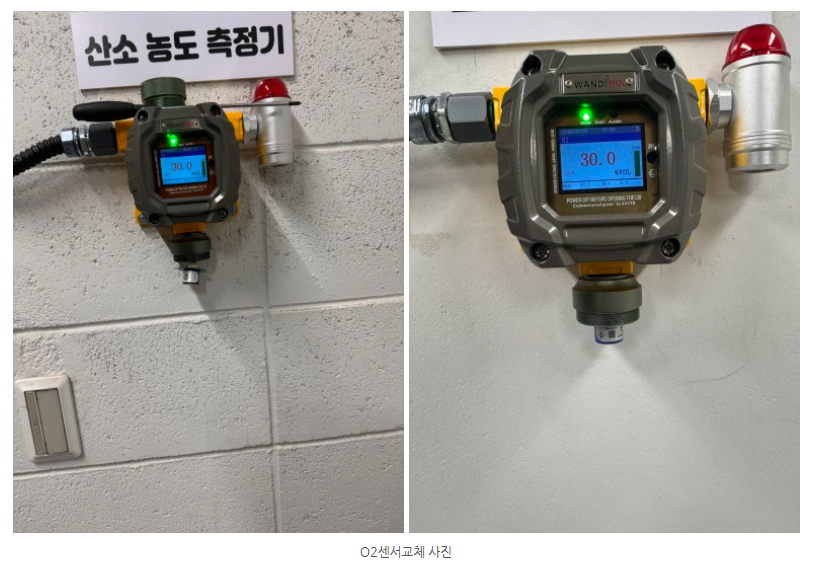
Normally the power should be shut off before replacing a sensor, but given the nature of this site, the power could not be shut down, so the replacement was carried out live. When a sensor is replaced with the power on, the reading fluctuates significantly at first before gradually settling — this typically takes about 5–10 minutes.
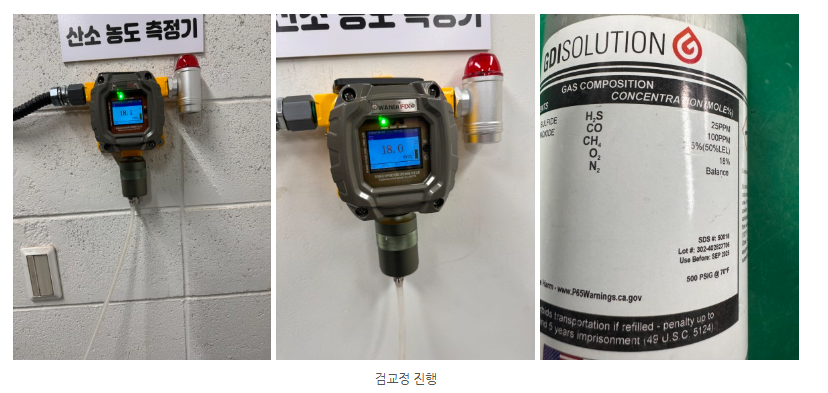
Once the reading stabilized after the sensor replacement, calibration was carried out using 18% O2 reference gas, repeated 2–3 times. The process is complete once the calibration value reads correctly and the unit shows a normal ambient O2 concentration of approximately 21%.
Because measurement drift naturally increases the longer it has been since installation or the last calibration, we recommend calibrating fixed-type detectors on an annual basis.
When you're not sure what gas is present in a given environment, or you know the gas but can't confirm its exact concentration, choosing the right equipment before purchase can be difficult. The safest path is a thorough consultation with a specialist who accounts for every relevant factor — the environment, the gases involved, their frequency, and their concentration — before selecting a detector with the correct measurement range.
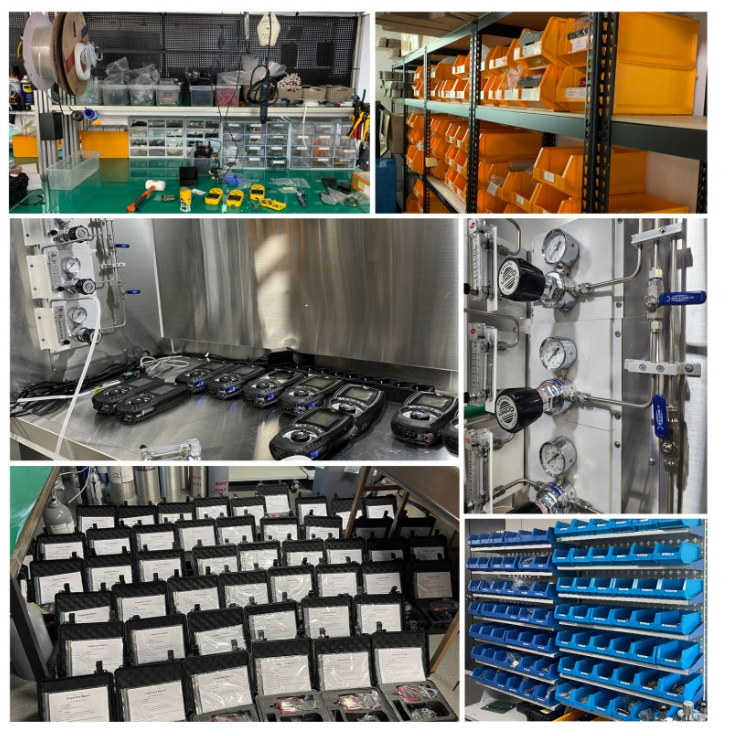
Beyond simple product sales, RS Korea is a gas-specialized company offering in-house calibration, domestic after-sales repair, fabrication and shipping, and installation work. Drawing on our experience across demonstrations, site surveys, delivery, repair, and installation in a wide range of environments, we provide 1:1 customized solutions tailored to each gas-measurement environment.
Repair item: FIX800 O2 sensor replacement and calibration
Notes: the unit showed no measurement issues, but since it had been installed in May 2022 with only about 3 months of sensor life left, the sensor was replaced and the unit recalibrated as a preventive measure.
This concludes our post on the FIX800 O2 sensor replacement and calibration. If you have any questions about gas detectors, gas analyzers, measurement environments, installation, or site surveys, please feel free to reach out to our team.

Frequently Asked Questions (FAQ)
Q1. Why was the sensor replaced if the detector was working normally?
Gas sensors have a limited service life. Although this unit was still reading correctly, it had only about 3–4 months of sensor life left, so the sensor was replaced proactively to avoid a future failure.
Q2. Why is a gas detector installed in an electrical room?
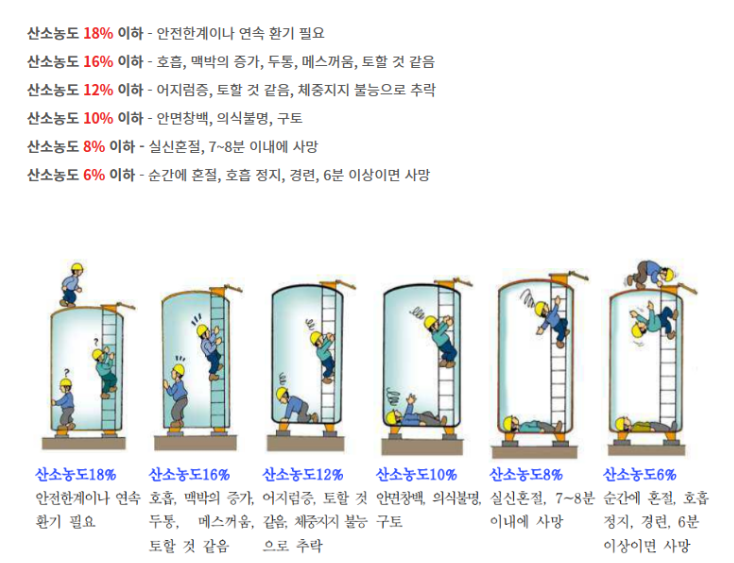
Electrical rooms are frequently located next to fire-suppressant agent rooms that use CO2. If CO2 leaks, it can displace oxygen in the space, so an O2 detector is installed to catch any drop in oxygen concentration and prevent asphyxiation.
Q3. Why was the sensor replaced with the power still on?
The standard procedure is to shut off power before replacing a sensor, but the operating conditions at this site did not allow the power to be turned off, so the replacement was carried out live, with the reading allowed to stabilize over roughly 5–10 minutes afterward.
Q4. How is the O2 sensor calibrated after replacement?
Calibration is performed using 18% O2 reference gas, repeated 2–3 times, and is considered complete once the unit correctly reads a normal ambient oxygen concentration of about 21%.
Q5. How often should a fixed-type gas detector be calibrated?
We recommend annual calibration, since measurement accuracy can drift more than a year after installation or the previous calibration.
#WANDI #FIX800 #OxygenDetector #SensorCalibration #FieldRepair #GasDetectorMaintenance #ElectricalRoomSafety #AsphyxiationPrevention #FixedGasDetector #IndustrialSafety
![[레이먼드] 오,폐수 처리실 유해가스 모니터링](https://wandi.co.kr/storage/construction-cases/YxFUQVBZ8Unnk7pJzzfsmezr6xNe0LZvQRDmt7TL.jpg)
![[브이피이코리아] 종합병원 지하 밀폐공간 가스 측정기 설치_FIX800 & FIX-DS](https://wandi.co.kr/storage/construction-cases/gNOA28xSlEy5uU3AOxyHDRH5UfAe0TpMTgAt4Uag.jpg)

