Applied Markets
Installed Gases
Project Details
Hello, this is RS Korea. Today's post covers an on-site inspection and calibration of the multi-gas detectors installed for worker safety in the machine room, wastewater treatment area, and septic tank room of a cosmetics R&D and manufacturing facility.
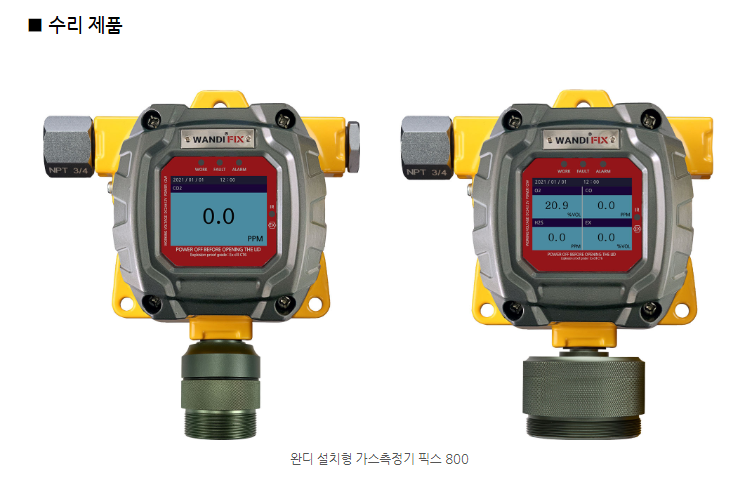
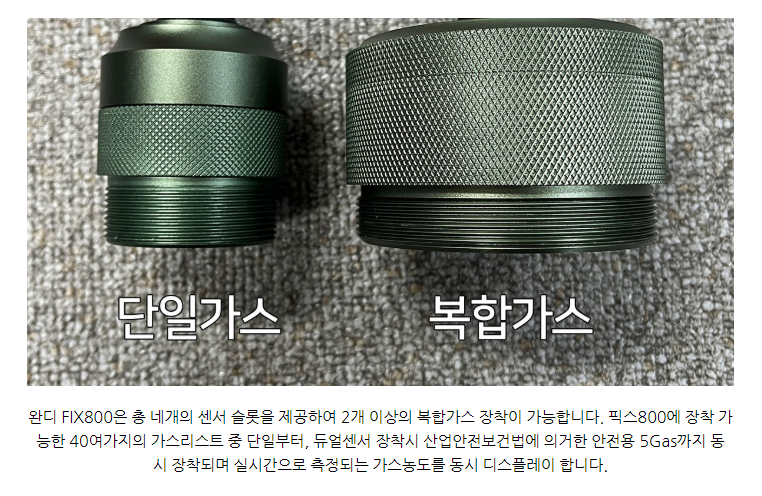
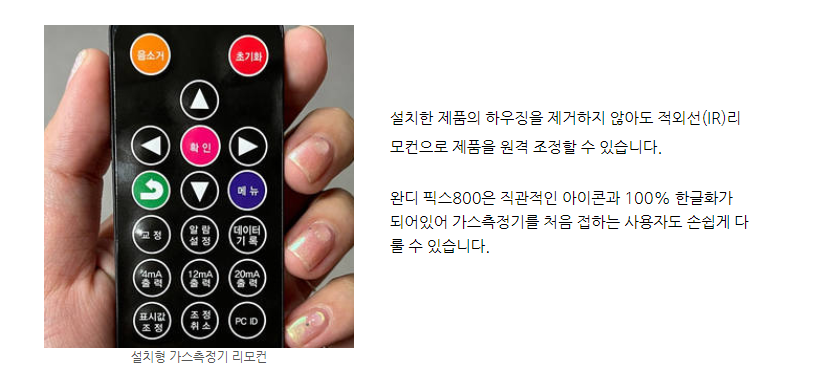
The detectors connect to a display board or PLC via RS485 communication, allowing readings to be checked and managed remotely. The gas sampling system (pre-treatment unit) can also be customized to the measurement environment, removing interfering environmental factors so that only the target gas is measured accurately. Full specifications and the compatible gas list are available on our official product page.
Initial Installation / Environment
The sensors at this site were replaced last May, and about one year has passed since that replacement. The customer requested a calibration visit, so our team traveled on-site to perform it.
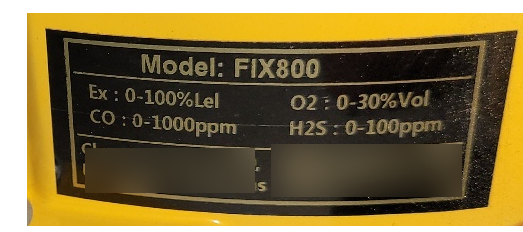
The facility was first installed in the first half of 2021 — two full years since initial installation and one year since the sensor replacement — so we visited to carry out routine calibration.
Installed Gases / Range
Oxygen (O₂): 0–30% Vol
Carbon Monoxide (CO): 0–1,000 ppm
Hydrogen Sulfide (H₂S): 0–100 ppm
Combustible Gas (EX): 0–100% LEL
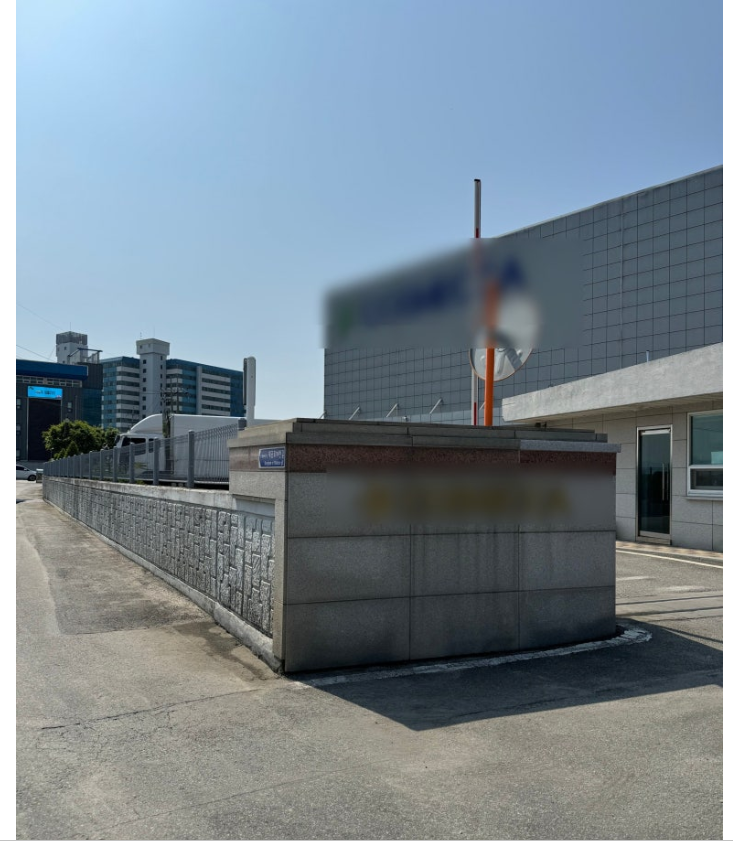
The facility researches, develops, and manufactures cosmetics. The detectors are installed at each point of the sludge separation room — where sludge generated during cosmetics manufacturing is separated — and the wastewater treatment facility, which processes wastewater generated during building use and R&D processes.
Purpose of Installation
In accordance with the Occupational Safety and Health Act, safety-purpose 4-gas (O₂/CO/H₂S/LEL) detectors were installed for worker safety in the septic tank room, sump room, wastewater treatment room, machine room, and sludge separation room.
Calibration
As noted above, all sensors were replaced last May, so this visit involved calibration only.
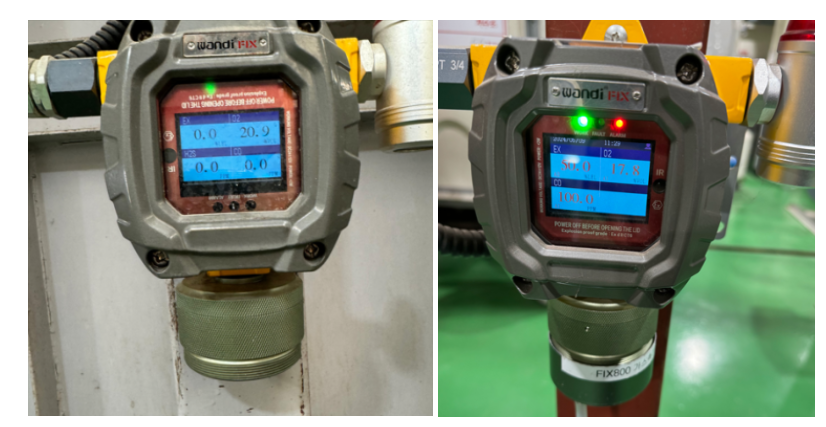
There are five detector installation points in total: the septic tank room, sump room, wastewater treatment room, machine room, and sludge separation room.
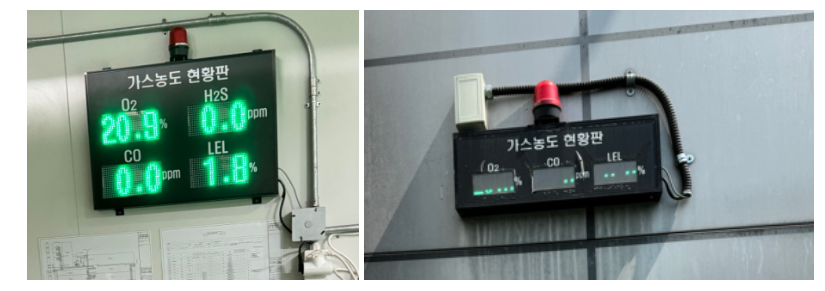
There are two gas-concentration display board installation points: the entrance to the wastewater treatment facility and the entrance to the sludge separation room.
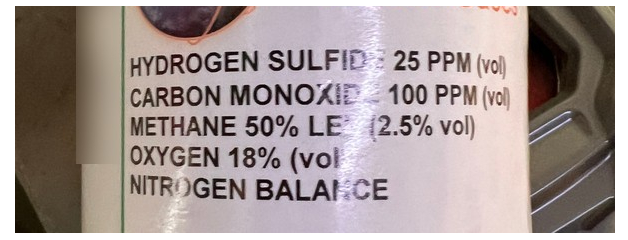
Calibration was performed using the following test gas concentrations: O₂ (Oxygen) 18% VOL, CO (Carbon Monoxide) 100 PPM, H₂S (Hydrogen Sulfide) 25 PPM, EX (Combustible Gas) 50% LEL. This process corrects any slight drift in the calibration values.
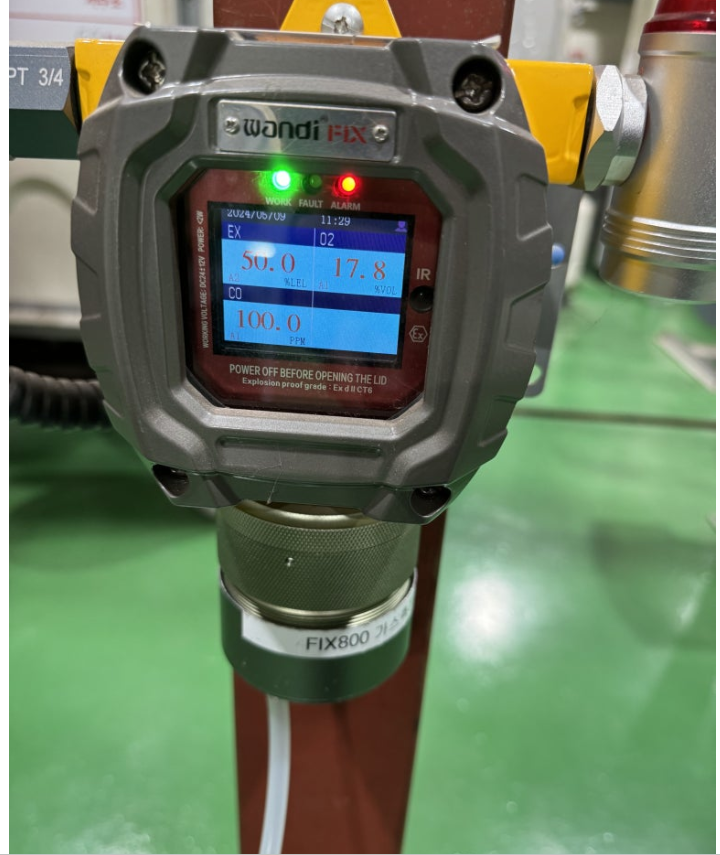
Since the sensors were replaced last year, the readings showed stable values with a relatively low error rate. Routine calibration like this is essential for maintaining accurate readings, and we understand it can be difficult for facility managers to track every device's inspection and repair cycle. That's why we offer a calibration-notice system that automatically manages the schedule for you.
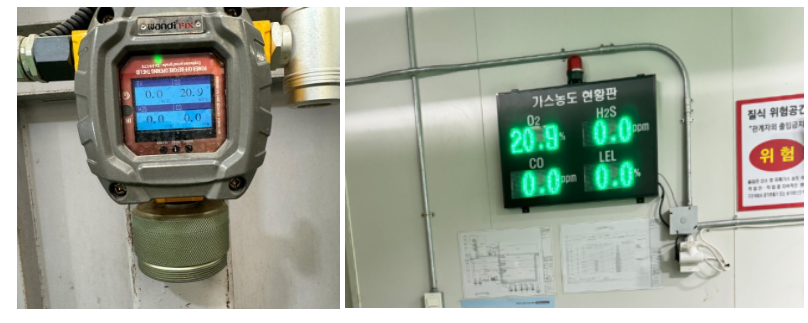
After calibration, the units correctly displayed standby readings, and communication with the external display board operated smoothly. In summary, this visit involved calibration one year after the prior sensor replacement.
When you're unsure what gases are present in a measurement environment — or you know the gas type but need to confirm the exact concentration — choosing the right equipment can be difficult. Consulting thoroughly with specialists about environmental factors, gas type, frequency, and concentration is the safest path to selecting a gas detector with the correct measurement range.
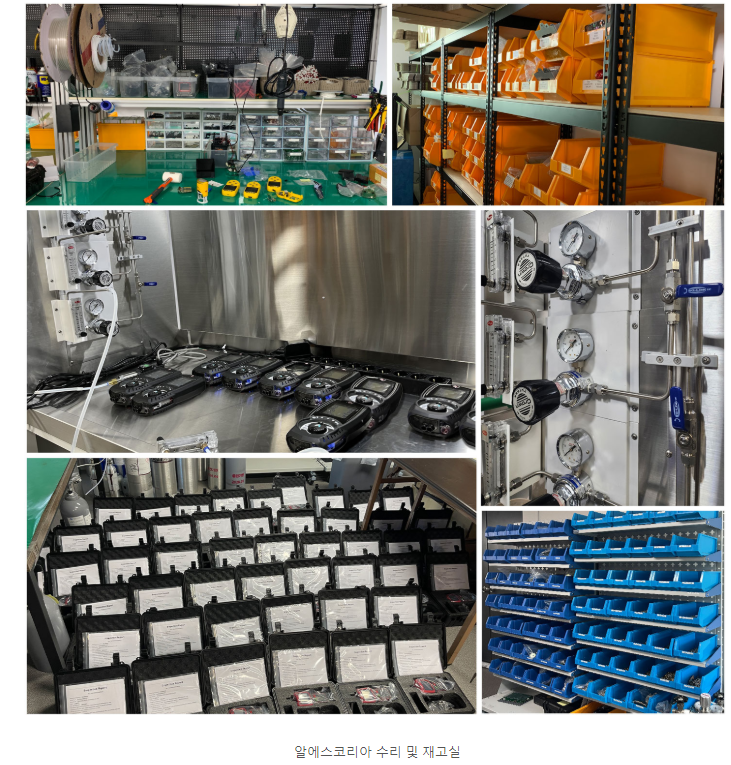
Beyond product sales, RS Korea is a gas-safety specialist offering in-house calibration, domestic repair (A/S), custom manufacturing, and installation services. Drawing on extensive experience with demonstrations, site surveys, delivery, repair, and installation across diverse environments, we provide tailored, one-on-one solutions for any gas measurement environment.
Summary
Environment: Cosmetics R&D and manufacturing facility — wastewater treatment plant and sludge separation room
Product: WANDI FIX800
Gases & Range: O₂ 0–30% Vol / CO 0–1,000 ppm / H₂S 0–100 ppm / EX 0–100% LEL
Service: Calibration
Notes: Calibration performed two years after initial installation and one year after sensor replacement
Frequently Asked Questions (FAQ)
Q1. Why does a gas detector need periodic calibration even after the sensors were already replaced?
Sensor readings can drift slightly over time due to environmental exposure and normal aging. Periodic calibration corrects that drift so the displayed values remain accurate, even between sensor replacement cycles.
Q2. How often should calibration be performed?
A general guideline is roughly once a year, though the ideal interval depends on the gas type, environment, and usage conditions. RS Korea's calibration-notice system can track this schedule automatically for facility managers.
Q3. Why are detectors needed in multiple rooms such as the septic tank, sump, and sludge separation rooms?
Wastewater and sludge-handling processes can generate hazardous gases such as H₂S and combustible gases, along with reduced oxygen levels. Under the Occupational Safety and Health Act, safety-purpose gas detectors are required at each point where workers may be exposed.
Q4. What does the gas sampling system (pre-treatment unit) do?
It conditions the sample air before it reaches the sensor, removing environmental interference such as moisture or particulates so the detector can measure the target gas accurately and consistently.
Q5. Can readings be monitored remotely from outside the room?
Yes. Using RS485 communication, the detector can connect to an external display board or PLC, allowing personnel to check gas concentrations and status without entering the room directly.
![[레이먼드] 오,폐수 처리실 유해가스 모니터링](https://wandi.co.kr/storage/construction-cases/YxFUQVBZ8Unnk7pJzzfsmezr6xNe0LZvQRDmt7TL.jpg)
![[브이피이코리아] 종합병원 지하 밀폐공간 가스 측정기 설치_FIX800 & FIX-DS](https://wandi.co.kr/storage/construction-cases/gNOA28xSlEy5uU3AOxyHDRH5UfAe0TpMTgAt4Uag.jpg)

