Applied Markets
Installed Gases
Project Details
Hello, this is our team.
We received a call from a combined heat and power plant where our equipment was installed back in March of last year. Another department there had seen the fixed gas detector and status display we'd installed, and the team responsible for the site's landfill gas treatment facility asked us to install a gas leak detector for worker safety.
Product Installed
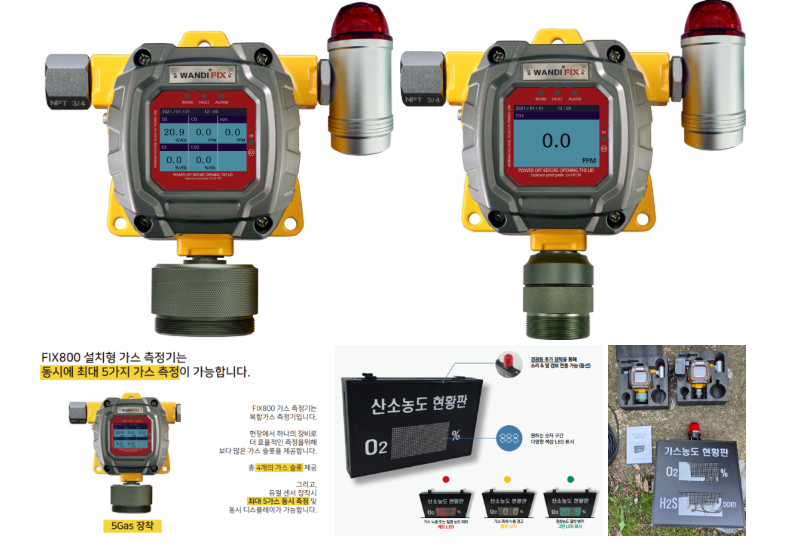
To prepare for possible gas leaks inside the confined space — before entry, during work, and so on — the detector was installed inside the space itself, paired with an external status display so the internal gas concentration could be checked from outside before entering.
Installation
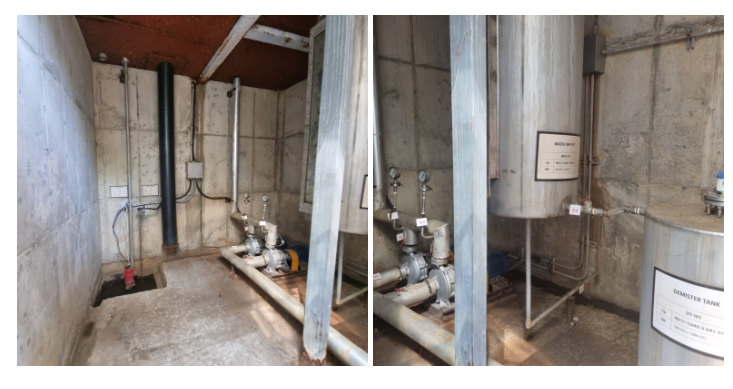
To protect workers operating in the condensate collection sump along the landfill gas transfer piping, a gas detector was installed inside the sump, with a status display mounted outside so personnel could check the internal gas concentration before entering.
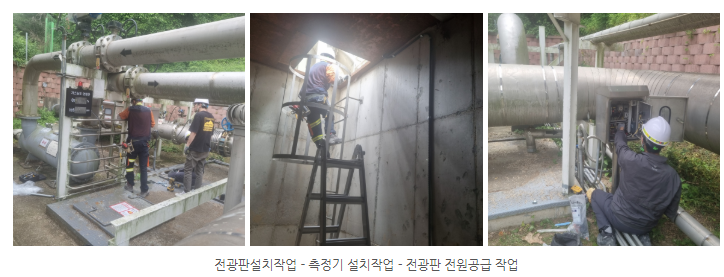
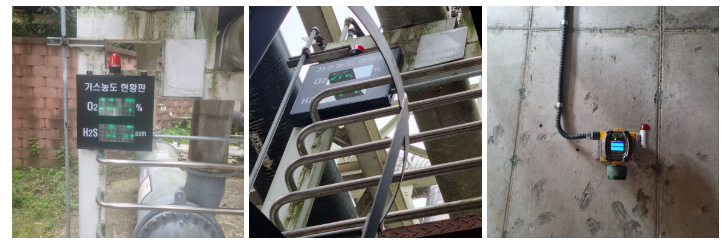
The status display was mounted at a location the customer specified — one that would be visible both when looking up from the work space below and when approaching the site from outside. Since the display was to be mounted outdoors, the customer asked about waterproofing; we explained that these status displays are always built for outdoor use, and that it would be easier to see for themselves by visiting a site where one had already been installed the previous year, so the team went to check that earlier installation together.
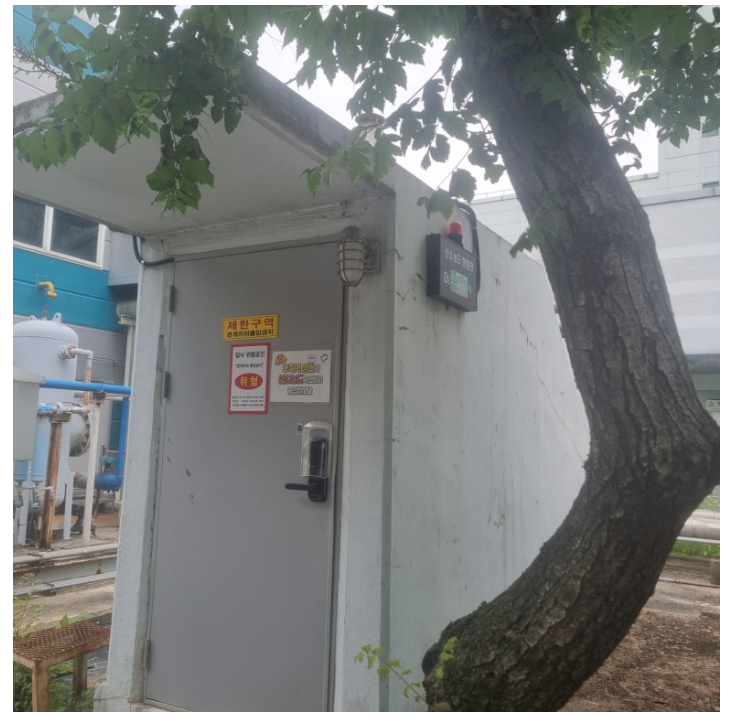
At that earlier site, the team showed the customer the status display installed the previous year and confirmed that there had been no reported issues with it since installation. In the sump, methane and moisture separated from the landfill gas are collected — the moisture stays in the sump, while the methane moves on to the flare stack. To guard against methane leaks in the facility where the flare stack system operates, a combustible gas detector was also installed in the system room.
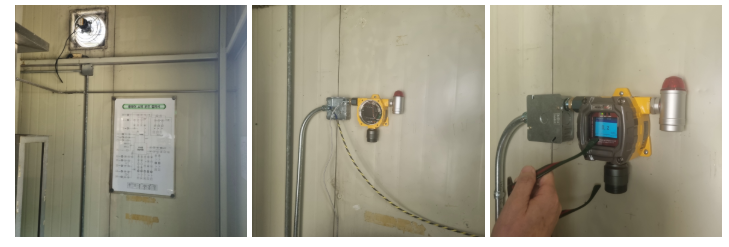
After completing the installation in the flare stack system's operating area as well, the team demonstrated the alarm test and gas response to the facility's responsible staff member before wrapping up the work. That concludes this installation of confined-space safety gas detectors at a landfill gas treatment facility. Thank you.


자주 묻는 질문 (FAQ)
Q1. Why are both a gas detector and a status display installed at a landfill gas facility?
The detector is installed inside the confined space to monitor for gas leaks in real time, while the status display is mounted outside so workers can check the internal gas concentration before entering.
Q2. Is it safe to mount the status display outdoors?
Yes. These status displays are built as outdoor-rated units by default, and there have been no reported issues with previously installed displays operating outdoors.
Q3. Why are detectors needed in both the condensate sump and the flare stack system room?
The sump collects methane and moisture separated from landfill gas, and the methane is then routed to the flare stack for processing — so both spaces carry a risk of methane exposure and are fitted with combustible gas detectors accordingly.
Q4. How is proper operation verified after installation?
After installation, the team performs an alarm test and a gas response test in front of the facility's responsible staff member to confirm correct operation before completing the work.
Q5. How is the mounting location for the status display decided?
The location is agreed on with the customer to ensure the display is clearly visible both when looking up from the work space below and when approaching the site from outside.
#WANDI#FIX800#LandfillGas#ConfinedSpaceSafety#GasStatusDisplay#CombustibleGasDetector#FlareStack#FixedGasDetector#IndustrialSafety#MethaneDetection
![[레이먼드] 오,폐수 처리실 유해가스 모니터링](https://wandi.co.kr/storage/construction-cases/YxFUQVBZ8Unnk7pJzzfsmezr6xNe0LZvQRDmt7TL.jpg)
![[브이피이코리아] 종합병원 지하 밀폐공간 가스 측정기 설치_FIX800 & FIX-DS](https://wandi.co.kr/storage/construction-cases/gNOA28xSlEy5uU3AOxyHDRH5UfAe0TpMTgAt4Uag.jpg)

