Applied Markets
Installed Gases
Project Details
Hello, this is our team from RS Korea's technical department.
Today's post covers the replacement and calibration of an FIX800 O₂ sensor installed at the wastewater treatment plant of a food and beverage production facility in Yeongju-si, Gyeongsangbuk-do.
Repaired Product
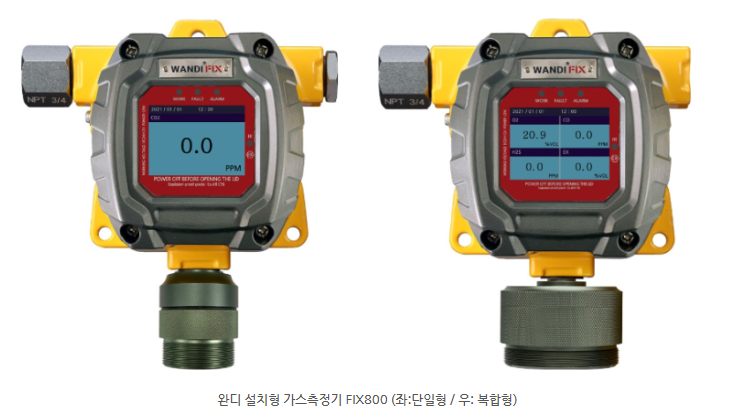
This is the FIX800, a fixed-type detector from WANDI, a specialist gas detection equipment brand. The FIX800 provides a total of four sensor slots, allowing two or more gases to be configured on a single unit. Selecting from around 40 available gas types, the unit can be configured from a single gas up to five simultaneous safety-related gases in line with industrial safety and health regulations when dual sensors are used, displaying all real-time readings at once.
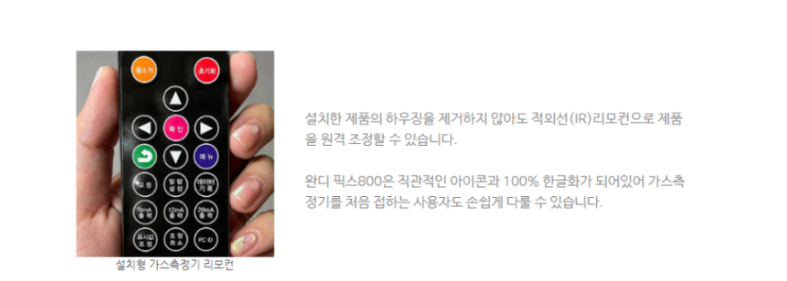
Installation Purpose and Environment
One unit is installed on each floor of this wastewater treatment plant, which spans two underground levels. Because the facility is an enclosed space and can generate hazardous gases — including H₂S produced during the wastewater treatment process and O₃ from an on-site ozone generator — the detectors were installed for safety monitoring purposes.
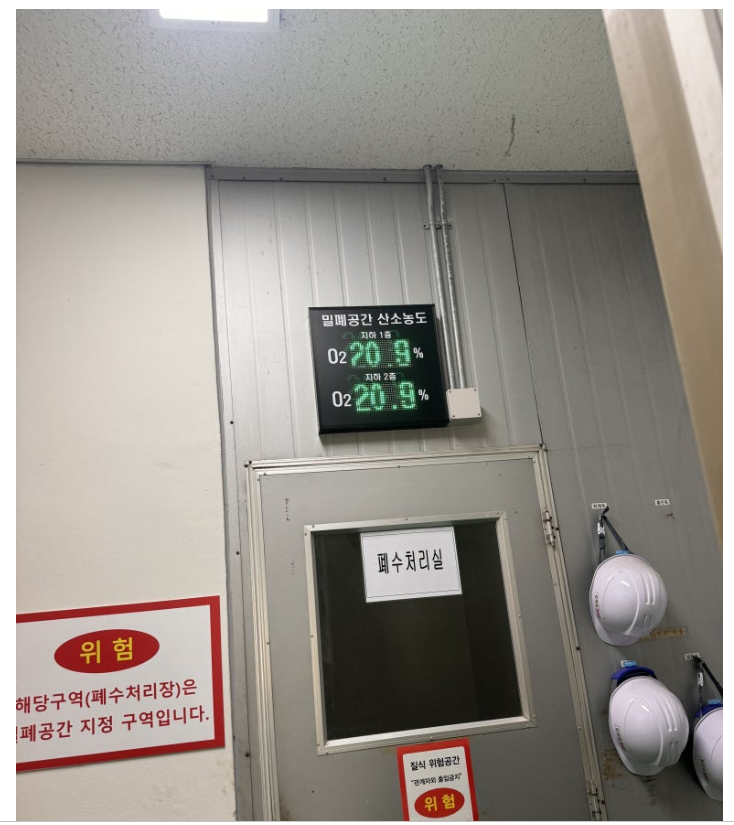
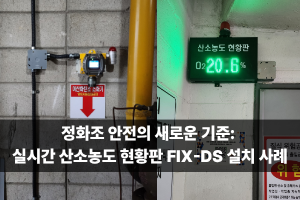
A status display was also installed at the entrance so workers can check the oxygen concentration before entering.
Repair and Calibration
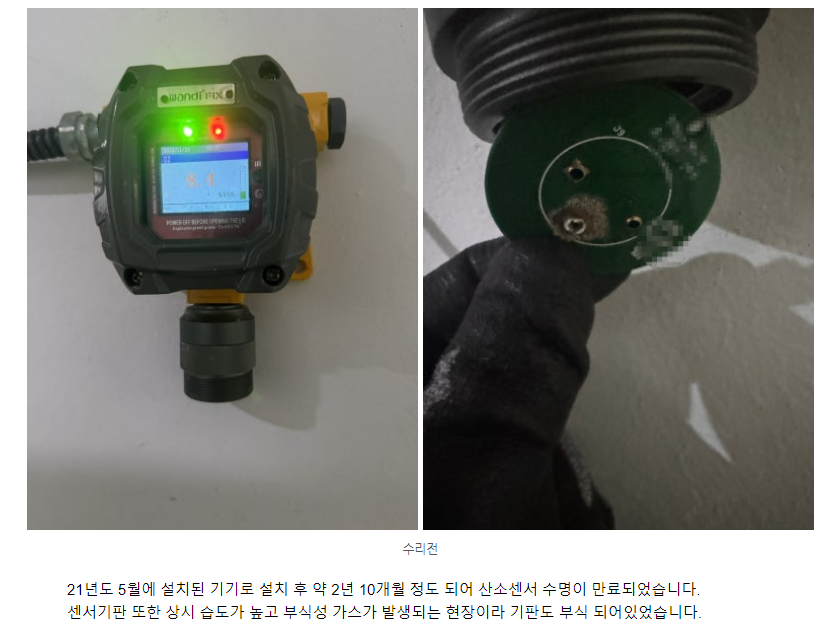
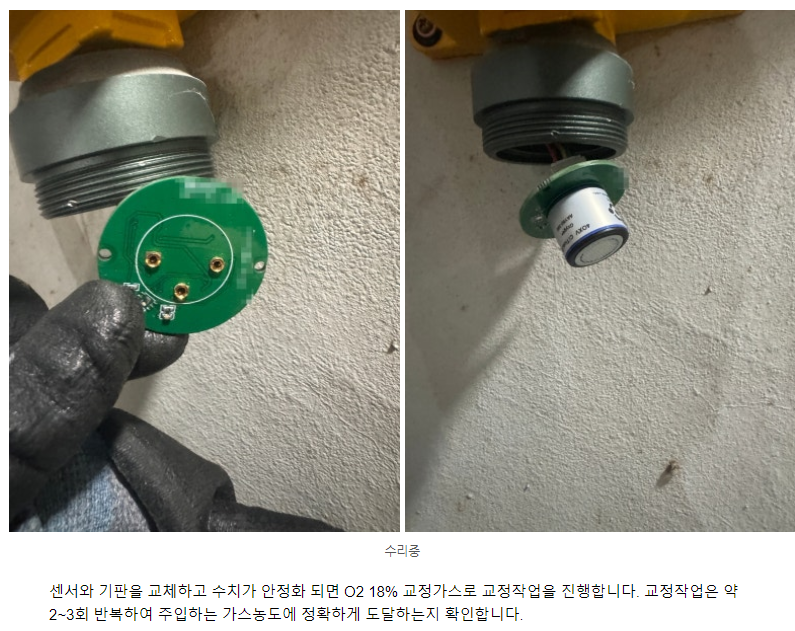
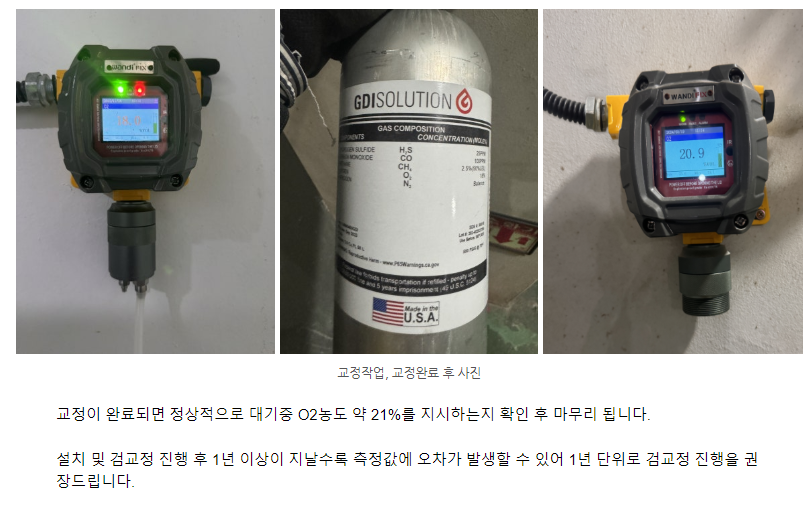
자주 묻는 질문 (FAQ)
Q1. How many sensor slots does the FIX800 have, and how many gases can it measure at once?
It provides four sensor slots and can be configured from a single gas up to five simultaneous safety-related gases — selected from around 40 available gas types — with dual sensors, displaying all readings in real time.
Q2. Why is an FIX800 unit installed on every floor of this wastewater treatment plant?
The facility is an enclosed space spanning two underground levels, where hazardous gases such as H₂S from the wastewater treatment process and O₃ from an on-site ozone generator can occur, so a unit is installed on each floor for safety monitoring.
Q3. What is the purpose of the status display at the entrance?
It allows workers to check the oxygen concentration before entering the space, helping ensure confined-space safety at the point of entry.
Q4. Why does the O₂ sensor need periodic replacement and calibration?
Electrochemical O₂ sensors are a consumable component, and their measurement accuracy can decline over time, so periodic replacement and calibration are needed to maintain reliable readings.
Q5. What does the repair and calibration process involve?
The unit is inspected on site, the sensor is replaced as needed, and calibration is performed using span gas to confirm correct operation and alarm function before the work is considered complete.
#WANDI#FIX800#O2SensorReplacement#GasCalibration#WastewaterTreatmentSafety#ConfinedSpaceSafety#OxygenDetector#FixedGasDetector#IndustrialSafety#GasDetectorRepair#YeongjuInstallation
![[레이먼드] 오,폐수 처리실 유해가스 모니터링](https://wandi.co.kr/storage/construction-cases/YxFUQVBZ8Unnk7pJzzfsmezr6xNe0LZvQRDmt7TL.jpg)
![[브이피이코리아] 종합병원 지하 밀폐공간 가스 측정기 설치_FIX800 & FIX-DS](https://wandi.co.kr/storage/construction-cases/gNOA28xSlEy5uU3AOxyHDRH5UfAe0TpMTgAt4Uag.jpg)

