Applied Markets
Installed Gases
Project Details
Hello, this is RS Korea's technical sales team.
We received an inquiry about relocating a gas detector. The customer explained that the relocation was needed due to a laboratory reorganization. We asked for photos of the equipment and its intended new location.
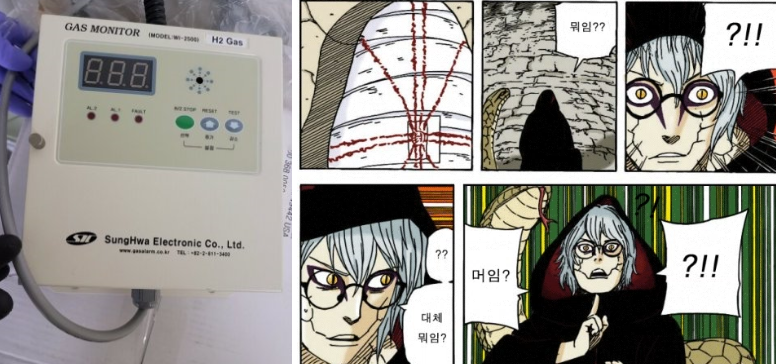
On reviewing the photos, we found that the unit was not actually a product line we normally handle — it was a comparable unit from another manufacturer in the same industry. After discussing the situation with the customer, it became clear that relocating the unit through its original supplier was not possible due to internal circumstances such as the lab reorganization and a change in the responsible contact person, and the inquiry had been passed along to our team through our gas detector installation blog.

Even though it wasn't a product line we typically handle, our team accepted the request without hesitation, drawing on extensive experience with installation, on-site inspection, repair, and calibration work across a wide range of equipment. With that, the team headed to Daejeon.
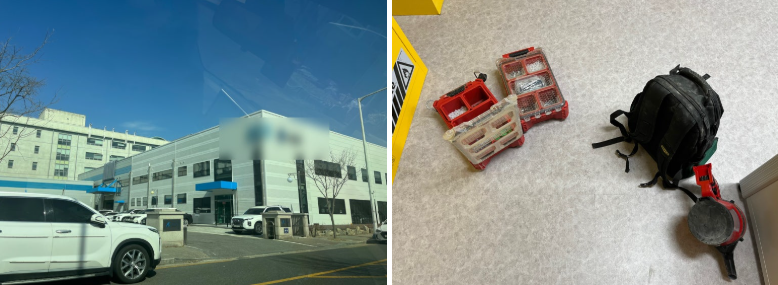
This is a pharmaceutical company facility in Daejeon. The team prepared the necessary tools and materials, along with a vacuum cleaner to avoid leaving any mess behind after the work was done.
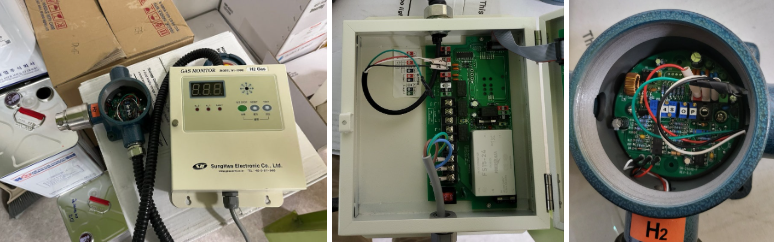
This particular unit is a sensor-and-transmitter configuration without its own display, paired with a separate monitoring box for alarm status and reading confirmation. Although the wiring can look complex, the key task is simply the signal connection between the power supply, the detector, and the monitoring system. The unit was carefully disassembled and set down, and although the terminals were labeled, photos of the internal wiring were taken beforehand as a precaution against any miswiring during reassembly.
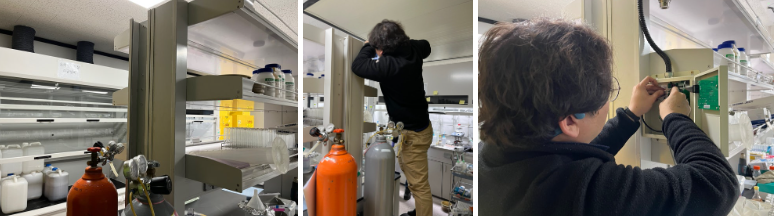
The installation location and power supply were reconfirmed. The unit was positioned above the hydrogen gas cylinder — since hydrogen is one of the lightest gases on Earth — to provide early detection in the event of a possible gas leak. Once the location was finalized, the installation proceeded.
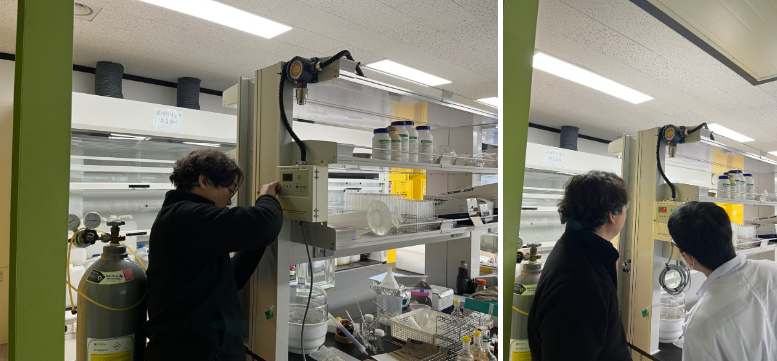
After completing the wiring, the team used a prepared span gas to verify the unit's response and alarm behavior.
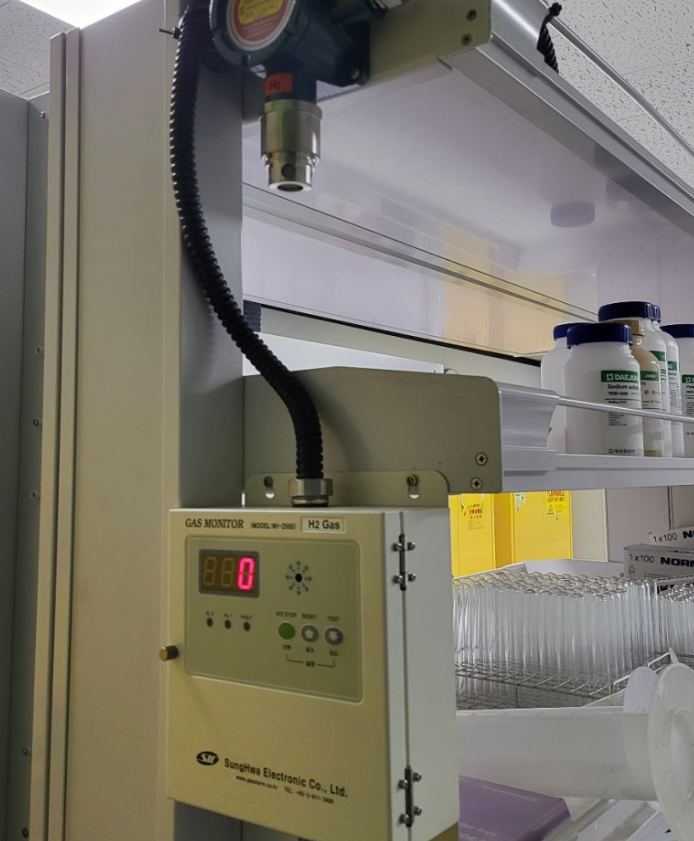
With the possibility of another relocation in mind, the excess cable length was neatly coiled and secured on top of the laboratory rack. Thanks to a clean installation and commissioning, both the customer and our team were satisfied with the result.
To summarize: our team relocated and commissioned a gas detector — a model not typically handled by RS Korea — at a pharmaceutical company facility in Daejeon. Drawing on years of experience in installation, repair, inspection, and calibration, our team is glad to help with environmental measurement equipment inquiries whenever we're able to. Please feel free to reach out.
자주 묻는 질문 (FAQ)
Q1. Why does a hydrogen gas detector need to be positioned above the gas source?
Hydrogen (H₂) is one of the lightest gases and tends to rise quickly, so mounting the detector above the cylinder allows for earlier detection in the event of a leak.
Q2. Can RS Korea relocate or service equipment it doesn't normally sell?
Yes. In this case, the unit was a comparable product from another manufacturer, but our team was able to handle the relocation and commissioning based on broad experience with installation, inspection, repair, and calibration work across different types of gas detection equipment.
Q3. Why were internal wiring photos taken before disassembling the unit?
Even though the terminals were labeled, taking photos beforehand helps prevent miswiring when the unit is reassembled at its new location, ensuring the sensor, transmitter, and monitoring box are all reconnected correctly.
Q4. How is the detector's response verified after relocation?
After completing the wiring, a span gas is applied to confirm that the unit responds correctly and that the alarm functions as expected before the installation is considered complete.
Q5. Why was extra cable length left coiled on the equipment rack?
To make it easier to relocate the unit again in the future if needed, without having to run entirely new cabling.
#WANDI#HydrogenDetector#H2GasDetector#GasDetectorRelocation#LaboratorySafety#CombustibleGas#ExplosionRisk#PharmaceuticalIndustry#GasCalibration#IndustrialSafety#DaejeonInstallation
![[레이먼드] 오,폐수 처리실 유해가스 모니터링](https://wandi.co.kr/storage/construction-cases/YxFUQVBZ8Unnk7pJzzfsmezr6xNe0LZvQRDmt7TL.jpg)
![[브이피이코리아] 종합병원 지하 밀폐공간 가스 측정기 설치_FIX800 & FIX-DS](https://wandi.co.kr/storage/construction-cases/gNOA28xSlEy5uU3AOxyHDRH5UfAe0TpMTgAt4Uag.jpg)

