Project Details
Hello, this is RS Korea.
It may feel like we're posting about the same kind of work every time, but we've completed another installation. As a kind of interim summary, we'd like to review the work our team has carried out so far on the Seoul light rail (Dongbuk Line) construction project.
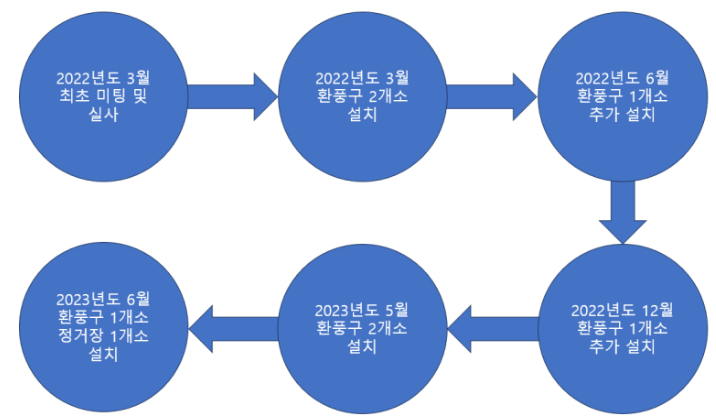
We've steadily installed detectors at around eight locations so far, and more installations are planned. One encouraging development is that these units, which used to be installed only in ventilation shaft areas, are now also being installed at station platforms. Looking back over the project, there were even a few completed installations we couldn't post about simply because no photos were taken afterward. This time, let's take a look at the current site — the visit covered ventilation shaft No. 111 and an adjacent stop.
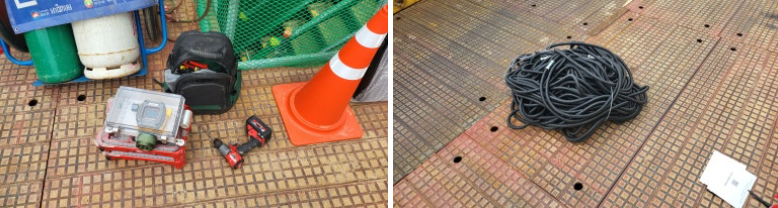
At the first ventilation shaft, the materials and tools were laid out on site and photographed before starting work.

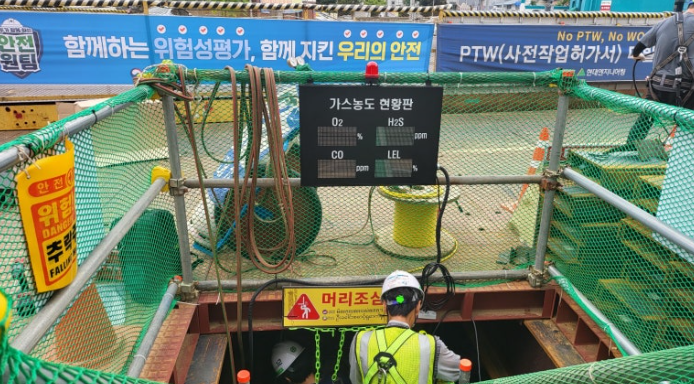
The status display was mounted first. At this stage of the project, the site was missing some of the usual safety signage, giving the impression that work was being carried out somewhat hastily. The entrance partition wall also had not yet been installed. Because of this, there wasn't a suitable spot to store the full 150 m coil of pre-prepared cable, so only the length needed for this section was cut and used, with the remainder kept in storage separately. Fortunately, the waterproof corrugated conduit had been pre-assembled in 25 m sections joined together, which made it easy to separate out only the length required.
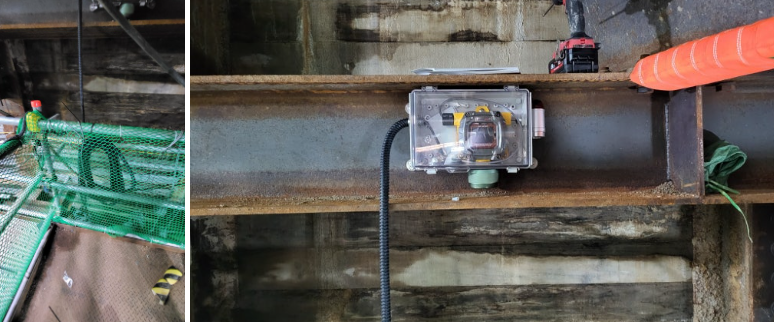
The unit was mounted in place using its magnetic bracket, and the remaining slack cable was neatly stored behind the fencing so it wouldn't obstruct worker movement. With the electrical work and a function test complete, that section of the installation was finished.
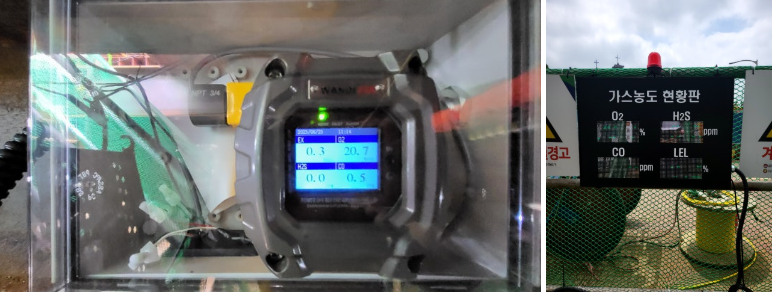
After finishing the electrical work, power was applied to the unit. Because this is an underground space, the oxygen reading came in slightly lower than typical ambient air, and a small amount of carbon monoxide was detected due to diesel-powered heavy equipment operating underground — though not at a level of concern. After completing the product demonstration, the team moved on to the next site.
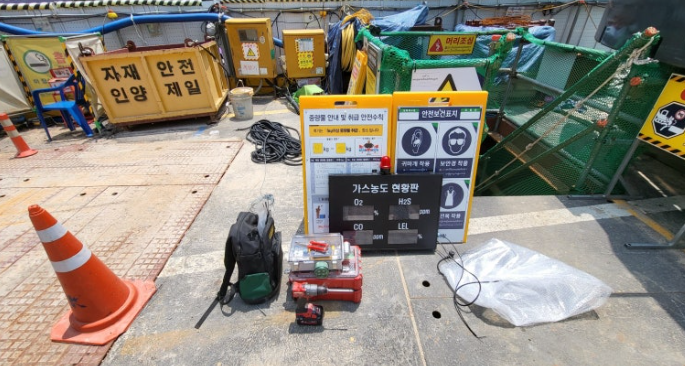
This is the second site, a station stop. As with the previous site, safety signage was not posted here either, and the entrance container partition wall had not yet been built.
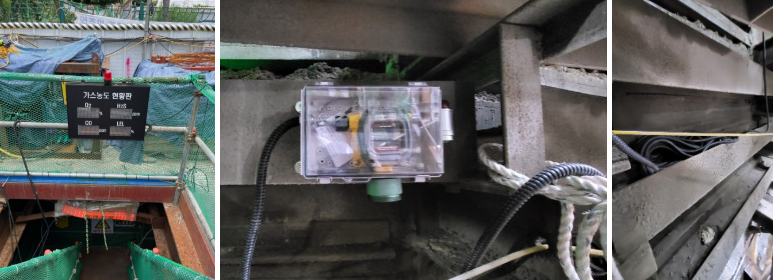
With this many installations completed by now, the process moves quickly — the sequence is always the same: mount the status display, install the detector, and organize the cabling.
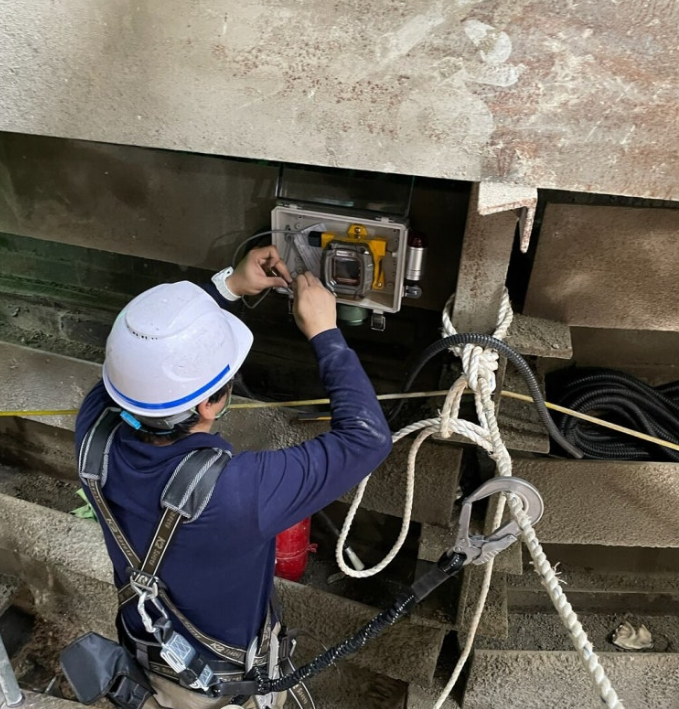
Fencing had not yet been installed at this particular site, so the team followed the site supervisor's instructions and worked with safety harnesses clipped in.
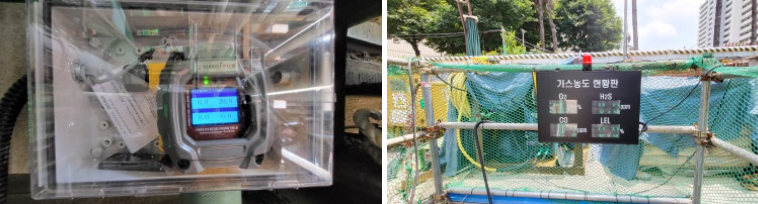
Power supply was completed. This location was shallower than the previous site, and since it was during the lunch break the equipment wasn't running, so the air composition was close to normal ambient conditions and the site was safe. Both installations for the day were completed successfully by late morning.
That wraps up today's installation. Installed items: an FIX800 4-gas (O₂, CO, H₂S, LEL) fixed detector for confined-space hazardous gas monitoring per industrial safety and health standards, together with a dedicated FIX800 4-channel external status display and beacon light. Notes: the unit was mounted in a magnetic bracket enclosure that allows for relocation and is waterproof, and 150 m of communication cable was pre-installed to support future relocation work.
For product inquiries, demonstrations, or site survey requests regarding this gas detector, please feel free to contact our team during regular business hours on weekdays.
자주 묻는 질문 (FAQ)
Q1. Why is this FIX800 detector configured to measure four gases (O₂, CO, H₂S, LEL)?
Because it is installed to meet confined-space hazardous gas monitoring requirements under industrial safety and health standards, covering oxygen deficiency, carbon monoxide, hydrogen sulfide, and combustible gas risks commonly found in tunnel and underground construction environments.
Q2. Why was carbon monoxide detected at one of the sites?
Diesel-powered heavy equipment was operating in the underground space at the time, which can generate a small amount of carbon monoxide. The reading in this case was not at a level of concern.
Q3. What is the magnetic bracket enclosure used for?
It allows the detector to be securely mounted without drilling or permanent fixtures, which is useful in tunnel construction environments where equipment may later need to be relocated as work progresses. It is also waterproof, suiting the damp conditions typical of underground sites.
Q4. Why was 150 m of communication cable pre-installed?
To support future relocation of the monitoring system as the tunnel construction progresses, reducing the amount of additional cabling work required at that time.
Q5. How can I request a product demonstration or site survey for this detector?
You're welcome to contact our team directly during regular business hours on weekdays to arrange a product demonstration, site survey, or inquiry.
#WANDI#FIX800#ConfinedSpaceSafety#4GasDetector#TunnelConstruction#IndustrialSafety#GasStatusDisplay#OxygenDeficiency#CarbonMonoxideMonitoring#SeoulLightRail
![[레이먼드] 오,폐수 처리실 유해가스 모니터링](https://wandi.co.kr/storage/construction-cases/YxFUQVBZ8Unnk7pJzzfsmezr6xNe0LZvQRDmt7TL.jpg)
![[브이피이코리아] 종합병원 지하 밀폐공간 가스 측정기 설치_FIX800 & FIX-DS](https://wandi.co.kr/storage/construction-cases/gNOA28xSlEy5uU3AOxyHDRH5UfAe0TpMTgAt4Uag.jpg)

