Project Details
Hello, it's been a while. This is RS Korea's technical sales team.
Today's long story goes back to last May. A manufacturer based in Pohang reached out to us repeatedly about measuring and analyzing gases that could be generated during a material combustion test process. We exchanged quotes and materials by email, building a working relationship with the researcher in charge even though we'd never met in person.
Through the many requests and consultations, we had to give a somewhat skeptical answer, for the following reasons: WANDI's fixed gas detectors are fundamentally designed for industrial safety and general ambient-air monitoring — they are not suited to measuring combusted gas. A pre-treatment process can be added for high-temperature gas measurement, but in an environment where the fuel material and dust levels aren't clearly defined, it's difficult to guarantee both accurate measurement and sensor lifespan. Most of the target gases — NO2, SO2, Cl2, F2, CO, and CO2 — can cross-interfere with one another, causing readings to be inflated or suppressed, which makes accurate measurement difficult.
We raised and emphasized these concerns every time we sent materials, but the customer kept requesting further inquiries and re-quotes. Eventually we said, "Let's meet in person and talk it through."
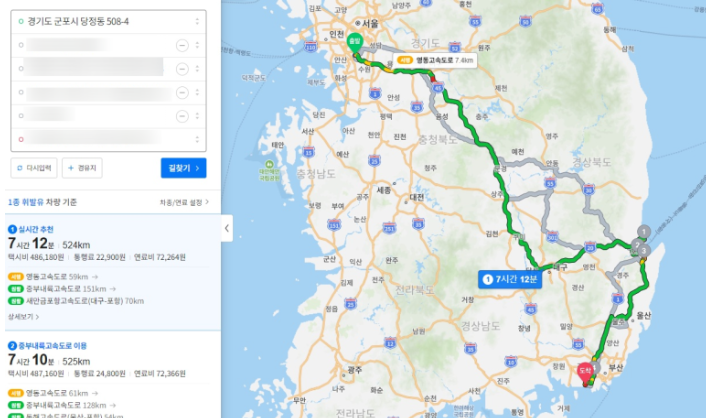
Traveling from Gunpo to Gyeongsang-do isn't exactly easy. We combined the trip with several other meetings, large and small, along the way (a junior colleague did the driving). It made for a somewhat unusual sales meeting, but after traveling all the way to Pohang, the discussion centered on the limitations of the environment the customer was requesting — because our priority is accurate measurement, not just making a sale.
We shared and discussed supporting documentation on the limitations mentioned earlier. Some were limitations of WANDI's products, and some were limitations of where gas-sensor technology currently stands — in other words, we also discussed issues that aren't simply a matter of what we personally can or can't do, but what isn't yet solvable industry-wide. The long meeting concluded with us recommending against the purchase and installation, and we wrapped up there.
But then — an order came in shortly after the meeting. Surprised, we called to check, and learned that, based on what we had told them, the customer had reached out to several other suppliers, most of whom said it couldn't be done. Of everyone they contacted, they chose us because we had been the most thorough and dedicated in explaining the situation. With a clear confirmation that they understood the limitations and wanted to proceed with measurement anyway, we moved forward with production.
The total order came to 4 sets of portable equipment and 3 sets of fixed equipment, plus installation. Due to the customer's security policies we weren't able to take our own on-site photos, so the following photos were provided by the site manager, with our added explanations.
The products to be installed and delivered were as follows:
— GasTiger 2000, CO2 100%, 1 unit
— GasTiger 6000, O2 25% / SO2 10,000 ppm, 1 unit
— GasTiger 6000, CO2 100% / O2 100%, 1 unit
— GasTiger 6000, SO2 10,000 ppm, 1 unit
— FIX800, F2 100 ppm / Cl2 200 ppm / CO2 50%, 1 unit
— FIX800, CO 10%, 1 unit
— FIX800, SO2 10,000 ppm, 1 unit
— Plus pre-treatment equipment for moisture and temperature control
It turned into a fairly large single order, rather suddenly.
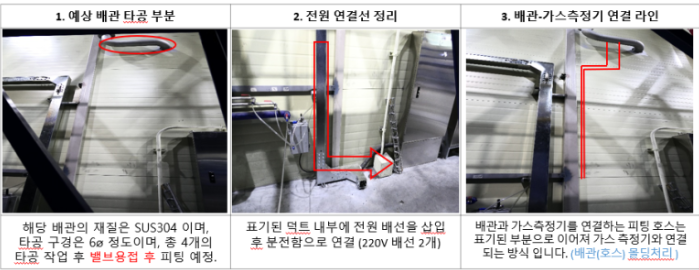
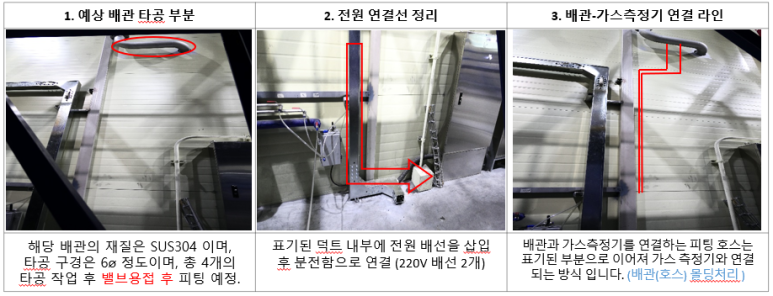
On the roughly 2-meter-tall exhaust duct, IN and OUT ports had to be separated, drilled, and welded (we don't do welding ourselves, so we arranged an additional contractor for that). For future maintenance convenience, we agreed to use PU (polyurethane) tubing for the sampling line, secured with cable duct. The power line was routed for protection using the existing steel duct.
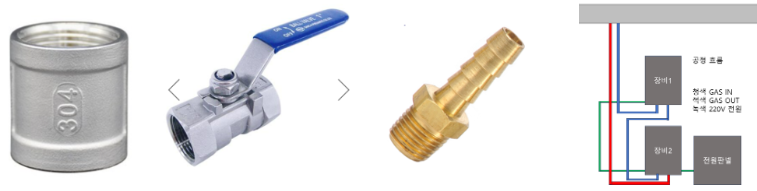
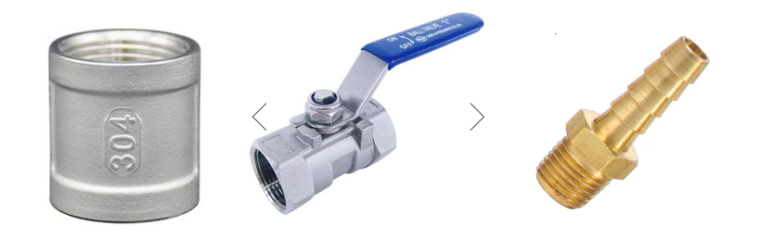
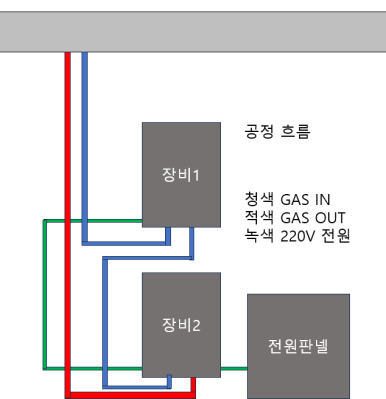
We welded SUS304 sockets to the piping, and installed ball valves to prepare for future non-use or inspection. Each component was arranged after discussion. Because fitting all three FIX800 units into separate pre-treatment enclosures would take up unnecessary space and add cost, we decided to compress them into two enclosures instead, as shown in the diagram.
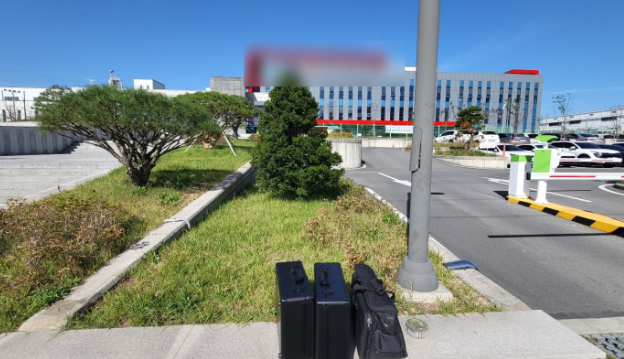
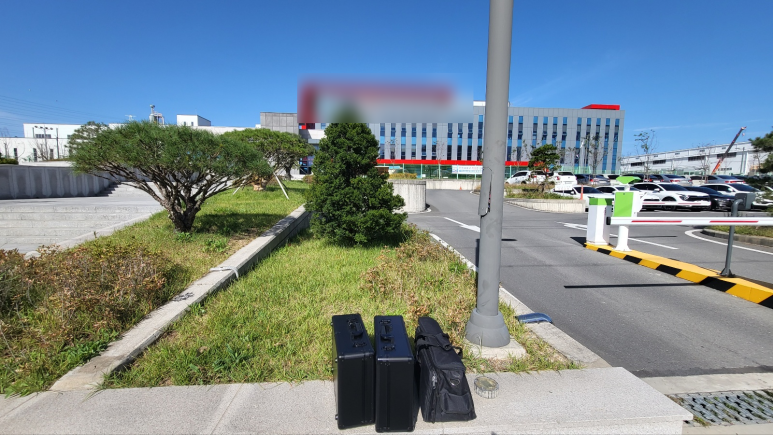
Knowing we wouldn't be able to take photos on installation day, we photographed the finished products in advance. Once preparations and coordination were complete, the day arrived on a now-chilly day in October.
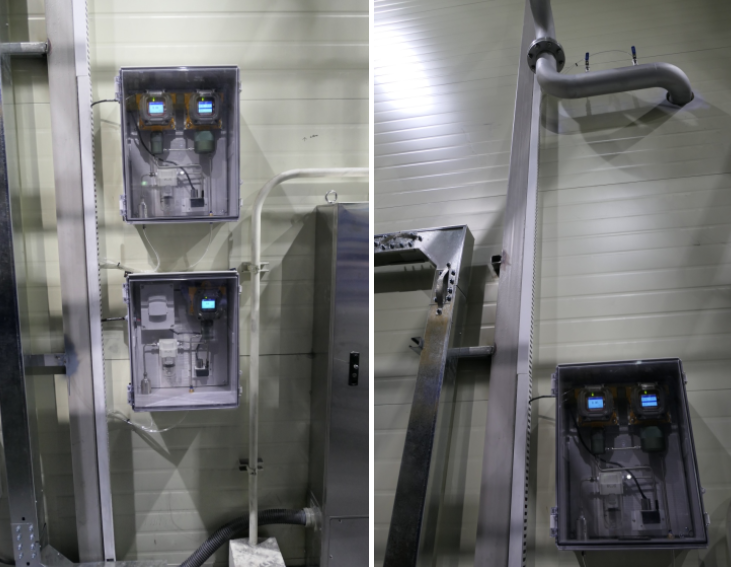
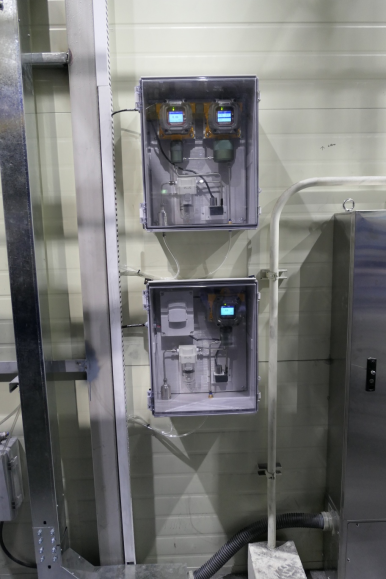
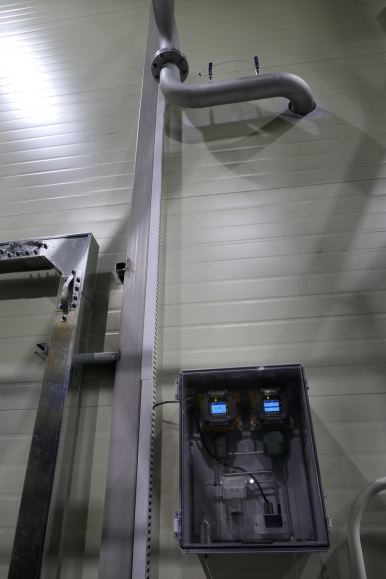
Because the facility was fairly large, safety training and paperwork alone took about an hour. As mentioned, we weren't able to take process photos for security reasons — it's a shame, since those photos always make for a nicer write-up.
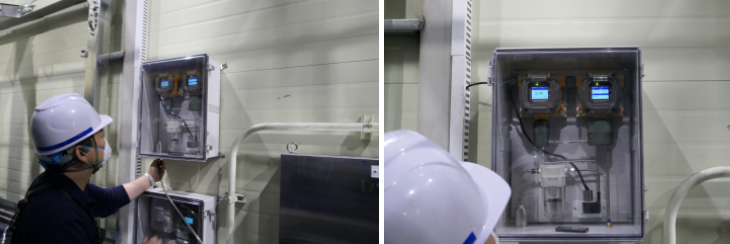
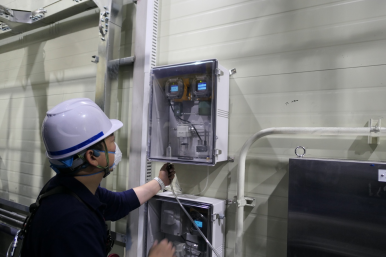
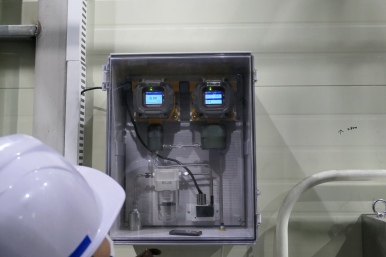
The installation itself took about 3 hours. Looking back at it now, it's a clean, well-finished job — reassuring to see our team hasn't lost its touch.

Since the customer's research equipment wasn't running at the time, we tested by injecting calibration gas. The fast response satisfied both the customer and our team.
The reason today's post ran long wasn't just a shortage of photos — we wanted to walk you through the full process from installation to delivery. At RS Korea, we continue to gather a wide range of delivery cases, failure cases, and troubleshooting cases so we can guide customers on both the limitations and the solutions for their specific measurement environment. Through meetings, site visits, and shared documentation, we do our best to ensure accurate measurement and smooth ongoing maintenance. Because that's what technical sales is about.
Frequently Asked Questions (FAQ)
Q1. What was delivered and installed in this case?
A Pohang-based manufacturer ordered 4 sets of portable GasTiger detectors and 3 sets of fixed FIX800 detectors, along with pre-treatment equipment for moisture and temperature control, to monitor gases generated during a material combustion test process.
Q2. Why were fixed gas detectors initially not recommended for this application?
WANDI's fixed detectors are designed for industrial safety and general ambient-air monitoring rather than combusted gas, and target gases such as NO2, SO2, Cl2, F2, CO, and CO2 can cross-interfere with one another, making fully accurate measurement difficult in this kind of environment.
Q3. Why were 3 FIX800 units compressed into 2 pre-treatment enclosures?
Housing all three units in separate enclosures would have taken up more space and added unnecessary cost, so two units were combined into a shared enclosure instead.
Q4. How was the system tested after installation?
Since the customer's research equipment wasn't in operation at the time, calibration gas was injected to verify a fast, accurate response from the detectors.
Q5. Why does RS Korea share the limitations of its own products?
RS Korea continually collects delivery, failure, and troubleshooting cases so it can advise customers on both the limitations and the practical solutions for their specific measurement environment, prioritizing accurate measurement over simply making a sale.
#WANDI#GasTiger#FIX800#CombustionGasAnalyzer#PortableGasDetector#FixedGasDetector#PreTreatmentSystem#ManufacturingSafety#GasMeasurement#IndustrialSafety
![[레이먼드] 오,폐수 처리실 유해가스 모니터링](https://wandi.co.kr/storage/construction-cases/YxFUQVBZ8Unnk7pJzzfsmezr6xNe0LZvQRDmt7TL.jpg)
![[브이피이코리아] 종합병원 지하 밀폐공간 가스 측정기 설치_FIX800 & FIX-DS](https://wandi.co.kr/storage/construction-cases/gNOA28xSlEy5uU3AOxyHDRH5UfAe0TpMTgAt4Uag.jpg)

