Project Details
FIX800 Four-Gas Fixed Detector Installation at a Nature Center Septic Tank Room
Hello, this is our team. We visited a nature center facility today to install a fixed gas detector for confined-space safety in its septic tank room. The facility interior was clean and had plenty of interesting things worth sharing, but photography was restricted to work areas only, so no interior facility photos could be included here.
Equipment List
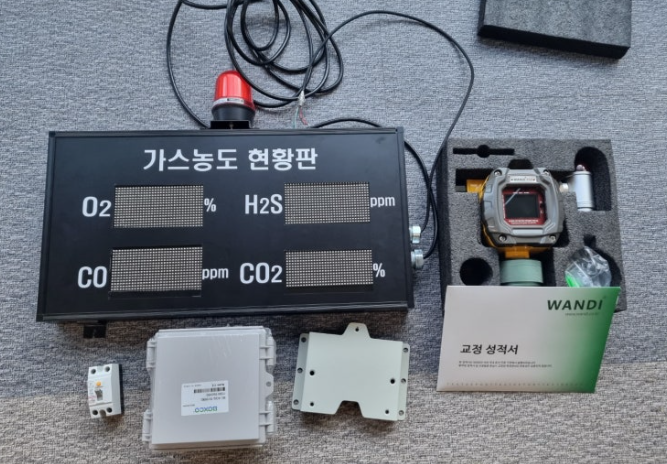
Detector Installed — FIX800
This is the FIX800 fixed gas detector from WANDI, a specialist gas detection brand.
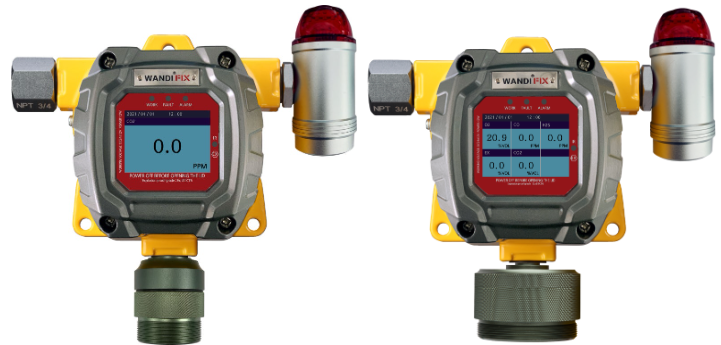
Single-gas FIX800 vs. composite (multi-gas) FIX800: since the sensor mounts in the lower housing of the detector, a composite configuration requires a larger sensor board, resulting in a correspondingly larger lower housing.
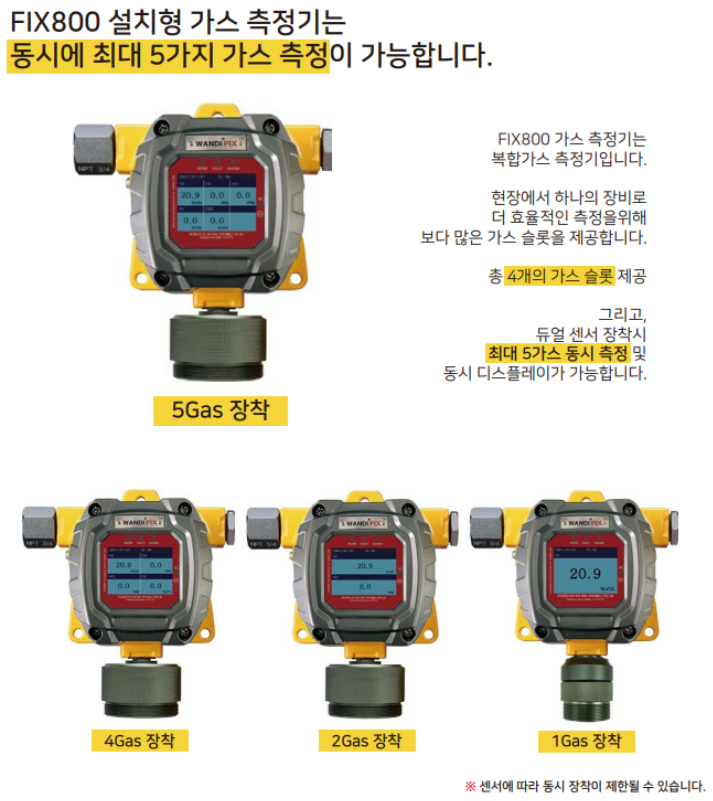
Installation Environment
- Purpose: Confined-space septic tank interior. The client requested a fixed detector for worker safety and operational convenience.
- Gases / ranges: O₂ (0–30 %Vol), CO (0–1,000 ppm), H₂S (0–100 ppm), CO₂ (0–5 %Vol)
- Site request: Because the entrance was narrow and access required a ladder descent into a confined space, the client asked that our team take periodic breaks during the work — a request made out of genuine concern for our safety.
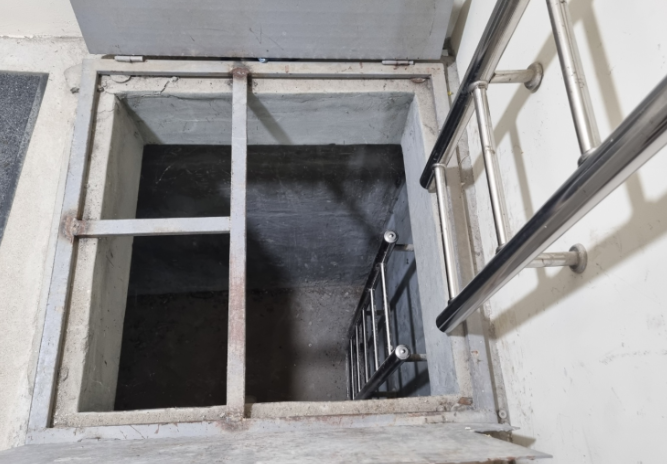
Having visited quite a few sites by now and grown accustomed to ladders and tight spaces, it was tempting to think a space like this would be no trouble at all — a moment of overconfidence immediately followed by bumping my head on the low entrance. A useful reminder to stay careful rather than complacent, no matter how routine a site may seem.
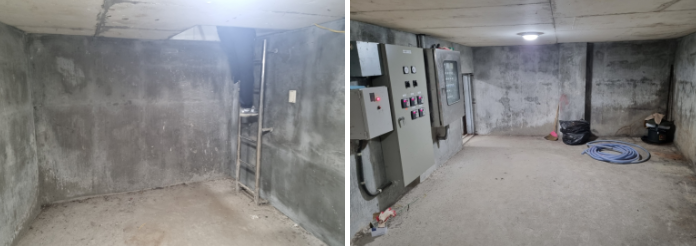
After descending the ladder through the narrow entrance, the septic tank's power supply panel comes into view (no odor at this point, which briefly suggested this might be an unusually pleasant site).
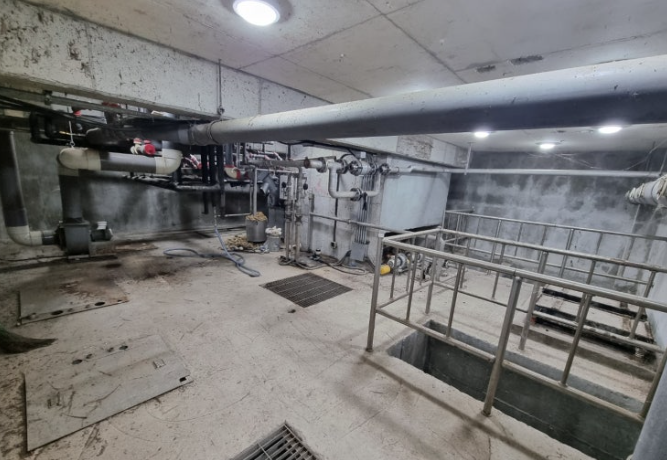
Passing through the inner door reveals the interior of the septic tank room itself — and the familiar odor was there to greet us as expected. One of the most common questions on site is where exactly the detector should be mounted. When the client has no specific preference, our standard guidance is to install the sensor near the gas generation point and at approximately human respiratory height. Once the client identifies the likely gas source, we recommend a nearby mounting location and confirm it with them before beginning installation.
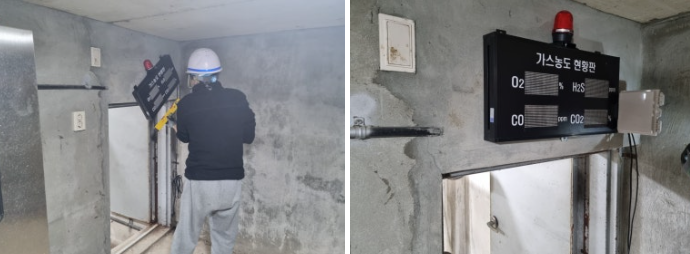
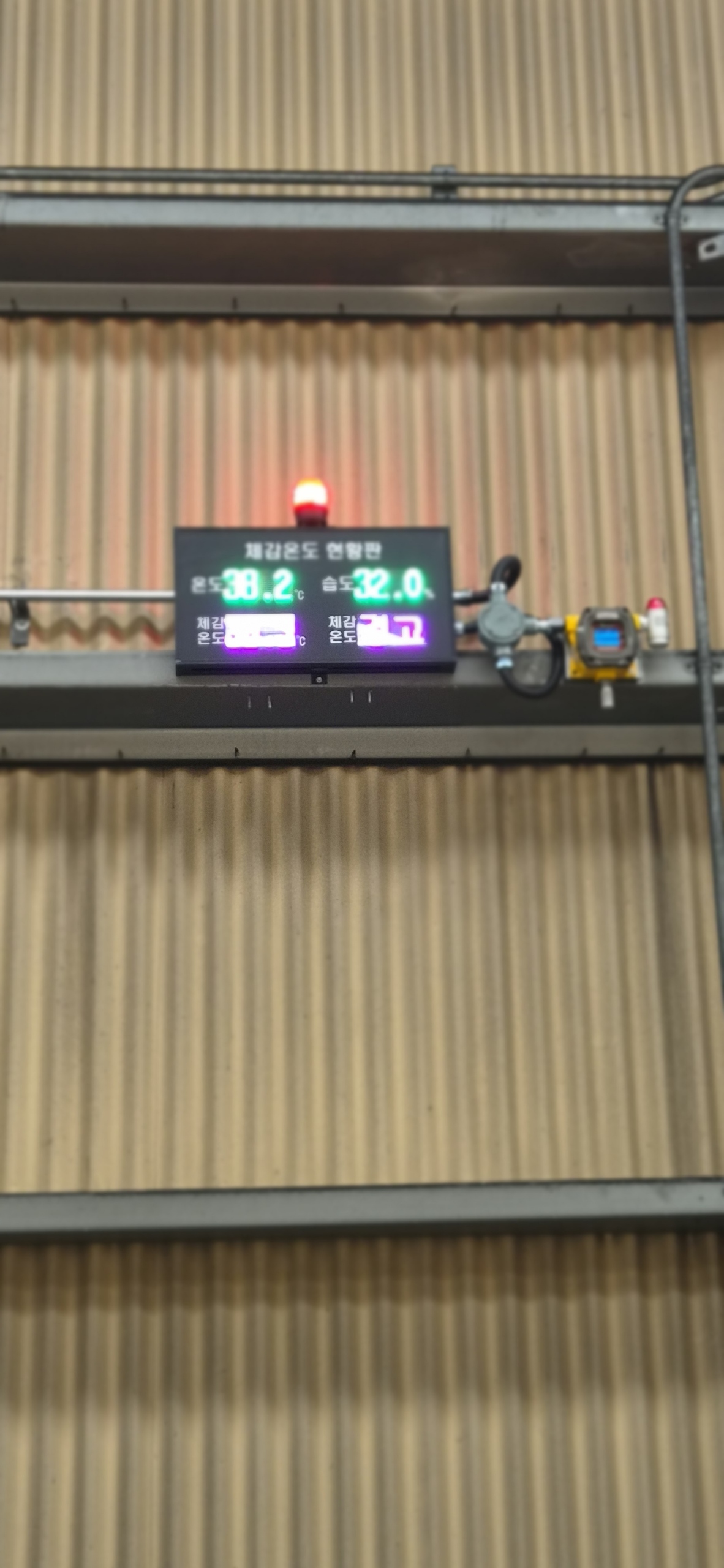
The display panel was mounted above the septic tank room entrance,
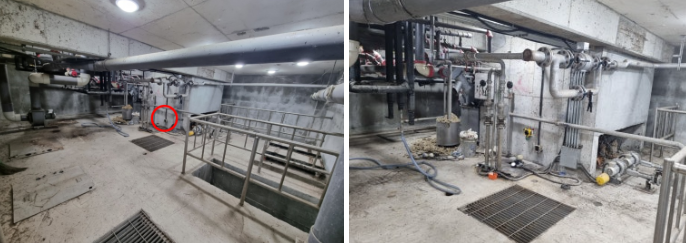
while the FIX800 fixed detector was installed beside the waste tank. The odor was noticeably strongest at that central location, confirming it as a good sensor placement point. Even in a septic tank room that workers only visit occasionally, RS Korea's standard practice is to route power and communication cabling neatly regardless of how infrequently the space is accessed.
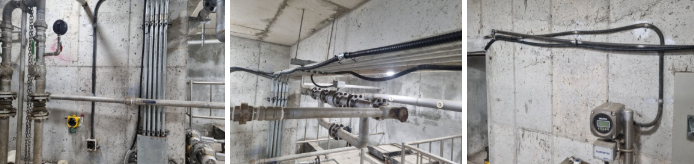
Waterproof flexible conduit was routed along the existing pipework for the cable run. Work was proceeding smoothly, but a smooth process always warrants a second check.
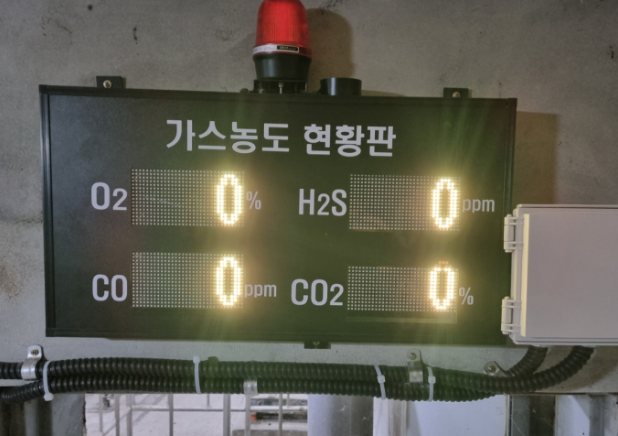
The detector's wiring connection was fine, but communication wasn't coming through correctly. Just when things seemed to be going too well, the cause turned out to be minor — a terminal inside the display panel appeared to have come loose, so the panel was quickly opened for inspection.
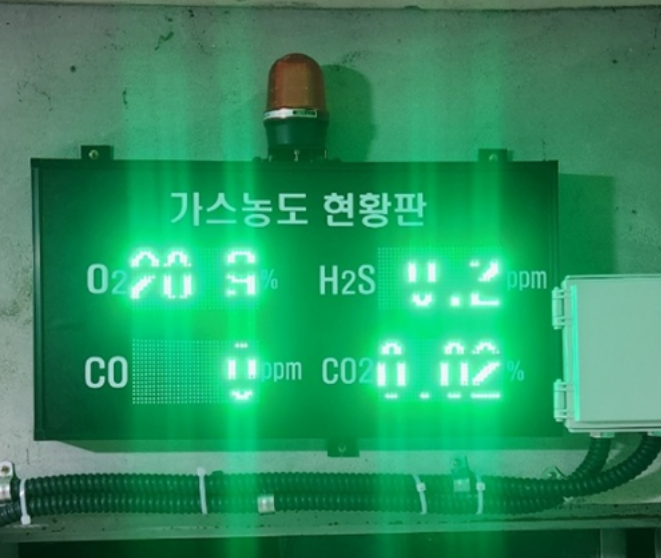
With that resolved, the work was complete. After reporting completion to the client, the alarm response and communication link were demonstrated on site before closing out the job. Site assessments like this help determine what's feasible, and where a client's request can't be accommodated exactly as asked, we explain the reasoning and offer the best available alternative on site. Inquiries about fixed or portable gas detectors are always welcome.

Confined-Space Gas Hazards in Septic Tank Environments
- Oxygen deficiency risk: Biological decomposition in septic tanks rapidly consumes O₂, creating life-threatening oxygen-deficient atmospheres (below 18 %Vol) without warning.
- H₂S accumulation: Hydrogen sulfide generated by anaerobic bacteria can reach dangerous concentrations; its characteristic odor becomes undetectable to the human nose at high levels, making continuous fixed monitoring essential rather than relying on smell alone.
- CO₂ displacement: CO₂ is heavier than air and pools in low-lying confined spaces, compounding oxygen deficiency risk during maintenance entry.
- Sensor placement strategy: Detectors are positioned near the primary gas generation source at approximately human respiratory height to maximize early-warning detection before workers descend.
- Restricted access considerations: Narrow entry hatches and ladder descents limit rapid egress; a permanently installed detector with an external display panel allows pre-entry atmospheric verification without requiring workers to enter the space first.
Frequently Asked Questions
What gases must be monitored in a septic tank confined space?
Korean occupational safety regulations for confined spaces require monitoring of at minimum O₂ (oxygen deficiency), H₂S (hydrogen sulfide), CO (carbon monoxide), and CO₂ (carbon dioxide). The FIX800 composite unit measures all four gases simultaneously, satisfying the multi-gas monitoring requirement in a single fixed installation.
Where should a fixed gas detector be mounted inside a septic tank room?
The sensor unit should be placed near the primary gas generation source — typically adjacent to the waste tank — at approximately human respiratory height. The remote display panel is best located at the room entrance so workers can verify atmospheric conditions before entry without stepping into the confined space.
What is the difference between the FIX800 single-gas and composite (multi-gas) versions?
Both variants share the same FIX800 housing and display, but the composite model accommodates multiple sensor PCBs. Because the sensors mount in the lower sensor compartment, the composite unit's lower housing is physically larger than the single-gas version to accommodate the expanded circuit board.
Is a fixed detector required, or is a portable gas monitor sufficient for septic tank maintenance?
A fixed installed detector provides continuous monitoring and allows pre-entry atmosphere checking without requiring a worker to carry a portable unit into the space. For confined spaces accessed only occasionally for maintenance — such as this septic tank room — a fixed system offers meaningfully greater protection, since it continues monitoring the space even when no maintenance work is scheduled.
What happens if a communication issue is found after installation?
Before closing out a job, the wiring and communication link between the detector and display panel are tested on site. If an issue is found — such as a loose terminal connection inside the display panel — the panel is opened, the connection is inspected and corrected, and the alarm and communication functions are re-tested before the installation is confirmed complete.
#FIX800 #FixedGasDetector #ConfinedSpaceSafety #SepticTankMonitoring #H2SDetection #FourGasMonitor #IndustrialSafetyKorea #WANDIKorea #SeoulInstallation #DisplayBoard
![[레이먼드] 오,폐수 처리실 유해가스 모니터링](https://wandi.co.kr/storage/construction-cases/YxFUQVBZ8Unnk7pJzzfsmezr6xNe0LZvQRDmt7TL.jpg)
![[브이피이코리아] 종합병원 지하 밀폐공간 가스 측정기 설치_FIX800 & FIX-DS](https://wandi.co.kr/storage/construction-cases/gNOA28xSlEy5uU3AOxyHDRH5UfAe0TpMTgAt4Uag.jpg)

