Project Details
FIX800 4-Gas Detector Relocation — Seoul Dongbuk Line Tunnel, Nowon-gu
Hello, this is RS Korea's technical sales team. Searching "Nowon-gu" on our blog turns up several similar posts — meaning our detectors are installed along the entire tunnel section this contractor is working on. For reference, additional photos from one of the better-documented sites along this line are available on our blog.
Product installations along this line share several common design points:
- Protection against dust generated during blasting and construction work
- Protection of the unit from rainwater and other moisture ingress
- Magnetic-mount enclosures for ease of relocation
- 5–6 spare conductors included in each cable run to simplify future relocation
- All sites built to the same standardized system
This visit was a relocation request tied to the progress of excavation work. The sites covered were:
- Station 113: 266 Hagye-dong, Nowon-gu, Seoul (in front of Kia Motors)
- Vent shaft 112E: 266 Hagye-dong, Nowon-gu, Seoul (in front of the Korea Transportation Safety Authority Nowon Inspection Center)
- Vent shaft 111E: 271-7 Hagye-dong, Nowon-gu, Seoul (in front of Hagye 5-Complex Apartments)
- Vent shaft 109E: 311-20 Jangwi-dong, Seongbuk-gu, Seoul (in front of Jangwol SH-vil Complex 1)
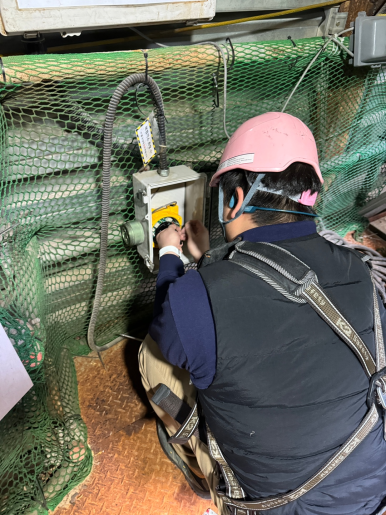
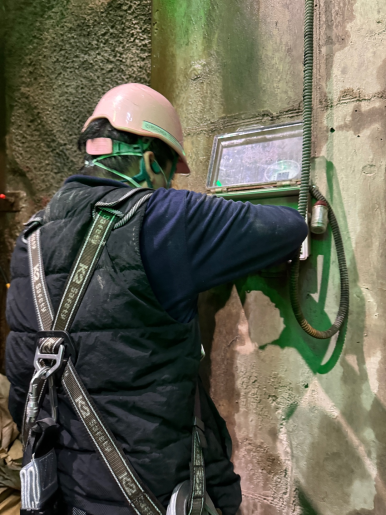
Cable routing and equipment relocation were straightforward at each site, so this report simply shares the work photos along with notable observations. The general work sequence is: verify detector power and communication wiring → power off the hard-wired display board → relocate the detector → re-route power cabling → complete wiring and verify operation. The same sequence was applied at all four sites.
Station 113
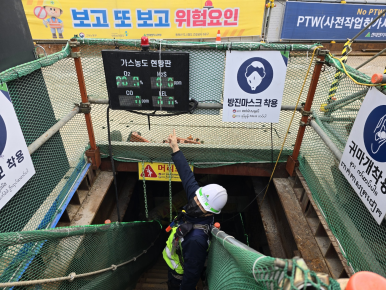
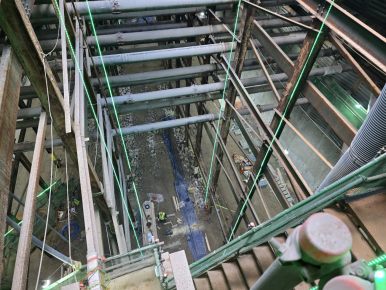
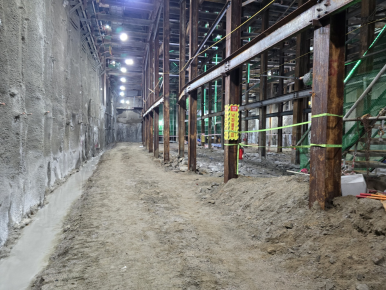
Gas readings were still normal before work began. This station was installed some time ago, but excavation has already progressed much deeper than expected. One variable: the original plan was to magnet-mount the unit to a steel structure, but due to work vehicle and worker traffic, it had to be fixed to a cured concrete wall instead — every site brings its own surprises.
Vent Shaft 112E
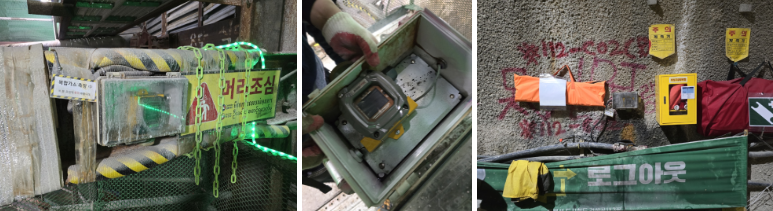
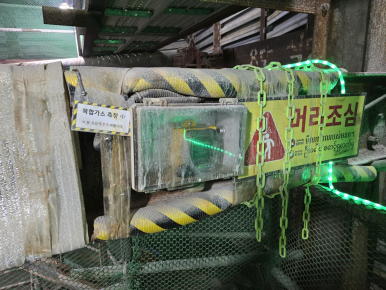
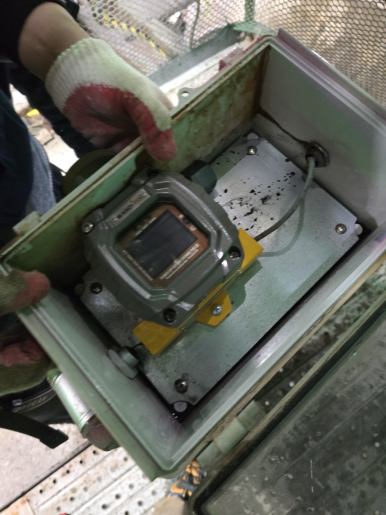
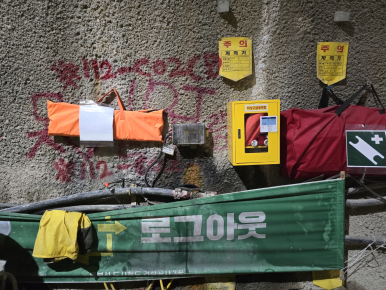
At the second site, powering down and removing the unit revealed some water and debris pooled inside the enclosure. Protective foam padding appears to have caused water running down the H-beam to collect rather than drain — the unit was mounted on the inner face of the H-beam rather than the outer face, which combined with the protective tape work to trap moisture. After cleaning the interior and restoring power, the unit operated normally. When installing in the field, avoiding rain exposure is good, but choosing a location where water cannot pool is even more important. (It appears the unit had already been relocated once on-site since the original installation.) As with Station 113, the unit was reinstalled near the entrance of the horizontal section and confirmed to operate normally.
Vent Shaft 111E
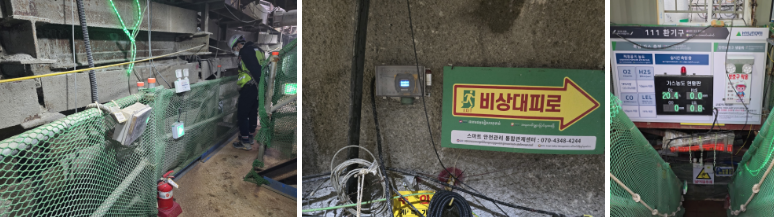
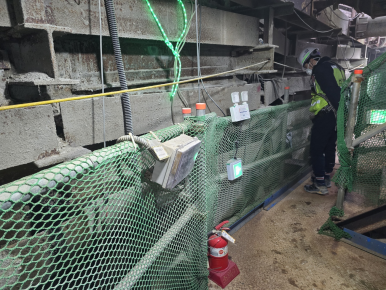
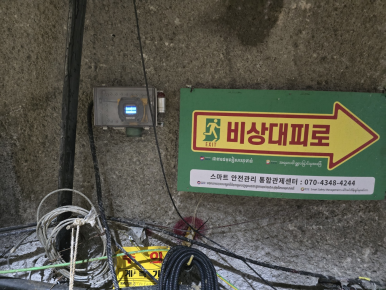
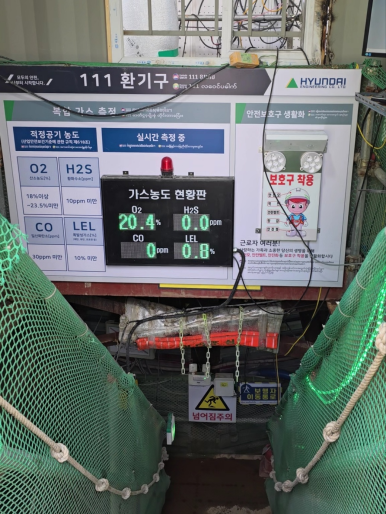
The third vent shaft had the most demanding working conditions — the shafts are not deep enough for a hoist to be practical, so climbing an unsteady temporary staircase repeatedly was no small task. It's no wonder the site crews and managers all stay lean, climbing these stairs every day. Everyone should take care of their knees on a site like this. This location also appeared to have had a self-directed relocation during concrete curing work; the unit was removed, re-routed, and confirmed to measure normally after reinstallation.
Vent Shaft 109E
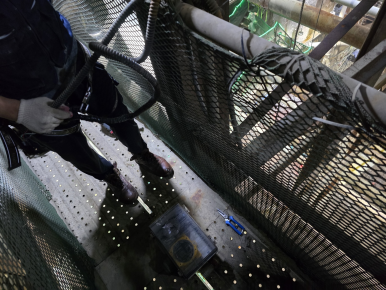
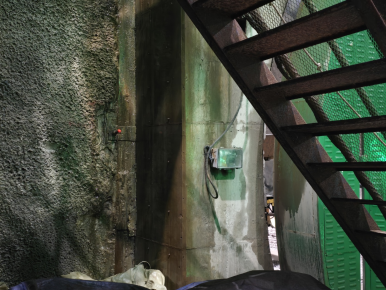
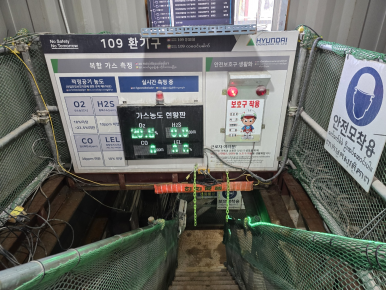
The final site had the cleanest work environment of the four, though the staircase climb was still no easier. Because this location had a proper structural column rather than a roughly cured concrete wall, fixing the unit was considerably easier. The magnetic brackets originally installed for portability were removed at all four sites, and the units were reinstalled on the walls using anchor bolts — meaning more tools had to be carried between sites, adding to the workload.
Closing
RS Korea supports every project not only with product selection and application guidance, but through installation, commissioning, after-sales service, and relocation — staying involved for as long as the site remains active. Wherever gas measurement is needed, our team will be there. Thank you for your continued interest and support.
Frequently Asked Questions
Why does a single tunnel line need so many relocation visits?
As tunnel excavation progresses, the working face moves deeper and the equipment originally installed near the entrance falls out of the optimal monitoring zone. Detectors and display boards must be relocated periodically to keep monitoring coverage aligned with the active work area, which is why the same detector units may be moved several times over the life of a project.
Why are magnetic-mount enclosures used for tunnel installations?
Magnetic mounts allow a detector to be quickly attached to or removed from steel structural members without drilling or anchoring, which is ideal for tunnel sites where the unit needs to be relocated as excavation advances. Where a suitable steel structure isn't available, the unit is instead anchored directly to a cured concrete wall or structural column.
Why did water accumulate inside one of the detector enclosures?
Water intrusion can occur when a unit is mounted on the inner face of a structural beam combined with protective padding or tape that inadvertently blocks natural drainage paths, allowing water running down the structure to collect near the enclosure rather than draining away. Selecting a mounting position and orientation that allows water to drain freely is essential to preventing this issue.
How is normal operation verified after a relocation?
After the detector is remounted and rewired, power is restored and the unit is checked to confirm it reads ambient gas concentrations correctly and communicates properly with the display board. Only after this verification is the relocation considered complete.
What ongoing support does RS Korea provide after installation?
RS Korea supports projects from initial product selection through installation, commissioning, after-sales service, and any subsequent relocation needed as a project progresses — remaining engaged with a site for as long as gas monitoring is required.
#Nowon #SeoulLightRailTunnel #TunnelConstruction #ConfinedSpaceSafety #FourGasDetector #O2COH2SEX #AsphyxiationPrevention #FIX800 #RelocationInstallation #WANDI
![[레이먼드] 오,폐수 처리실 유해가스 모니터링](https://wandi.co.kr/storage/construction-cases/YxFUQVBZ8Unnk7pJzzfsmezr6xNe0LZvQRDmt7TL.jpg)
![[브이피이코리아] 종합병원 지하 밀폐공간 가스 측정기 설치_FIX800 & FIX-DS](https://wandi.co.kr/storage/construction-cases/gNOA28xSlEy5uU3AOxyHDRH5UfAe0TpMTgAt4Uag.jpg)

