Installed Gases
Project Details
FIX800 4-Gas Detector Installed for Confined Space Safety at Wonju Tunnel Construction Site
Hello, this is our team. We install tunnel gas monitoring systems on a recurring basis nearly every year, and this project came to us after the site manager saw a previous tunnel installation we had documented and specifically requested a matching LED display panel sized for this site. A fixed-type four-gas detector (FIX800) monitoring O₂, CO, CO₂, and LEL was installed at an active tunnel excavation site in Wonju, Gangwon-do, Republic of Korea, located along National Highway Route 5 between Sillim and Panbu. The installation was designed to protect workers operating in the confined, oxygen-deficient environment of an in-progress tunnel bore. In addition to the in-tunnel detector unit, an external LED display panel was custom-fabricated and installed at the tunnel entrance to allow personnel outside the tunnel to monitor real-time gas concentration readings before entry.
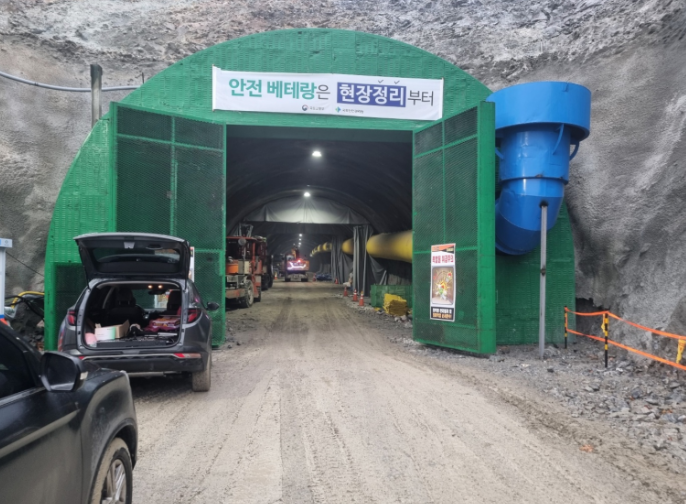
Installation Purpose
- Fixed gas detector installed inside the tunnel — a confined space — to protect worker safety
- External LED display panel installed to allow gas concentration readings to be checked before entering the tunnel interior
Equipment Installed

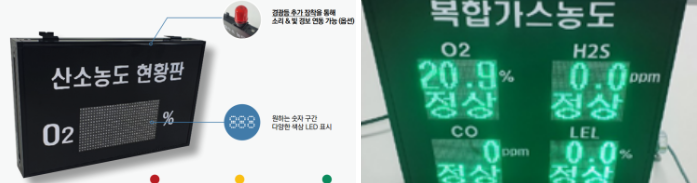
Both the FIX800 detector and the display panel are checked against site requirements before fabrication and installation. Inquiries about the product or installation process are always welcome.
Installation Materials
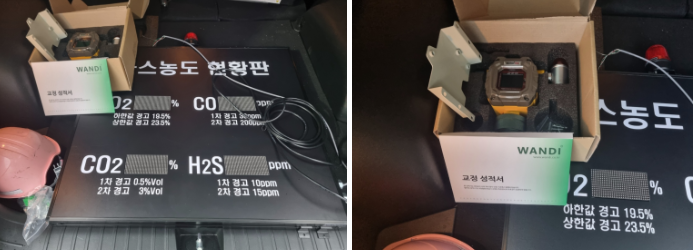
Rain on the day of installation meant the materials had to be photographed inside the vehicle rather than staged on-site — the ground was mud rather than solid dirt, making an outdoor product shot impractical.
Installation Specifications
| Item | Details |
|---|---|
| Detector Model | FIX800 Fixed-Type Gas Detector |
| Gas Channels | O₂ (oxygen), CO (carbon monoxide), CO₂ (carbon dioxide), LEL (combustible gas / lower explosive limit) |
| Installation Environment | Confined space — active road tunnel excavation in progress (National Highway Route 5, Sillim–Panbu section) |
| Location | Wonju, Gangwon-do, Republic of Korea |
| External Display | Custom LED scoreboard-style display panel, installed at tunnel entrance for remote gas level monitoring; waterproof flexible conduit used from panel to tunnel interior |
Installation in Progress
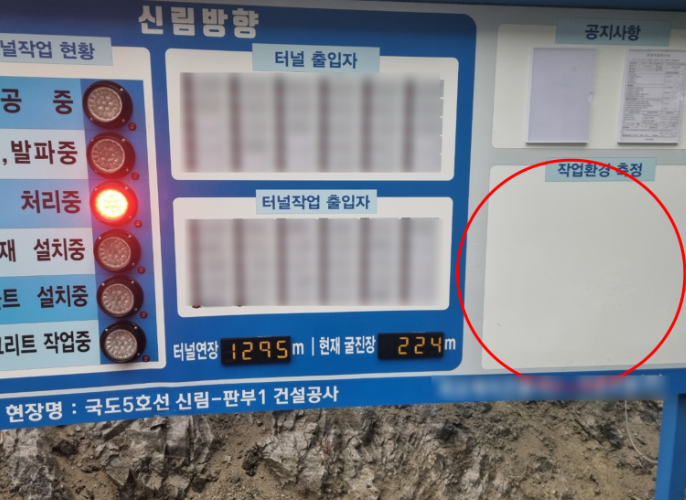
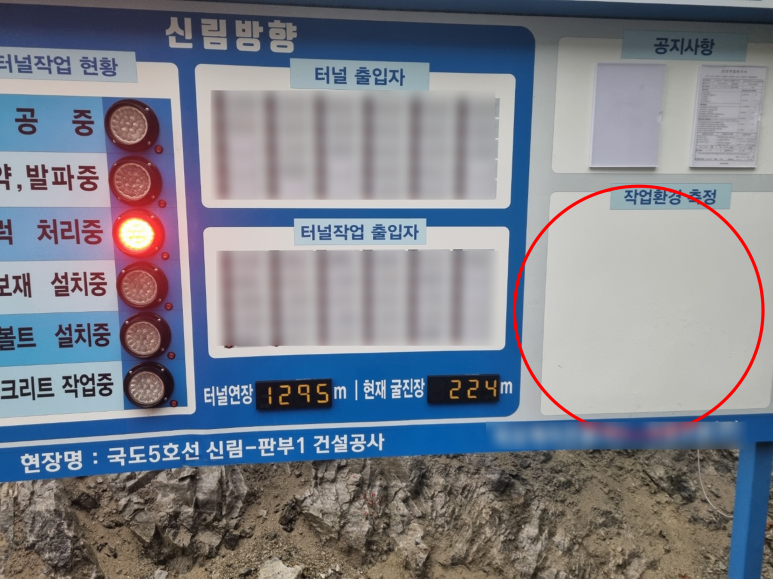
The panel layout was similar to a site we had worked on two years earlier, so positioning and power routing went quickly since the process was already familiar.
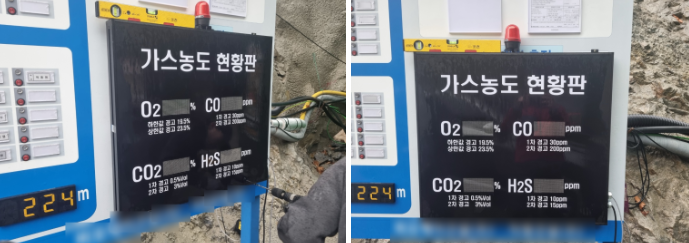
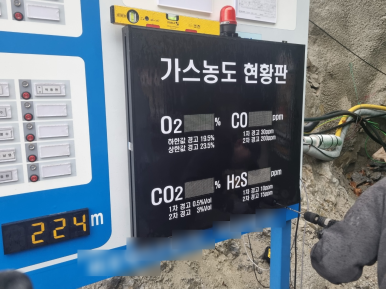
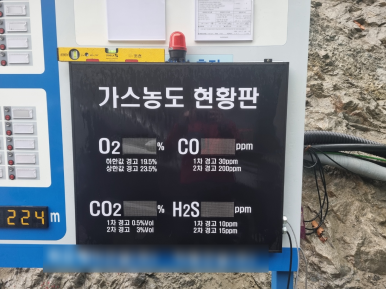
The display panel was leveled and installed first, before the rain intensified. The most time-consuming part of installing a tunnel gas detector is always the cable routing work. From the display panel to the tunnel entrance, waterproof flexible conduit was used.
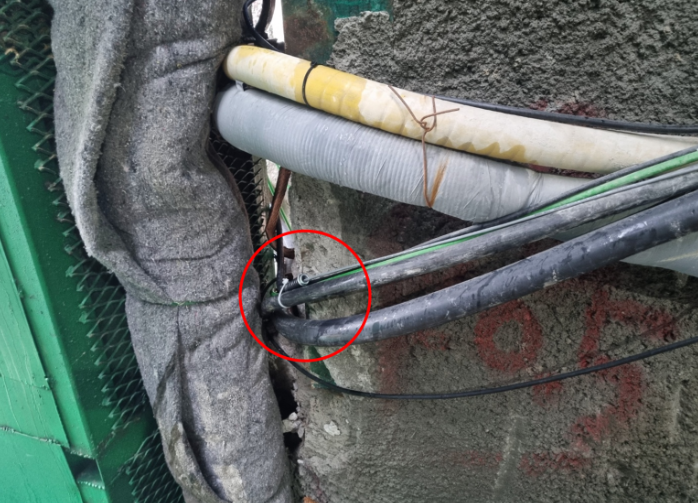
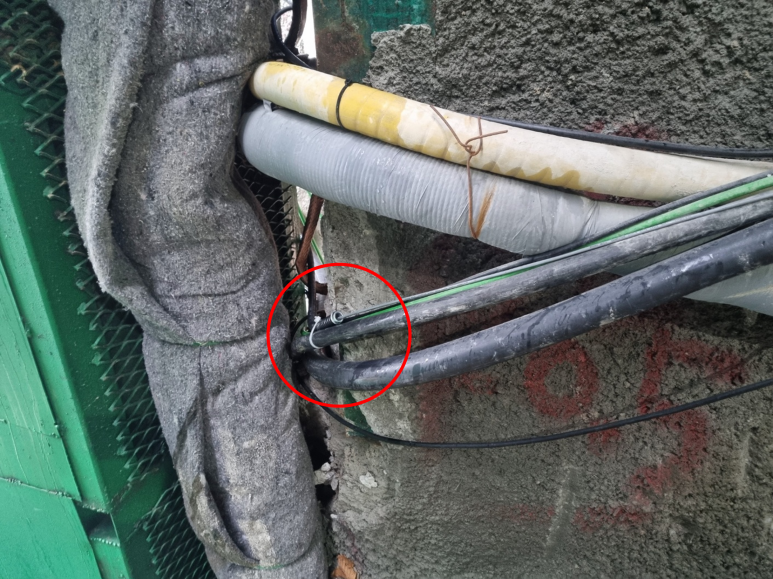
Once the flexible conduit reaches the interior, the cable run continues from there all the way to the detector. Simply carrying the cable inward would have been easy in theory, but conditions made it more difficult in practice.
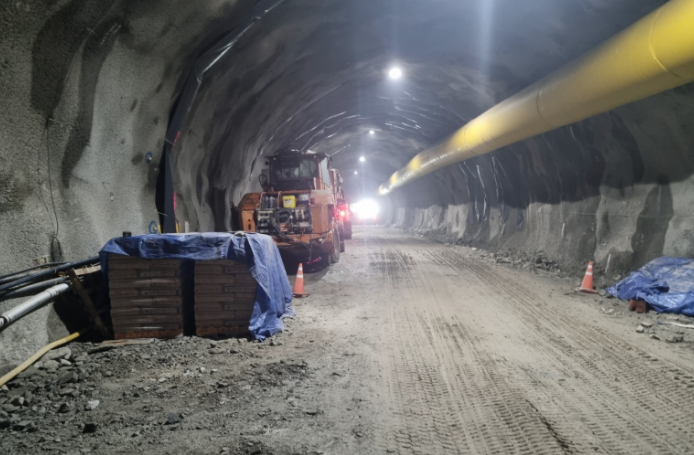
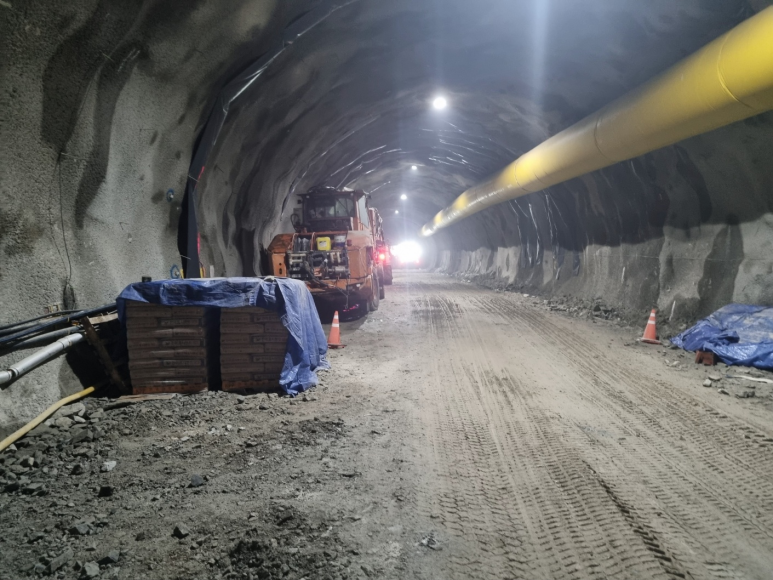
With the rain continuing, further complications came from having to route the cable along the left-side wall while parked materials and cranes narrowed the available path, making the routing work considerably less comfortable than a typical installation.
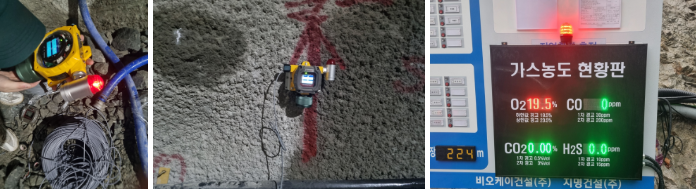
After completing the cable fixing work, response alarm tests were performed on both the detector and the display panel, and the installation was completed. The site manager confirmed the completed work on site, and arrangements were made to stay in contact regarding any follow-up access needed as construction continues. Inquiries about the detector or installation are always welcome.

Key Safety Considerations for Confined-Space Gas Detection in Tunnel Construction
- Tunnel bores under active excavation are classified as confined spaces where O₂ deficiency, CO accumulation from heavy equipment exhaust, CO₂ buildup, and combustible gas pockets can develop rapidly, making continuous real-time monitoring essential.
- An external LED display panel at the tunnel entrance enables supervisors and workers outside the tunnel to verify safe gas levels before entry, substantially reducing the risk of confined-space incidents.
- Waterproof flexible conduit must be used for all cable runs between the exterior panel and the interior sensor unit to protect signal integrity and prevent moisture ingress in the wet, muddy conditions typical of active excavation sites.
- Cable routing through the tunnel interior is the most time-consuming phase of installation; obstructions such as parked construction equipment and cranes require careful planning and additional labor.
- After installation, the system must be verified through functional alarm tests on both the detector unit and the external display panel before site handover to the site manager.
Frequently Asked Questions
What gases does the FIX800 monitor in tunnel construction applications?
In this tunnel construction installation, the FIX800 was configured to simultaneously monitor four gases: O₂ (oxygen deficiency), CO (carbon monoxide), CO₂ (carbon dioxide), and LEL (lower explosive limit for combustible gases). This four-channel configuration provides comprehensive protection against the primary hazards encountered in confined tunnel environments.
Why is an external LED display panel used alongside the in-tunnel gas detector?
Because the gas detector is installed deep inside the tunnel bore, workers and supervisors at the entrance cannot directly read its display. The external LED panel relays real-time gas concentration data to the tunnel entrance, allowing personnel to confirm safe conditions before entering the confined space and enabling rapid response if alarm thresholds are exceeded.
What wiring method is required for the tunnel entrance-to-interior cable run?
A waterproof flexible conduit is used for the cable run from the external display panel to the tunnel entrance, after which conduit-protected wiring continues through the interior to the detector. This method protects signal cables from moisture, mud, and mechanical damage inherent to active excavation environments.
How is the installation commissioned and handed over to the site?
Upon completion of all wiring and mounting work, functional response and alarm tests are performed on both the FIX800 detector and the external LED display panel. The completed system is then demonstrated to and confirmed by the site manager, after which ongoing operational guidance is provided as needed throughout the construction project.
#FIX800 #TunnelConstruction #ConfinedSpaceSafety #GasDetector #O2COCo2LEL #Wonju #FixedGasMonitor #WANDIKorea #LEDDisplayBoard #RoadTunnelSafety
![[레이먼드] 오,폐수 처리실 유해가스 모니터링](https://wandi.co.kr/storage/construction-cases/YxFUQVBZ8Unnk7pJzzfsmezr6xNe0LZvQRDmt7TL.jpg)
![[브이피이코리아] 종합병원 지하 밀폐공간 가스 측정기 설치_FIX800 & FIX-DS](https://wandi.co.kr/storage/construction-cases/gNOA28xSlEy5uU3AOxyHDRH5UfAe0TpMTgAt4Uag.jpg)

