Installed Gases
Project Details
FIX800 O₂ Fixed Gas Detector Installation in Commercial Building Protected Zones — Busan
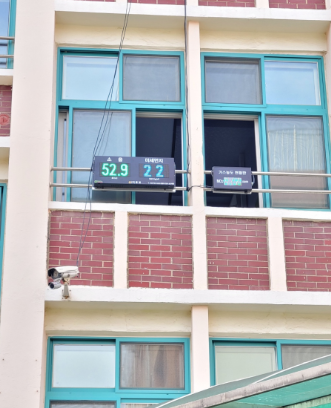
In response to amended South Korean fire suppression regulations effective October 18, 2024, a Busan commercial building commissioned the installation of nine FIX800 O₂ fixed oxygen gas detectors across nine independent CO₂-protected zones. The project followed the same configuration successfully deployed at a prior Yongsan building installation and was carried out to ensure worker safety in the event of accidental CO₂ discharge from the building's fire suppression system.
Installation Specifications
| Item | Details |
|---|---|
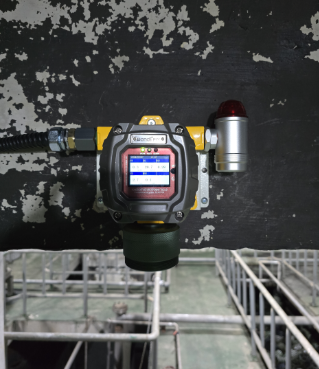
| Detector Model | WANDI FIX800 (fixed-type gas detector) |
| Target Gas | O₂ (Oxygen) — single-sensor configuration |
| Number of Units | 9 units across 9 protected zones |
| Display / Output | Single-channel LED display panel (전광판 1CH), 9 units installed |
| Installation Environment | CO₂ fire suppression protected zones within a multi-story commercial building, Busan |
CO₂ Discharge Hazard in Protected Zones: Why O₂ Monitoring Is Critical
- A protected zone (방호구역) is a designated area equipped with fire detection and automatic CO₂ suppression systems; accidental discharge can release CO₂ to a minimum concentration of 34% within 60 seconds.
- Exposure to CO₂ at such concentrations without immediate evacuation can result in asphyxiation and fatal poisoning, making real-time O₂ monitoring an essential life-safety measure.
- The October 18, 2024 legislative amendment to CO₂ fire suppression equipment management requirements mandates enhanced safety measures, including gas detection, in affected facilities.
- The FIX800 O₂ detector supports flexible sensor configurations — from a single O₂ sensor up to a 5-gas confined-space package (O₂, CO, H₂S, LEL, CO₂) — enabling site-specific solutions across building and industrial environments.
- Installing a dedicated O₂ detector at each protected zone entry point provides immediate alarm feedback, allowing workers to evacuate safely before oxygen levels reach dangerous thresholds.
Frequently Asked Questions
What is a "protected zone" (방호구역) in the context of building fire suppression?
A protected zone is a compartment within a facility that is continuously monitored by fire detection equipment and is connected to an automatic CO₂ fire suppression system. In the event of a fire, CO₂ is discharged to extinguish it. Because CO₂ displaces oxygen rapidly, these zones present a serious asphyxiation risk to personnel and require dedicated gas monitoring.
Why was the FIX800 O₂ model selected for this installation?
The FIX800 is a wall-mounted fixed gas detector designed for continuous monitoring. For this application, a single O₂ sensor configuration was chosen because the primary hazard is oxygen depletion caused by CO₂ discharge. The unit's single-channel LED display provides clear, real-time readings that workers can check immediately upon entering the zone.
How many units were installed, and how were they distributed?
A total of nine FIX800 O₂ detectors were installed — one per protected zone — across nine separate protected compartments in the building. Each zone also received a single-channel display panel (1CH), giving a complete 9-unit detector and 9-unit display system.
What regulatory change triggered this installation project?
South Korea's revised regulations on CO₂ fire suppression equipment management, which took effect on October 18, 2024, introduced stricter safety requirements for facilities using CO₂-based suppression systems. Building owners are now required to implement additional protective measures — including gas detection equipment — to safeguard personnel working in or near protected zones.
#FIX800 #OxygenDetector #FixedGasDetector #CO2FireSuppression #ProtectedZoneSafety #BuildingSafety #Busan #WANDIKorea
![설치] 원주 국토5호선 신림~판부간 터널공사 밀폐공간 안전용 가스측정기 FIX800 4GAS O2 CO CO2 LEL 설치!](https://wandi.co.kr/storage/construction-cases/Ekn7PulFgplHqjZgJUfOsevvzH0Kawa1G0h9NlH8.png)
![설치] 약품 폐수탱크 수위계와 인디게이터 설치 그리고 무선 모니터링까지 MP + SUP1100 + FIX-AP](https://wandi.co.kr/storage/construction-cases/UjHcHl5kWktnCXlnvMIgk6eQhh7pqwuf3u65iKLO.png)