Project Details
Fixed Multi-Gas Detector FIX800 4GAS Installed at Paju Sewage Treatment Plant
Recent revisions to Korea's Occupational Safety and Health Standards have driven a wave of blog posts about installing gas detectors in fire-suppressant agent rooms and other protected areas. WANDI's core product line addresses a broader need: multi-gas detectors that measure, with a single unit, the range of gases that can cause asphyxiation accidents in confined spaces.
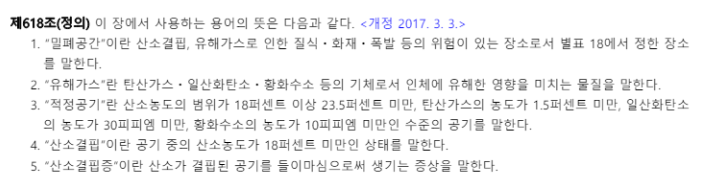
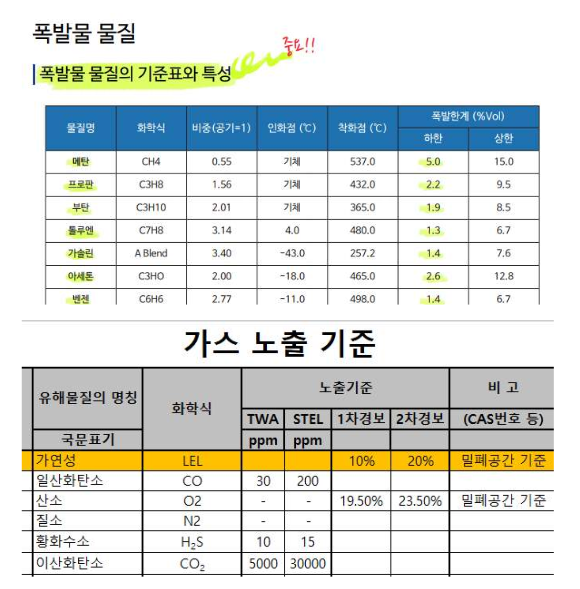
Article 618, Chapter 10, Section 1 of Korea's Occupational Safety and Health Standards specifies the gases that must be measured to prevent worker asphyxiation in confined spaces. Since the 2017 revision, the following five gases must be monitored:
- O₂ (oxygen)
- CO (carbon monoxide)
- CO₂ (carbon dioxide)
- H₂S (hydrogen sulfide)
- EX (explosive/combustible gas)
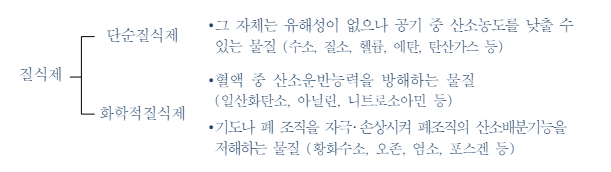
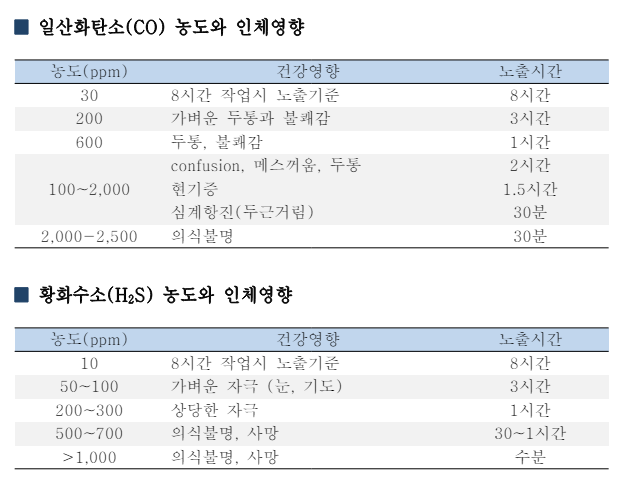
Asphyxiation accidents are often assumed to result only from oxygen deficiency, but toxic-gas asphyxiation is just as real a risk — even very low gas concentrations can be fatal. (PPM means one part per million; 1% equals 10,000 ppm.) Relying on an oxygen-only meter alone can leave a toxic-gas hazard undetected.
With that regulatory background covered, on to the installation itself. This site is a sewage treatment plant in Paju.
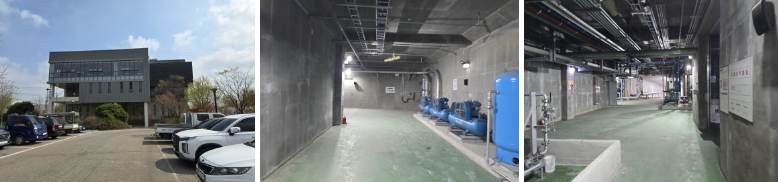
Because the surrounding area is a newly developed district, the facility itself was clean and odor-free — a notable improvement over sites that process food waste or livestock manure. The plant's open layout and uncluttered ceiling cable trays also made the wiring work considerably easier than usual.
Installation Details

Detectors were installed at the center of two primary treatment facility zones, wired through 16 mm waterproof corrugated conduit. At the customer's request, the conduit was color-matched to the doorway and routed neatly toward the emergency exit light. A status board was installed at the basement-level (B1) entrance, roughly 30–40 m from the detectors.
| Item | Details |
|---|---|
| Detector Model | WANDI FIX800 4GAS (fixed installation type) |
| Gases Monitored | O₂ (oxygen), CO (carbon monoxide), H₂S (hydrogen sulfide), EX (combustible / LEL) |
| Installation Environment | Confined-space areas of a sewage treatment plant |
| Location | Paju City, Gyeonggi Province, Republic of Korea |
| Wiring & Power | 16 mm waterproof corrugated conduit; 4-core shielded cable (220 V AC input → 24 V DC via onboard converter, plus RS-485 communication); status board 30–40 m away |
Powering the status board alone brings the entire detector network online, simplifying operation and reducing startup errors.

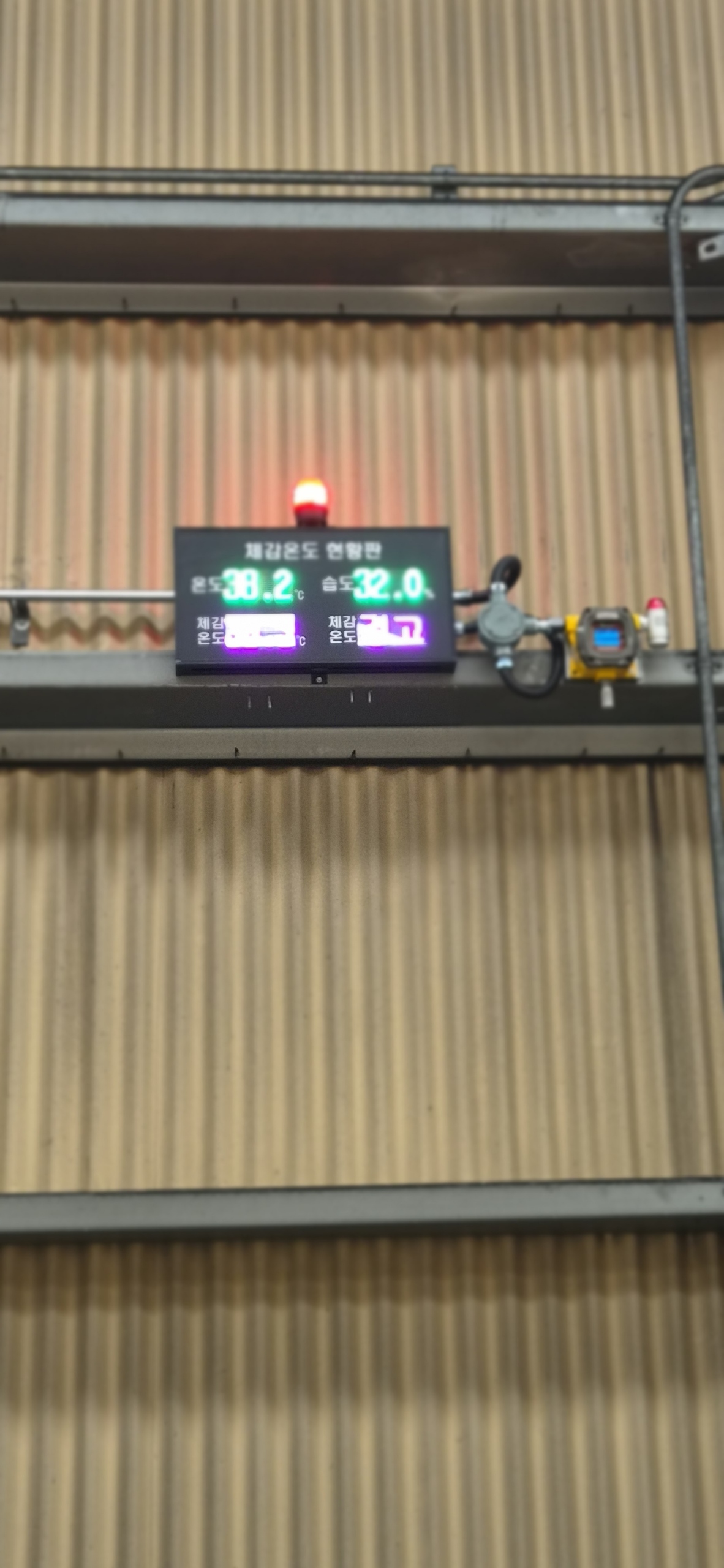
Shortly after power-up, while sensors are still warming up or if a communication issue is present, the status board displays all channels as 0 in yellow. In this installation, the delay was simply normal sensor warm-up time, with no wiring or configuration issues involved. Once the warm-up period ends, each channel displays its reading in green when within the normal range. Using test gas, the oxygen reading was lowered below the alarm threshold to demonstrate the alarm condition: the display switched to red with an accompanying audible and visual alarm.
Maintenance & Calibration
- The installed sensors use electrochemical and catalytic combustion technology, with an expected service life of two years.
- The product carries a one-year defect warranty.
- Annual calibration is recommended to confirm the unit remains within normal operating tolerances; calibration outside this interval can be arranged according to the customer's own internal policy.
- Calibration can be performed as an on-site visit (a regional travel fee applies) or by disassembling the unit and shipping it to RS Korea. Certificates can be issued as KOLAS-accredited reports (a national accreditation body, at higher cost) or as WANDI's own in-house calibration certificates.
- Sensors that reach the two-year mark must be replaced; all replacement work is carried out in Korea, and RS Korea keeps stock on hand at all times.
Confined-Space Gas Hazards at Water Treatment Facilities
- Korean occupational safety regulations (revised 2017) mandate simultaneous monitoring of five gases in confined spaces: O₂, CO, CO₂, H₂S, and EX. The FIX800 4GAS addresses four of these key hazards in a single wall-mounted unit.
- O₂ deficiency is not the only asphyxiation risk — toxic gases such as H₂S can cause chemical asphyxiation at extremely low concentrations (parts-per-million range), making multi-gas detection essential.
- Sewage treatment plants generate H₂S from biological decomposition in enclosed pump rooms, sedimentation basins, and dehydration rooms, making them high-risk confined spaces even when oxygen readings appear normal.
- The FIX800 status board provides a real-time visual readout at the B1F entry point: green display indicates all channels within safe limits; yellow display indicates sensor warm-up or communication loading; red display with audible and visual alarms activates when any channel exceeds the configured alarm threshold.
Frequently Asked Questions
What gases does the WANDI FIX800 4GAS monitor at a sewage treatment plant?
The FIX800 4GAS simultaneously monitors oxygen (O₂), carbon monoxide (CO), hydrogen sulfide (H₂S), and combustible gases (EX / %LEL). These four channels address the primary asphyxiation and explosion risks present in confined spaces at sewage and wastewater treatment facilities.
Why is a multi-gas detector required rather than a single oxygen meter?
Korean Occupational Safety and Health Standards (Article 618) specify that workers entering confined spaces must measure multiple gas types, because toxic gases such as H₂S can be lethal at very low ppm concentrations even when oxygen levels remain normal. A single O₂ meter cannot detect H₂S, CO, or flammable gas accumulation.
What is the expected service life and maintenance schedule for the FIX800 sensors?
The electrochemical and catalytic combustion sensors in the FIX800 have an expected operational lifespan of two years, after which full replacement is required; replacement work is completed in Korea, with stock maintained on hand. The product carries a one-year defect warranty, and annual calibration is recommended. Calibration can be performed on-site (a regional travel fee applies) or by shipping the disassembled unit to RS Korea, with certificates available as KOLAS-accredited reports or as WANDI in-house calibration certificates.
What does the %LEL reading on the EX channel mean?
%LEL stands for percent of the Lower Explosive Limit. It expresses the concentration of a combustible gas as a percentage of the minimum concentration at which that gas can ignite. A reading of 100 %LEL means the gas concentration has reached its ignition threshold; industry practice is to alarm at 10–25 %LEL to provide a safe warning margin before an explosive atmosphere develops.
For further questions about the WANDI FIX800 4GAS or other confined-space gas detection solutions, please contact RS Korea (WANDI Korea) during business hours.
#FIX800 #MultiGasDetector #ConfinedSpaceSafety #SewageTreatmentPlant #H2SDetector #FixedGasMonitor #Paju #WANDIKorea
![[레이먼드] 오,폐수 처리실 유해가스 모니터링](https://wandi.co.kr/storage/construction-cases/YxFUQVBZ8Unnk7pJzzfsmezr6xNe0LZvQRDmt7TL.jpg)
![[브이피이코리아] 종합병원 지하 밀폐공간 가스 측정기 설치_FIX800 & FIX-DS](https://wandi.co.kr/storage/construction-cases/gNOA28xSlEy5uU3AOxyHDRH5UfAe0TpMTgAt4Uag.jpg)

