Project Details
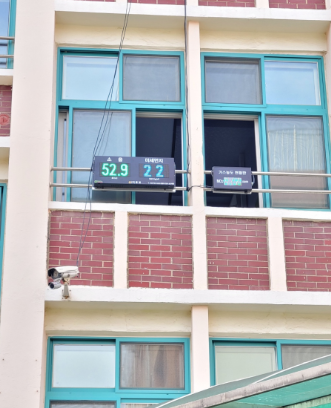
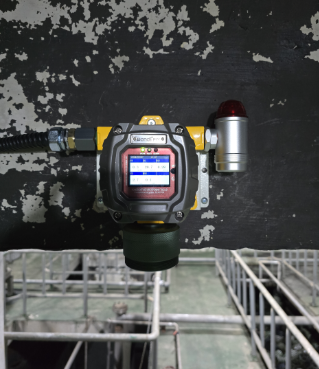
RS Korea installed a FIX800 fixed gas detector and LED status board at a relay pump station handling approximately 1,000 tons of wastewater per day, forwarding it to downstream pump stations or treatment plants.
Background: Relay pump stations are installed at points where pipeline burial depth increases or along long-distance conveyance routes, transferring wastewater onward to the next station. This particular station operates under 24-hour monitoring — if a pump fails, wastewater can back up through surrounding drains and flood the surrounding area, so a fixed gas detector was installed to protect workers performing continuous safety checks in this confined space.
Product: The FIX800 fixed detector is increasingly requested for gas cylinder rooms, protected zones, confined spaces, and laboratories where checking gas concentration with a portable detector before entry is impractical or too slow. As a standard diffusion-type instrument, FIX800 performs reliably even in dusty environments such as tunnels; when pump-based suction sampling is required instead, RS Korea can add a dust pre-filter to the sampling system.
Installation approach: To keep cable routing clean and unobtrusive, technicians located existing cable trays through the electrical room floor rather than running visible conduit along stairwells — a more labor-intensive approach but one that leaves a neater finished appearance for staff and visitors.
Site visit and demonstration: At the facility manager's request, RS Korea returned to demonstrate the remote control and alarm functions. The manager rated the system highly — full marks for response speed and light visibility, and near-full marks for alarm volume, with a suggestion to increase it slightly given ambient pump noise. The gas concentration display board was confirmed to be reading correctly and matching the detector output.
Frequently asked questions covered during the visit:
- Calibration interval: recommended annually; calibration certificates are valid for one year and calibration visits also serve as a general equipment check.
- Sensor lifespan: approximately 1.5 years for some sensor types, up to 2 years for others.
- Identifying sensor failure: RS Korea can confirm failures during calibration, or customers can watch for a zero reading in situations where gas should be present and contact RS Korea or send in the unit for inspection.
- Repair turnaround: RS Korea maintains stock of confined-space safety sensors and can fabricate components in-house, typically completing repairs within one to two weeks.
RS Korea welcomes inquiries on any gas measurement topic via the contact information provided at installation.
![설치] 원주 국토5호선 신림~판부간 터널공사 밀폐공간 안전용 가스측정기 FIX800 4GAS O2 CO CO2 LEL 설치!](https://wandi.co.kr/storage/construction-cases/Ekn7PulFgplHqjZgJUfOsevvzH0Kawa1G0h9NlH8.png)
![설치] 약품 폐수탱크 수위계와 인디게이터 설치 그리고 무선 모니터링까지 MP + SUP1100 + FIX-AP](https://wandi.co.kr/storage/construction-cases/UjHcHl5kWktnCXlnvMIgk6eQhh7pqwuf3u65iKLO.png)