Project Details
RS Korea completed installation of a FIX800 fixed five-gas detector and FIX-DS LED status board in the underground wastewater treatment room of a telecommunications company branch building in Wonju, Gangwon-do.
Background
This installation addresses gas concentration monitoring required under Article 618 of Korea's Occupational Safety and Health Standards, which mandates confined-space gas monitoring to prevent worker asphyxiation accidents.
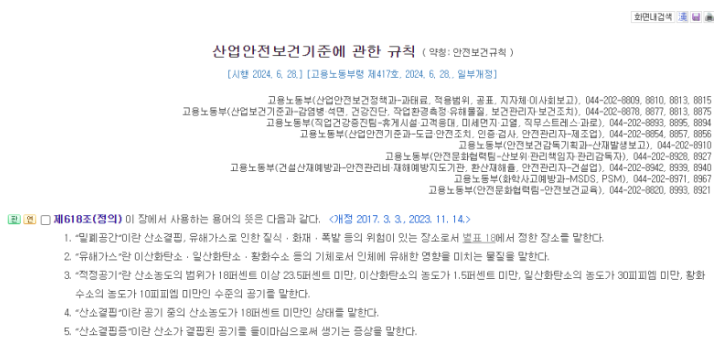
Since 2023, the telecom operator had been discussing installation of gas concentration detectors at underground wastewater treatment facilities located inside its branch buildings nationwide. After selecting the required gas types and considering budget and regulatory requirements, the first project was finally launched. Following two pilot installations, the program is expected to expand gradually to additional branch buildings.
The equipment installed at this branch is as follows.
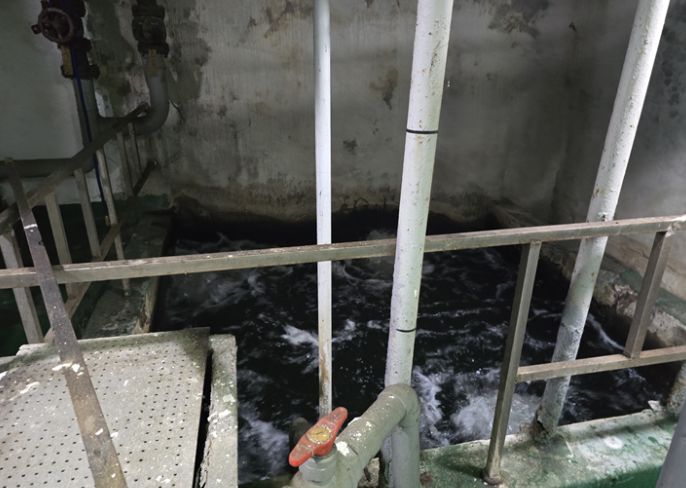
This site is an underground wastewater treatment room inside a telecommunications company branch building in Wonju, Gangwon-do.
Fixed Gas Detector FIX800 (5-Gas)
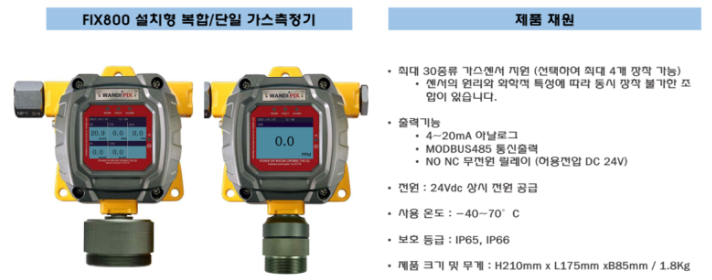
The FIX800 is a fixed multi/single-gas detector. Users can select the sensors to install; when configured with a dual CO/H2S sensor, it can simultaneously measure up to five gases, covering all five gases required by law — O2, CO, H2S, EX (LEL), and CO2 — from a single unit.
FIX-DS Dedicated Monitoring Display for FIX800
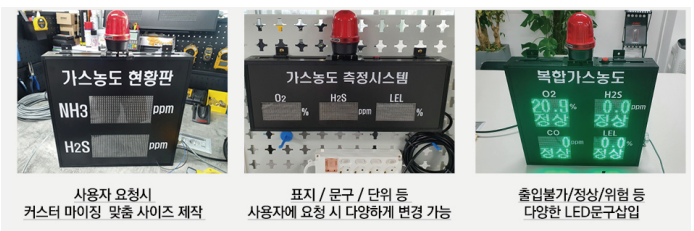
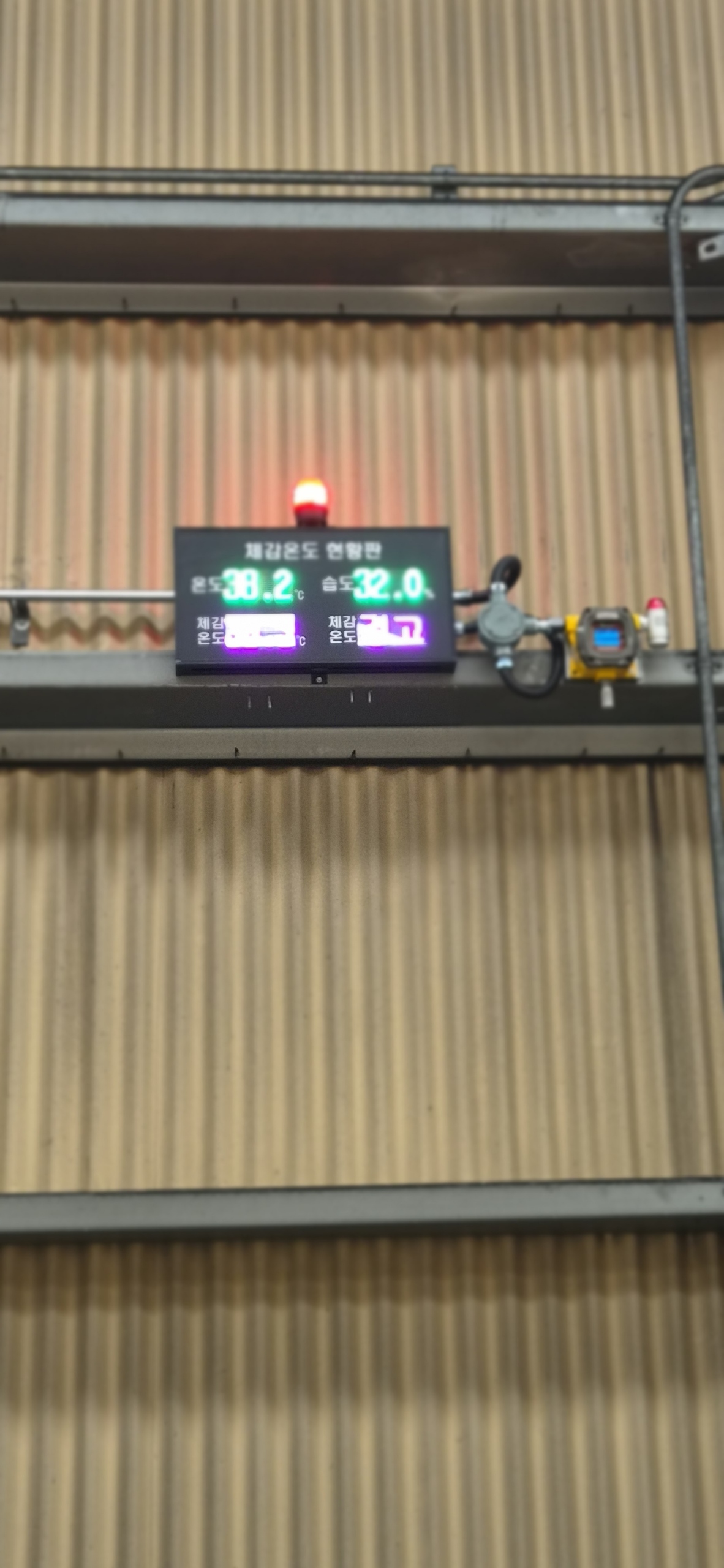
The FIX-DS is a dedicated monitoring display for the FIX800, featuring a highly visible LED display. Since the FIX800 itself is built to order according to user requirements, the FIX-DS status board is likewise manufactured to match the detector's specifications, with a range of customization options.
With this pair of devices in place, personnel can be alerted and evacuated in time whenever there is a risk of asphyxiation, both before and during work in the confined space.
Preparation
The first branch to receive this installation is located in Wonju-si, Gangwon-do. Construction was authorized to begin at 10 a.m.; accounting for preparation time and safety briefing, the crew arrived on site around 9 a.m.
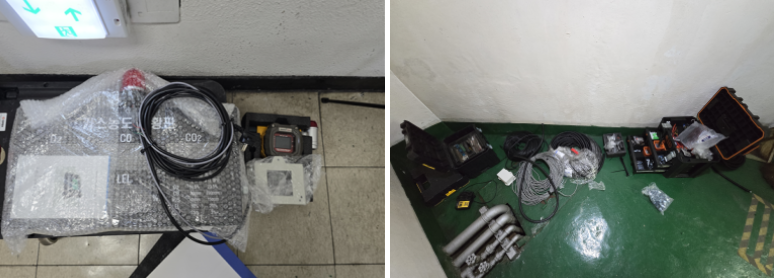
Before starting work, the team checked the products and materials scheduled for installation that day: the gas detector, the LED status board, 16 mm waterproof corrugated conduit, VCTF 3C 1.5 sq power cable, AWG 24 4C shielded cable, and other miscellaneous materials.
Before Work
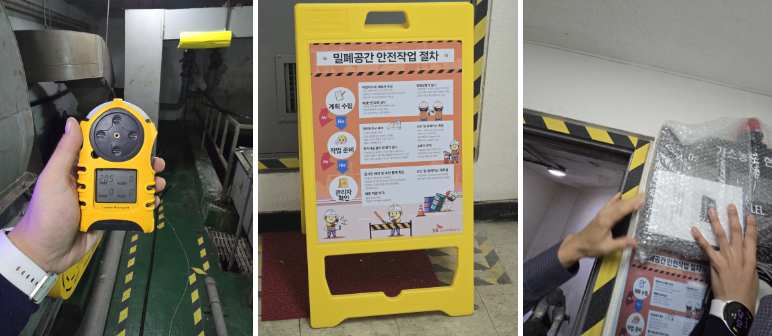
Before entering the confined space, the crew checked the internal gas concentration. At the facility manager's request, a MINIMAX X4 detector kept on site was used to measure and record the atmosphere — the oxygen level read 20.5%, slightly low but well within a safe range for work. A safety barrier was set up to keep unauthorized personnel from entering, and the previously agreed installation locations for the detector and status board were reconfirmed.
During Work
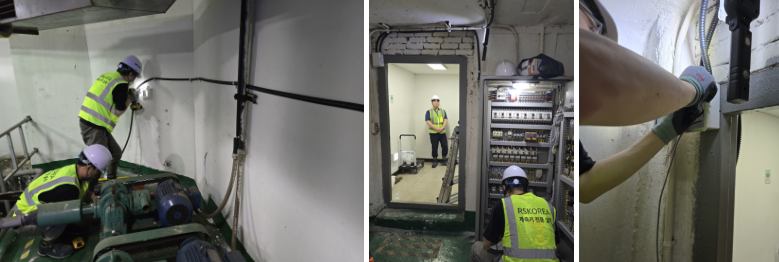
When enough crew members are available, splitting the team into a mounting group and a wiring group allows the work to proceed more quickly. Where no cable tray is available, drilling is sometimes unavoidable; in such cases, caulking the door frame rather than drilling into concrete provides better safety and efficiency. A junction box was used wherever wires needed to be spliced, positioned to conceal the drilled opening for a clean finish. Power was supplied from the panel inside the wastewater treatment room; since no spare breaker was available, an existing spare outlet inside the panel was used by agreement with the facility.
Work Completed
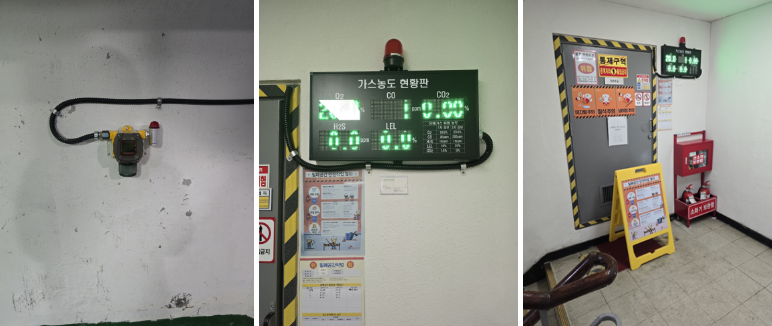
Reporting the completed work and training the facility manager on how to use the system left little time for photos. The team tested normal communication with the status board, ran an alarm test using calibration gas, and provided training on maintenance and sensor calibration intervals. A contact card was attached to the underside of the status board for any future service needs, and the work area was cleaned up before wrapping up.
Closing
Although this may look like the same product every time, for the end user it is the first time they are seeing it. Every project is approached with a fresh mindset, and while the process may look similar each time, RS Korea aims to make small improvements with every installation.
For inquiries about nationwide demonstrations, delivery, or installation of fixed gas detection systems, please feel free to reach out to RS Korea.
![[레이먼드] 오,폐수 처리실 유해가스 모니터링](https://wandi.co.kr/storage/construction-cases/YxFUQVBZ8Unnk7pJzzfsmezr6xNe0LZvQRDmt7TL.jpg)
![[브이피이코리아] 종합병원 지하 밀폐공간 가스 측정기 설치_FIX800 & FIX-DS](https://wandi.co.kr/storage/construction-cases/gNOA28xSlEy5uU3AOxyHDRH5UfAe0TpMTgAt4Uag.jpg)

