Applied Markets
Installed Gases
Project Details
Unidentified Odor Investigation at a Public Library — GasTiger 2000 Multi-Sensor Field Deployment
A public library in Yongsan, Seoul, received persistent unidentified odor complaints from users and staff. With no prior knowledge of which gases were responsible, a measurement solution capable of simultaneously detecting multiple potential odor-causing gases was required. The GasTiger 2000's configurable multi-sensor platform was selected for this field investigation, with NH₃ (ammonia), CH₄ (methane), VOC (volatile organic compounds), and CH₃SH (methanethiol) sensors installed simultaneously. The field survey used the detector to systematically measure suspected emission points and identify the odor source.
Detector Configuration
| Item | Details |
|---|---|
| Model | GasTiger 2000 portable multi-gas detector |
| Sensors installed | NH₃ (ammonia) + CH₄ (methane) + VOC + CH₃SH (methanethiol) |
| Purpose | Identify odor-causing gas type and concentration — trace emission source |
| Detection method | Internal pump sampling — targeted point-by-point measurement at suspected zones |
| Location | Yongsan, Seoul |
Characteristics of Target Odor Gases
- NH₃ (Ammonia): Sharp pungent odor. Generated from toilet drain lines, septic tank leaks, and HVAC refrigerant leaks
- CH₄ (Methane): Odorless but co-generated with organic decomposition gases from septic systems. Explosion hazard at elevated concentrations
- VOC (Volatile Organic Compounds): Emitted from paints, adhesives, pesticides, and cleaning products. Causes headaches and dizziness with prolonged exposure
- CH₃SH (Methanethiol): Characteristic rotting-cabbage odor. Generated by septic tank and sewer line leaks; detectable at extremely low concentrations (odor threshold: 0.002 ppm)
Field Investigation Process
- Step 1: Characterize odor pattern — assess timing, location, and intensity variation
- Step 2: Systematic GasTiger 2000 measurement at suspected zones — toilet drain access points, ventilation ducts, septic tank connections
- Step 3: Identify high-concentration points → confirm target gas type
- Step 4: Based on findings, recommend pipe inspection/repair or installation of a fixed continuous monitoring system
Frequently Asked Questions
What detector is most appropriate when the odor-causing gas is unknown?
The GasTiger 2000 allows sensor combinations to be specified at the time of purchase — up to four gases simultaneously. Configuring a combination of NH₃, H₂S, VOC, and CH₃SH covers the most common odor-causing gases found in building environments, allowing a single site visit to identify the source without prior knowledge of the specific gas involved.
Can a VOC sensor measure all volatile organic compounds individually?
A PID-based VOC sensor detects a broad range of volatile organic compounds as a total VOC (TVOC) reading rather than identifying individual species. For quantifying specific compounds such as toluene or benzene, a separate GC-MS analysis is required. However, for field odor investigations — confirming the presence and general concentration level of VOC emissions — the VOC sensor provides sufficient information to identify the source zone.
Why is CH₃SH (methanethiol) particularly important in odor investigations?
Methanethiol has an extremely low human odor threshold of approximately 0.002 ppm. Even micro-leaks from aging septic pipe joints generate detectable odors that trigger complaints. Measuring CH₃SH at suspected plumbing access points enables early identification of leaks that are invisible to the naked eye and too small to detect by standard gas monitoring.
Is continuous fixed monitoring recommended after the odor source is identified?
If the odor source is attributed to pipe deterioration or minor septic leaks, recurrence is likely even after repair. Installing a fixed FIX800 detector near the identified emission source for 24-hour continuous monitoring — with an alarm triggered upon threshold exceedance — is the most effective long-term strategy for preventing repeat odor incidents.
Why is odor management especially critical in public facilities such as libraries?
Public facilities serving large numbers of visitors are particularly sensitive to odor incidents, as even mild odors generate immediate user complaints. Gases such as NH₃, H₂S, and VOC can also have health implications with prolonged exposure. Rapid source identification and resolution directly supports visitor safety and the facility management team's credibility.
#OdorSourceInvestigation #GasTiger2000 #NH3CH4VOCDetector #MethanethiolOdor #PublicFacilityOdorManagement #PortableMultiGasDetector #LibraryOdorSurvey #YongsanSeoul #WANDIKorea #TamtecCNS
![납품] 공공기관(초등학교) 대기질 측정 위한 FIX800 NO2 와 미세먼지 소음 측정기 납품 설치](https://wandi.co.kr/storage/construction-cases/uHpA1nMmzxkhVsGa2o93pQrNhO2Qan4yj8v6ZyyX.png)
![설치] 서울시 동작구 통신사 지사 지하 폐수처리장 FIX800 5GAS 및 전광판 설치 작업](https://wandi.co.kr/storage/construction-cases/h45V0D5w3QxXv8Yr0FiJgPGz6LSpxKvzCMAfAhaV.png)
![[레이먼드] 발전소 서버실,제어실 설치사례](https://wandi.co.kr/storage/construction-cases/AIx5JLMDD2Vkw0UQVzqeR3dNMtOMfw5UbMy7ifWH.jpg)
![설치] 무선 IOT 하드웨어 FIX-AP 첫 설치 4-20ma 수위 트랜스미터 모니터링](https://wandi.co.kr/storage/construction-cases/kStrBVcES9XlNiFqUSzi1cp7818Sj3nNPXxjTc64.png)
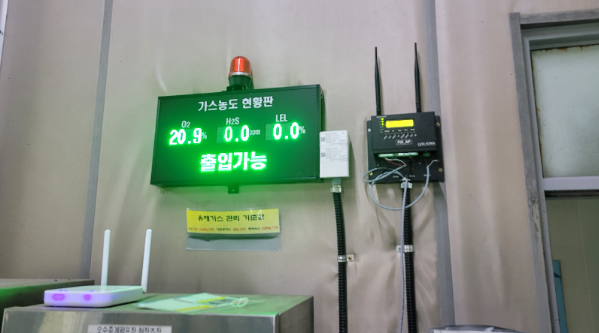
![설치]서울시 지하공동구 설치형 복합가스측정기 FIX800 + 전광판 설치현장!](https://wandi.co.kr/storage/construction-cases/4OdX5WcqxlRPgDD7YsP8ntGzKawX5b24sFXLhUWg.png)