Applied Markets
Installed Gases
Project Details
Hello.
Today's post covers a FIX800 fixed gas detector and monitoring display panel that can measure and monitor hazardous gases in a work environment.
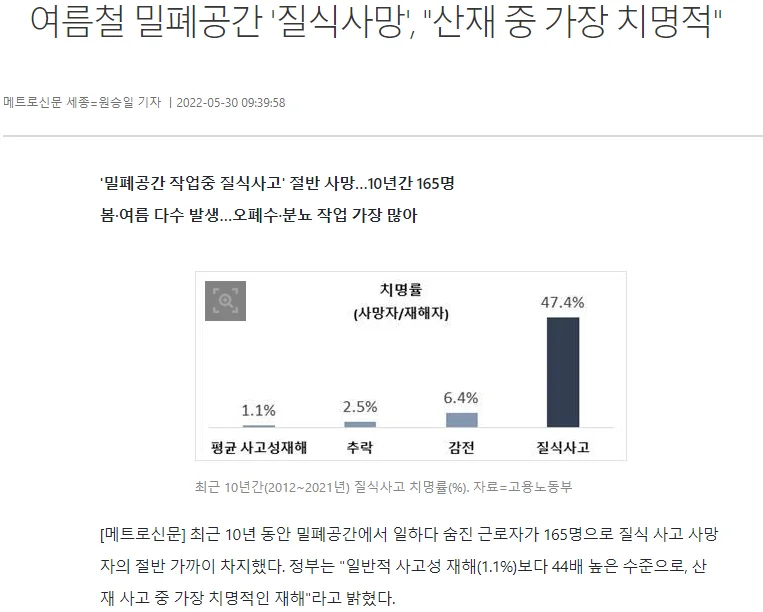
Hazardous gas suffocation accidents in work environments
Over the past 10 years, the number of suffocation accidents caused by hazardous gas in work environments has been increasing.
To prevent these accidents, hazardous gases in the work environment are measured and monitored to protect worker safety.
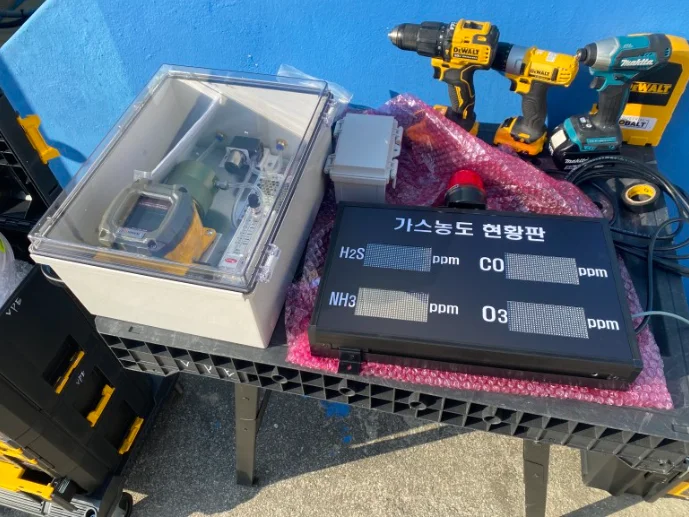
Hazardous gas detector installation preparation
At this particular work environment, configured with the FIX800 detector and display panel, hydrogen sulfide, ozone, and several other hazardous gases could occur, so the system was installed to detect these hazards in advance.
Gas detector: FIX800 multi-gas detector
Sensors: O3 (ozone) / H2S (hydrogen sulfide) / NH3 (ammonia) / CO (carbon monoxide)
Monitoring: 4-channel display panel with warning lights
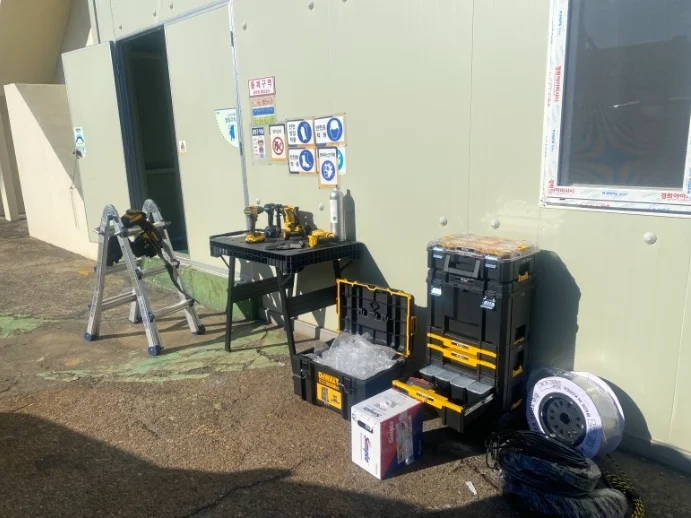
Gas detector professional installation service
Preparing the installation tools before starting work.
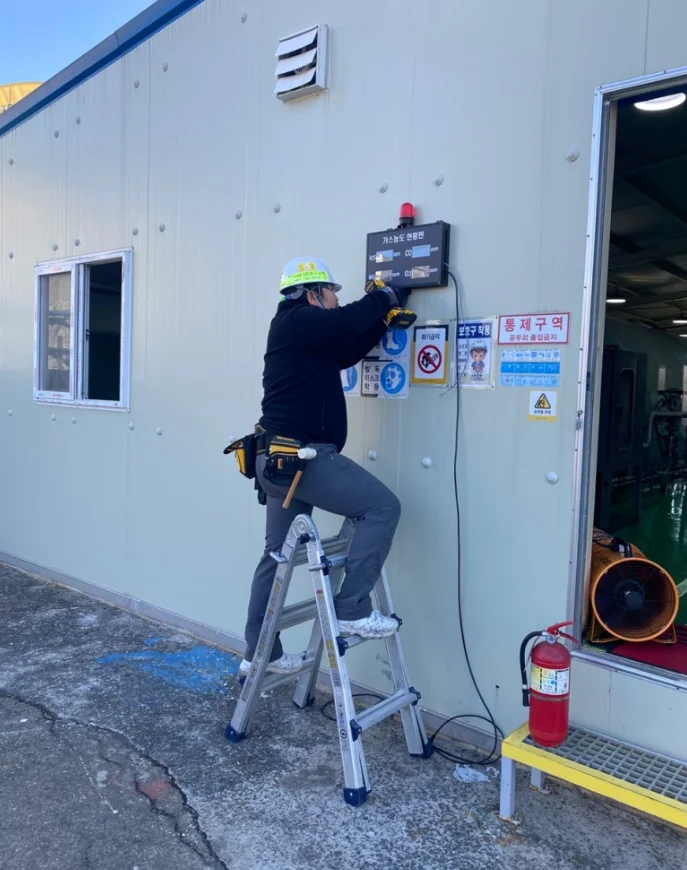
Gas detector and display panel installation
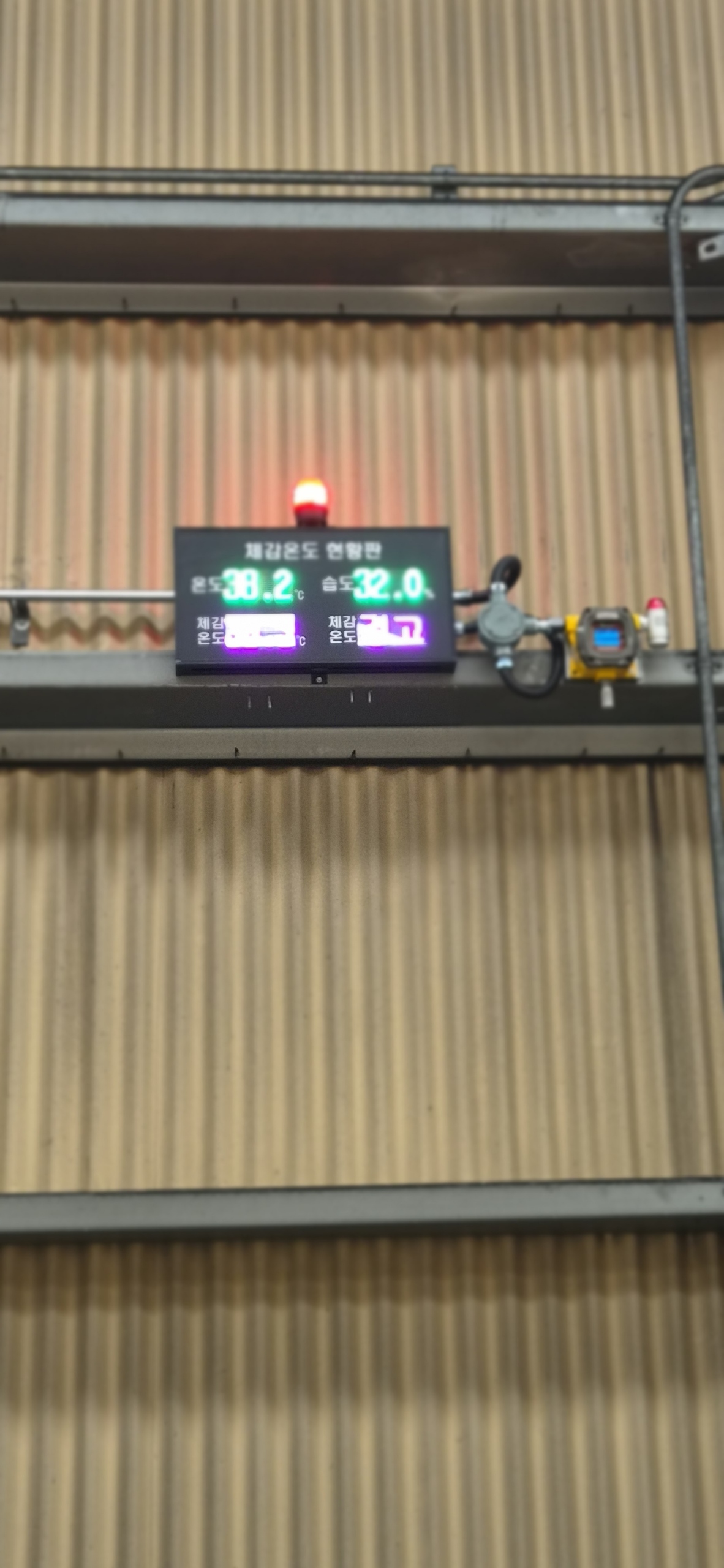
We coordinate with the site to select the location for the display panel and gas detector, then proceed directly to installation. The display panel shown here also operates reliably outdoors without any water leakage issues.
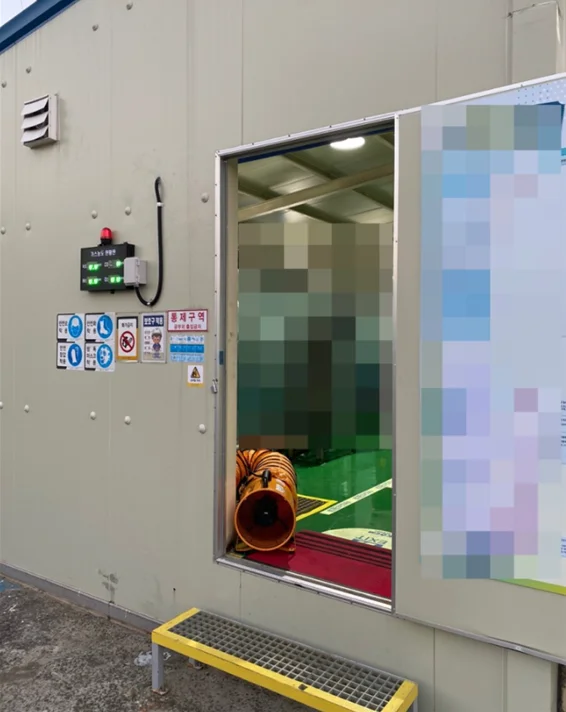
Gas detector and display panel monitoring
The display panel and gas detector installed and running a trial. After installation, we always run a test using standard reference gas to confirm response time and equipment accuracy.
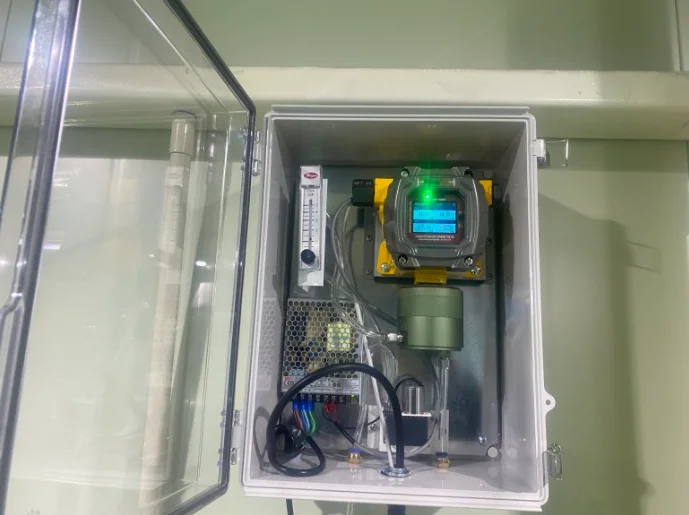
Hazardous multi-gas detector
The gas is drawn in from the point where the hazardous gas occurs using a diaphragm pump, allowing real-time monitoring.
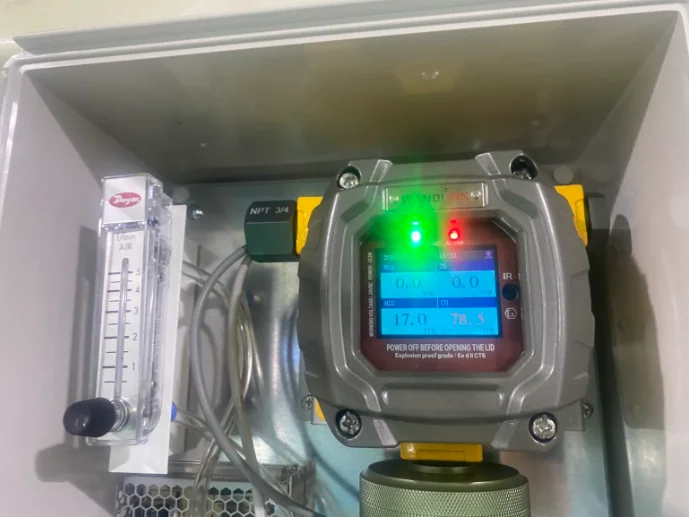
FIX800 multi-gas detector
The detector communicates with the display panel via an RS485 digital signal, allowing stable monitoring without noise or signal hunting.
That concludes this post on hazardous gas measurement in work environments!
Beyond hazardous gas installation and monitoring, we also support a wide range of measurement environments and provide installation solutions tailored to industrial site needs.
If you have any questions, please feel free to call us anytime.
Frequently Asked Questions (FAQ)
Q1. What gases does this system measure?
The FIX800 multi-gas detector in this case measures O3 (ozone), H2S (hydrogen sulfide), NH3 (ammonia), and CO (carbon monoxide).
Q2. How is the gas sample collected for measurement?
A diaphragm pump draws gas from the point where the hazardous gas is generated, enabling real-time monitoring.
Q3. How does the detector communicate with the display panel?
The detector and display panel communicate via an RS485 digital signal, which provides stable monitoring free of noise or signal hunting.
Q4. Can the display panel be installed outdoors?
Yes. The display panel used in this installation operates reliably outdoors without any water leakage issues.
Q5. How is equipment accuracy verified after installation?
After installation, a test is always performed using standard reference gas to confirm the detector's response time and measurement accuracy.
#WANDI #FIX800 #MultiGasDetector #HazardousGasDetection #WastewaterTreatment #GasStatusDisplayPanel #HydrogenSulfide #AmmoniaMonitoring #RS485Monitoring #WorkerSafety
![[레이먼드] 오,폐수 처리실 유해가스 모니터링](https://wandi.co.kr/storage/construction-cases/YxFUQVBZ8Unnk7pJzzfsmezr6xNe0LZvQRDmt7TL.jpg)
![[브이피이코리아] 종합병원 지하 밀폐공간 가스 측정기 설치_FIX800 & FIX-DS](https://wandi.co.kr/storage/construction-cases/gNOA28xSlEy5uU3AOxyHDRH5UfAe0TpMTgAt4Uag.jpg)

