Applied Markets
Installed Gases
Project Details
Hello.
A few days ago, at an apartment complex septic tank, the methane gas concentration rose above the lower explosive limit (LEL) and caused an explosion accident.

Many different gases can occur in confined spaces and work environments, but the gas most directly linked to explosions in residential environments is flammable gas (methane, propane, etc.).
Types of flammable gas
Hydrogen / Acetylene / Ethylene / Methane / Propane / LPG / Ammonia, and others.
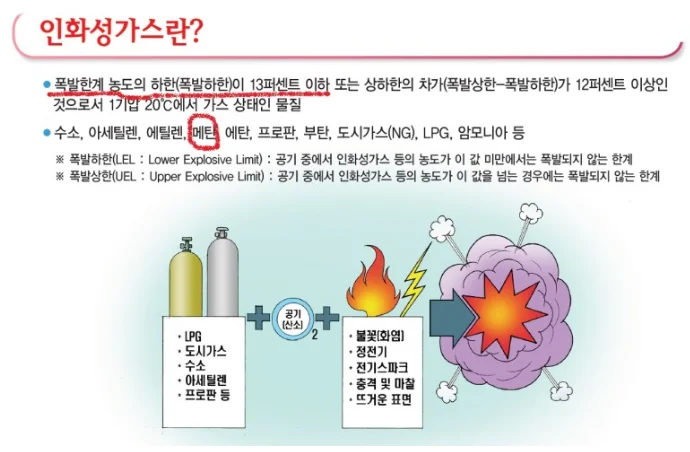
Since methane is the main gas used for household purposes domestically, the lower explosive limit is set based on methane (5% VOL), and gas leaks are managed accordingly.
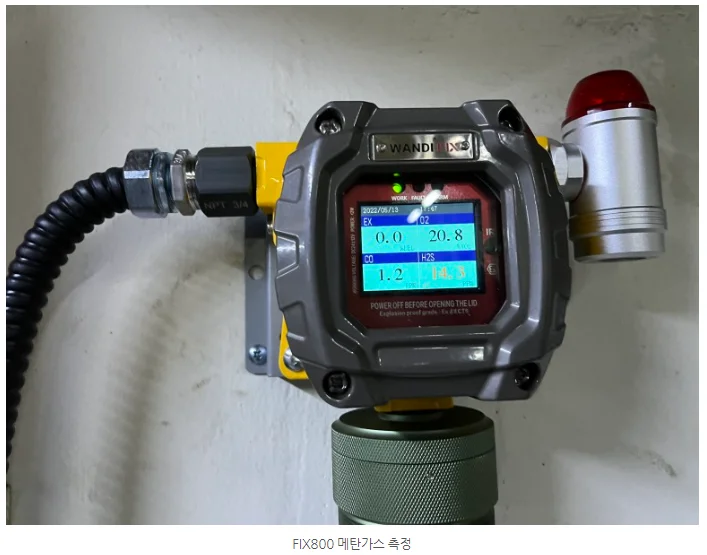
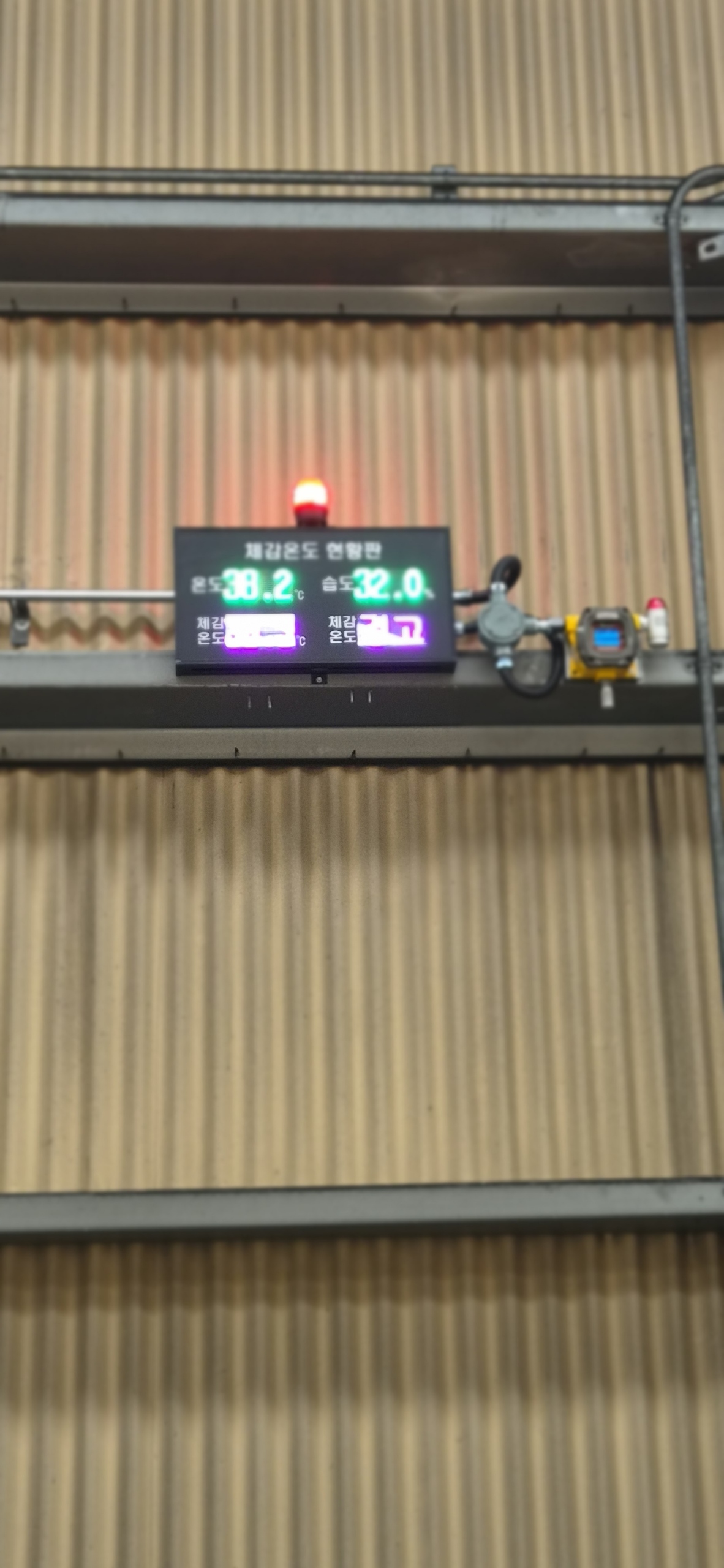
A multi-gas detector was installed so that any gas generated during work inside the septic tank can be identified immediately, linked to a gas status display panel so workers can check it intuitively.
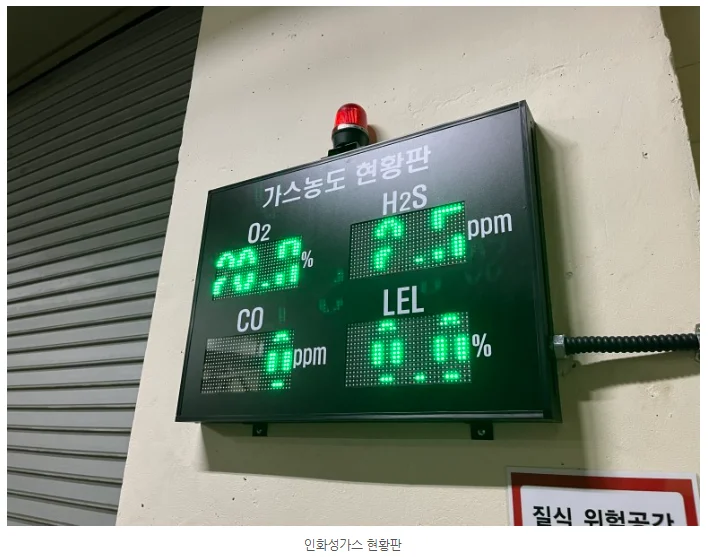
Through the warning-light alarm on the gas detector and gas status display panel, any danger can be recognized quickly.
When flammable gas exceeds 10% LEL, both a sound alarm and a color-change alarm are activated.
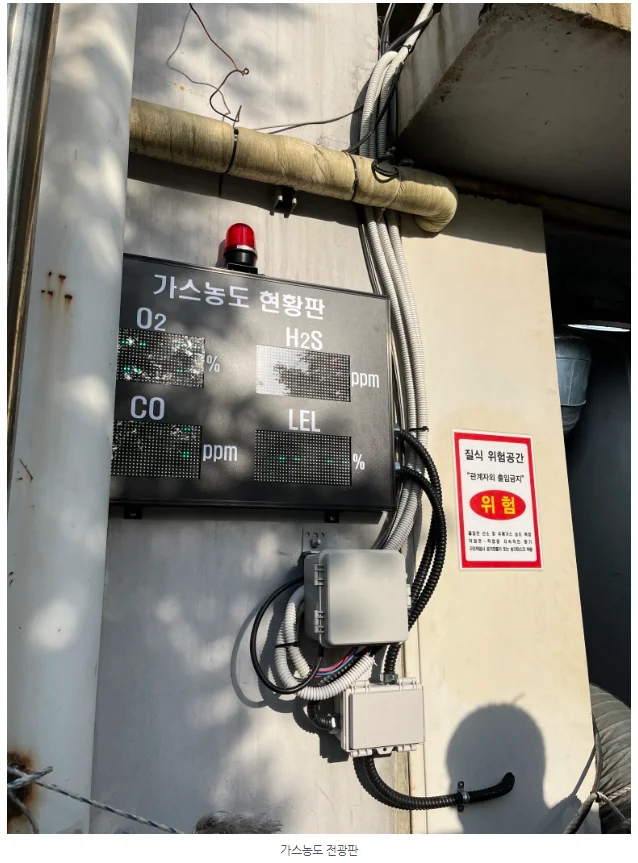
Depending on the site, the gas status display can be managed across 2 channels to prepare for safety incidents.
Example configuration:
Gas detector: 1 unit (in the gas hazard area)
Gas status display panel: 2 units (near each entrance)
Web monitoring: continuous monitoring via the safety manager's PC
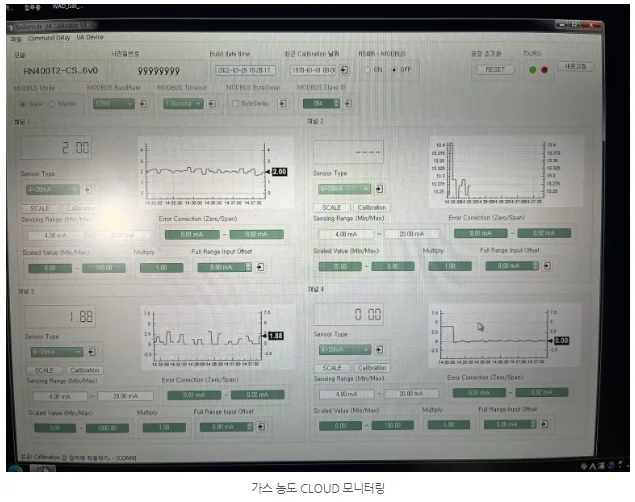
Our solution allows gas concentration to be managed not only on-site, but also remotely — facility and site managers can check the gas concentration status of each site from an office PC.
Even when not physically on-site, hazardous situations can be predicted and assessed in advance for prevention.
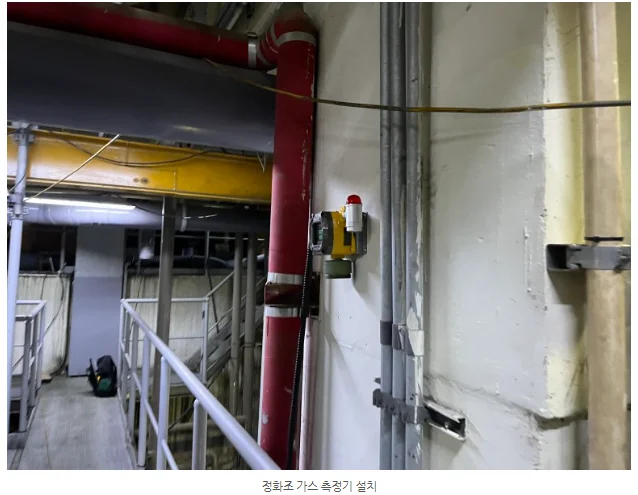
Equipment and monitoring configurations can be customized in various ways according to each site manager's requirements.
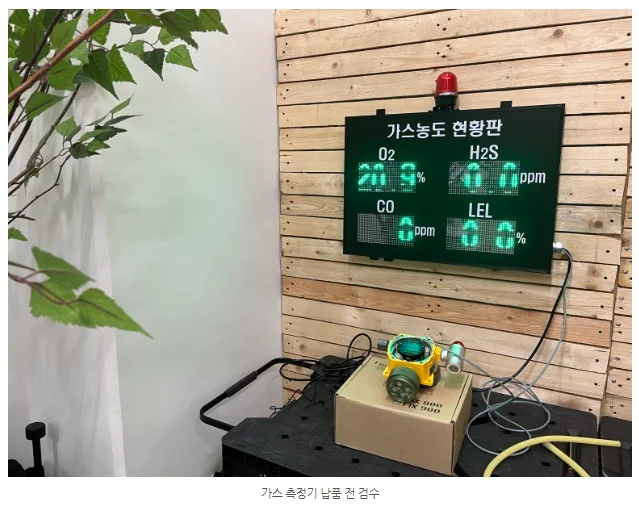
We thoroughly inspect every unit before delivery to ensure reliable equipment supply.
We also provide after-sales support, visiting the site as quickly as possible if any equipment issues arise, so operations can continue without interruption.
If you need a gas detector installation or monitoring consultation for a septic tank or any area at risk of a flammable gas explosion, please feel free to contact us anytime.
Frequently Asked Questions (FAQ)
Q1. What gas detector was used in this case?
A FIX800 fixed multi-gas detector was installed in a septic tank confined space, linked with a gas status display panel and web monitoring system.
Q2. What triggers the alarm in this system?
When flammable gas exceeds 10% of the lower explosive limit (LEL), both a sound alarm and a color-change warning-light alarm are activated on the detector and display panel.
Q3. Why is methane used as the reference gas for the explosive limit?
Since methane is the main gas used for household purposes domestically, the lower explosive limit is set based on methane at 5% VOL, and gas leaks are managed on that basis.
Q4. Can the gas concentration be monitored remotely?
Yes. In addition to on-site display panels, a web monitoring configuration allows facility and site managers to check gas concentration status from an office PC, even when they are not physically on-site.
Q5. Is the equipment configuration customizable?
Yes. The number of detectors, display panels, and monitoring channels can be configured in various ways to match each site manager's specific requirements.
#WANDI #FIX800 #ConfinedSpaceSafety #SepticTank #FlammableGasDetection #MethaneGas #LELMonitoring #GasStatusDisplayPanel #RemoteGasMonitoring #ExplosionPrevention
![[레이먼드] 오,폐수 처리실 유해가스 모니터링](https://wandi.co.kr/storage/construction-cases/YxFUQVBZ8Unnk7pJzzfsmezr6xNe0LZvQRDmt7TL.jpg)
![[브이피이코리아] 종합병원 지하 밀폐공간 가스 측정기 설치_FIX800 & FIX-DS](https://wandi.co.kr/storage/construction-cases/gNOA28xSlEy5uU3AOxyHDRH5UfAe0TpMTgAt4Uag.jpg)

