Applied Markets
Installed Gases
Project Details
Hello. Today we would like to share a case involving the delivery and on-site training of gas detection equipment used for confined-space safety management at wastewater treatment facilities.
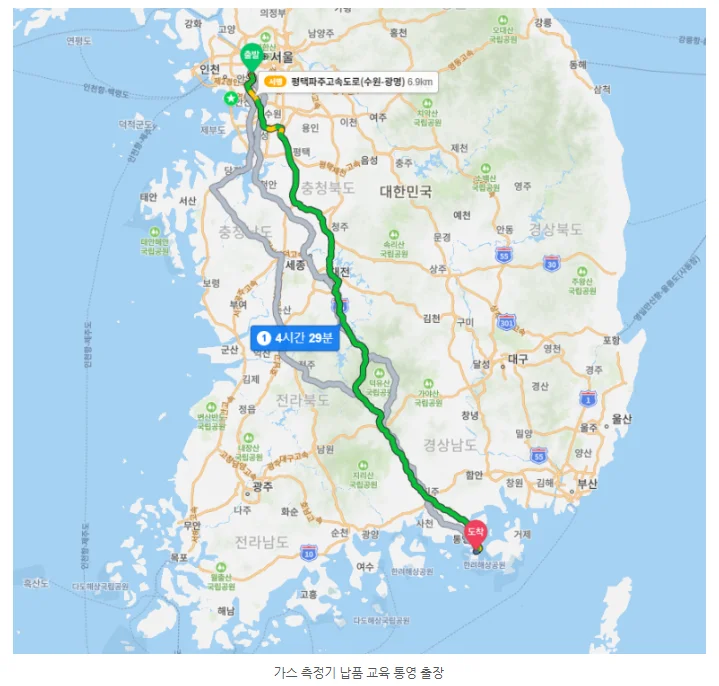
We frequently travel to the Yeongnam region for projects like this. Safety-purpose gas detectors have been installed at various government agencies and companies, and a number of units have also been supplied to wastewater treatment facilities throughout the region.
We continue to provide ongoing management support to make sure the equipment keeps operating without issues.
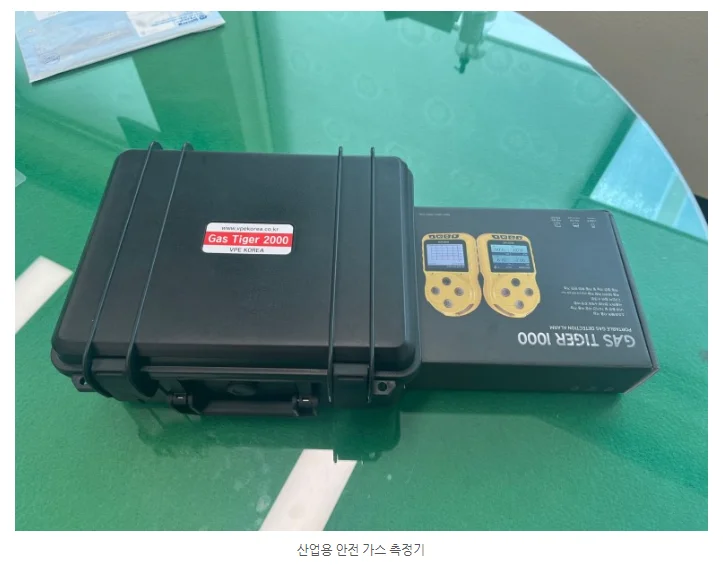
For this confined-space safety application, the models supplied were the GasTiger 2000 (5-gas) and the GasTiger 1000 (4-gas).
GasTiger 2000 — pump-suction type, 5-gas measurement: O2, CO, H2S, EX, CO2.
GasTiger 1000 — atmospheric diffusion type, 4-gas measurement: O2, CO, H2S, EX.
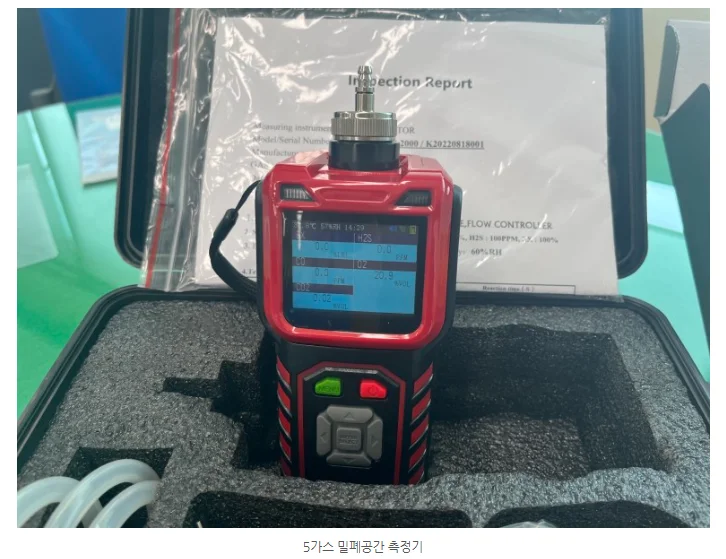
As shown above, all five parameters are measured at once and displayed together on a single screen for quick and easy monitoring.
The GasTiger 2000 can be ordered conveniently through our online store, with delivery typically taking about 2–3 weeks.
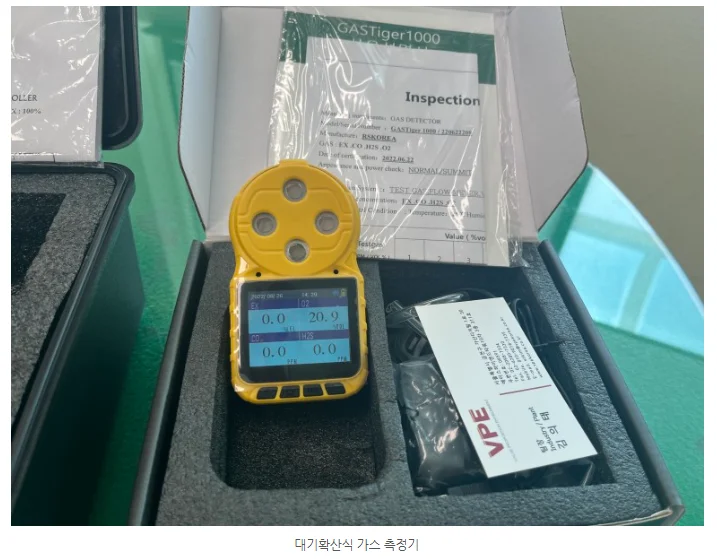
The GasTiger 1000 is an atmospheric diffusion-type device that measures four gases simultaneously. It also supports both sound and vibration alarms and is designed to be worn on a worker's safety belt for continuous, hands-free monitoring.
The GasTiger 1000 can also be ordered through our online store, with delivery available within 2 days — orders placed before 4 PM ship the same day.
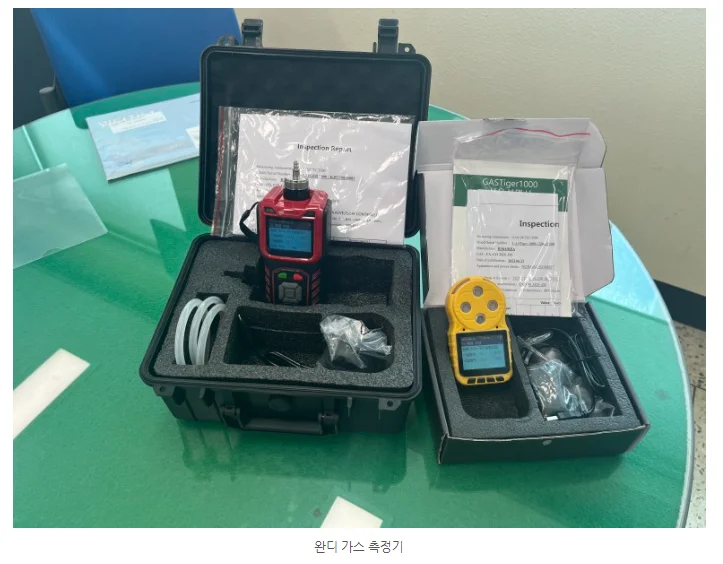
With just these two devices, accidents caused by reduced oxygen levels and toxic gas exposure can be effectively prevented.
- GasTiger 2000: used to check air quality and hazards before entering a dangerous area.
- GasTiger 1000: worn at all times by workers to detect immediate danger.
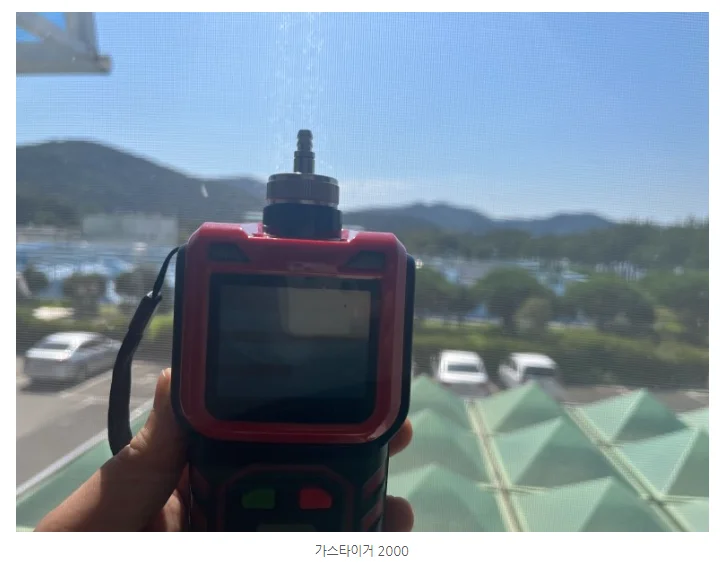
We offer a range of solutions including portable gas detector supply, installation and monitoring configuration, and integrated monitoring for hazardous areas. Please feel free to contact us anytime.
This concludes our case study on gas detector delivery for confined-space safety management at a wastewater treatment facility.
Frequently Asked Questions (FAQ)
Q1. What gas detector models were used in this case?
Two models were supplied: the GasTiger 2000 (pump-suction type, 5-gas: O2, CO, H2S, EX, CO2) and the GasTiger 1000 (atmospheric diffusion type, 4-gas: O2, CO, H2S, EX).
Q2. What kind of sites were these detectors installed at?
They were installed for confined-space safety management at wastewater treatment facilities, including various government agencies, companies, and multiple wastewater facilities across the Yeongnam region.
Q3. What is the difference between the GasTiger 2000 and the GasTiger 1000?
The GasTiger 2000 is a pump-suction unit used to check air quality before entering a hazardous area, while the GasTiger 1000 is a diffusion-type unit that workers wear at all times to detect immediate danger.
Q4. How long does delivery take after ordering?
The GasTiger 2000 typically ships in about 2–3 weeks, while the GasTiger 1000 is available within 2 days, with same-day shipping for orders placed before 4 PM.
Q5. What kind of accidents can this equipment help prevent?
It helps prevent accidents caused by oxygen deficiency and toxic gas exposure in confined spaces.
#WANDI #GasTiger2000 #GasTiger1000 #ConfinedSpaceSafety #WastewaterTreatment #PortableGasDetector #OxygenMonitoring #ToxicGasDetection #GasSafetyEquipment #AccidentPrevention
![[레이먼드] 오,폐수 처리실 유해가스 모니터링](https://wandi.co.kr/storage/construction-cases/YxFUQVBZ8Unnk7pJzzfsmezr6xNe0LZvQRDmt7TL.jpg)
![[브이피이코리아] 종합병원 지하 밀폐공간 가스 측정기 설치_FIX800 & FIX-DS](https://wandi.co.kr/storage/construction-cases/gNOA28xSlEy5uU3AOxyHDRH5UfAe0TpMTgAt4Uag.jpg)

