Applied Markets
Installed Gases
Project Details
Hello.
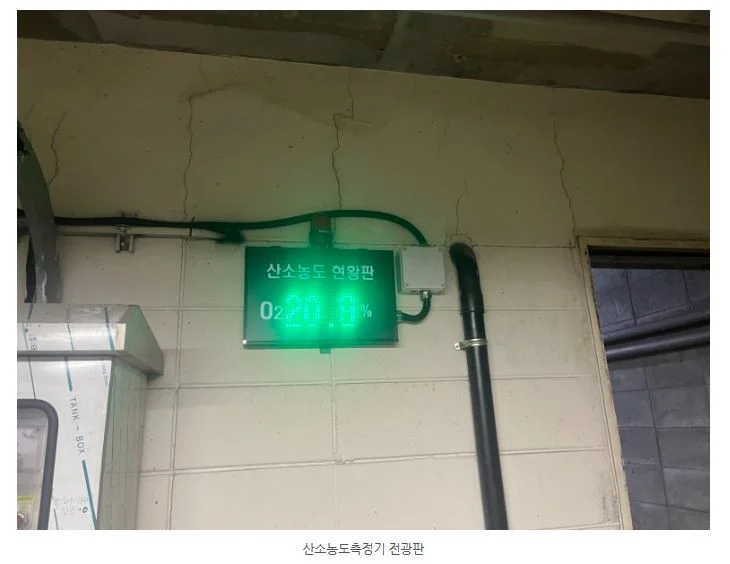
Today's post covers a visit to a general hospital's wastewater treatment plant to install an oxygen concentration detector and monitoring system that meets the requirements of Korea's Occupational Safety and Health Act.
Under the Act, before entering a confined space, the oxygen and hazardous gas levels must be measured to confirm the air is safe, and this check is required for any confined-space work.
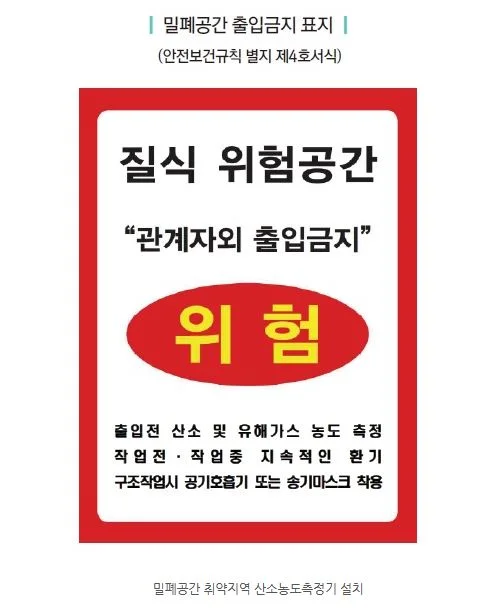
We specialize in providing gas detector installation and monitoring to help prevent asphyxiation risks that can occur at industrial sites.
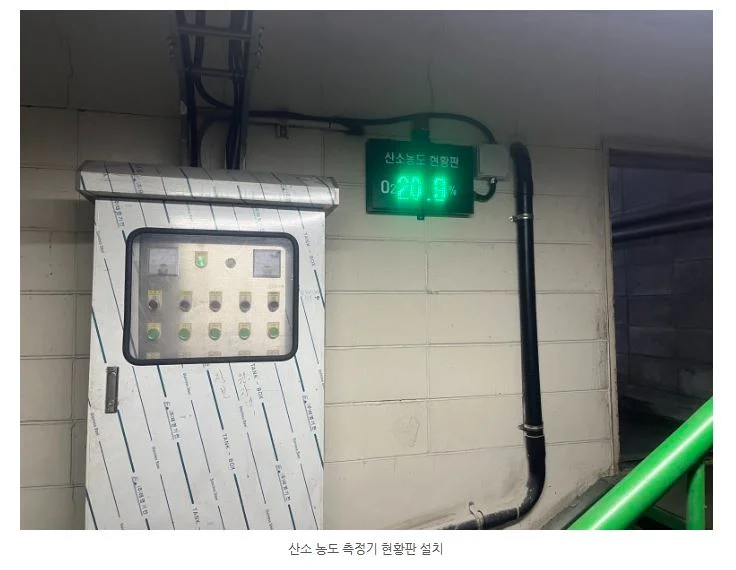
Working conditions at wastewater treatment facilities are very poor. Various gases are generated and air quality is often inadequate, so the air condition in vulnerable areas must always be checked before entering the workspace.
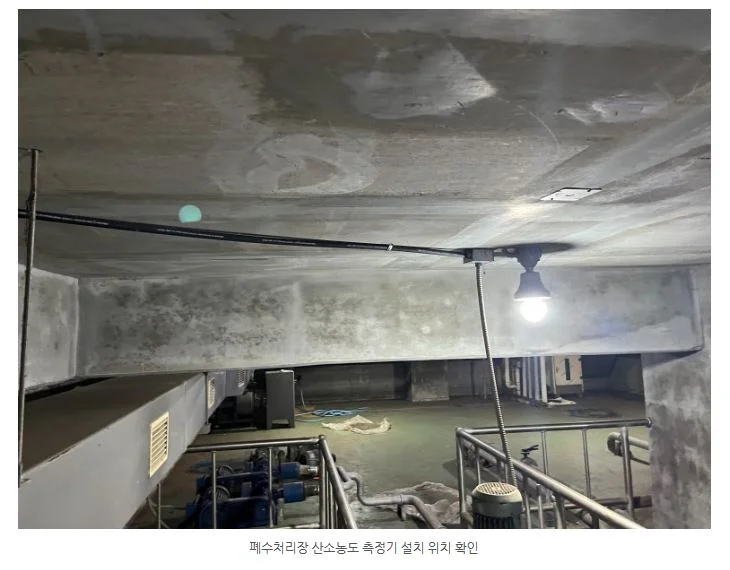
Because gas detector sensors are vulnerable to moisture, they should be installed in a location with minimal risk of condensation or water ingress, while still being placed near points where gas is likely to occur.
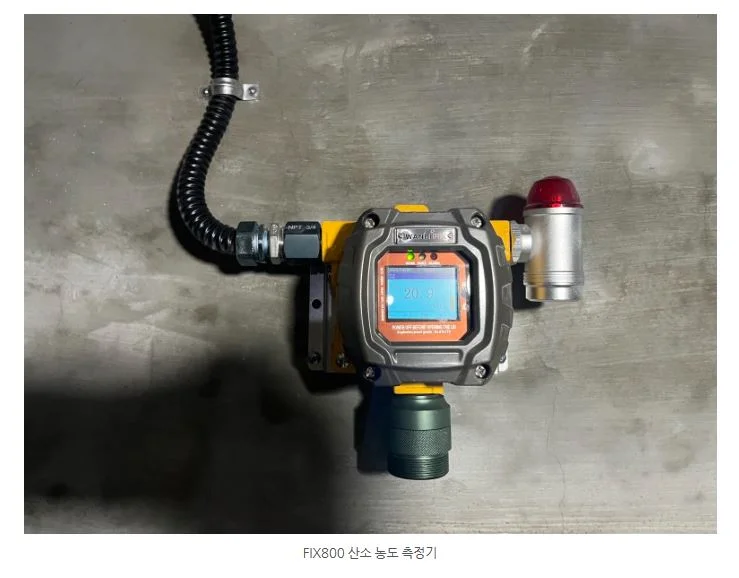
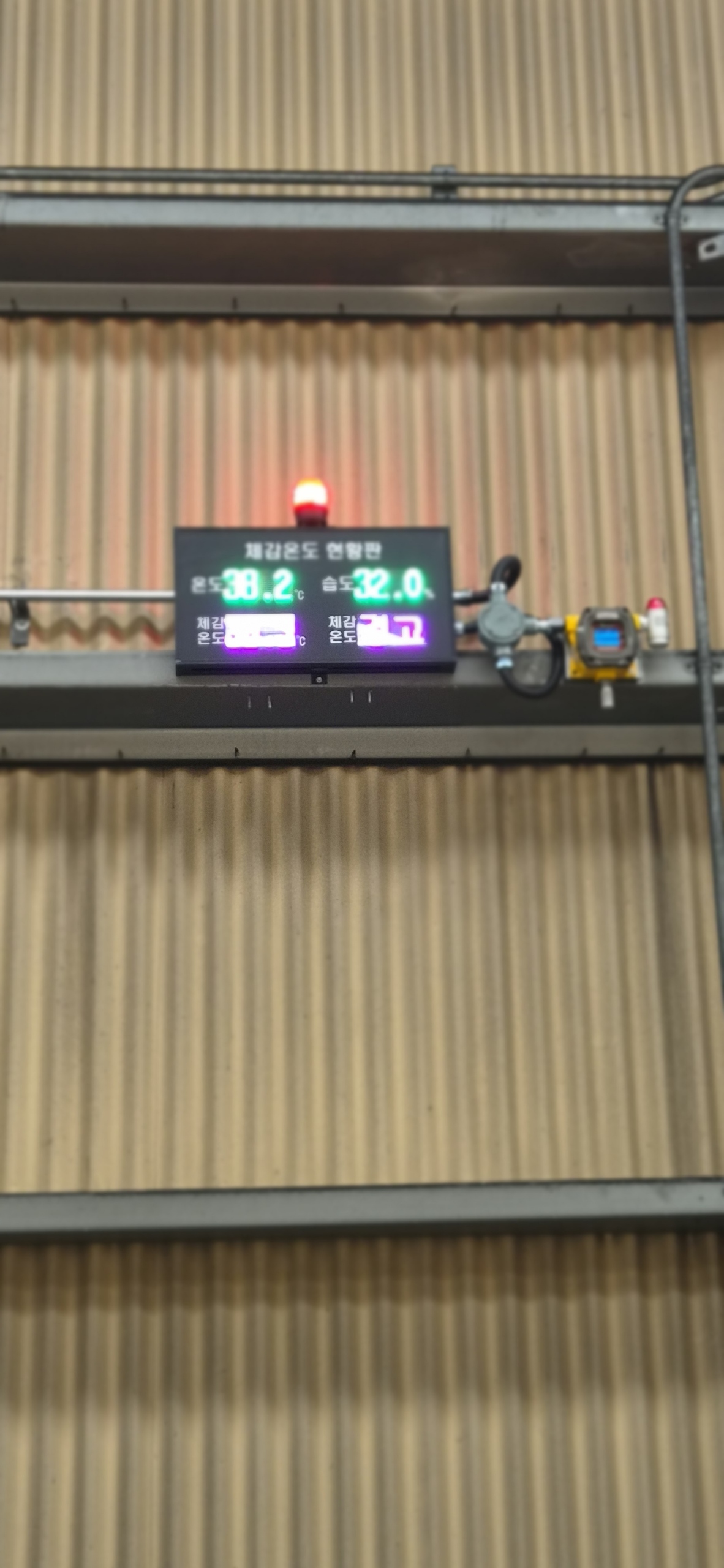
The FIX800 fixed multi-gas detector can be configured with a single O2 sensor, but depending on site conditions it can also be configured with up to five sensors — O2, CO, H2S, combustible gas (EX), and CO2 — together with a gas status display board and monitoring.
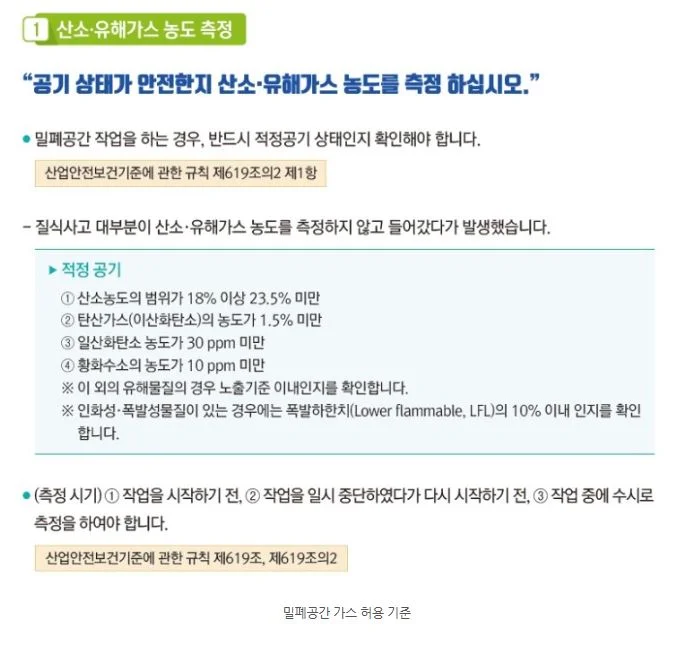
The alarm is configured according to Korea's Occupational Safety and Health Act, and when a hazardous condition is detected, sound and beacon-light alarms help workers evacuate safely.
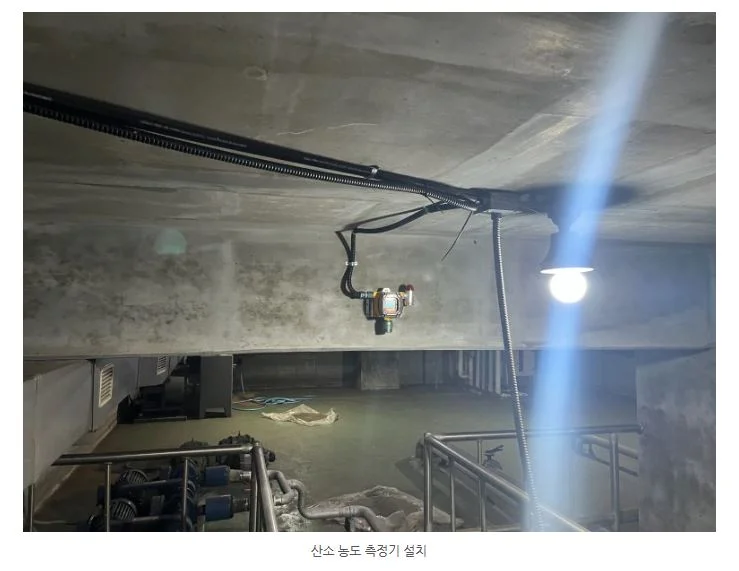
Depending on site conditions, cable terminations are completed using flexible or rigid conduit, and in some cases holes must be drilled through the wall.
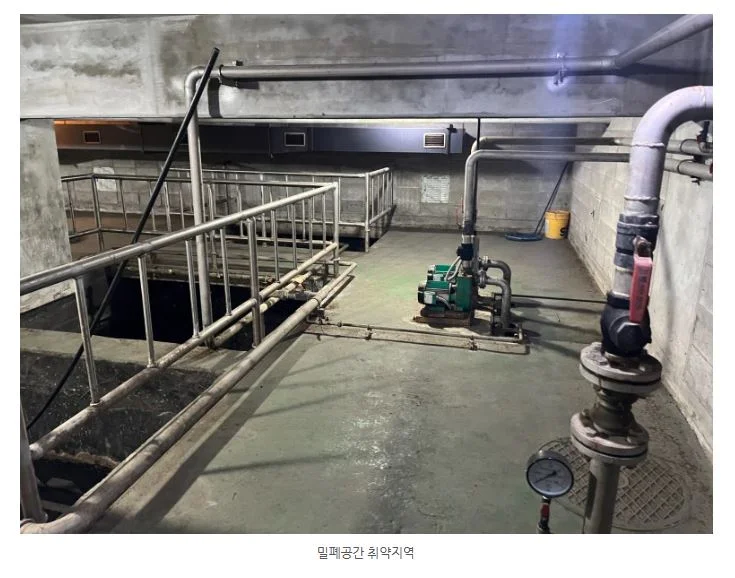
This particular installation site was relatively well managed. Depending on the site, however, gas levels can sometimes reach a point where it becomes difficult to breathe properly.
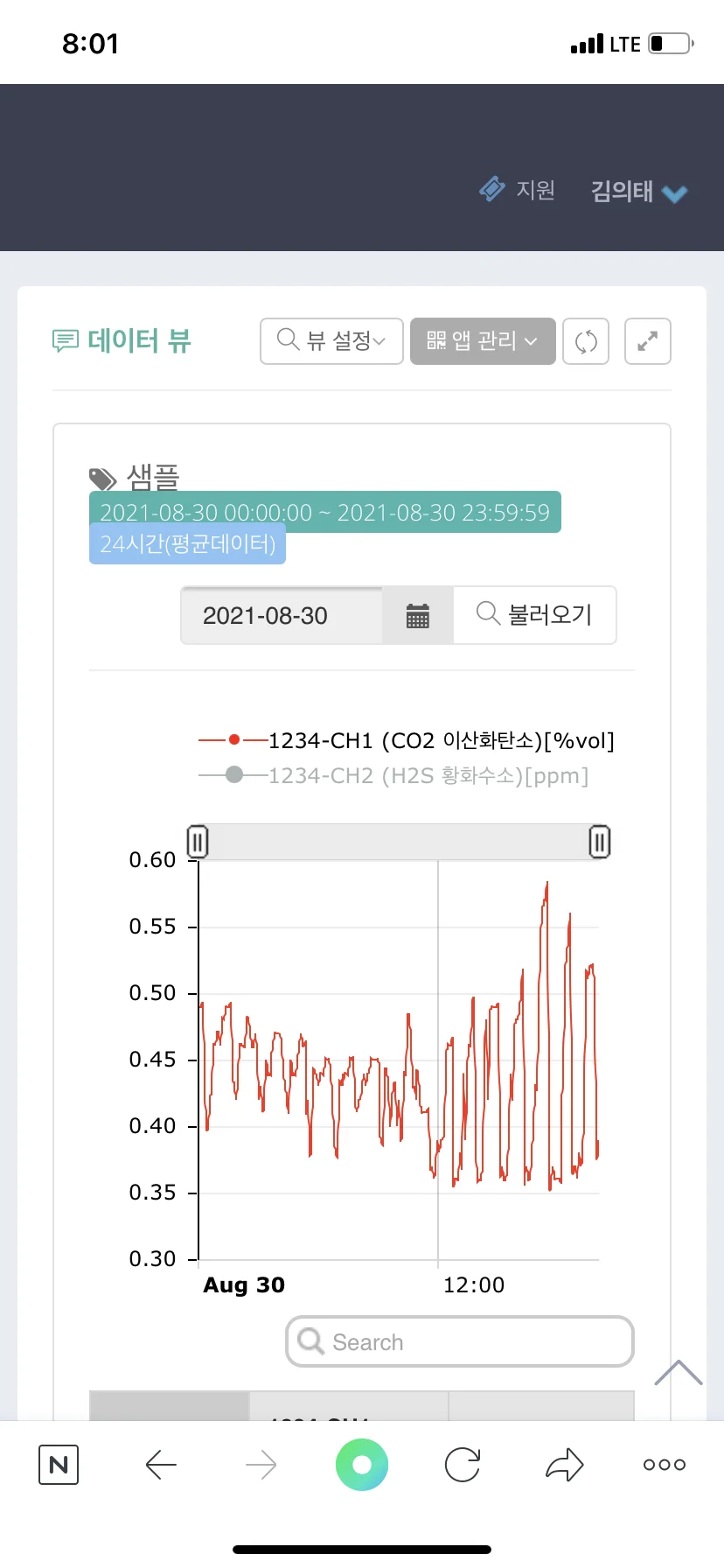
Remote confined-space gas alarm monitoring
Depending on the monitoring requirements, a remote gas alarm monitoring solution can also be provided. This allows a manager to check the real-time condition of a site with an installed gas detector, regardless of where the manager is located.
This kind of oxygen concentration and gas monitoring can also be applied to facilities such as:
Food fermentation and storage areas
Sewage treatment plant settling tanks
Septic tanks at wastewater treatment plants
Manure treatment facilities
Inside cold storage warehouses
Wastewater settling tanks
Sewer manholes
and other locations requiring oxygen and gas monitoring.
Please feel free to contact us anytime.
Frequently Asked Questions (FAQ)
What oxygen detector was installed in this case?
A FIX800 fixed multi-gas detector fitted with an O2 (oxygen) sensor was installed, and depending on site conditions the FIX800 can be configured with up to five sensors — O2, CO, H2S, combustible gas (EX), and CO2.
Where should the gas detector be installed?
Because gas detector sensors are vulnerable to moisture, they must be installed in a location free from condensation or water ingress, while still being located near points where gas is likely to be generated.
How does the alarm work?
The alarm is configured according to Korea's Occupational Safety and Health Act, and when a hazardous condition occurs it uses sound and a beacon light to help workers evacuate safely.
Is remote monitoring available?
Yes. Depending on the monitoring requirements, a remote gas alarm monitoring solution can also be provided, allowing a manager to check the site's status in real time regardless of where they are located.
What other types of facilities can this be applied to?
It can be applied to a variety of facilities that require oxygen and gas monitoring, including food fermentation and storage areas, sewage treatment plant settling tanks, septic tanks, manure treatment facilities, cold storage warehouses, wastewater settling tanks, and sewer manholes.
#WANDI#FIX800#OxygenDetector#ConfinedSpaceSafety#WastewaterTreatment#GasMonitoring#RemoteMonitoring#OccupationalSafety#AsphyxiationPrevention#GeneralHospital
![[레이먼드] 오,폐수 처리실 유해가스 모니터링](https://wandi.co.kr/storage/construction-cases/YxFUQVBZ8Unnk7pJzzfsmezr6xNe0LZvQRDmt7TL.jpg)
![[브이피이코리아] 종합병원 지하 밀폐공간 가스 측정기 설치_FIX800 & FIX-DS](https://wandi.co.kr/storage/construction-cases/gNOA28xSlEy5uU3AOxyHDRH5UfAe0TpMTgAt4Uag.jpg)

