Applied Markets
Installed Gases
Project Details
Hello!
This is our installation team.
We recently visited an installation site!!
This case covers a delivery of a FIX800 (HCN) fixed detector, a pre-treatment unit, a 1-channel display board, and a Tiger2000 (HCN) portable detector.
Let's take a look at the on-site installation.

Here is the installed detector and pre-treatment unit.
The pre-treatment unit includes moisture handling and a filter.
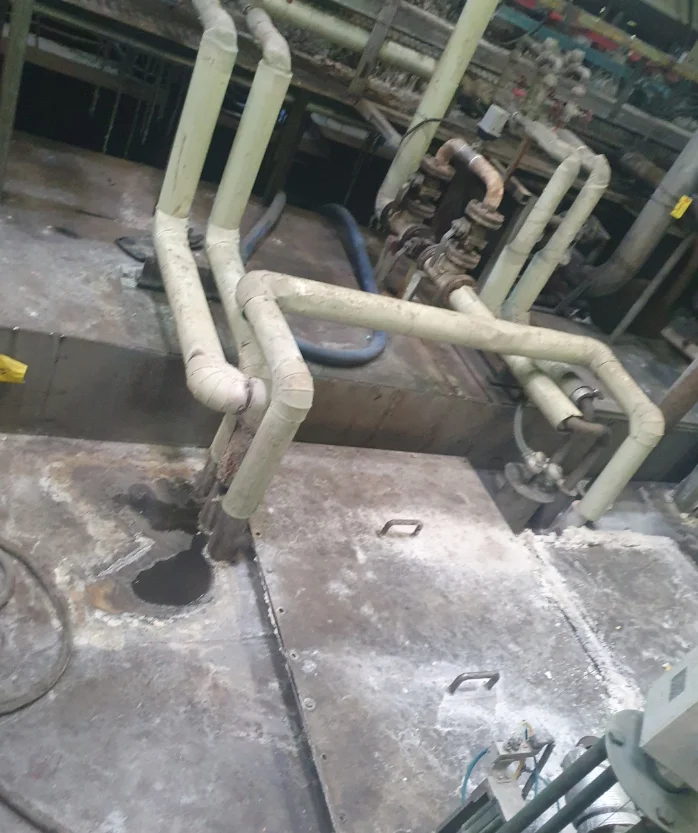
We were told that hydrogen cyanide (HCN) is generated right at this spot!
Yet the fixed detector, installed about 1 meter above, was reading 0 ppm. Curious about this, we checked the area with a portable Tiger2000 detector.

And sure enough — readings of close to 10 ppm were measured at the source. Yet, interestingly, in this same HCN-generating area, the fixed detector 1 meter above continued to read 0 ppm. Curious about the reason, we looked into the molecular weight of hydrogen cyanide versus that of the surrounding air. Hydrogen cyanide has a molecular weight of about 27 g/mol, while the combined nitrogen and oxygen in air is around 32 g/mol — so it appears the hydrogen cyanide, being lighter, was not rising up from the source point. Fortunately, since the HCN was concentrated right at ground level, there was no risk of anyone inhaling it directly. Following this finding, the customer's equipment team also plans to add separate exhaust ventilation to vent the HCN outside.

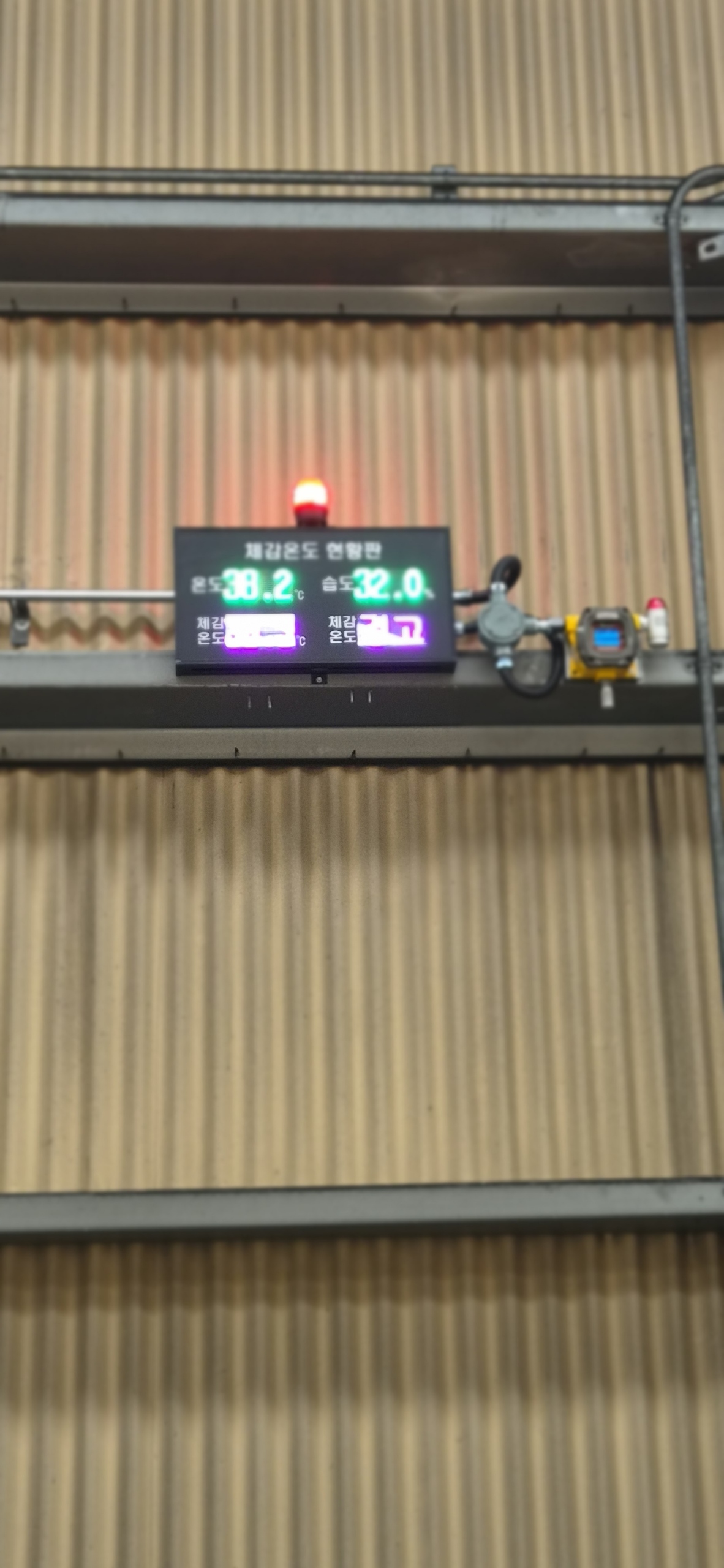
Next, here is the installed 1-channel display board with a warning light.
It receives output from the detector via RS485 communication, and is shown here reading 0 ppm.
-----------------------------------------------------------
This site visit turned out to be very informative. We look forward to visiting again!
Frequently Asked Questions (FAQ)
Q1. Why did the fixed detector 1 meter above the source read 0 ppm even though HCN was being generated right at that spot?
A portable detector measured readings of close to 10 ppm right at the source, while the fixed detector installed about 1 meter above read 0 ppm. This is likely because hydrogen cyanide (molecular weight ~27 g/mol) is lighter than the surrounding air (nitrogen and oxygen combined, ~32 g/mol), so it tends to stay near the source rather than rising.
Q2. What equipment was installed in this case?
The installation included a FIX800 (HCN) fixed detector, a pre-treatment unit with moisture handling and a filter, a 1-channel gas concentration display board, and a Tiger2000 (HCN) portable detector used to verify readings on site.
Q3. Why is a pre-treatment unit needed?
A pre-treatment unit with moisture handling and a filter is installed ahead of the detector to reduce measurement error caused by moisture or particulates, helping ensure stable, reliable readings.
Q4. What follow-up action is planned after this site visit?
Based on the findings from this visit, the customer's equipment team plans to add separate exhaust ventilation to vent the hydrogen cyanide outside.
Q5. How is the 1-channel display board connected?
The display board receives output from the detector via RS485 communication and shows the real-time reading; at the time of this site visit, it was correctly displaying 0 ppm.
#WANDI #FIX800 #HydrogenCyanide #HCNDetector #PreTreatmentUnit #GasConcentrationDisplay #Tiger2000 #PortableGasDetector #IndustrialSafety #ChangwonInstallation
![[레이먼드] 오,폐수 처리실 유해가스 모니터링](https://wandi.co.kr/storage/construction-cases/YxFUQVBZ8Unnk7pJzzfsmezr6xNe0LZvQRDmt7TL.jpg)
![[브이피이코리아] 종합병원 지하 밀폐공간 가스 측정기 설치_FIX800 & FIX-DS](https://wandi.co.kr/storage/construction-cases/gNOA28xSlEy5uU3AOxyHDRH5UfAe0TpMTgAt4Uag.jpg)

