Applied Markets
Installed Gases
Project Details
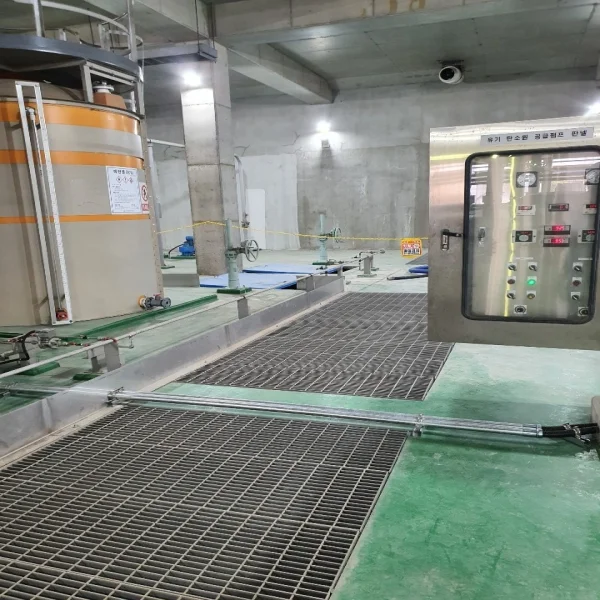
This wastewater treatment site had an unusual requirement compared to most projects.
Most wastewater treatment facilities typically require sensors for O2 (oxygen) or H2S (hydrogen sulfide). In this case, however, the client managing the site specifically requested methanol detection, so Raymond Korea installed a fixed gas detector fitted with a methanol leak-detection sensor. Why does a wastewater treatment plant need methanol monitoring?
[Raymond Korea Co., Ltd. / Product inquiries: 031-429-1231]
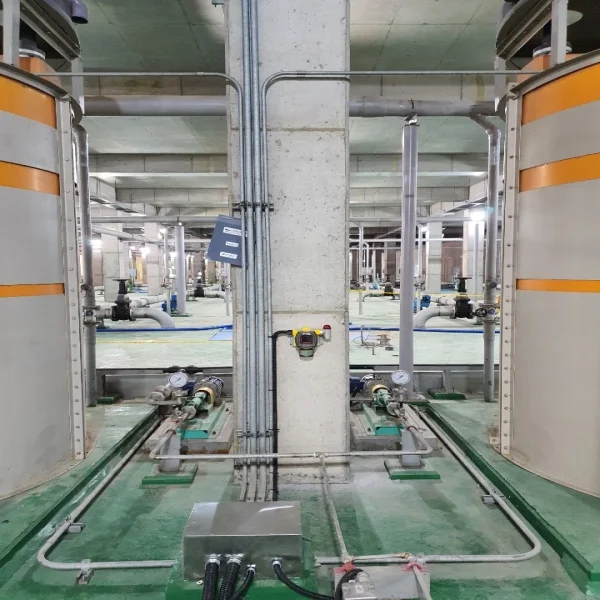
Methanol is a flammable, combustible gas. At around 6% concentration in air, methanol can ignite explosively when it meets a heat source. Methanol is used at this facility because it is an essential nutrient source for the microorganisms that remove nitrates from wastewater.
A continuous methanol supply is required to sustain the microbial process that removes nitrate contamination and purifies the water. As a result, denitrification systems at wastewater treatment plants store large volumes of methanol and periodically dose it into the wastewater stream. Because any leak or release of this stored methanol carries an explosion risk, a dedicated methanol detector was selected for this installation.
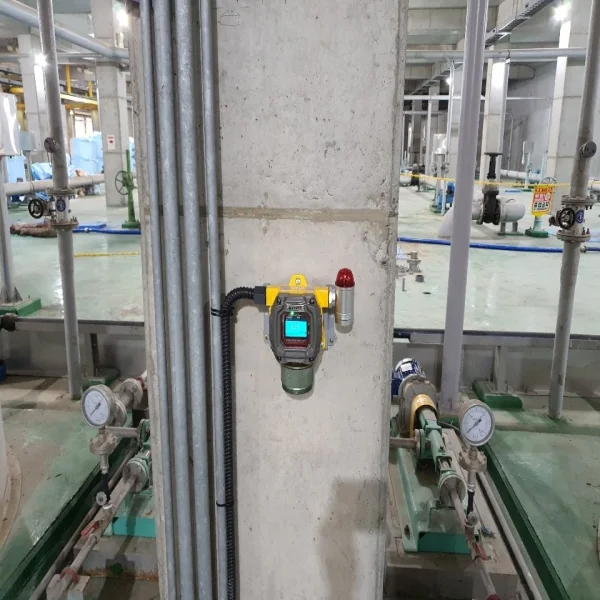
Methanol can be measured using a combustible gas LEL sensor — LEL stands for Lower Explosive Limit. An LEL sensor can also detect toluene, methane, isobutylene, LNG, LPG, propane, and other combustible/flammable gases in addition to methanol.
In short, a combustible LEL sensor functions as a general-purpose detector for flammable gases. Because it responds broadly to many flammable substances, it cannot detect extremely trace leaks with high specificity, but it reliably detects gas leaks at the concentrations typically of concern in the field. This is why combustible sensors are in high demand and tend to be more affordable than other sensor types.
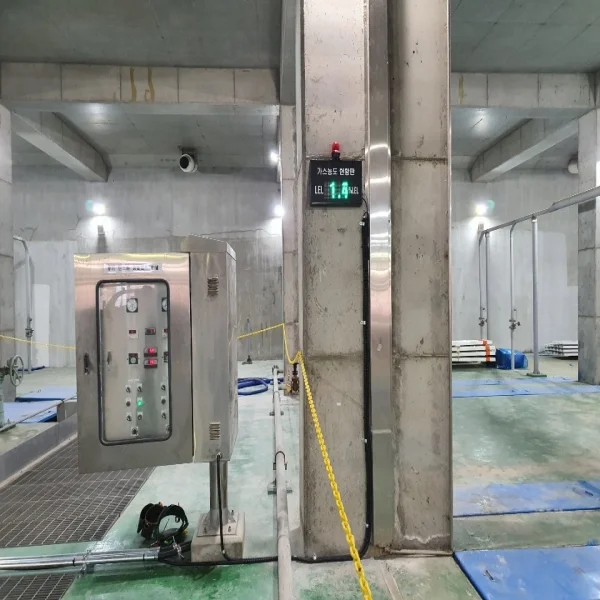
For explosive gases like methanol, rapid recognition and response upon leak detection are critical. Wastewater treatment plants in particular often have significant ambient noise from pumps and motors, meaning an audible alarm from a detector may go unnoticed from a distance — and reading exact concentration values on a detector display from far away is equally difficult.
For this reason, a methanol concentration display board was installed high on a support column for maximum visibility and rapid recognition. The display uses SMD dot-matrix modules similar to those seen on highway signage, allowing current concentration readings to be seen from a distance. Even if the alarm beacon's sound isn't audible, its flashing visual alert allows for immediate recognition and response.
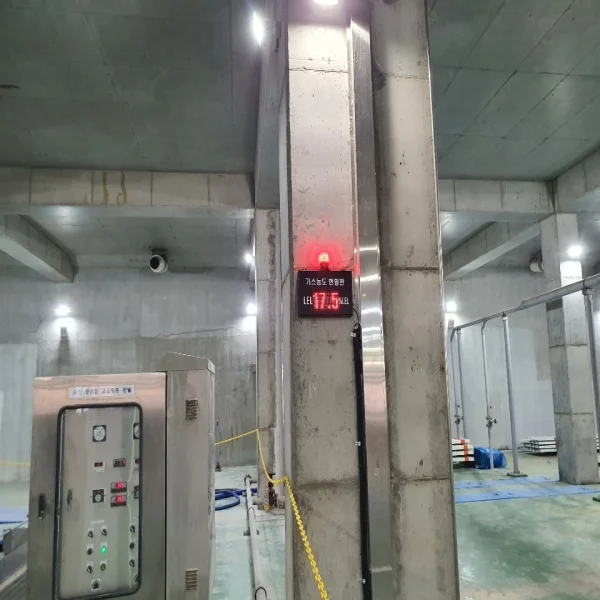
As the photos show, the display board's red LED text and beacon alarm are designed for excellent visibility — impossible to miss even for someone passing by without paying close attention.
One notable finding after installing the detector and display board was that trace amounts of methanol are detectable even under normal operating conditions. This is expected, since some portion of the methanol dosed into the system can volatilize before being absorbed by the microorganisms — fortunately, the level detected was very low, around 1.5% LEL. For reference, a fire or explosion hazard requires a concentration of 100% LEL, so this baseline reading does not indicate a hazardous condition on site.
Raymond Korea is a specialized gas detector sales and installation company offering free site surveys, tailored solutions, installation, and dedicated after-sales support and maintenance.
Thank you.
![설치] 전주지역 병원 설치형 가스측정기 전광판 설치](https://wandi.co.kr/storage/construction-cases/xLXjLIqCqafpuAv7l5mJKncztJJPhW6RvVCbxSAt.png)
![설치] 과천 약품탱크 레이더수위계 와 무선 모니터링](https://wandi.co.kr/storage/construction-cases/YzksuxJxJ8JgiEjKNRJ6jUIEVfYAW35ZCfnTy5zN.png)
![설치] 수처리 연구소 FIX800 산소농도 측정기 설치](https://wandi.co.kr/storage/construction-cases/nXCZvKEb1QVj7eiKHjhQw4YVcJ52rKS5k4ewFda2.png)
![설치] 제주도 골프장내 폐수처리장 FIX800 설치](https://wandi.co.kr/storage/construction-cases/HGOOZ2Q2natr46VeJ42OG9PsZnO1mmLjup1nf0Dw.png)
![설치] 평택 펠릿보일러 스팀 생산공장 co 측정](https://wandi.co.kr/storage/construction-cases/LRxRpWhvSbyVd4iSYPmvKFRTQqsUfCsiuikZTOwI.png)
![FIX800 설치] 경유보관 탱크 누수감지 창원편 -1](https://wandi.co.kr/storage/construction-cases/uUTyWWv78QoMqP3s4l8yskXssi5OOv9YezSBc9DP.png)