Applied Markets
Installed Gases
Project Details
Hello. This is our team. We received an inquiry about gas detectors for a confined space and visited a hospital in Jeonju. The customer had already seen one of our electronic display boards and wanted a setup where, as soon as an access hatch was opened before entering a confined space, staff could immediately see the internal gas readings.
Installation Purpose: Gas measurement inside a confined wastewater-treatment space, to confirm worker safety before entry.
Installed Equipment: A WANDI FIX800 fixed-type multi-gas detector in a 4-gas configuration — O2 (0-30% Vol), CO (0-1,000 ppm), H2S (0-100 ppm), and LEL (0-100% LEL).
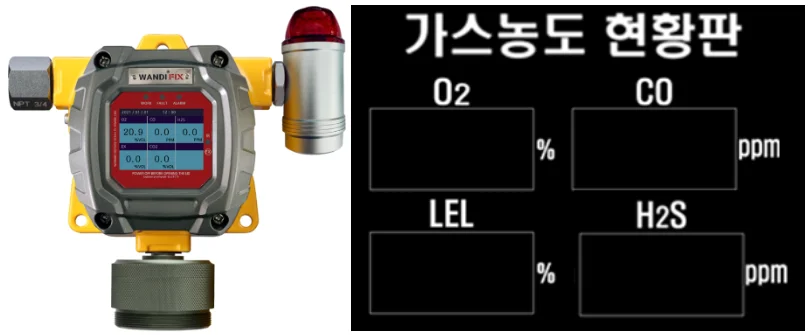
Installation Points: At the wastewater storage tank, the customer requested that the display board be visible immediately upon opening the access hatch cover, together with a gas detector at the same location. The space let in no natural light and was too narrow for two people to work in together, though the odor level inside was manageable.
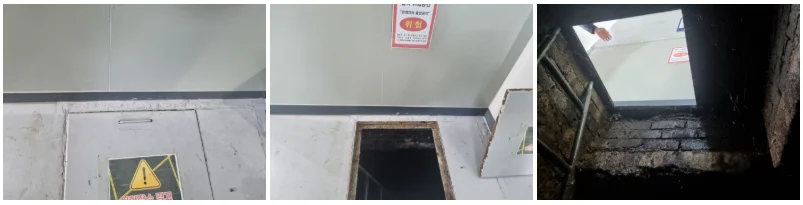
A separate wastewater treatment facility is located outside the main hospital building. The customer asked for a detector and display board on the left-hand wall there as well, so gas readings would be visible while descending the stairway into that area.
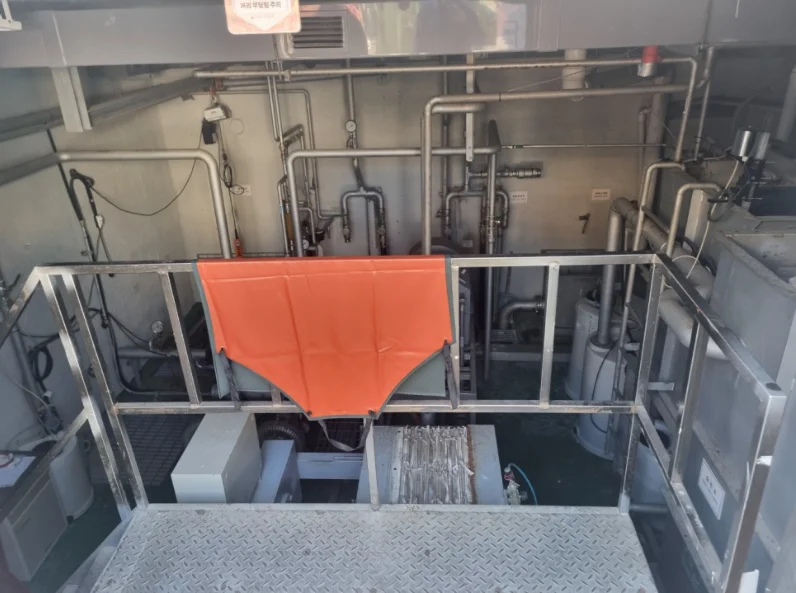
Installation Work: The tank space was too tight to enter for photographs, so the work was documented from above.
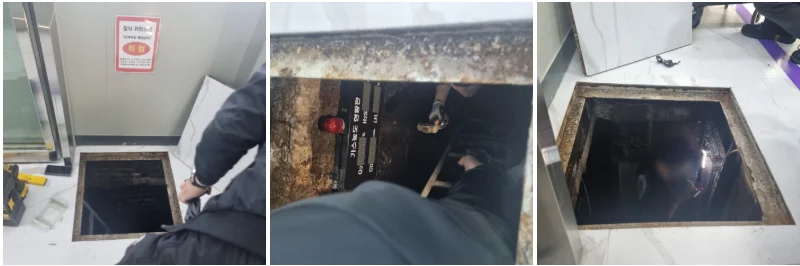
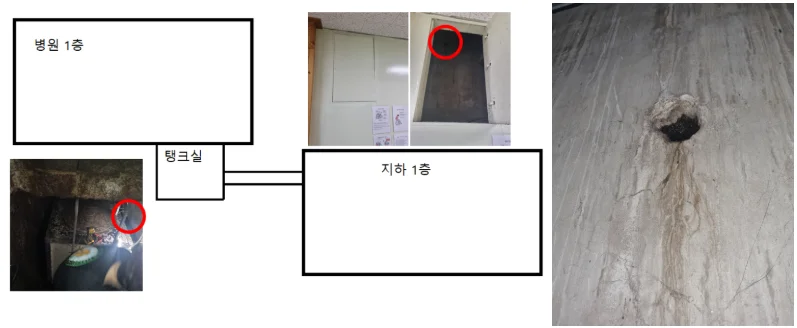
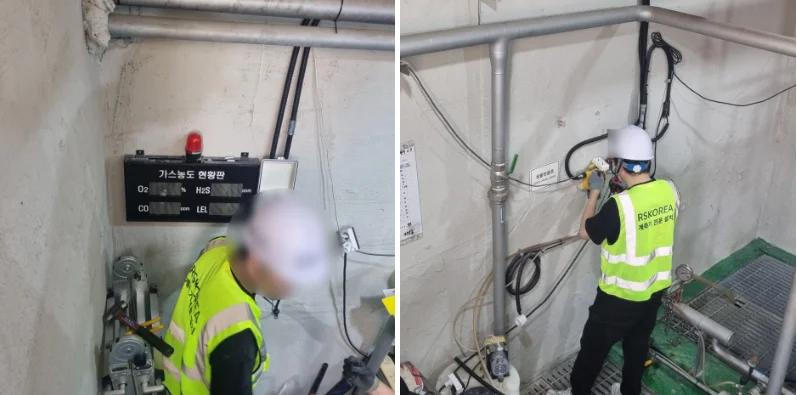
No power supply was available inside the tank room, which sits along a corridor used by hospital staff. Even after routing through the wall, there was no outlet to use at the tank room itself, so the power line had to be run down to the basement level — where the tank room wall meets the basement corridor — and connected to an outlet there.
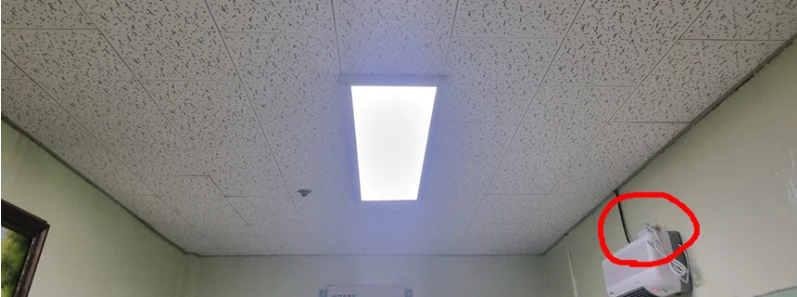
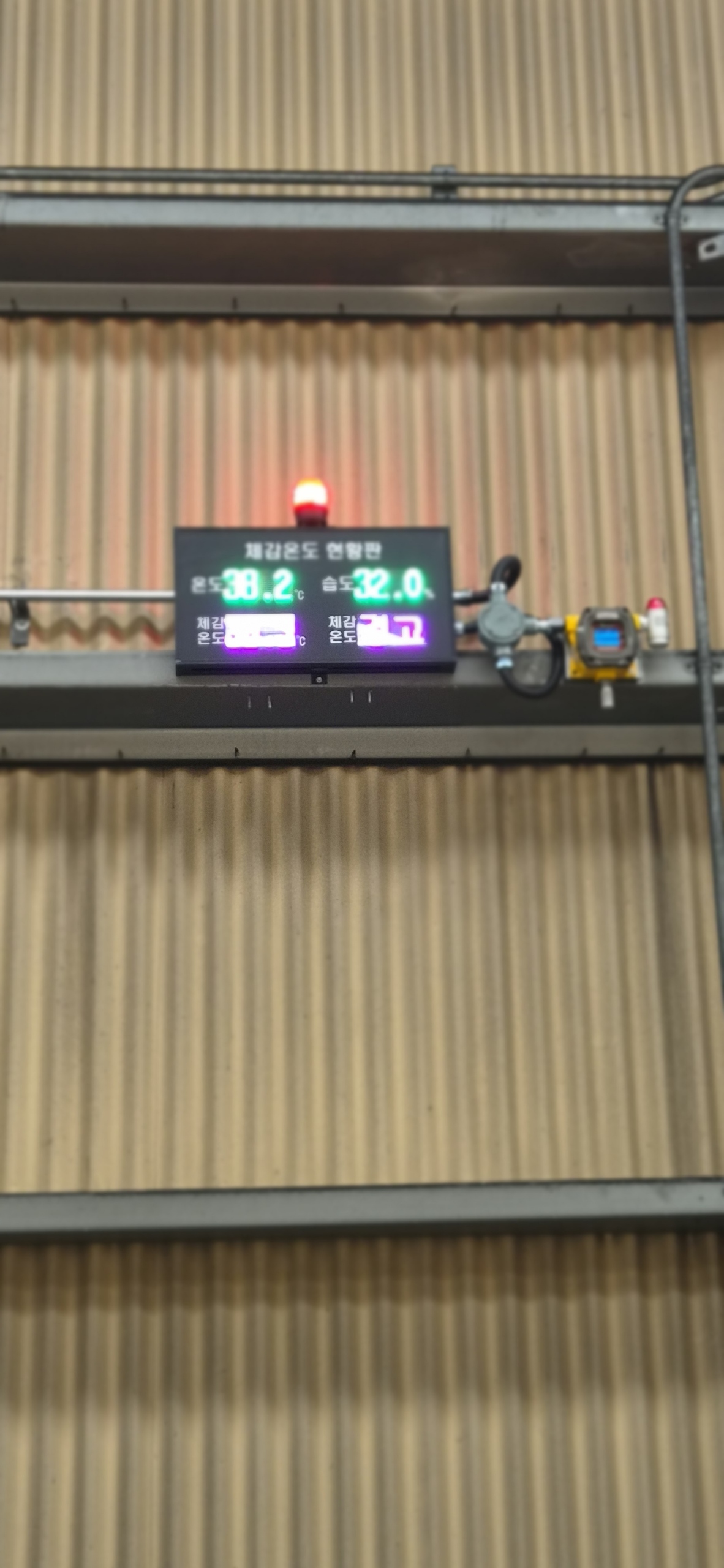
Power for the display board was drawn from a multi-outlet strip connected to the air conditioner, and the ceiling tiles were opened to route the cable and keep exposed wiring to a minimum.
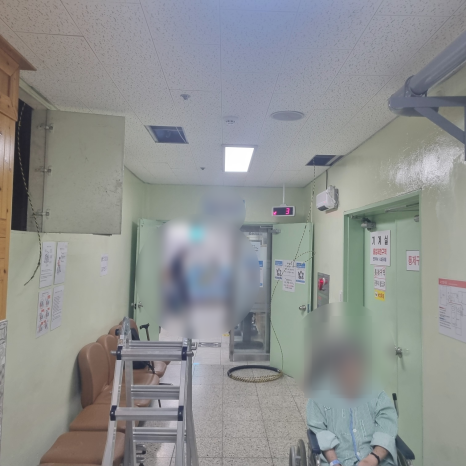
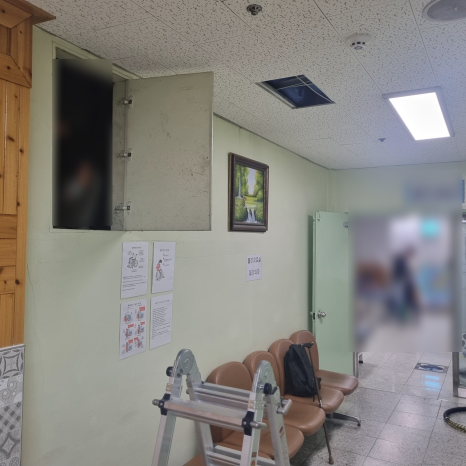
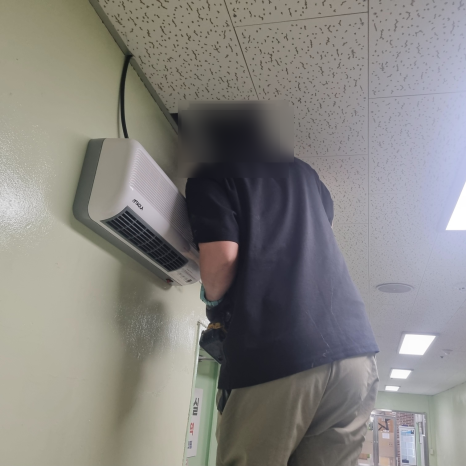
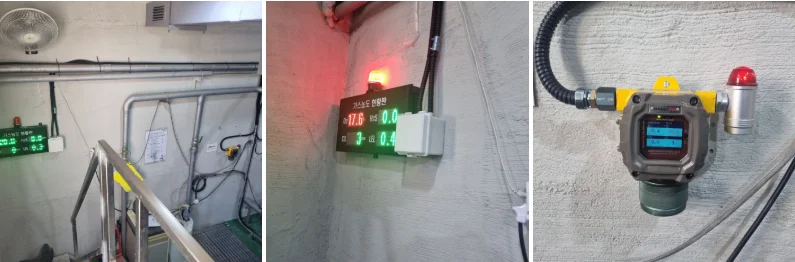
With the wiring completed, both the display board and the fixed gas detector received stable power, and the beacon light and alarm both worked correctly, completing the work at the wastewater tank room.
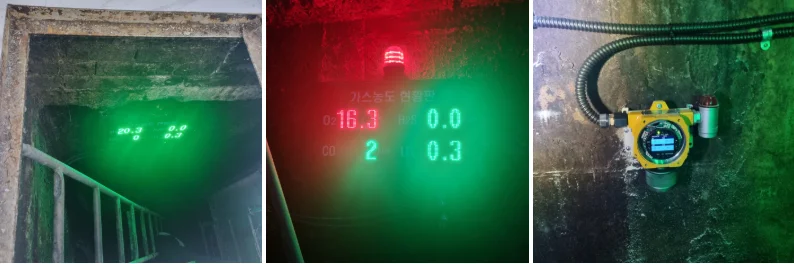
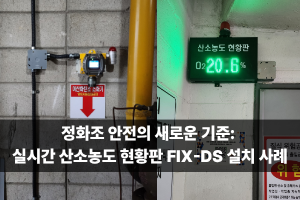
A display board is normally installed at the same point as the fixed gas detector so the internal gas concentration can be checked from outside before entry. Since this treatment facility sits outside the hospital building rather than inside it, the display board was installed near the stairway entrance at the customer's request, so it would remain clearly visible.
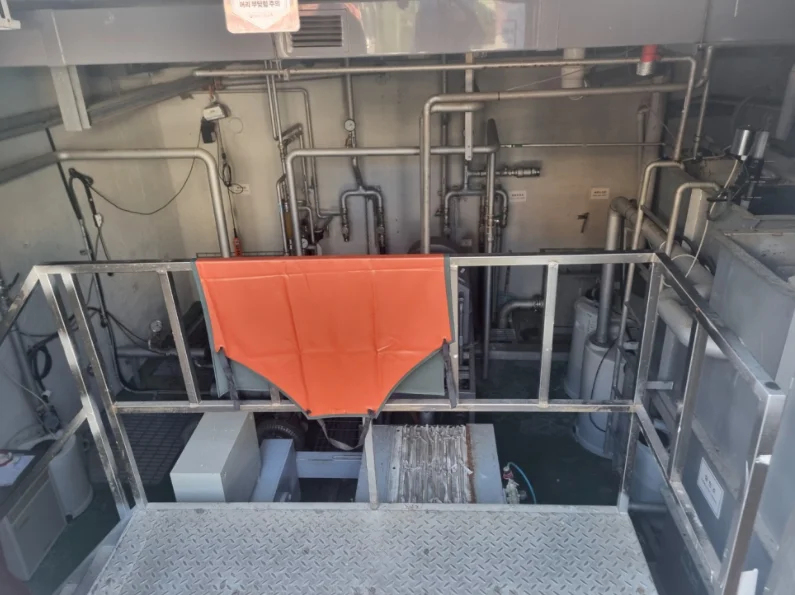
For installations at this type of treatment facility, there are a few points worth checking with the facility owner in advance. Power for the display board can be added either through an earth-leakage breaker at the electrical panel or by using an existing multi-outlet strip without issue. However, if the intended strip is already powering other equipment, a direct outlet connection may require shutting off the breaker feeding that strip for electrical safety during the work — which would also stop any other devices sharing that strip, so it is important to confirm in advance whether those devices can be safely powered down for the duration of the work.
After completing the installation, the beacon light and alarm were tested again, and the customer was given a demonstration along with an explanation of the product and its calibration cycle before the work was closed out. Because the display board uses LED modules, the readings remain clearly visible even from a distance, and the customer was pleased with the result.
Frequently Asked Questions (FAQ)
Q1. What equipment was installed at this site?
A WANDI FIX800 fixed-type multi-gas detector configured for 4 gases — O2, CO, H2S, and LEL — was installed together with an LED electronic display board, at both the wastewater storage tank and the outdoor wastewater treatment facility.
Q2. Why install a display board in addition to the gas detector?
The display board lets staff check the internal gas concentration from outside the space before opening the access hatch or descending into the area, so they can confirm it is safe to enter first.
Q3. Why did the power routing require extra work?
The tank room had no accessible power outlet nearby, so the power line was routed through the wall down to a basement-level outlet, and the display board's power was drawn from a multi-outlet strip connected to the air conditioner, with ceiling tiles opened to minimize exposed wiring.
Q4. What should facility owners check before this type of installation?
Whether power can be added via a breaker at the electrical panel or drawn from an existing multi-outlet strip without disrupting other equipment should be confirmed in advance, and if a shared strip must be used, whether the other devices on it can be safely powered off during the work.
Q5. What happens after installation is complete?
The beacon light and alarm are tested, and the customer receives a demonstration along with guidance on the product's operation and calibration cycle before the work is closed out.
#WANDI #FIX800 #GasDetector #ConfinedSpace #WastewaterTreatment #ElectronicDisplayBoard #GasLeakDetection #WorkerSafety #IndustrialSafety #HospitalFacility
![[레이먼드] 오,폐수 처리실 유해가스 모니터링](https://wandi.co.kr/storage/construction-cases/YxFUQVBZ8Unnk7pJzzfsmezr6xNe0LZvQRDmt7TL.jpg)
![[브이피이코리아] 종합병원 지하 밀폐공간 가스 측정기 설치_FIX800 & FIX-DS](https://wandi.co.kr/storage/construction-cases/gNOA28xSlEy5uU3AOxyHDRH5UfAe0TpMTgAt4Uag.jpg)

