Applied Markets
Installed Gases
Project Details
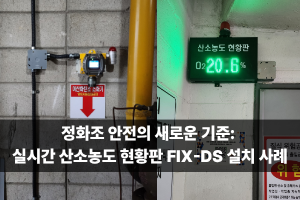
RS Korea completed installation of a FIX800 fixed five-gas detector and FIX-DS LED status board at a telecommunications company branch building in Dongjak-gu, Seoul — the second of two branch installations carried out for this client, following an earlier installation at the company's Wonju, Gangwon-do branch. This installation follows the same specification and procedure as the Wonju site.
Introduction
This project uses the same content and method as our previous post covering the Wonju branch installation, so please refer to that post for additional background — the approach here is nearly identical.
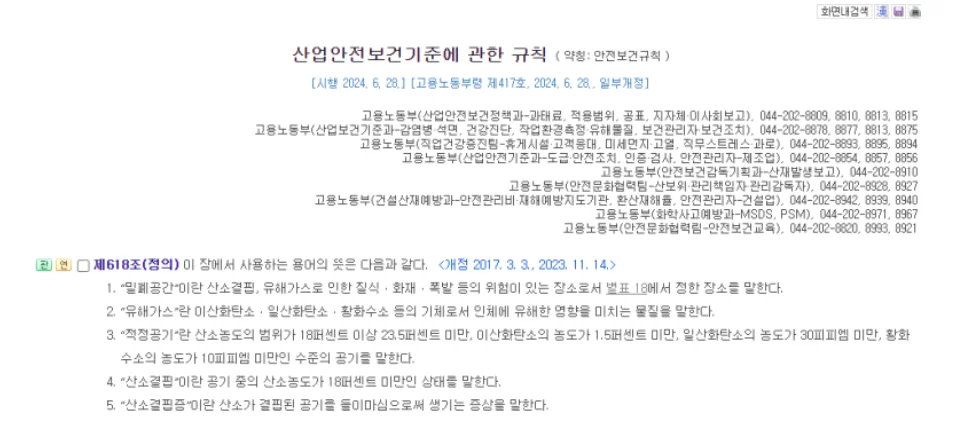
The installation was carried out under Article 618 of Korea's Occupational Safety and Health Standards, which requires monitoring of five gases in confined spaces to prevent worker asphyxiation: O2 (oxygen), CO (carbon monoxide), CO2 (carbon dioxide), H2S (hydrogen sulfide), and EX (combustible gas). The Dongjak-gu building is a headquarters-level site, and the client specifically emphasized both confined-space safety for future occupants and installer safety during the work itself.
The equipment planned for installation was as follows.
FIX800 fixed multi/single-gas detector
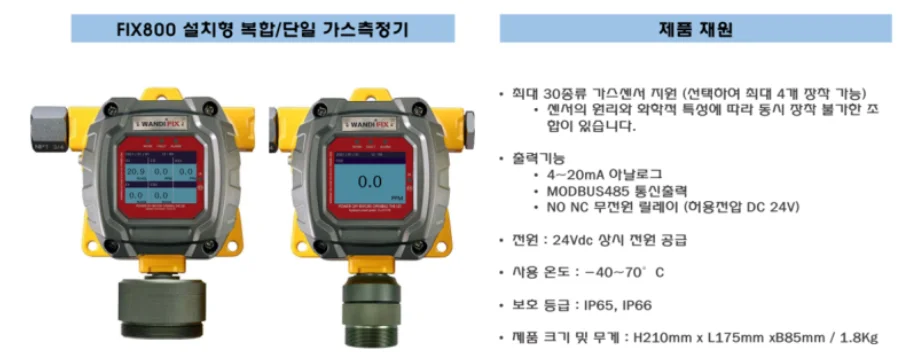
The FIX800 is a fixed multi/single-gas detector that can be configured with whichever sensors the customer needs. With a dual CO/H2S sensor installed, it can simultaneously measure all five legally required gases — O2, CO, H2S, EX, and CO2 — from a single unit.
FIX-DS dedicated monitoring display
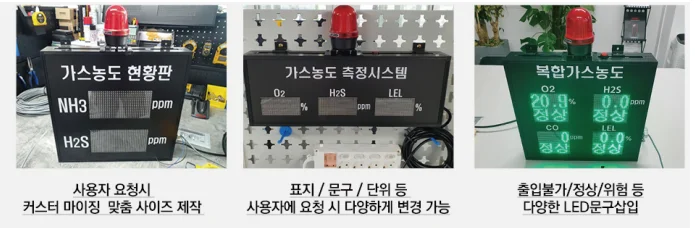
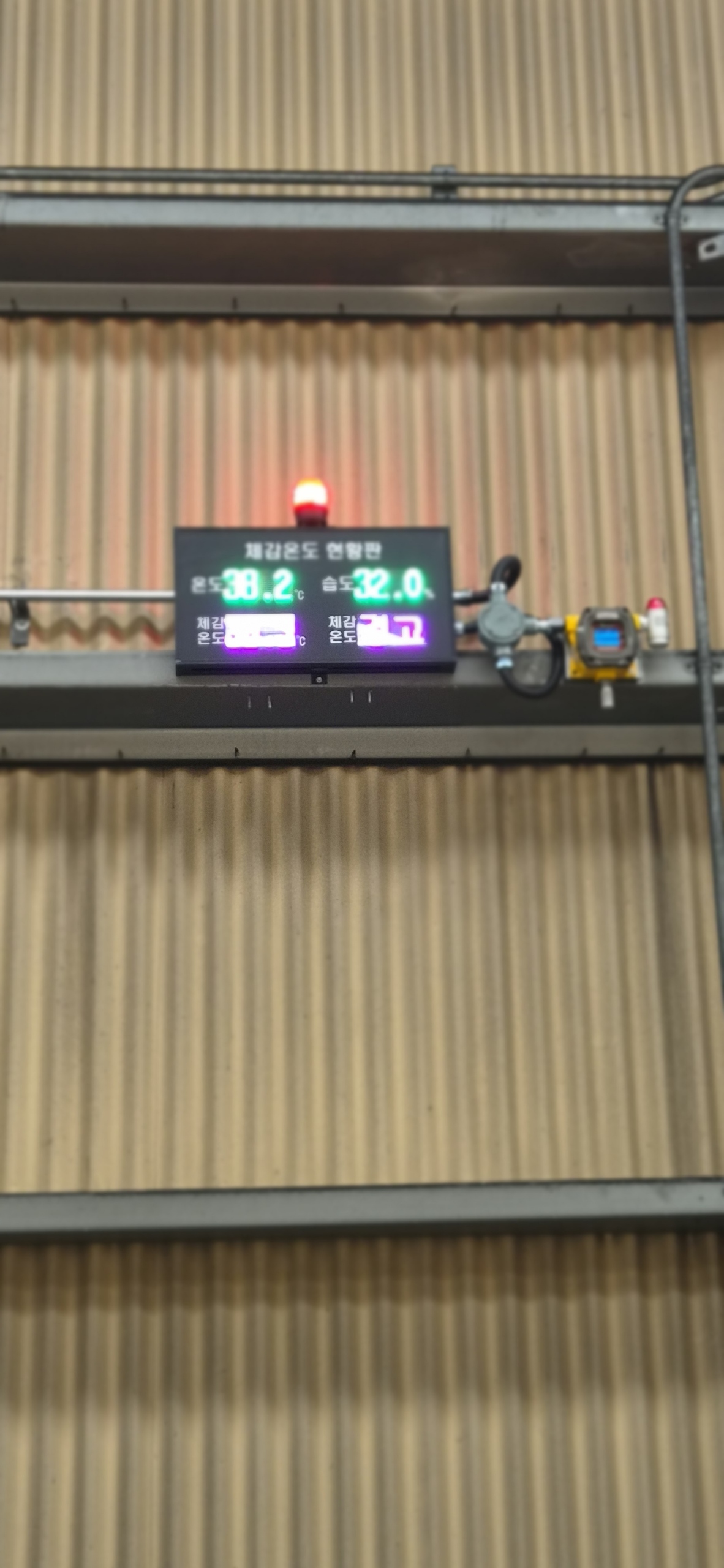
The FIX-DS is a dedicated monitoring display built for the FIX800, featuring a high-visibility LED screen. Because the FIX800 itself is built to order to match customer requirements, the matching display can also be customized in a variety of ways.
With just these two components in place, occupants and workers are able to evacuate and respond quickly if a suffocation risk arises before or during confined-space work.
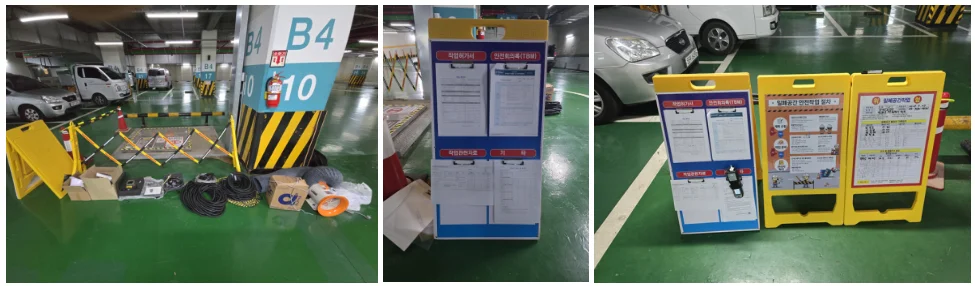
Site preparation began with gathering the detector, the display board, and the day's work materials — communication cable, power cable, and waterproof corrugated conduit — along with a safety sign board and a blower for the confined-space work. The safety sign board displayed confined-space worker safety training information, a site risk assessment, an on-site representative registration form, and other documents, along with the client's own work permit form.
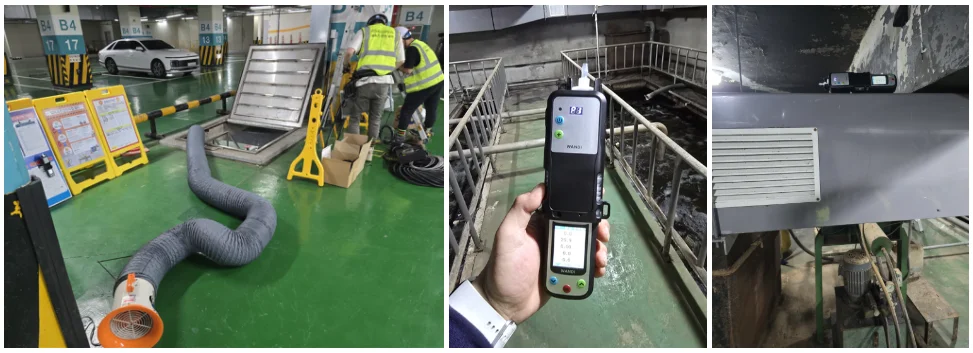
Before entering the confined space, a blower supplied fresh air for 15 minutes. A technician then carried a portable EDW500 pump-type multi-gas detector down into the space to confirm conditions were safe before starting work. Readings were normal, so the EDW500 was left on site for continuous monitoring — the reason for leaving it there is explained further below.
Work in Progress
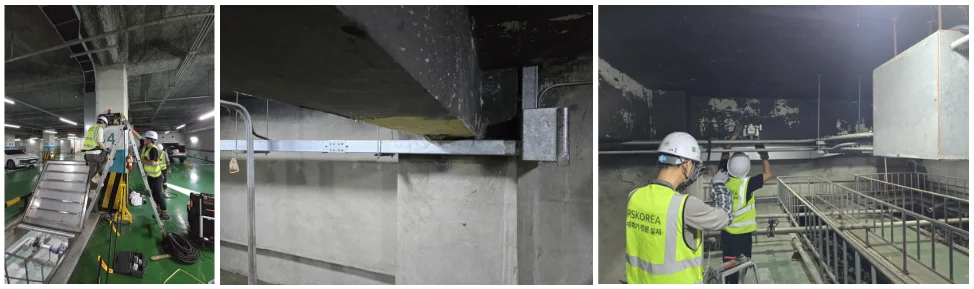
The team split into two groups to install the display board and the detector at the same time. Cable routing to both locations mostly followed existing cable trays, and since the trays were positioned at a convenient working height, the installation went smoothly.
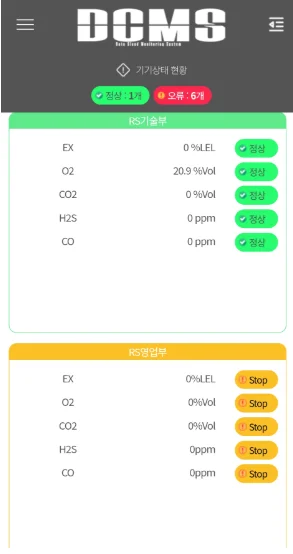
Gas concentration inside the confined space was checked once every hour throughout the work. Because the EDW500 left on site includes a USIM-based IoT connection, the client was able to check real-time gas readings remotely from outside the workspace via mobile device. The client showed strong interest in this feature, and RS Korea submitted a follow-up proposal for expanded IoT monitoring after the installation was complete — a topic we'll cover in more detail in a future post, since today's post focuses on the installation itself.
Completion
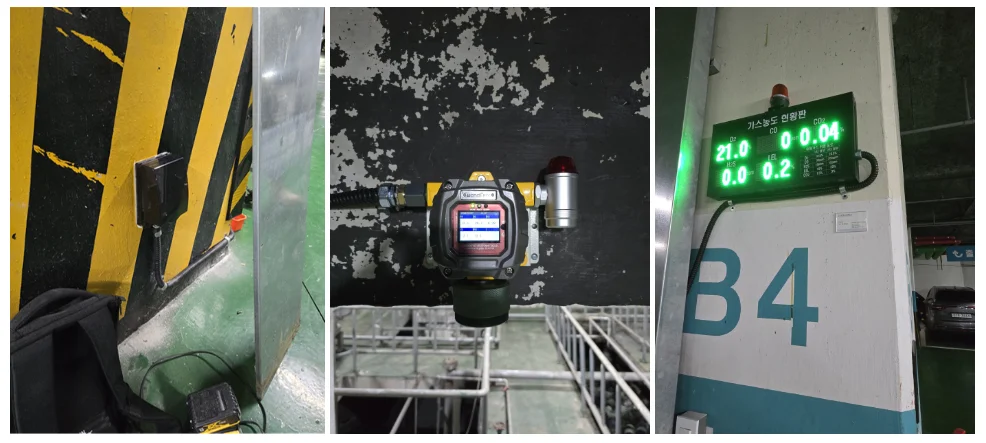
Power was supplied to the display board via an outlet behind the mounting column, and both the detector and display board were confirmed to be operating normally. This completes the second of two wastewater treatment room installations carried out at this building, covering everything from safety preparation through installation and commissioning.
Closing
The continued growth in installations of gas concentration detectors for worker safety reflects a broader national trend toward greater safety awareness. RS Korea will keep adapting its installation methods to match evolving industry standards and continue to demonstrate steady improvement over time.
#WastewaterTreatmentFacility #GasDetector #FixedGasDetector #InstalledGasDetector #MultiGasDetector #WastewaterGasDetector #WaterTreatmentGasDetector #OccupationalSafetyAndHealthAct #FiveGases #5Gases #5GASDetector #OSHAGasDetector #FixedMultiGasDetector #ConfinedSpaceGasDetector #Wandi #FIX800 #GasMonitoring
![[레이먼드] 오,폐수 처리실 유해가스 모니터링](https://wandi.co.kr/storage/construction-cases/YxFUQVBZ8Unnk7pJzzfsmezr6xNe0LZvQRDmt7TL.jpg)
![[브이피이코리아] 종합병원 지하 밀폐공간 가스 측정기 설치_FIX800 & FIX-DS](https://wandi.co.kr/storage/construction-cases/gNOA28xSlEy5uU3AOxyHDRH5UfAe0TpMTgAt4Uag.jpg)

