Applied Markets
Installed Gases
Project Details
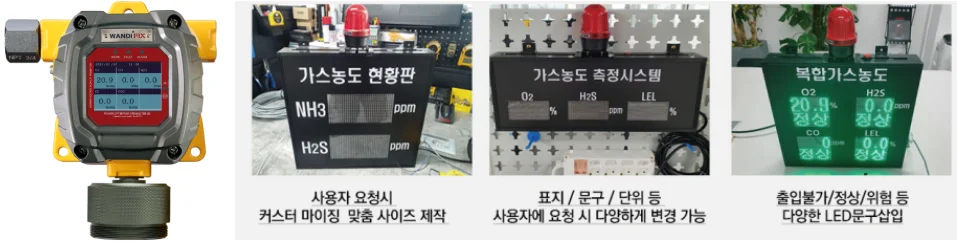
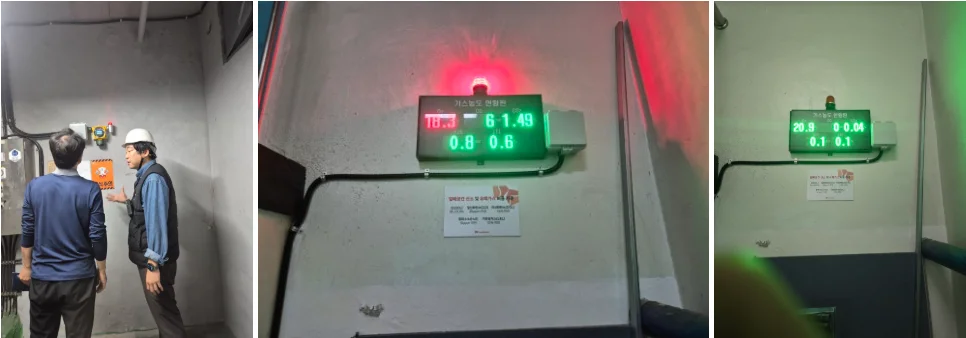
Hello, this is RS Korea's technical sales team. Through competitive pricing and fast response, we've been awarded a project to install confined-space gas detectors across multiple branch offices of a telecom company, and we're carrying out the installations sequentially.
Project overview
Scope: installation of a gas concentration detector and remote display for confined-space asphyxiation prevention.
Product installed: FIX800 fixed multi-gas detector (5 gases — O2, CO, CO2, H2S, EX) with a dedicated FIX-DS 5-channel remote display.
Location: an underground septic tank room (confined space) inside a telecom company building in Changwon.
Crew: 1 site supervisor and 2 installers.
Duration: approximately 4 hours.
Before work
Direct access from the underground parking area made unloading materials very convenient.
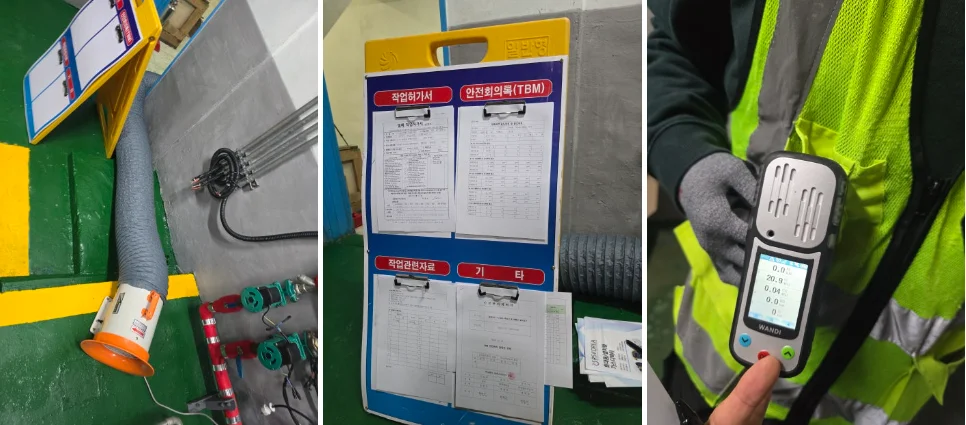
Thirty minutes before starting, the confined space was opened and ventilated, using a blower to bring in outside air. A safety barrier was set up to keep unauthorized personnel out, a safety checklist was completed periodically, and gas levels inside the confined space were measured to confirm it was safe to begin work.
During work
The installation broke down into three main areas: mounting the detector, mounting the display, and running and connecting power. The steps follow a typical electrical installation process — straightforward in outline, but routing power and communication lines carefully to avoid disrupting the site's appearance took considerable time.
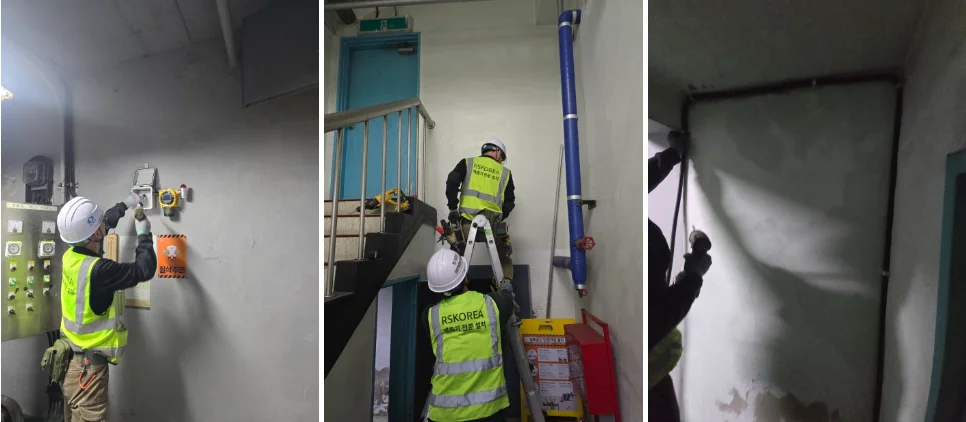
Mounting the detector inside the confined space and the display near the entrance normally requires drilling through walls or caulking around a door frame. At this site, an existing ventilation grille allowed the wiring to be routed through it instead, with the site manager's permission. Ladder work required two people at all times, with outriggers fully extended, and gas concentrations inside the confined space were re-checked hourly throughout the work.
After work
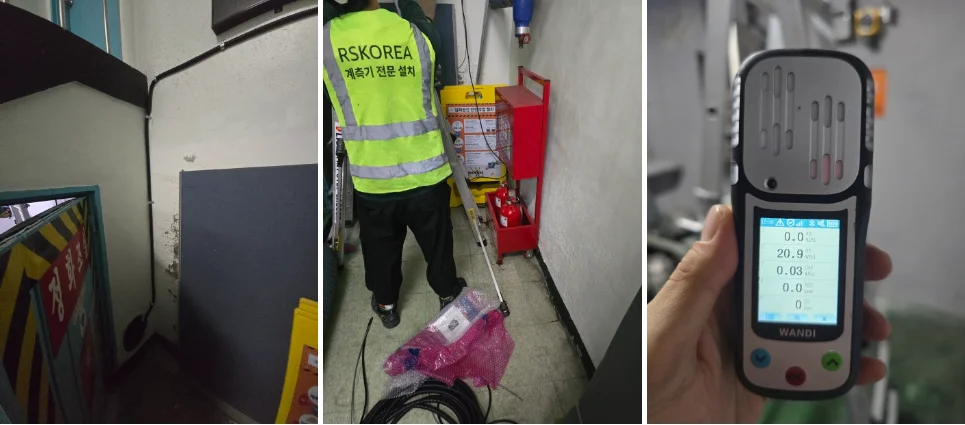
The detector was configured with O2, CO, CO2, H2S, and EX sensors — the gases specified under Article 618 of Korea's Occupational Safety and Health Standards Regulation for confined-space asphyxiation prevention. Sensor types: O2, CO, and H2S use electrochemical sensors; EX uses a catalytic combustion sensor; and CO2 uses an NDIR sensor. Electrochemical sensors consist of an electrode and electrolyte and are consumable, requiring periodic replacement.
After installation, the customer was briefed on the operating principles and methods, along with the most important aspects — calibration and maintenance. An alarm test was carried out using test gas, along with guidance on how to respond to alarms and handle malfunctions. The site was closed out once testing confirmed normal operation.
Closing
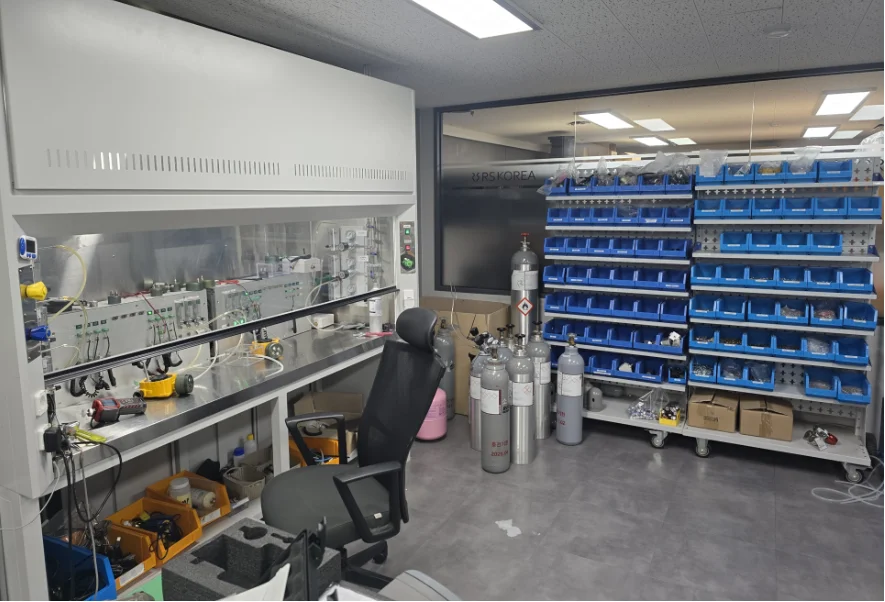
RS Korea's gas detection solution unifies quoting, site survey, manufacturing, installation, and maintenance into a single all-in-one system, aiming to minimize the effort and uncertainty customers face from product selection through to long-term use.
An in-house calibration system and a full inventory of spare parts help maintain product quality and enable fast after-sales service.
Frequently Asked Questions (FAQ)
Which gases does this system monitor, and why?
The system monitors five gases — O2, CO, CO2, H2S, and EX — which are specified under Article 618 of Korea's Occupational Safety and Health Standards Regulation as the representative gases for confined-space asphyxiation prevention.
What sensor technologies are used?
O2, CO, and H2S use electrochemical sensors; EX uses a catalytic combustion sensor; and CO2 uses an NDIR (non-dispersive infrared) sensor. Electrochemical sensors are consumable and require periodic replacement.
How was the confined space prepared before installation?
The space was opened and ventilated 30 minutes before work began, using a blower to bring in outside air. A safety barrier restricted access, a safety checklist was completed periodically, and gas levels were measured to confirm safe conditions before entry.
How long did the installation take?
A crew of one site supervisor and two installers completed the work in about four hours.
What happens after installation is complete?
The customer receives a briefing on operating principles, calibration, and maintenance, followed by an alarm test using test gas and guidance on responding to alarms or malfunctions.
#FIX800#GasDetector#ConfinedSpaceSafety#OxygenMonitoring#H2SDetection#COMonitoring#CO2Monitoring#IndustrialSafety#RemoteDisplay#WANDI
![[레이먼드] 오,폐수 처리실 유해가스 모니터링](https://wandi.co.kr/storage/construction-cases/YxFUQVBZ8Unnk7pJzzfsmezr6xNe0LZvQRDmt7TL.jpg)
![[브이피이코리아] 종합병원 지하 밀폐공간 가스 측정기 설치_FIX800 & FIX-DS](https://wandi.co.kr/storage/construction-cases/gNOA28xSlEy5uU3AOxyHDRH5UfAe0TpMTgAt4Uag.jpg)

